



Why Magnesium Deficiency Is So Common — And So Commonly Missed
Magnesium deficiency has a unique diagnostic problem: standard blood tests miss it. Serum magnesium — the test most doctors order — measures magnesium in the blood, which makes up only 1% of total body magnesium. The remaining 99% is inside cells and in bone. The body tightly regulates serum magnesium by pulling it from bone and cells whenever serum levels drop — so serum magnesium remains “normal” until deficiency is severe. By the time serum magnesium shows as low on a blood test, intracellular and skeletal magnesium depletion has already been occurring for months or years. This is why clinicians call magnesium deficiency “the silent epidemic” — most deficient people have entirely normal blood test results.
Dietary intake: The estimated average dietary magnesium intake in urban India is approximately 200–250mg/day — well below the RDA of 310–420mg depending on age and sex. Only populations still consuming traditional whole-grain and seed-rich diets (rural South India, tribal communities) approach adequate intake.
The grain processing problem: Polishing removes the bran and germ from rice and wheat — the magnesium-rich components. Polished white rice provides approximately 12mg/100g. Brown rice: 43mg/100g. Ragi (finger millet): 137mg/100g. The shift to polished grains has reduced the grain-sourced magnesium contribution by approximately 80–90%.
Medications that deplete magnesium: Proton pump inhibitors (omeprazole, pantoprazole, rabeprazole — among the most overprescribed drugs in India for GERD and acidity) cause clinically significant hypomagnesaemia with chronic use. Diuretics (commonly prescribed for hypertension and heart failure) increase renal magnesium excretion. Oral contraceptive pills reduce serum magnesium. Antacids with calcium carbonate compete with magnesium for absorption. If you are on any of these medications, your magnesium depletion risk is substantially elevated.

Stress and cortisol: Cortisol directly increases renal magnesium excretion through the distal tubule. Every episode of stress depletes magnesium; and magnesium deficiency in turn amplifies the cortisol response to subsequent stressors — a self-perpetuating depletion cycle. With approximately 80% of Indian adults under regular stress, this cycle is pervasive.
The Symptom Checklist — How Many Apply to You?
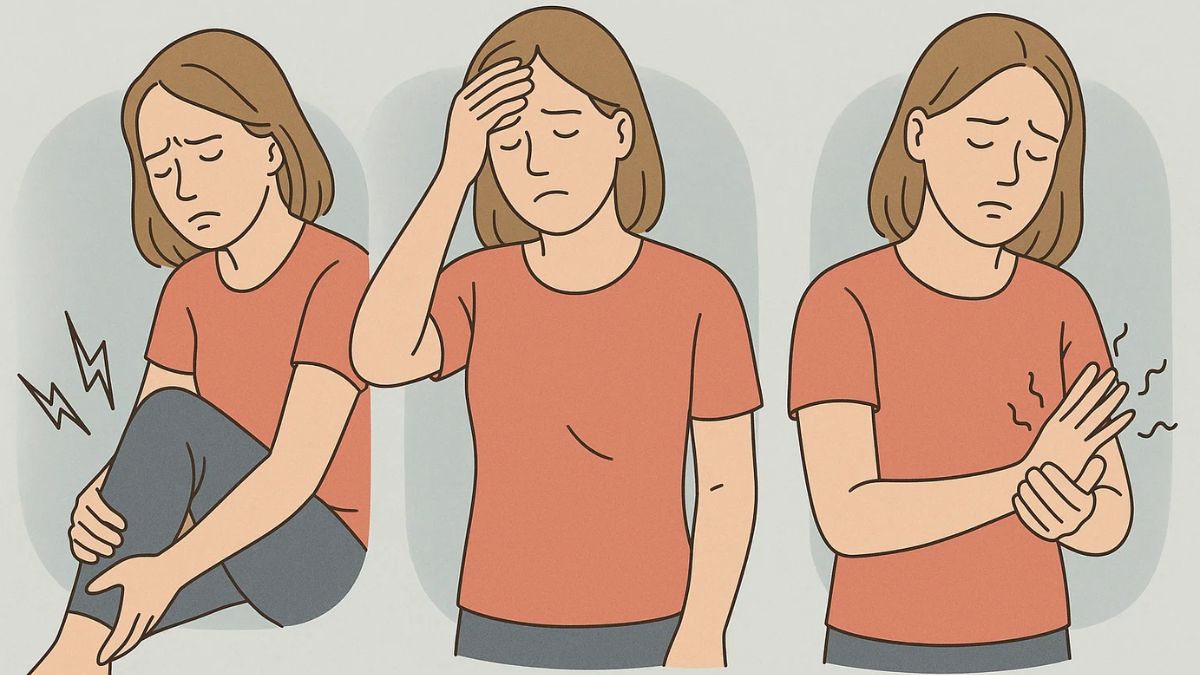
Check the symptoms you have been experiencing consistently for more than 4 weeks. More than 4 checked symptoms from this list — with no other identified cause — strongly suggests subclinical magnesium insufficiency worth addressing through dietary correction and supplementation.
Nocturnal leg cramps — cramps specifically waking you from sleep, most common in calves
Muscle twitches and eyelid flickering — particularly the “twitching eyelid” that persists for days
Anxiety and irritability — low-level, background anxiety without clear situational cause
Difficulty falling asleep — mind races at bedtime, cannot switch off despite exhaustion
Headaches and migraines — recurrent, particularly tension headaches or classic migraines
Fatigue not improved by sleep — low energy even after adequate sleep hours
Palpitations or irregular heartbeat — awareness of your heartbeat, occasional missed beats
Constipation — particularly if chronic and not resolved by adequate fibre and water
Worsening blood sugar or insulin resistance — higher fasting glucose, need for more diabetes medication
High blood pressure — particularly if mildly elevated and not fully controlled with medication
Low mood or depression — persistent low mood, particularly if unresponsive to standard treatment
Worsening PMS or menstrual cramps — magnesium deficiency is closely tied to premenstrual tension and dysmenorrhea
- Anxiety & irritability: Reduced NMDA block → neural hyperexcitability → exaggerated stress response, easily triggered emotional reactivity
- Migraines: Magnesium deficiency is found in 50% of migraine patients; IV magnesium is an established acute migraine treatment (NHF guidelines). Mechanism: cortical spreading depression (the wave behind migraine aura) is facilitated by NMDA hyperactivity
- Depression: Multiple studies link low magnesium to depression; magnesium modulates serotonin receptor function and BDNF (brain-derived neurotrophic factor) expression
- Brain fog & poor concentration: NMDA receptor dysregulation impairs synaptic plasticity — the molecular basis of learning and memory consolidation
- Noise and light sensitivity: Low magnesium threshold for sensory gating — sensory inputs overwhelm more easily
⚗️ NMDA block reduction → neural hyperexcitability | 50% of migraine patients deficient | IV Mg: established migraine treatment
- Magnesium glycinate 200–400mg at bedtime — glycinate crosses the blood-brain barrier most effectively; most studied for anxiety and sleep
- Magnesium L-threonate (Magtein) — specifically developed to increase brain magnesium concentrations; studied for cognitive enhancement and anxiety
- Dietary: til (sesame) in daily cooking, dark chocolate (30g 70%+ daily), ragi as grain base, almonds as daily snack
- Migraine prevention: Magnesium glycinate 400mg daily — consistent use over 3+ months reduces migraine frequency (Cochrane-reviewed evidence)
- Results timeline: anxiety improvement often felt within 1–2 weeks; migraine prevention effect builds over 8–12 weeks
- Palpitations: Atrial ectopic beats, premature ventricular contractions (PVCs), and awareness of irregular heartbeat — often described as “heart fluttering” or “skipped beats”
- Hypertension: Vascular smooth muscle lacks the calcium channel blocking effect of magnesium → sustained vasoconstriction → elevated blood pressure. Meta-analyses confirm magnesium supplementation reduces both systolic and diastolic BP by 2–5 mmHg
- Arterial stiffness: Magnesium deficiency promotes vascular calcification (calcium deposits in arterial walls) — increasing cardiovascular event risk
- Coronary artery spasm: Magnesium deficiency is associated with Prinzmetal (vasospastic) angina — chest pain from coronary artery smooth muscle spasm without atherosclerosis
- Increased cardiac event risk: Multiple large epidemiological studies link low dietary magnesium to increased risk of myocardial infarction and cardiac mortality
⚗️ Natural calcium channel blocker | Meta-analysis: -2–5 mmHg BP with Mg supplementation | Vascular calcification risk | Arrhythmia facilitation
- Magnesium citrate or glycinate 300–400mg daily alongside any antihypertensive medication — discuss with cardiologist as Mg may reduce medication dose requirements
- Dietary potassium + magnesium combination: banana, palak, rajma — both minerals work synergistically for vascular tone regulation
- Reduce dietary drivers of Mg loss: excess sodium (promotes renal Mg excretion), alcohol, excessive caffeine
- Emergency use: IV magnesium sulphate is a standard hospital treatment for ventricular arrhythmias (torsades de pointes) — demonstrating the cardiac electrophysiological significance of magnesium
- Palpitations from Mg deficiency typically resolve within 3–4 weeks of adequate supplementation
- Nocturnal leg cramps: The most characteristic symptom — waking from sleep with intense calf cramps. Ca²⁺-ATPase pump failure from Mg deficiency is the most common reversible cause
- Eyelid twitching (myokymia): Involuntary, repetitive facial muscle fasciculations — commonly the eyelid. Almost always resolves with magnesium correction
- Restless legs syndrome (RLS): The urge to move legs (particularly at night) linked to dopamine dysregulation that magnesium modulates
- Generalised muscle tension: Difficulty fully relaxing muscles — particularly in the neck, shoulders, and jaw. Tension headaches often originate here
- Exercise-induced cramping: Athletes who cramp easily and frequently often have low intracellular magnesium, depleted further by sweat losses
- Muscle weakness: Severe deficiency impairs myosin ATPase — reducing muscle force generation
⚗️ Ca²⁺-ATPase requires Mg → calcium clearance failure → sustained contraction | Nocturnal leg cramp = most characteristic Mg deficiency symptom
- Immediate relief for acute cramps: Magnesium glycinate or citrate 200–400mg — leg cramps typically resolve within 1–2 weeks of consistent daily use
- Transdermal magnesium: Magnesium chloride oil sprayed or massaged directly onto cramping muscles — bypasses GI absorption, particularly useful for localised severe cramps
- Epsom salt baths: Magnesium sulphate dissolved in warm bath water — transdermal absorption provides both magnesium and the relaxing warmth of the bath
- Athletes: Higher replacement doses needed (400–600mg daily) — sweat contains significant magnesium (approximately 4.5mg per litre of sweat)
- Dietary til daily: 1 tbsp sesame seeds in cooking provides approximately 32mg elemental magnesium — the most concentrated readily-available food source in Indian cooking
- Worsening insulin resistance: Impaired insulin receptor tyrosine kinase → cells respond less to insulin → higher blood glucose for the same insulin level
- Increased type 2 diabetes risk: A 2011 Diabetes Care meta-analysis of 7 prospective studies found each 100mg/day increase in magnesium intake was associated with 15% reduction in type 2 diabetes risk
- PCOS aggravation: Magnesium deficiency worsens insulin resistance → more hyperinsulinaemia → more androgen production → worse PCOS symptoms. Magnesium supplementation specifically reduces insulin resistance in PCOS
- Worsening diabetes control: Diabetics are already at higher magnesium loss risk from osmotic diuresis; the deficiency then worsens their glucose control — a particularly vicious cycle
- Elevated cortisol amplification: Low magnesium → amplified HPA axis response to stressors → higher cortisol → more magnesium loss. See: How to Reduce Cortisol Naturally
- Premenstrual syndrome (PMS): Magnesium deficiency is specifically associated with PMS — particularly emotional symptoms (irritability, anxiety, mood swings) and physical symptoms (breast tenderness, cramps). Cochrane evidence confirms magnesium is superior to placebo for dysmenorrhea
⚗️ Insulin receptor tyrosine kinase requires Mg | Diabetes Care meta-analysis: +100mg Mg/day = -15% T2DM risk | PCOS: Mg → improved insulin sensitivity
- Diabetics: Magnesium glycinate or citrate 300–400mg daily — discuss with endocrinologist as improvement in insulin sensitivity may require medication dose adjustment
- PCOS: Magnesium supplementation specifically addresses the insulin resistance dimension of PCOS — combine with myo-inositol for additive insulin-sensitising effect
- PMS and dysmenorrhea: 200–400mg magnesium glycinate daily in the week before and during menstruation — Cochrane-confirmed reduction in dysmenorrhea. See: Best Remedies for Menstrual Cramps
- Dietary priority: Ragi over white rice as carbohydrate base — 137mg Mg/100g vs 12mg in polished white rice. This single swap dramatically improves both glycaemic response and magnesium intake simultaneously
- Difficulty falling asleep: Reduced GABA-A activity and NMDA block → neural hyperexcitability → the “racing mind” that won’t slow at bedtime
- Frequent night waking: Poor magnesium status reduces sleep efficiency and increases micro-arousal frequency during the night
- Reduced deep (slow-wave) sleep: Magnesium is required for the adenosine triphosphate metabolism that drives electroencephalographic slow waves — deep sleep stages are reduced
- Restless legs syndrome: Dopaminergic pathway dysregulation from magnesium deficiency produces the creeping leg discomfort that prevents sleep
- Early morning waking: The cortisol awakening response is amplified when magnesium is low — waking earlier than needed with an inability to return to sleep
⚗️ 2012 RCT (500mg/day, 8 weeks): improved sleep quality, efficiency, time, insomnia severity, and serum melatonin | GABA-A agonism + NMDA antagonism
- Magnesium glycinate 200–400mg 60–90 minutes before bedtime — glycine’s independent sleep-promoting effects (reducing core body temperature through glycine receptor activation in the brainstem) complement magnesium’s NMDA and GABA effects
- Epsom salt (magnesium sulphate) bath 20 minutes before bed — transdermal absorption + relaxing warmth lower core body temperature, which reliably triggers sleep onset
- The bedtime stack: Ashwagandha (cortisol reduction) + magnesium glycinate (NMDA + GABA) + warm milk (tryptophan → melatonin) — three complementary mechanisms. See: Home Remedies for Better Sleep
- Sleep improvement from magnesium correction: typically noticeable within 5–10 days of starting glycinate at bedtime
- Constipation: Intestinal smooth muscle peristalsis requires the same calcium-magnesium cycling as skeletal muscle contraction-relaxation. Deficiency slows colonic transit. Magnesium citrate and oxide specifically are used as osmotic laxatives (drawing water into the colon)
- Intestinal hyperpermeability (“leaky gut”): Magnesium deficiency reduces claudin and occludin expression — the tight junction proteins that seal the intestinal epithelial barrier. Reduced barrier integrity allows bacterial endotoxins (lipopolysaccharides) to enter the bloodstream, driving systemic inflammation
- Microbiome disruption: Magnesium deficiency alters the gut microbiome composition — reducing Bifidobacterium and Lactobacillus relative abundance
- Worsened IBS symptoms: The combination of gut muscle dysfunction and intestinal hyperpermeability worsens IBS symptom severity
⚗️ Tight junction proteins (claudin, occludin) require Mg | Intestinal permeability → LPS systemic entry → inflammation | Microbiome disruption
- Magnesium citrate for constipation — the mildly laxative form is specifically useful here (200–400mg at bedtime draws water into the colon)
- Food-based gut magnesium: Ragi porridge for breakfast (137mg/100g), til in sabzi (350mg/100g), rajma as dal protein base (140mg/100g)
- Gut barrier: Magnesium combined with Vitamin D and butyrate (from ghee/dal) restores tight junction protein expression
- For the complete gut health picture: Gut Health and Overall Wellness
- Vitamin D cannot be activated: The conversion of Vitamin D3 to its active hormonal form (1,25-dihydroxyvitamin D / calcitriol) requires two hydroxylation steps, both requiring magnesium-dependent enzymes. Magnesium deficiency renders Vitamin D supplementation largely ineffective — a critical explanation for why millions of Indians take Vitamin D supplements without apparent benefit
- Bone loss: Osteoblast (bone-building cell) and osteoclast (bone-resorbing cell) activity both require magnesium. Deficiency shifts the balance toward resorption. Epidemiological studies consistently link low dietary magnesium to low bone mineral density
- Paradoxical arterial calcification from calcium supplementation: Without adequate magnesium, supplemental calcium that should go to bone is redirected to arterial walls and soft tissue — precisely the reverse of the intended effect. This is why calcium supplements without magnesium are associated with increased cardiovascular risk in some studies
- Osteoporosis risk: Low magnesium → Vitamin D activation failure → calcium malabsorption → bone loss → osteoporosis. The entire calcium-bone axis depends on adequate magnesium
⚗️ Both Vitamin D hydroxylation steps require Mg-dependent enzymes | Mg deficiency = Vitamin D supplementation ineffective | Ca without Mg → arterial calcification risk
- Never supplement calcium or Vitamin D without magnesium: The complete bone mineral support protocol is Vitamin D3 + Vitamin K2 + Magnesium + dietary calcium — in that combination
- If Vitamin D supplements haven’t helped: Add magnesium glycinate or citrate 300–400mg daily alongside the Vitamin D — this often produces the improvement in fatigue, immunity, and bone metabolism that the Vitamin D alone wasn’t producing
- Dietary calcium + magnesium: Ragi provides both (344mg calcium/100g AND 137mg magnesium/100g) — the most beneficial grain for Indian bone health. Sesame seeds provide calcium and magnesium in the ideal ratio
- Ratio recommendation: Calcium:Magnesium ratio of 2:1 to 1:1 — the typical 4:1 ratio of most calcium supplements vs dietary magnesium creates the calcification risk
Magnesium-Rich Indian Foods — The Complete Reference
| Food | Mg per 100g | Practical Serving | Mg per Serving | Best Way to Use |
|---|---|---|---|---|
| Til (sesame seeds) | 350mg ⭐⭐⭐ | 1 tbsp (9g) | 32mg | Til chikki, til in sabzi tadka, til rice, til laddoo |
| Pumpkin seeds (kaddu beej) | 262mg ⭐⭐⭐ | 30g (small handful) | 79mg | Morning snack, mixed into curd, added to salad |
| Ragi / Finger millet | 137mg ⭐⭐ | 100g cooked (½ cup) | 137mg | Ragi porridge, ragi roti, ragi mudde, ragi dosa |
| Rajma (kidney beans) | 140mg ⭐⭐ | 100g cooked (½ cup) | 85mg | Rajma curry, rajma rice — the classic North Indian combination |
| Chana (chickpeas) | 115mg ⭐⭐ | 100g cooked | 78mg | Chana masala, chole, chana chaat, sattu drink |
| Palak (spinach) | 79mg ⭐⭐ | 100g cooked | 79mg | Palak dal, palak paneer, palak paratha, palak soup |
| Dark chocolate (70%+) | 100mg ⭐⭐ | 30g (1 square) | 30mg | Daily 3–4pm snack replacing biscuits |
| Almonds (badam) | 270mg ⭐⭐⭐ | 30g (20 almonds) | 81mg | Soaked overnight, morning snack, added to milk |
| Moong dal (whole green) | 48mg | 100g cooked (½ cup) | 48mg | Moong dal khichdi, moong sprouts |
| Banana (kela) | 27mg | 1 medium banana | 32mg | Morning fruit, added to curd, smoothie |
| Bajra (pearl millet) | 114mg ⭐⭐ | 100g cooked | 114mg | Bajra roti (Rajasthani bajra ki roti), bajra khichdi |
| Moringa leaves (sahjan) | 147mg (dried) ⭐⭐ | 1 tsp powder | 15mg | Moringa morning water, added to dal, moringa chutney |
The Magnesium Supplement Guide — Which Form to Take and Why
The form of magnesium supplementation matters significantly — different forms have different bioavailability, different effects on the gut, and different therapeutic affinities for different body systems.
Magnesium Deficiency Myths vs. Facts
“A blood test showing normal magnesium means you’re not deficient.”
Serum magnesium (the standard blood test) measures only 1% of total body magnesium. The body tightly regulates serum levels by pulling magnesium from bone and cells — so serum stays “normal” until deficiency is severe. Red blood cell magnesium (intracellular) is significantly more accurate but rarely ordered in India. Symptomatic improvement after supplementation is often the most practical diagnostic tool available.
“I take Vitamin D, so my bone health is covered.”
Vitamin D3 cannot be converted to its active form (calcitriol) without magnesium-dependent hydroxylation enzymes. If you are magnesium deficient, Vitamin D supplementation is largely ineffective — the inactive form cannot be activated. This is a major reason why millions of Indians taking Vitamin D supplements show no clinical improvement. Add magnesium alongside Vitamin D3 and the improvement often appears within 4–6 weeks.
“Magnesium supplements cause kidney problems.”
Healthy kidneys efficiently excrete excess dietary magnesium — making toxicity from oral supplementation at recommended doses essentially impossible in people with normal kidney function. The caution is specifically for chronic kidney disease, where the kidneys cannot excrete magnesium adequately. For healthy adults, oral magnesium at 200–400mg/day is safe for indefinite use. Excess beyond absorption capacity typically produces mild diarrhoea — the body’s self-regulating feedback mechanism.
“Leg cramps are always caused by dehydration.”
Dehydration is one cause of leg cramps. But magnesium deficiency — through impaired Ca²⁺-ATPase pump function in muscle cells — is the most common reversible cause of nocturnal leg cramps specifically (cramps that wake you from sleep). The distinction is timing: dehydration cramps occur during or after exercise or heat exposure; magnesium-deficiency cramps characteristically occur at rest, particularly at night. If your leg cramps occur at night and are not associated with exercise or heat, magnesium deficiency is the most likely cause.
Frequently Asked Questions
Magnesium deficiency produces symptoms across multiple systems because it is a cofactor for 300+ enzymes. Most characteristic symptoms: nocturnal leg cramps (cramps waking you from sleep — most specific single symptom), eyelid twitching (myokymia), anxiety and irritability without clear cause, difficulty falling asleep despite exhaustion, recurrent headaches or migraines, palpitations, fatigue not improved by sleep, constipation, worsening blood sugar control, and PMS/menstrual cramps. Checking more than 4 of these symptoms — with no other identified cause — strongly suggests subclinical magnesium insufficiency worth addressing.
India’s magnesium deficiency epidemic: (1) Dietary transition from ragi, bajra, til, whole dal → polished white rice, refined wheat (removes 80–90% of grain magnesium); (2) Proton pump inhibitors (omeprazole, pantoprazole — among the most overprescribed medications in India) chronically reduce Mg absorption; (3) Stress — cortisol increases renal Mg excretion; (4) Diabetes — osmotic diuresis depletes Mg (India has the world’s second-largest diabetic population); (5) GI losses from chronic diarrhoea, IBS, inflammatory bowel; (6) Diuretics for hypertension; (7) Alcohol. Estimated average intake: 200–250mg/day vs 310–420mg RDA.
Highest Indian magnesium foods: til/sesame seeds (350mg/100g — 1 tbsp = 32mg), almonds (270mg/100g — 30g = 81mg), pumpkin seeds (262mg/100g — 30g = 79mg), ragi/finger millet (137mg/100g), rajma (140mg/100g cooked), bajra/pearl millet (114mg/100g), dark chocolate 70%+ (100mg/100g), palak (79mg/100g cooked), chana (115mg/100g). The single most impactful dietary change: replace white rice (12mg/100g) with ragi (137mg/100g) as grain base — simultaneously addresses magnesium deficiency, blood sugar control, and bone calcium.
RDA for Indian adults: women 310–320mg/day; men 400–420mg/day; pregnant women 350–360mg/day. Most urban Indians consume 200–250mg/day — well below requirements. For supplementation: start with 100–200mg magnesium glycinate at bedtime, increase to 300–400mg over 1–2 weeks. Upper tolerable limit from supplements: 350mg/day (above this, osmotic diarrhoea is common). Food sources do not have an upper limit — eating magnesium-rich foods is always preferable to supplements as the primary strategy.
Yes — with Cochrane-reviewed evidence. A 2012 double-blind RCT found magnesium supplementation (500mg/day, 8 weeks) significantly improved sleep quality, efficiency, time, early morning awakening, and serum melatonin in insomniacs. Mechanisms: NMDA antagonism (reduces neural hyperexcitability at bedtime), GABA-A agonism (promotes inhibitory nervous system activity), melatonin synthesis support (required for the serotonin → melatonin conversion enzyme). Best form for sleep: magnesium glycinate (glycine independently lowers core body temperature — a reliable sleep onset trigger). Take 200–400mg glycinate 60–90 minutes before bedtime.
Related Articles You’ll Love
Magnesium deficiency does not announce itself with a single dramatic symptom. It seeps into the body system by system — tightening muscles at night, accelerating heartbeats at rest, racing the mind at midnight, blunting insulin responses, stiffening blood vessels, preventing the bones from using the Vitamin D and calcium that were carefully supplemented. It does its damage quietly, in the background, while every individual symptom is attributed to something else and treated separately.
The corrective narrative is equally quiet — sesame seeds in every meal, ragi replacing white rice, a square of dark chocolate in the afternoon, magnesium glycinate at bedtime. No dramatic intervention. Just a slow, steady restoration of the mineral that 300 enzymes were waiting for.
Check how many symptoms you recognised. Start with the dietary swap — ragi for white rice. Add the bedtime glycinate. Give it six weeks. The difference will surprise you. 🌿Which symptom made you recognise this was about magnesium — the nocturnal leg cramps, the eyelid twitch that won’t stop, the anxiety that appears from nowhere, or the Vitamin D supplements that never seemed to work? Share this with every person managing unexplained symptoms that a blood test couldn’t explain. 👇
Sources & Further Reading
- Journal of Research in Medical Sciences (2012) — Magnesium RCT (500mg/8 weeks): Significantly Improved Sleep Quality, Efficiency, Time, and Serum Melatonin in Insomniacs
- Diabetes Care (2011) — Meta-analysis: Each 100mg/day Increase in Dietary Magnesium Associated with 15% Reduction in Type 2 Diabetes Risk
- European Journal of Clinical Nutrition (2012) — Magnesium Supplementation Meta-analysis: Significant Reduction in Systolic and Diastolic Blood Pressure
- Neurology (1996) — Magnesium Prophylaxis for Migraine: Double-Blind RCT — Significant Reduction in Attack Frequency
- Cochrane Review (2001) — Magnesium for Primary Dysmenorrhea: Significantly Superior to Placebo
- Nutrients (2018) — Magnesium and Vitamin D: Magnesium Required for Both Vitamin D Hydroxylation Steps — Deficiency Renders D Supplementation Ineffective
- Journal of the American College of Nutrition (2004) — NMDA Receptor Block by Magnesium: Mechanism of Neural Excitability Regulation and Anxiety
- HerbeeLife — How to Reduce Cortisol Naturally: The Stress-Magnesium Connection
- HerbeeLife — Natural Health & Ayurvedic Wellness
Disclaimer: This content is for informational and educational purposes only. People with kidney disease, cardiac conditions, or those on medication should consult a healthcare provider before supplementing magnesium. Never stop prescribed medications without medical guidance. Read full disclaimer →