
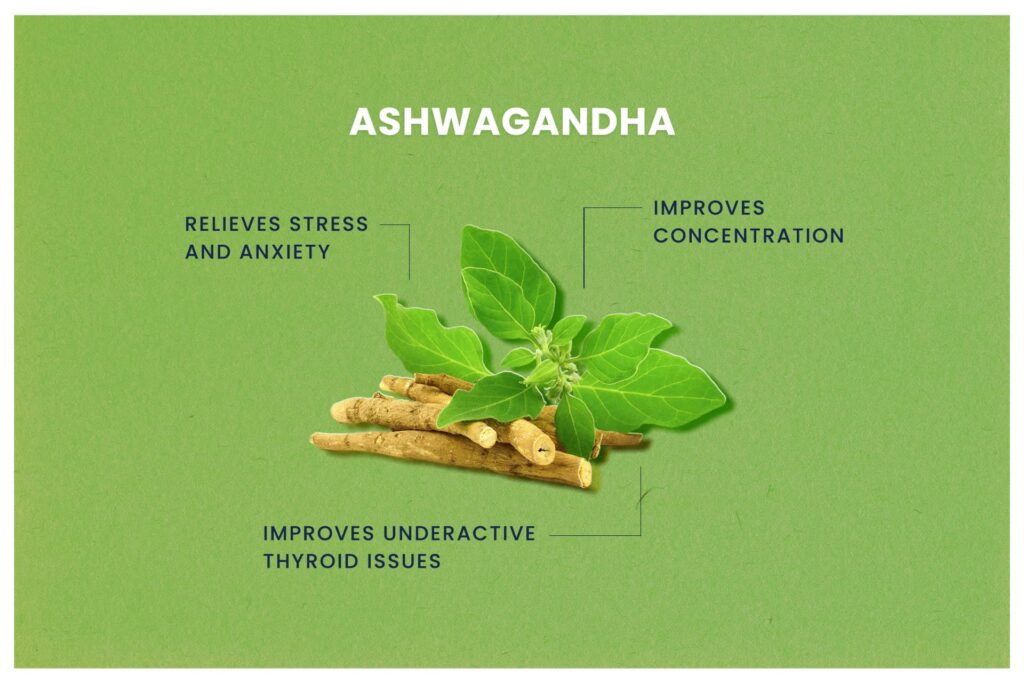

Ashwagandha benefits for stress & anxiety are not a trend — they are a 3,000-year-old promise that modern neuroscience is finally catching up to. But here is the uncomfortable truth: most people taking ashwagandha don’t actually understand why it works, and that lack of understanding is exactly why so many people quit before they ever see results.
This article is different. We will not just tell you that ashwagandha “reduces cortisol.” We will show you how that happens biologically, what it feels like week by week, why it outperforms many other adaptogens, and — most importantly — where it falls short so you don’t set yourself up for disappointment.
By the end, you’ll know more about ashwagandha benefits for stress & anxiety than most practitioners who prescribe it.

What Is Ashwagandha — And Why Does It Actually Work?
Ashwagandha (Withania somnifera) is a small evergreen shrub native to India, North Africa, and the Mediterranean. The name itself is Sanskrit — “ashwa” means horse, “gandha” means smell — and the traditional belief was that the herb would give you the strength and vitality of a horse. Ancient Ayurvedic texts classified it as a rasayana, a rejuvenating herb used to promote longevity, mental clarity, and reproductive health.
But here is what most articles skip: the reason ashwagandha benefits for stress & anxiety are so consistent across thousands of years is not mystical — it is molecular. The root contains a group of steroidal lactones called withanolides, particularly withaferin A and withanolide D. These compounds interact directly with the body’s stress-signalling architecture.
🔬 The Science in Plain English: Withanolides act as “signal blockers” in the HPA axis — the brain-body highway that decides how much cortisol to release. They don’t sedate you; they teach your nervous system to respond proportionally instead of panicking.
This is a critical distinction. Ashwagandha doesn’t numb you. It recalibrates you. People who notice the best results describe it not as feeling “sleepy” but as feeling “grounded” — able to face the same stressors without the same spike of anxiety. That is the hallmark of a true adaptogen.
The 5 Proven Ashwagandha Benefits for Stress & Anxiety (Deep Dive)
Here is where we go beyond the surface. Each benefit below includes what is actually happening in your body — not just a vague claim.
1. Cortisol: The Stress Hormone Ashwagandha Actually Targets
Cortisol is not your enemy — it is your alarm system. The problem is modern life keeps triggering false alarms: deadline emails, social media comparisons, poor sleep, skipped meals. Your body does not distinguish between a tiger chasing you and a passive-aggressive work message. Both spike cortisol.
Chronically elevated cortisol physically shrinks the prefrontal cortex (your decision-making brain), enlarges the amygdala (your fear brain), disrupts hormones, and suppresses immunity. A landmark 2012 double-blind trial published in the Indian Journal of Psychological Medicine found that participants taking 300 mg of KSM-66 ashwagandha extract daily showed a 27.9% reduction in serum cortisol after 60 days. This is clinically significant.
💡 Insider Angle: The cortisol-lowering effect is cumulative — the herb gradually “tunes” the feedback loop in the hypothalamus. People who quit after 2 weeks miss the most important window. Days 21–42 are when the real recalibration happens.
2. The GABA Connection: Why Ashwagandha Calms Anxiety Differently
Withanolides act as positive allosteric modulators of GABA-A receptors — they do not overwhelm the system; they make the receptor more sensitive to the GABA your body naturally produces. The effect is anxiolytic (anti-anxiety) without sedation. You feel calmer, not slower. This is why ashwagandha is increasingly studied as a non-pharmacological intervention for Generalized Anxiety Disorder (GAD).
3. Sleep Quality: The Underrated Ashwagandha Benefit Nobody Talks About
The stress-sleep-anxiety cycle is a closed loop. Stress disrupts sleep. Poor sleep amplifies anxiety. Heightened anxiety increases cortisol. Elevated cortisol disrupts sleep further. Ashwagandha interrupts this loop from multiple entry points.
A 2019 study published in PLOS ONE found that 300 mg ashwagandha extract taken twice daily significantly improved sleep onset latency and sleep efficiency. More importantly, it increased slow-wave sleep (SWS) — the deep, physically restorative phase most of us are chronically deficient in. Better SWS means better cortisol regulation the next day. Also read: Home Remedies for Better Sleep
4. Neuroinflammation: The Hidden Link Between Stress and Brain Fog
Chronic psychological stress triggers neuroinflammation — the brain’s equivalent of a low-grade fever that never quite goes away. It manifests as persistent brain fog, irritability, emotional blunting, and reduced motivation. Withaferin A has demonstrated inhibition of NF-κB — a master regulator of the inflammatory response in the brain. This makes ashwagandha benefits for stress & anxiety particularly valuable for high-stress professionals who experience cognitive burnout.
5. Long-Term Resilience: The Adaptive Advantage Most Supplements Can’t Offer
After consistent use over 8–12 weeks, users don’t just feel calmer — they report handling stress better even on days they forget to take it. That is adaptation. That is resilience. That is the true promise of adaptogens, and ashwagandha delivers on it more consistently than almost any other herb. Also see: Adaptogens & Moringa: Why They’re Going Viral in 2026
What to Realistically Expect: A Week-by-Week Ashwagandha Timeline
The number one reason people abandon ashwagandha benefits for stress & anxiety is unrealistic expectations. Here is an honest breakdown:
Nothing Dramatic (And That’s Good)
The herb is beginning to accumulate in your system. Some people notice slightly better sleep. Most notice nothing obvious. This is normal — adaptogens are not stimulants.
The Subtle Shift
You may notice reacting to stressors with slightly less intensity. Sleep may be noticeably deeper. Some people report reduced morning cortisol spikes — waking up less anxious.
The Real Window
Cortisol regulation is measurably improving. Most clinical studies measure outcomes at 30 and 60 days — this is why. Anxiety is noticeably reduced. Many users describe this as “feeling like themselves again.”
Systemic Adaptation
The HPA axis is genuinely recalibrated. Resilience under pressure increases. Some users report benefits persisting even when they take a break — a sign that adaptation has occurred, not just symptom suppression.
Cycling Off (Recommended)
A 2–4 week break every 3 months is recommended to prevent tolerance. Resume when stress levels increase again.
Myth vs. Fact: The Ashwagandha Misinformation Problem
The internet is full of half-truths about ashwagandha benefits for stress & anxiety. Here are the most persistent myths with the actual facts:
| ❌ Myth | ✅ Fact |
|---|---|
| It works like a sleeping pill | It promotes calmness and natural sleep without sedation. You will not feel drowsy during the day. |
| Higher dose = faster results | There is a therapeutic window. Excess dosing causes GI distress and paradoxical stimulation. More is not better. |
| It is addictive like prescription anxiolytics | Ashwagandha has no known dependency profile. No withdrawal symptoms have been observed in studies. |
| It works the same for everyone | Genetics, gut microbiome, and baseline cortisol levels all affect response. Results vary significantly. |
| You need to take it every day forever | Cycling is recommended. Periodic breaks maintain effectiveness and allow natural HPA axis function. |
| It can replace therapy or medication | It is a complementary tool, not a replacement for clinical treatment of anxiety disorders. |
| All ashwagandha products are the same | Standardized extracts like KSM-66 and Sensoril are far more consistent and studied than raw powder. |
Ashwagandha vs Other Natural Stress Remedies: An Honest Comparison
How do the ashwagandha benefits for stress & anxiety stack up against other natural options?
| Supplement | Cortisol ↓ | GABA | Sleep | Long-Term | Research |
|---|---|---|---|---|---|
| Ashwagandha | ✔ Strong | ✔ Yes | ✔ Yes | ✔ Best | ✔ Extensive |
| L-Theanine | ⚡ Mild | ✔ Yes | ⚡ Mild | ✘ Acute | ✔ Good |
| Valerian Root | ✘ Limited | ⚡ Partial | ✔ Strong | ✘ Acute | ⚡ Moderate |
| Rhodiola Rosea | ⚡ Moderate | ✘ Limited | ✘ No | ⚡ Moderate | ⚡ Moderate |
| Chamomile | ✘ Minimal | ⚡ Mild | ⚡ Mild | ✘ Acute | ⚡ Limited |
How to Use Ashwagandha for Stress & Anxiety: Dosage Guide
📊 Evidence-Based Dosage Reference

The Best Time to Take Ashwagandha
Evening or bedtime: Best for people with racing thoughts at night or difficulty falling asleep. The GABA-modulating effects pair well with the body’s natural wind-down.
Morning with breakfast: Best for people with morning cortisol spikes — that anxious, dreaded feeling before the day begins. Taking ashwagandha with a fat-containing meal improves withanolide absorption.
Split dose (morning + evening): Most effective for moderate-to-severe chronic anxiety. This is the approach used in most high-dose clinical trials and delivers the most consistent ashwagandha benefits for stress & anxiety.
Traditional Ashwagandha Milk
Mix 1 tsp ashwagandha powder + 1 cup warm whole milk + ½ tsp raw honey + a pinch of cardamom. Drink 30 minutes before bed. Fat in milk enhances withanolide absorption; tryptophan supports serotonin production. This is the original Ayurvedic method — and the science backs it.
The Psychological Angle: Why Your Mindset Matters Too
Here is something no supplement blog will tell you: ashwagandha benefits for stress & anxiety are amplified or diminished by your relationship with stress itself. Research on psychoneuroimmunology shows that people who believe stress is harmful have measurably worse HPA axis dysregulation than people who perceive stress as manageable.
Ashwagandha recalibrates the HPA axis — but if you continue telling yourself that everything is catastrophic, you are continuously re-triggering the same system the herb is trying to calm. The most effective approach combines ashwagandha with basic habits: consistent sleep times, 10 minutes of morning light, and naming your emotions (affect labelling has been shown to reduce amygdala activation in fMRI studies).
Who Should Be Cautious With Ashwagandha?
Pregnant women: Ashwagandha has traditionally been used as an emmenagogue (uterine stimulant) and may increase risk of miscarriage. Avoid during pregnancy.
People with autoimmune conditions: The herb’s immune-stimulating properties could theoretically exacerbate lupus, rheumatoid arthritis, or Hashimoto’s thyroiditis. The thyroid angle is nuanced — consult your doctor if you are on thyroid medication.
People on sedatives or benzodiazepines: The GABA-modulating effects may add to sedation. Not necessarily dangerous, but requires medical supervision.
People with liver sensitivities: There are isolated case reports of liver injury associated with high-dose, unregulated products. Stick to clinically studied doses and certified brands.
What to Know Before Buying: The Industry Angle
The global ashwagandha market is projected to exceed $1.5 billion by 2028. That growth has attracted a flood of low-quality products. Here is what actually matters:
KSM-66 and Sensoril are the two most rigorously studied extracts. KSM-66 is root-only (the traditional preparation, standardized to ≥5% withanolides). Sensoril uses root and leaf at higher potency. Both have multiple human clinical trials supporting their specific concentrations.
Raw powder labelled “1000mg” with no standardization is essentially a random dose — the withanolide content depends entirely on growing and processing conditions.
Look for third-party certification: NSF, USP, or Informed Sport on the label. The supplement industry is self-regulated, and heavy metal contamination is a real concern with unverified brands.
Frequently Asked Questions About Ashwagandha Benefits for Stress & Anxiety
Can ashwagandha replace anti-anxiety medication?
No. Ashwagandha benefits for stress & anxiety are evidence-backed but the herb is not approved as a medical treatment for clinical anxiety disorders. Never stop or reduce prescribed medication without consulting your doctor. Ashwagandha is a complementary tool, not a replacement for clinical care.
How long before I notice ashwagandha benefits for stress and anxiety?
Subtle improvements in sleep and morning anxiety typically appear within 1–2 weeks. Meaningful cortisol regulation begins around weeks 3–4. The most comprehensive benefits emerge after 8–12 weeks of consistent daily use. Patience is part of the protocol.
Does ashwagandha cause weight gain?
Directly, no. By reducing cortisol, it may indirectly reduce stress-related overeating and cortisol-driven abdominal fat. Some trials have shown modest reductions in body weight as a secondary outcome. It is not a weight loss supplement, but it will not cause gain.
Can I take ashwagandha with coffee?
Yes, but coffee spikes cortisol — which works against the ashwagandha benefits for stress & anxiety. If taking ashwagandha in the morning, wait 30–60 minutes after coffee. This is not a hard rule, but it optimises the hormonal environment for the herb.
Is KSM-66 better than regular ashwagandha powder?
For consistency and clinical reliability, yes. KSM-66 is standardized to ≥5% withanolides and tested in over 20 clinical trials. Raw powder is variable. For therapeutic use, a standardized extract is the more reliable choice.
Can ashwagandha help with panic attacks?
Ashwagandha is not suitable for acute panic relief — its effects are cumulative. However, consistent long-term use has been shown to reduce the frequency and intensity of anxiety episodes in people with generalised anxiety, potentially reducing the conditions that lead to panic attacks.
Can teenagers use ashwagandha for stress?
The clinical studies demonstrating ashwagandha benefits for stress & anxiety have been conducted primarily on adults. For teenagers experiencing significant stress or anxiety, professional guidance is recommended before starting any supplement.
What is the difference between ashwagandha and Brahmi for anxiety?
Ashwagandha primarily works on the HPA axis and cortisol regulation. Brahmi (Bacopa monnieri) works more directly on neurotransmitter systems and cognitive function. They complement each other well — ashwagandha for stress and resilience, Brahmi for memory and mental clarity. Many Ayurvedic formulations combine both.
Conclusion: The Calm You’re Looking For Already Exists in Your Biology
You are not broken because you are stressed. You have a highly sensitive nervous system operating in an environment it was never designed for — 24/7 connectivity, artificial light, ultra-processed food, and constant social comparison.
Ashwagandha benefits for stress & anxiety work because they meet your biology where it actually is. They do not override your system — they remind it how to self-regulate. This herb has been doing that for 3,000 years, and the growing body of clinical evidence confirms what the ancient practitioners understood intuitively.
Start consistently, at an appropriate dose, with realistic expectations. The calm is not something you have to manufacture. It is something you stop preventing.
Which Part Surprised You the Most?
Was it the GABA connection? The week-by-week timeline? The myth about drowsiness? Drop a comment below and share this with someone who has been struggling with stress. 🌿
📚 Sources & References
- Chandrasekhar K. et al. (2012). A prospective, randomized double-blind study of the effects of KSM-66 ashwagandha root extract on stress and anxiety. Indian Journal of Psychological Medicine, 34(3), 255–262. — View on PubMed
- Pratte M.A. et al. (2014). An alternative treatment for anxiety: A systematic review of human trial results for the Ayurvedic herb ashwagandha. Journal of Alternative and Complementary Medicine. — View on PubMed
- Langade D. et al. (2019). Efficacy and Safety of Ashwagandha Root Extract in Insomnia and Anxiety. PLOS ONE. — View on PubMed
- Salve J. et al. (2019). Adaptogenic and Anxiolytic Effects of Ashwagandha Root Extract in Healthy Adults. Cureus, 11(12). — View on PubMed
- Choudhary D. et al. (2017). Body Weight Management in Adults Under Chronic Stress Through Treatment With Ashwagandha Root Extract. Journal of Evidence-Based Complementary & Alternative Medicine. — View on PubMed
- National Center for Complementary and Integrative Health (NCCIH). Ashwagandha: What You Need To Know. — View on NCCIH
🌿 Related Articles
- Giloy Benefits for Immunity: Powerful Science-Backed Guide
- Adaptogens & Moringa: Powerful Benefits Going Viral in 2026
- Home Remedies for Better Sleep: What Actually Works
- Natural Ways to Boost Your Immune System
- Neem Benefits: Blood Purification Guide Backed by Science
- Amla Benefits: Immunity & Digestion Backed by Science
- Hair Fall After 30: Alarming Causes You Need to Know
📲 Follow HerbeeLife
Stay connected for daily Ayurvedic wisdom, natural remedies, and wellness tips:
- 📸 Instagram — @herbeelife
- 📌 Pinterest — herbeelifee
- 𝕏 Twitter / X — @herbeelifee
- 👍 Facebook — herbeelifee

