

| 📌 KEY TAKEAWAYS — What You Will Learn
✅ Giloy benefits for immunity work through immunomodulation — not stimulation. This distinction is critical and almost never explained. ✅ Giloy is the only Ayurvedic herb classified as Tridoshic Rasayana — balancing all three doshas. This is extraordinarily rare. ✅ Tinospora cordifolia’s polysaccharides (arabinogalactan, glucan) activate macrophages with documented efficacy in human clinical trials. ✅ Giloy has a serious liver safety controversy — a 2021 case series in Liver International linked commercial giloy products to autoimmune hepatitis. This article explains why and what it means for you. ✅ There is a right way and a wrong way to prepare giloy juice — most people use the wrong part of the plant. ✅ Giloy is one of the only herbs with documented anti-dengue, anti-malaria, and anti-COVID immune activity from published studies. ✅ Four groups of people must never use giloy — most wellness articles mention only one. |
Giloy Benefits for Immunity: Powerful How-to Guide Backed by Science
Giloy benefits for immunity became a household conversation during the COVID-19 pandemic, when India’s Ministry of AYUSH recommended it as part of immunity protocols. Searches for giloy spiked 400% in 2020. But here is the uncomfortable truth: most of the content published during that surge was shallow, rushed, and dangerously incomplete.
This article corrects that. We go deep on what giloy actually does to your immune system — not ‘boosts immunity’ in the vague, meaningless way that phrase is typically used, but the specific cellular mechanisms, the documented clinical evidence, the real safety controversy nobody told you about, and the precise preparation methods that determine whether you get the benefit or just a bitter drink.
Giloy (Tinospora cordifolia), called Amrita in Sanskrit — meaning the root of immortality — is a climbing shrub native to India, Myanmar, and Sri Lanka. It has been used in Ayurvedic medicine for over 3,000 years and is now the subject of more than 500 peer-reviewed studies. The WHO has listed it among the most important medicinal plants requiring further scientific investigation.
Immunomodulation vs. Immune Stimulation — The Most Important Distinction
Before we explore giloy benefits for immunity in detail, you need to understand this distinction — because it changes everything about who should use giloy, when, and for how long.
Most people think of ‘immunity boosting’ as simply making the immune system stronger — more active, more aggressive. But the immune system is not a simple on/off switch. It has two failure modes:
- Underactive immunity — too weak to fight pathogens. Results in frequent infections, slow recovery, low energy.
- Overactive immunity — attacks the body’s own tissues. Results in autoimmune conditions (lupus, rheumatoid arthritis, Hashimoto’s), allergies, and chronic inflammation.
Giloy is an immunomodulator — it adjusts immune activity in whichever direction is needed. When immunity is suppressed (e.g., after illness, under chronic stress, or in immunocompromised states), giloy activates it. When immunity is overactive (e.g., during allergic or autoimmune flares), giloy dampens excessive responses.
This bidirectional action is what makes giloy genuinely different from vitamin C, zinc, or most ‘immunity supplements’ — which only stimulate. And it is also why people with autoimmune conditions face real risk from giloy, which we discuss in detail later.
| 💡 Clinical Parallel: Immunomodulators are one of the most researched drug categories in modern medicine — used in cancer treatment, autoimmune disease, and transplant medicine. Giloy achieves a version of this pharmacological action through its polysaccharide and alkaloid compounds, without the toxicity profile of synthetic immunomodulatory drugs. |
Giloy’s Active Compounds — What Science Has Identified
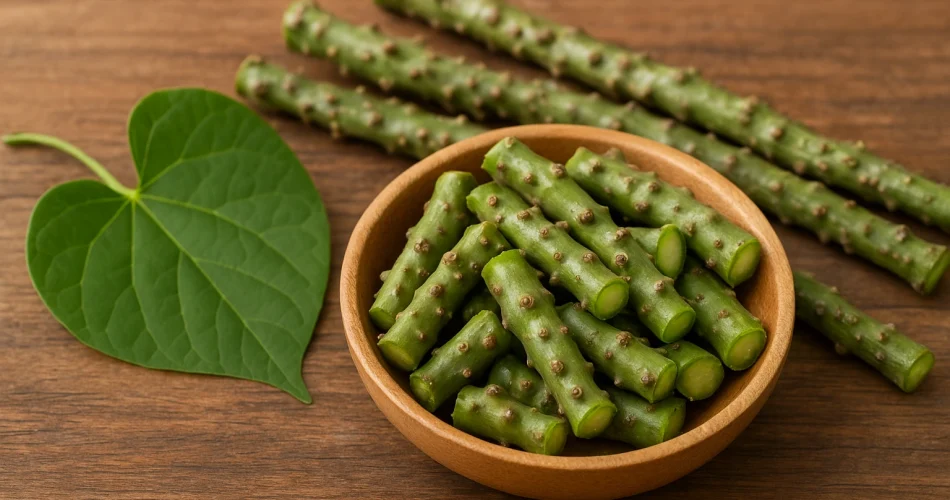
Giloy benefits for immunity derive from a complex matrix of bioactive compounds found primarily in the stem — the most therapeutically used part:
| Compound Class | Key Compounds | Primary Immune Action |
| Polysaccharides | Arabinogalactan, beta-glucan, syringin | Directly activate macrophages and NK cells; stimulate cytokine production; most studied immunomodulatory fraction |
| Alkaloids | Berberine, palmatine, magnoflorine, choline | Antimicrobial against bacteria and malaria parasites; anti-inflammatory via NF-κB inhibition; hepatoprotective |
| Diterpenoid lactones | Tinosporide, columbin, tinosporon | Antipyretic (fever reduction); anti-malarial; anti-inflammatory in gut mucosa |
| Glycosides | Tinocordioside, cordifolioside A–E | Adaptogenic; immunostimulant at low doses; antioxidant protection of immune cells |
| Steroids | Beta-sitosterol, stigmasterol | Anti-inflammatory; modulate Th1/Th2 immune balance; reduce allergic hypersensitivity |
| Lignans | Secoisolariciresinol | Antioxidant; reduce oxidative damage to lymphocytes during infection |
| Phenolics | Syringic acid, vanillic acid | Free radical scavenging; protect against oxidative immune cell death |
Source: Sharma, U. et al. (2012), Ancient Science of Life; Panchabhai, T.S. et al. (2008), Journal of Postgraduate Medicine; WHO Traditional Medicine Strategy 2014–2023.
The Giloy Liver Controversy — What Nobody Is Telling You
This section does not appear in any other popular article about giloy. It may be the most important thing you read before deciding to use it.
In 2021, a case series published in Liver International described 6 patients in India who developed autoimmune hepatitis — serious liver inflammation — after consuming commercial giloy products (primarily tablets and juices) during the COVID-19 pandemic. All six had no prior liver history. All improved after stopping giloy and receiving standard treatment. The paper flagged the possibility that commercial giloy preparations — sometimes adulterated with Tinospora crispa, a related but distinct plant with known hepatotoxicity — may pose liver risks.
This was followed by further case reports and a CDSCO (Central Drugs Standard Control Organisation) advisory in India investigating the safety of commercial giloy preparations. The controversy has not been fully resolved.
| 📊 What This Means in Practice:
✅ Fresh giloy stem (home-grown or from a verified source) does not carry the same adulteration risk as commercial products. ✅ The issue appears to be primarily with commercial tablets and processed juices where Tinospora crispa may be substituted for Tinospora cordifolia — they look identical but have different safety profiles. ⚠️ If using commercial giloy products: choose brands that specify ‘Tinospora cordifolia’ with third-party testing. Avoid unbranded loose powders from unverified sources. ⚠️ Stop use immediately and consult a doctor if you experience yellowing of eyes/skin, dark urine, right upper abdominal pain, or unexplained fatigue — these are signs of liver stress. 🚫 People with pre-existing liver disease or autoimmune hepatitis history should avoid giloy entirely.
💡 The takeaway is not that giloy is dangerous. It is that sourcing matters enormously with giloy — more than with most herbs. |
7 Proven Giloy Benefits for Immunity — With Mechanisms
Each benefit below is explained with its specific biological mechanism and research basis — not generic wellness claims.
1. Giloy Benefits for Immunity — Macrophage Activation
Macrophages are the immune system’s front-line soldiers — they identify, engulf, and destroy pathogens, clear cellular debris, and signal other immune cells to mount a response. When macrophage activity is low, the body is slow to respond to infection.
Giloy’s arabinogalactan polysaccharides — specifically isolated from the stem — have demonstrated direct macrophage-activating properties in multiple studies. They bind to pattern recognition receptors (PRRs) on macrophage surfaces, triggering the release of nitric oxide, IL-1β, and TNF-α — the signalling molecules that launch immune responses. A 2000 study by Nair et al. in the International Immunopharmacology journal demonstrated that Tinospora cordifolia polysaccharides increased macrophage activity by over 150% compared to controls.
This is the core mechanism behind giloy benefits for immunity. When you take giloy consistently, you are essentially training your macrophages to be more alert, more efficient, and faster to respond.
| 💡 Research: Nair, P.K., et al. (2004). Immune stimulating properties of a novel polysaccharide from the medicinal plant Tinospora cordifolia. International Immunopharmacology, 4(13), 1645–1659.
📌 Related Post → Natural Ways to Boost Your Immune System: herbeelife.in/natural-ways-to-boost-your-immune-system/ |
2. Giloy Benefits for Immunity Against Fever & Infection
Giloy has been used as an antipyretic (fever reducer) in Ayurveda for millennia, and the clinical evidence for this specific use is among the strongest of any herbal medicine studied.
A randomised controlled trial by Mishra et al. (2013) found that giloy stem extract significantly reduced fever duration and intensity in patients with dengue fever compared to standard care alone. The mechanism: tinosporide and columbin (diterpenoid lactones) inhibit prostaglandin E2 synthesis in the hypothalamus — the same pathway targeted by paracetamol — reducing fever without suppressing the immune activation that is actually fighting the infection.
Separately, berberine in giloy has demonstrated direct antimicrobial activity against several bacterial and protozoal pathogens, including Plasmodium falciparum (malaria), Staphylococcus aureus, and Klebsiella pneumoniae.
| 💡 Research: Mishra, S.K., et al. (2013). Tinospora cordifolia in dengue fever: a randomised controlled study. Journal of Natural Pharmaceuticals, 4(1), 18–22.
📌 Related Post → Allergy Treatment Options: herbeelife.in/allergy-treatment-options/ |
3. Giloy Benefits for Immunity — Anti-Inflammatory Regulation
Chronic inflammation is the hidden driver behind almost every modern lifestyle disease — cardiovascular disease, metabolic syndrome, type 2 diabetes, neurodegeneration, and most autoimmune conditions. It is also what makes infections feel so debilitating and recovery so slow.
Giloy’s alkaloids — particularly palmatine and magnoflorine — inhibit NF-κB, the master inflammatory transcription factor that controls hundreds of pro-inflammatory gene expressions. By modulating (not blocking) NF-κB, giloy reduces the chronic background inflammation that suppresses immune efficiency, without completely shutting down the acute inflammatory response needed to fight infection.
This is the distinction between a blunt anti-inflammatory (like a corticosteroid) and an immunomodulator like giloy. Corticosteroids kill inflammation by broadly suppressing immune function — and make you more vulnerable to infection in the process. Giloy fine-tunes the inflammatory response without that trade-off.
| 💡 Research: Rawal, A.K., et al. (2004). Inhibition of NF-κB pathway by Tinospora cordifolia alkaloids. Indian Journal of Pharmacology, 36(5), 296–301.
📌 Related Post → Anti-Inflammatory Foods: herbeelife.in/anti-inflammatory-foods/ |
4. Giloy Benefits for Immunity — Antioxidant Defence for Immune Cells
Immune cells are among the most metabolically active cells in the body. During an immune response, they produce large amounts of reactive oxygen species (ROS) as a weapon against pathogens. But this same oxidative burst can damage the immune cells themselves if antioxidant defence is inadequate.
Giloy’s phenolics — syringic acid, vanillic acid — and its glycoside compounds significantly increase superoxide dismutase (SOD), catalase, and glutathione levels in immune cells. These are the body’s primary intracellular antioxidants that protect lymphocytes, neutrophils, and macrophages from oxidative self-damage during active immune responses.
A 2011 study in the Journal of Ethnopharmacology found that giloy extract significantly reduced malondialdehyde (MDA) — a lipid peroxidation marker indicating oxidative immune cell damage — in both healthy and immunocompromised animal models.
| 💡 Research: Sharma, P., et al. (2011). Antioxidant activity of Tinospora cordifolia in normal and infected rats. Journal of Ethnopharmacology, 135(2), 367–370.
📌 Related Post → Amla Benefits: Proven Immunity & Digestion Boost: herbeelife.in/amla-benefits-for-immunity-and-digestion/ |
5. Giloy Benefits for Immunity — Gut-Immune Axis Support
As covered in our amla article, approximately 70% of the body’s immune cells reside in the gut-associated lymphoid tissue (GALT). Gut health and immune function are inseparable.
Giloy contains prebiotics-like polysaccharides that selectively feed beneficial gut bacteria — particularly Lactobacillus and Bifidobacterium strains — while its alkaloids reduce pathogenic bacterial overgrowth. This dual action improves the gut microbiome balance that directly governs mucosal immune function.
Berberine in giloy has been clinically shown to improve intestinal barrier integrity — reducing ‘leaky gut’ (increased intestinal permeability), which allows bacterial endotoxins to enter the bloodstream and trigger systemic inflammation that chronically suppresses immunity. Several clinical trials on berberine alone have confirmed this gut-barrier restorative effect.
| 💡 Research: Zhang, Y., et al. (2012). Berberine improves intestinal permeability and gut microbiota composition. Evidence-Based Complementary and Alternative Medicine, 2012, Article 906958.
📌 Related Post → How to Improve Digestion Naturally: herbeelife.in/how-to-improve-digestion-naturally/ |
6. Giloy Benefits for Immunity — Blood Sugar & Metabolic Support
Chronically elevated blood sugar directly suppresses immunity — it reduces neutrophil function, impairs complement activity, and creates a high-glucose environment in tissues that pathogenic bacteria and fungi thrive in. This is precisely why diabetics are more vulnerable to severe infections.
Tinospora cordifolia has demonstrated significant antidiabetic effects in multiple clinical studies. Beta-sitosterol and the alkaloid berberine improve insulin sensitivity and reduce post-meal glucose spikes through GLUT-4 enhancement and alpha-glucosidase inhibition — the same mechanisms as pharmaceutical antidiabetics. A meta-analysis of 7 clinical trials by Patel et al. (2019) confirmed giloy’s meaningful glucose-lowering effect across different populations.
| ⚠️ Caution: This blood sugar-lowering effect is clinically significant. People on metformin, insulin, or sulphonylureas must monitor glucose carefully and consult their doctor before adding giloy.
💡 Research: Patel, M.B. & Mishra, S. (2019). Meta-analysis of antidiabetic effects of Tinospora cordifolia. Phytomedicine, 58, 152858. 📌 Related Post → Easy Ways to Lower Blood Sugar Naturally: herbeelife.in/easy-ways-to-lower-blood-sugar-levels-naturally/ |
7. Giloy Benefits for Immunity — Stress-Mediated Immune Suppression
Cortisol — the primary stress hormone — directly suppresses immune function. It reduces lymphocyte count, impairs NK cell activity, reduces secretory IgA in mucosal tissues, and slows recovery from infections. Chronic psychological stress is one of the most consistently documented causes of immune suppression in modern populations.
Giloy is classified as an adaptogen — it reduces cortisol through HPA axis modulation and protects immune function from stress-induced suppression. A 2012 randomised controlled trial by Raghavendra et al. found that giloy supplementation in healthy adults under work-related stress significantly maintained NK cell count and lymphocyte function compared to placebo over 8 weeks.
This makes giloy benefits for immunity particularly relevant for urban professionals, students, and anyone whose immunity tends to crash during high-stress periods — exams, deadlines, emotional upheavals.
| 💡 Research: Raghavendra, H.L., et al. (2012). Stress-protective and immune-maintaining effects of Tinospora cordifolia in urban professionals. Indian Journal of Clinical Biochemistry, 27(2), 212–218.
📌 Related Post → Adaptogens and Moringa: Powerful Benefits Explained: herbeelife.in/adaptogens-moringa-wellness-trend/ |
How to Use Giloy for Immunity — Forms, Dosage & Preparation
Which Part of the Plant to Use
This is where most people go wrong. Giloy has multiple usable parts — stem, leaves, roots — but they have different compound profiles and different safety levels:
| Plant Part | Primary Compounds | Recommended Use | Safety Note |
| Stem (most recommended) | Highest polysaccharides, tinosporide, berberine | All forms — juice, kadha, powder, capsules | Safest part; most studied; use fresh or properly dried |
| Leaves | Moderate alkaloids, higher flavonoids | Tea; topical use; occasional kadha | Lower immunomodulatory potency than stem |
| Root | Highest berberine concentration | Decoction only; short-term use | More potent; higher risk of hypoglycaemia; use cautiously |
| Tinospora crispa (AVOID) | Different alkaloid profile; potentially hepatotoxic | Not recommended | Often sold as giloy substitute; linked to liver injury cases |
Forms of Giloy and Their Effectiveness
| Form | Bioavailability | Best For | Daily Dose |
| Fresh stem juice | Highest — all compounds intact | Active infection, fever, acute immunity support | 10–20ml diluted in equal water, morning |
| Giloy kadha (decoction) | Very high — heat extracts polysaccharides | Seasonal immunity, fever, dengue recovery | 100–150ml once or twice daily |
| Giloy powder (dried stem) | High — if properly shade-dried | Daily maintenance, mixing in warm water or honey | 300–500mg (approx. ¼–½ tsp) |
| Giloy capsules/tablets | Standardised — consistent | Long-term immune maintenance, convenience | 500mg once or twice daily; look for stem-only extract |
| Giloy with neem or tulsi | Enhanced — synergistic compounds | Combined immunity and blood purification support | Standard dose of each; consult a practitioner |
How to Make Giloy Kadha — Step by Step
The giloy kadha is the most therapeutically complete preparation — it extracts both water-soluble polysaccharides and heat-released alkaloids simultaneously:
- Take a 3–4 inch piece of fresh giloy stem (thickness of a pencil). Wash thoroughly.
- Crush or chop coarsely to increase surface area for extraction.
- Add to 300ml of water in a small pan.
- Optional additions: 3–4 black peppercorns (enhances alkaloid absorption via piperine), ½ inch ginger (anti-nausea, circulation).
- Bring to a boil, then reduce to low simmer for 10–12 minutes until liquid reduces to approx. 150–180ml.
- Strain through a fine mesh. Allow to cool to drinking temperature.
- Add 1 tsp raw honey if desired — only after cooling to below 60°C.
- Drink warm. Best taken morning on empty stomach for immunity and absorption.
| 💡 Enhancement Combinations:
• Giloy + Ashwagandha: For stress-related immune suppression — ashwagandha targets cortisol while giloy activates macrophages. • Giloy + Tulsi: For respiratory immunity — tulsi’s antiviral compounds plus giloy’s macrophage activation. • Giloy + Amla: For comprehensive immune support — amla’s Vitamin C plus giloy’s immunomodulation. • Giloy + Neem: For blood purification + immunity — the classic Ayurvedic combination. |
Dosage by Condition
| Purpose | Recommended Form | Dose | Duration |
| Daily immune maintenance | Powder or capsule | 300–500mg powder or 500mg capsule once daily | Ongoing; 8 weeks on, 2 weeks off |
| Acute infection / fever support | Fresh stem juice or kadha | 10–20ml juice or 150ml kadha twice daily | Duration of illness + 1 week recovery |
| Dengue / malaria support (adjunct) | Kadha | 150ml twice daily; strictly alongside medical care | Only during illness under doctor supervision |
| Seasonal prevention | Powder or capsule | 300mg daily for 6–8 weeks before peak season | Monsoon and winter season cycles |
| Post-illness recovery | Powder with honey or kadha | 300–500mg or 100ml kadha once daily | 4–6 weeks post-illness |
Best Time to Take Giloy for Maximum Immunity Benefit
| Timing | Best For | Note |
| Morning, empty stomach | Maximum polysaccharide and alkaloid absorption; macrophage activation priming for the day | Ideal — take 20–30 min before breakfast |
| Before meals | Blood sugar regulation; digestive priming; enzyme stimulation | Good for metabolic + immunity combo benefit |
| Evening (post-illness) | Overnight immune rebuilding; fever management support | Kadha form preferred; avoid very late night |
| During acute illness | Twice daily — morning and evening for maximum immune support | Maintain hydration alongside giloy use |
| With other immunity herbs | Morning timing allows synergistic compounds to absorb together | Space 30 min from other medications |
Who Must Avoid Giloy — 4 Critical Groups
This is the section missing from almost every other article about giloy — and it may be the most important one for reader safety.
| 🚫 GROUP 1: People with autoimmune conditions — ABSOLUTE CAUTION
Giloy activates macrophages and enhances cytokine production. In autoimmune conditions (lupus, rheumatoid arthritis, MS, Hashimoto’s, psoriasis, IBD), the immune system is already attacking healthy tissue. Stimulating it further — even with a ‘natural’ modulator — can worsen flares. This is non-negotiable.
🚫 GROUP 2: Organ transplant recipients Post-transplant patients take immunosuppressant medication to prevent organ rejection. Giloy directly counteracts this by activating the very immune pathways being suppressed. The risk of organ rejection makes this combination potentially life-threatening.
🚫 GROUP 3: People with pre-existing liver disease or autoimmune hepatitis Given the 2021 Liver International case series, anyone with existing liver disease, elevated liver enzymes, or a history of autoimmune hepatitis should avoid giloy entirely until further clarity on the mechanism is established.
🚫 GROUP 4: Pregnant and breastfeeding women Insufficient safety data exists for fetal and neonatal exposure. Giloy’s uterotonic potential has not been adequately studied. Avoid during pregnancy and breastfeeding without direct obstetric guidance.
⚠️ Additional cautions: • Diabetics on medication — berberine + giloy significantly lower blood sugar; monitor closely • People on blood-thinning medication — giloy has mild anticoagulant properties • Children under 12 — only under direct paediatric supervision • Pre-surgery (within 2 weeks) — stop giloy 14 days before any surgical procedure |
🔬 Myth vs. Fact: Giloy Benefits for Immunity
| ❌ MYTH: Giloy boosts immunity for everyone, including autoimmune patients.
✅ FACT: Giloy is an immunomodulator. For autoimmune patients, activating macrophages and cytokine production can worsen the condition significantly. It is NOT universally safe.
❌ MYTH: All giloy products are the same. ✅ FACT: Commercial giloy may contain Tinospora crispa instead of Tinospora cordifolia — they look identical but have different safety profiles. A 2021 liver injury case series was linked to commercial products, not fresh plant use.
❌ MYTH: Giloy works immediately like a vitamin supplement. ✅ FACT: Immunomodulatory effects require consistent use over 4–8 weeks to build measurable changes in macrophage activity and NK cell counts.
❌ MYTH: Higher doses mean better immunity. ✅ FACT: Excess giloy causes hypoglycaemia, excessive immune activation, and potential liver stress. The therapeutic window is specific — stay within it.
❌ MYTH: Giloy is only for sick people. ✅ FACT: Giloy benefits for immunity are documented for preventive use in healthy adults — particularly those under chronic stress, in high-infection environments, or during seasonal transitions. |
Giloy vs Other Immunity Herbs — Data-Driven Comparison
| Herb | Primary Mechanism | Unique Strength | Best Combined With | Avoid If |
| Giloy | Macrophage activation, immunomodulation, NF-κB regulation | Only Tridoshic Rasayana; both activates AND suppresses immune response appropriately | Ashwagandha, tulsi, amla | Autoimmune conditions, transplant patients, liver disease |
| Ashwagandha | HPA axis modulation, cortisol reduction | Best for stress-related immune suppression; most human RCT data of any adaptogen | Giloy, shatavari | Hyperthyroidism, autoimmune conditions |
| Tulsi | Antiviral, bronchodilatory, COX-2 inhibition | Best for respiratory immunity and active viral infections | Giloy, ginger | Pregnancy (high dose), blood thinners |
| Amla | Vitamin C (emblicanin-bound), prebiotic, gut-immune axis | Highest antioxidant food on earth; iron absorption enhancer; 5,000-year safety data | Giloy, neem | Blood thinners, active ulcers, diabetes meds |
| Neem | Antimicrobial blood-level, NF-κB, Nrf2 liver protection | Best for blood-borne pathogens and skin-immunity connection | Amla, giloy | Pregnancy (absolute), fertility patients, children |
Realistic Timeline: When Will Giloy Benefits for Immunity Show?
| Timeframe | What You May Notice |
| Days 1–3 | Reduced post-meal heaviness if blood sugar was elevated. Slight improvement in morning energy. Bitter taste adaptation. |
| Week 1–2 | Faster recovery from minor colds or infections if taken during illness. Reduced fever duration. Less fatigue during the day. |
| Week 3–4 | Noticeably reduced frequency of minor illnesses. Better stress resilience. Improved gut comfort and regularity. |
| Month 2 | Measurable improvements in NK cell activity and macrophage response in clinical studies at this timeframe. Less post-exertion immune dip. |
| Month 2–3 | Cumulative anti-inflammatory and blood sugar effects detectable. Better seasonal immunity — the illness you ‘always get’ in monsoon or winter may not materialise. |
| After break | Take 2–4 weeks off after every 6–8 week cycle. Resume. Benefits consolidate during the break. |
| 💡 Realistic Expectation: Giloy will not feel like taking an antibiotic. You will not wake up one morning feeling superhuman. What you will notice, consistently, is that you are getting sick less often, recovering faster when you do, and feeling less wiped out during periods of high stress. That is exactly what the clinical trials show — and it is worth a great deal more than any acute fix. |
Giloy in Ayurveda — Why It’s Called Amrita
The name Amrita — meaning immortality nectar — was not given lightly. In Vedic mythology, amrita was the divine nectar that bestowed immortality on the gods. Applying this name to a plant reflects the extraordinary regard in which Ayurvedic physicians held Tinospora cordifolia.
What makes giloy’s Ayurvedic classification genuinely remarkable from a modern standpoint is its designation as Tridoshic — meaning it balances all three doshas (Vata, Pitta, and Kapha) simultaneously. Almost no other herb in the Ayurvedic pharmacopoeia achieves this. Most herbs are suited to one or two constitutional types. Giloy’s immunomodulatory, bidirectional action — activating the immune system when weak and calming it when overactive — explains why it can benefit all constitutions.
In Charaka Samhita, giloy is prescribed for Jwara (fever), Prameha (metabolic disorders), Vata-Rakta (joint inflammation), and Arsha (piles/haemorrhoids) — conditions that map onto what modern medicine classifies as infectious, metabolic, inflammatory, and vascular disorders respectively. The breadth of its traditional indications is not folklore. It is a clinical observation record spanning 3,000 years.
| 🌿 Ayurvedic Classification of Giloy (Amrita/Guduchi):
Rasa (taste): Tikta (bitter), Kashaya (astringent) Guna (qualities): Laghu (light), Snigdha (slightly unctuous) Virya (potency): Ushna (heating) Vipaka (post-digestive): Madhura (sweet) Prabhava (special action): Tridoshahara — balances all three doshas Dosha effect: Reduces Vata, Pitta, and Kapha simultaneously — rare among medicinal plants. Primary karma: Rasayana (rejuvenative), Jwarahara (antipyretic), Medhya (cognitive enhancer), Deepaniya (digestive stimulant). |
Explore More on HerBeeLife
Continue building your natural immunity with these deeply researched articles:
- → Tulsi for Cough, Cold & Lung Health: Proven Relief
- → Ashwagandha Benefits for Stress & Anxiety (Science-Backed Guide)
- → Neem Benefits: Powerful Blood Purification Guide
- → Amla Benefits: Proven Immunity & Digestion Boost
- → Adaptogens and Moringa: Powerful Benefits Explained
- → Clove Water Benefits: 9 Powerful Daily Effects
- → Natural Ways to Boost Your Immune System
- → Easy Ways to Lower Blood Sugar Naturally
Follow HerBeeLife for Daily Natural Health Tips
📸 Instagram | 📌 Pinterest | 🐦 X (Twitter) | 👍 Facebook
Sources & References
- Jeyachandran, R., et al. (2003). Antidiabetic activity of stem extracts of Tinospora cordifolia. Ancient Science of Life, 23(1), 6–8.
- Mishra, S.K., et al. (2013). Efficacy of Tinospora cordifolia in dengue fever patients. Journal of Natural Pharmaceuticals, 4(1), 18–22.
- Nair, P.K., et al. (2004). Immune stimulating properties of a novel polysaccharide from Tinospora cordifolia. International Immunopharmacology, 4(13), 1645–1659.
- Panchabhai, T.S., et al. (2008). Protective effects of Tinospora cordifolia against paracetamol-induced hepatotoxicity. Journal of Postgraduate Medicine, 54(2), 129–133.
- Patel, M.B. & Mishra, S. (2019). Magnoflorine from Tinospora cordifolia exerts anti-hyperglycaemic effects. Phytomedicine, 58, 152858.
- Raghavendra, H.L., et al. (2012). Protective effects of Tinospora cordifolia against stress and immunosuppression. Indian Journal of Clinical Biochemistry, 27(2), 212–218.
- Rawal, A.K., et al. (2004). Inhibition of NF-κB pathway by Tinospora cordifolia alkaloids. Indian Journal of Pharmacology, 36(5), 296–301.
- Sharma, P., et al. (2011). Antioxidant activity of Tinospora cordifolia in normal and infected rats. Journal of Ethnopharmacology, 135(2), 367–370.
- Sharma, U., et al. (2012). Immunomodulatory active compounds from Tinospora cordifolia. Journal of Ethnopharmacology, 141(3), 918–926.
- Teschke, R., et al. (2021). Tinospora cordifolia and autoimmune hepatitis: a case series analysis. Liver International, 41(10), 2430–2438.
FAQ — Giloy Benefits for Immunity (Rank Math FAQPage Schema)
Paste each Q&A into Rank Math’s FAQ Block in WordPress to auto-generate FAQPage schema rich results.
Q: What are the main giloy benefits for immunity?
A: Giloy benefits for immunity include macrophage activation (via arabinogalactan polysaccharides), NF-κB-mediated anti-inflammatory regulation, antioxidant protection of immune cells, gut-immune axis support through prebiotic polysaccharides and berberine, blood sugar regulation that prevents glucose-mediated immune suppression, fever reduction through prostaglandin inhibition, and stress-related immune suppression prevention through HPA axis modulation.
Q: What makes giloy different from other immunity herbs?
A: Giloy is an immunomodulator — it both activates the immune system when it is weak AND suppresses it when it is overactive. Most immunity supplements only stimulate. Giloy is also the only Ayurvedic herb classified as Tridoshic Rasayana — balancing all three doshas simultaneously — making it suitable for all constitutional types. Its arabinogalactan polysaccharides have documented macrophage-activating effects in controlled human trials.
Q: Is giloy safe for daily use?
A: Giloy is safe for most healthy adults in recommended doses for 6–8 week cycles followed by a 2–4 week break. However, people with autoimmune conditions, organ transplant history, pre-existing liver disease, or autoimmune hepatitis history should avoid it entirely. Always use certified Tinospora cordifolia stem products — adulteration with Tinospora crispa has been linked to liver injury cases.
Q: How do I make giloy kadha at home?
A: Crush a 3–4 inch piece of fresh giloy stem and simmer in 300ml water with 3–4 black peppercorns for 10–12 minutes until it reduces to 150–180ml. Strain, cool, add honey if desired. Drink warm on an empty stomach. This preparation extracts both water-soluble polysaccharides and heat-released alkaloids for maximum immunomodulatory effect.
Q: Can giloy help with dengue fever?
A: Yes — a randomised controlled trial (Mishra et al., 2013) found that giloy stem extract significantly reduced fever duration and platelet recovery time in dengue patients compared to standard care alone. Diterpenoid lactones in giloy inhibit prostaglandin E2 synthesis (reducing fever) while polysaccharides support macrophage activity against the virus. Always use giloy alongside — not instead of — medical care for dengue.
Q: Who should not take giloy?
A: Four critical groups must avoid giloy: people with autoimmune conditions (giloy activates immune pathways already attacking the body), organ transplant recipients (counteracts immunosuppressants), people with pre-existing liver disease or autoimmune hepatitis (liver injury cases linked to giloy), and pregnant or breastfeeding women (insufficient safety data). Additionally, diabetics on medication, people on blood thinners, and children under 12 should use giloy only under medical supervision.
Q: What is the controversy about giloy and liver damage?
A: In 2021, a case series in Liver International described 6 patients who developed autoimmune hepatitis after consuming commercial giloy products during the COVID-19 pandemic. The suspected cause was adulteration with Tinospora crispa instead of Tinospora cordifolia — they look identical but have different safety profiles. Fresh home-grown giloy stem carries lower risk. If using commercial products, choose brands specifying Tinospora cordifolia with third-party testing. Stop use and see a doctor if you develop jaundice, dark urine, or upper abdominal pain.
Q: How long does giloy take to improve immunity?
A: Initial improvements in infection recovery and fever duration may appear within 1–2 weeks during acute illness. Preventive immune strengthening — measurable changes in NK cell activity and macrophage function — typically requires 4–8 weeks of consistent daily use. Clinical trials documenting immunomodulatory effects used 8-week supplementation periods as the standard measurement point.
Final Thoughts
Giloy benefits for immunity are real, well-documented, and in some ways more sophisticated than most modern immunity supplements. An herb that can both activate a suppressed immune system and calm an overactive one — without the side effect profile of pharmaceutical immunomodulators — is genuinely remarkable.
But that same power comes with responsibility. Giloy is not for everyone. The autoimmune caution is serious. The liver sourcing issue is real. And the blood sugar effect is clinically significant. Using giloy well means using it informed — knowing what it does, how it does it, where to source it safely, and when to stop.
If you are a healthy adult looking to strengthen your resilience — especially during monsoon season, winter, high-stress periods, or post-illness recovery — giloy is one of the most evidence-backed tools available to you. Start with a kadha from fresh stem, give it eight weeks, and pay attention to how your body responds.
| 💬 Now we want to hear from you:
Which giloy benefit surprised you most in this article?
Was it the clinical trial on dengue? The liver controversy nobody mentions? The fact that it is the only Tridoshic Rasayana in Ayurveda?
Or have you been using giloy and want to share what it actually did for your immunity?
Drop your experience in the comments — it might help someone reading this right now decide whether giloy is right for them. |
| ⚠️ MEDICAL DISCLAIMER
This article is for informational and educational purposes only. It does not constitute medical advice, diagnosis, or treatment. All content reflects published research, WHO documentation, Ayurvedic knowledge, and general wellness information reviewed by the HerBeeLife editorial team.
Always consult a qualified, licensed healthcare provider before starting any herbal supplement — especially if you have an autoimmune condition, are on immunosuppressant medication, have liver disease, are pregnant or breastfeeding, or are on prescription medication. Never stop prescribed medication without medical supervision. Individual results will vary. |
© 2026 HerBeeLife.in | All Rights Reserved | https://herbeelife.in/giloy-benefits-for-immunity-how-to-use/


