


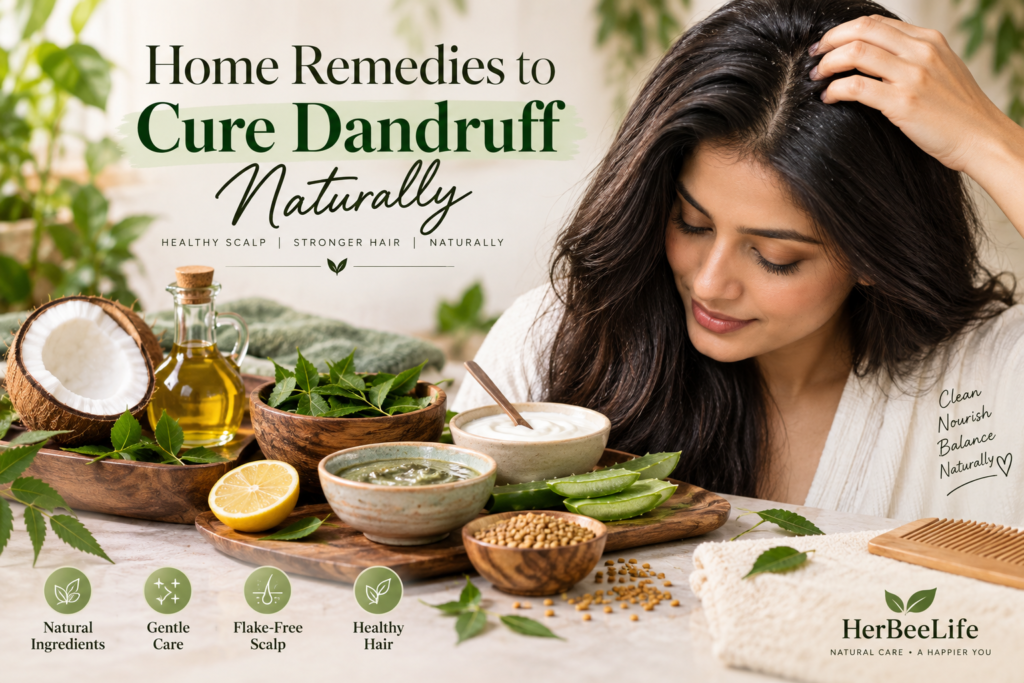
Before you reach for another anti-dandruff shampoo: not all flakes are the same, and treating dry flaking like it's oily flaking (or vice versa) is why so many remedies quietly fail. This guide starts with figuring out what kind of dandruff you're actually dealing with, then matches it to remedies — kitchen-based and Ayurvedic home remedies alike — that are built for that specific cause.
Dandruff isn't one condition wearing different disguises — it's usually one of three distinct triggers, and the fix changes depending on which one you're facing. Here's a quick way to tell them apart.
Dry & Flaky
Small, white, powdery flakes. Scalp feels tight, often worse in winter or with over-washing.
Oily & Clumpy
Larger, yellowish flakes that stick to hair. Scalp feels greasy within a day of washing.
Fungal / Itchy
Persistent itching, redness, and flaking that doesn't fully clear with regular shampoo — often seborrheic dermatitis.
"Washing your hair and scalp with a regular shampoo and water is what actually removes the dead skin cells, oil, and microorganisms that build up and lead to dandruff in the first place."
— Dr. Paradi Mirmirani, Board-Certified Dermatologist, quoted by the American Academy of DermatologyMatch the Remedy to the Cause
This is where most dandruff routines go wrong — using a stripping, oil-fighting ingredient on an already-dry scalp, or a heavy moisturizing oil on a scalp that's already overproducing sebum.
| Dandruff Type | Best-Suited Ingredients | Avoid |
|---|---|---|
| Dry & Flaky | Coconut oil, aloe vera, oatmeal, yogurt | Frequent hot-water washing, harsh clarifying shampoos |
| Oily & Clumpy | Apple cider vinegar, lemon, multani mitti, neem | Heavy overnight oiling, rich conditioners on the scalp |
| Fungal / Itchy | Tea tree oil, neem, zinc-based shampoo, garlic | Scratching, skipping medicated shampoo when advised |
Remedies Worth Trying, By Type
Neem & Tea Tree Oil Massage
Both carry natural antifungal and antibacterial compounds that target Malassezia, the yeast most commonly linked to dandruff and scalp itching.
Apple Cider Vinegar Rinse
Its mild acidity helps rebalance scalp pH and can loosen oily buildup — dilute generously (1 part ACV to 3 parts water) before use to avoid irritation.
Pure Tea Tree Essential Oil, Diluted
A few drops mixed into your regular shampoo or a carrier oil brings targeted antifungal action to stubborn, itchy patches without needing a full product switch.
Aloe Vera Gel
Its enzymes and mild anti-inflammatory compounds calm an irritated, tight-feeling scalp, making it especially useful for the dry-flaky type.
Fenugreek (Methi) Paste
Soaked and ground into a paste, fenugreek's antifungal and anti-inflammatory properties help calm scalp irritation while gently conditioning strands.
A Gentle, pH-Balanced Shampoo
Regular shampoos can be too alkaline for a compromised scalp barrier; a pH 5.5-balanced formula is milder on skin that's already inflamed or flaking.
A Clinically-Backed Anti-Dandruff Serum
For dandruff that keeps returning despite good habits, a leave-on serum built around proven actives like zinc pyrithione or ketoconazole can offer more consistent control between wash days.
Curious about herbs that support scalp health more broadly? Our guides on curry leaves for hair and Manjistha for blood purification pair naturally with a dandruff-control routine, and if shedding is part of your concern too, see our guide to reducing hair fall naturally.
A Weekly Rhythm That Works
Build This Into Your Week
- 2–3x a week: gentle, pH-balanced cleanse focused on the scalp, not just the lengths
- 1x a week: a targeted mask matched to your dandruff type (neem for fungal, aloe for dry, ACV for oily)
- Daily: avoid scratching — use a soft-bristle brush to relieve itching instead
- Ongoing: change pillowcases weekly and avoid sharing combs or towels to limit fungal spread
Common Mistakes That Keep Dandruff Coming Back
Over-washing strips the scalp barrier and can actually increase flaking as skin overcompensates with more oil. Under-washing lets dead skin cells and product buildup accumulate, feeding the yeast responsible for fungal dandruff. Switching shampoos every week also backfires — most active ingredients need two to three weeks of consistent use before you can fairly judge whether they're working.
🌿 More scalp-care rituals, Ayurvedic remedies, and real routines — follow along
Pinterest Instagram FacebookWhen to See a Dermatologist
Most dandruff responds well to consistent home care within three to four weeks. See a dermatologist if you notice redness, swelling, or oozing on the scalp, flaking that spreads to your eyebrows or the sides of your nose, or no improvement despite weeks of a matched routine — these can point to seborrheic dermatitis or a fungal infection that needs a prescription-strength approach.
Frequently Asked Questions
Is dandruff caused by a dry scalp or an oily one?
Both, depending on the person. Dry dandruff comes from a compromised, flaky skin barrier, while oily dandruff is usually linked to excess sebum feeding scalp yeast — treating the wrong type with the wrong remedy is the most common reason home care fails.
Can diet actually affect dandruff?
Yes, indirectly. Diets low in zinc, B vitamins, or healthy fats can weaken the scalp's skin barrier, making it more reactive to the yeast and irritants that trigger flaking.
How long should I try a home remedy before switching?
Give any single remedy or routine at least two to three weeks of consistent use. Switching too early is one of the biggest reasons people conclude "nothing works" when they simply didn't give it time.
Is dandruff contagious?
No. Dandruff itself doesn't spread between people, though sharing combs, towels, or pillowcases can spread the yeast that contributes to it in people already prone to flaking.
Can stress make dandruff worse?
Yes. Stress can affect immune function and oil production, both of which influence how much the scalp's yeast population flares up, making existing dandruff noticeably worse during high-stress periods.