


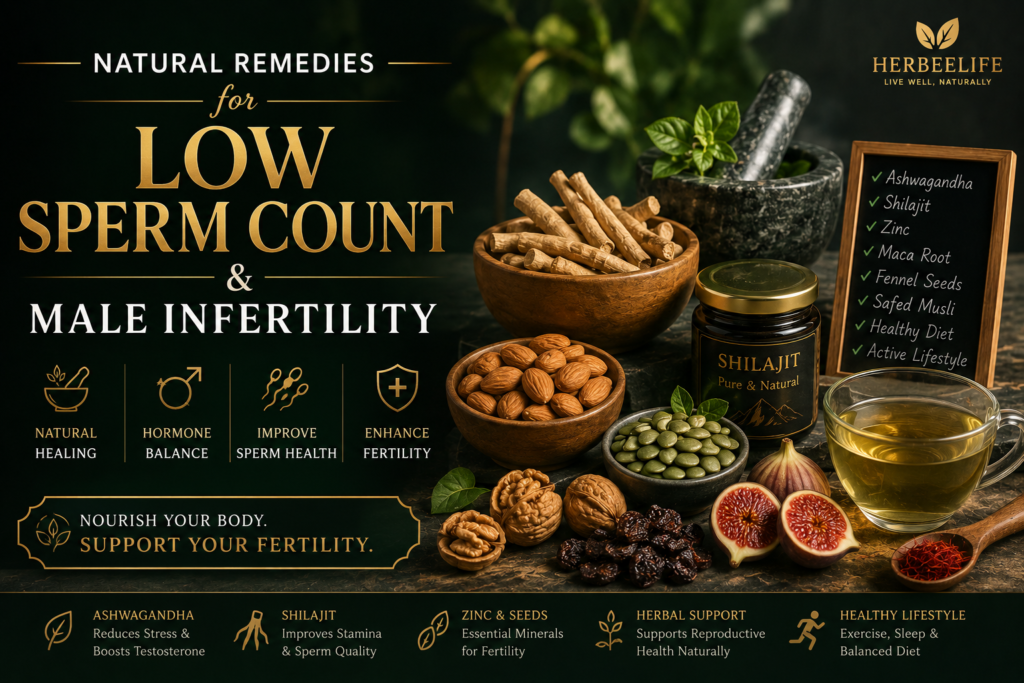
Natural Remedies for Low Sperm Count & Male Infertility
A calm, evidence-based guide to the diet, lifestyle, and Ayurvedic changes that genuinely support sperm health — for the journey toward parenthood.
Being told that sperm count or quality is part of why conception isn't happening can feel isolating — male fertility is talked about far less openly than it should be, even though it's a factor in roughly half of all couples struggling to conceive. The reassuring part is that sperm health is genuinely responsive to change: sperm regenerates roughly every 64-72 days, which means today's habits can meaningfully influence the sample your body produces just a couple of months from now.
This guide focuses on the natural approaches with real evidence behind them — the foods and nutrients most consistently linked to healthier sperm parameters, the everyday habits worth changing, and where a well-chosen supplement can genuinely help close a gap. Since stress and hormones play a real role here too, our guide to reducing cortisol naturally is a useful companion read.
What's inside this guide
Understanding Sperm Health
A standard semen analysis looks at three main things: count (how many sperm are present), motility (how well they move), and morphology (how normally they're shaped). All three matter for conception, and all three are influenced by overlapping factors — oxidative stress, heat exposure, nutrient levels, and hormonal balance chief among them. Since testosterone plays a direct role in sperm production, our guide on how hormones affect your health is a useful broader primer.
What Affects Sperm Count & Quality
- Oxidative stress — free radicals damage sperm DNA and reduce motility; this is the single most-studied mechanism behind fertility-supportive antioxidants.
- Heat exposure — frequent hot tubs, saunas, laptops on the lap, and tight underwear all raise scrotal temperature, which can measurably impair sperm production.
- Excess body weight — higher body fat is linked to lower testosterone and altered sperm parameters.
- Chronic stress — elevated cortisol disrupts the hormonal signalling that drives healthy sperm production.
- Smoking and excess alcohol — both are consistently linked to reduced sperm count, motility, and quality in research.
- Poor sleep — testosterone production is closely tied to deep sleep, and disrupted sleep patterns are linked to poorer semen parameters.
Diet & Nutrients That Support Fertility
1. Load up on antioxidants
Since oxidative stress is one of the biggest drivers of poor sperm quality, antioxidant-rich foods — berries, leafy greens, walnuts, and colourful vegetables — genuinely help counter the damage. See our full guide to anti-inflammatory foods for practical meal ideas.
2. Prioritise zinc and folate
Zinc is directly involved in sperm formation and testosterone production, while folate supports healthy DNA synthesis in developing sperm cells. Pumpkin seeds, chickpeas, leafy greens, and eggs are all accessible daily sources of both.
3. Choose healthy fats over processed ones
Diets higher in trans fats are consistently linked to lower sperm count in research, while omega-3 fatty acids support healthy sperm membrane structure and motility.
4. Manage your weight, gently
Since excess weight is linked to altered testosterone and sperm parameters, a sustainable approach to weight management can genuinely support fertility. Our guide to natural weight loss remedies covers an approach that won't backfire hormonally.
Lifestyle Changes That Genuinely Help
- Reduce scrotal heat exposure — avoid resting laptops directly on the lap, limit hot tub and sauna frequency, and choose looser-fitting underwear.
- Moderate, consistent exercise — regular movement supports healthy testosterone and circulation, though excessive endurance training without recovery can have the opposite effect.
- Limit alcohol and quit smoking — both show a dose-dependent negative relationship with sperm parameters, meaning even cutting back meaningfully helps.
- Stay well hydrated — semen is largely water-based, and adequate hydration supports healthy semen volume.
Sleep, Stress & Hormonal Balance
This is one of the most overlooked pieces of the fertility puzzle. Chronic stress elevates cortisol, which directly interferes with the hormonal signals that drive healthy testosterone and sperm production — and the stress of trying to conceive itself can unfortunately compound the problem.
- Protect 7-8 hours of consistent, quality sleep — see our guide on improving sleep naturally.
- Build a daily stress-management practice — our guide on the power of meditation is a simple, evidence-backed starting point.
- Yoga for stress relief combines movement with nervous-system regulation — genuinely useful during what can be an emotionally taxing time.
Ayurvedic Herbs for Male Fertility
Ashwagandha
One of the best-studied Ayurvedic herbs for male fertility — clinical trials have shown improvements in sperm count, motility, and testosterone levels with consistent use of a standardised extract. See our detailed Ashwagandha benefits guide for dosage and timing.
Gokshura (Tribulus Terrestris)
A traditional Ayurvedic herb long associated with male vitality, gokshura is often used alongside ashwagandha as part of a broader fertility-support routine.
Safed musli
Traditionally used in Ayurveda for stamina and reproductive health, typically taken as a standardised powder or capsule form as part of a consistent daily routine rather than a one-off remedy.
Premium Products Worth Considering
Diet and daily habits are your foundation, but a handful of well-chosen, evidence-backed products can genuinely support the process — especially useful during the 2-3 month window it takes for new sperm to develop.
🌿 HerBeeLife's Curated Fertility Support Edit
Higher-end picks chosen for genuine evidence, not just marketing promises.
At-Home Male Fertility Test Kit
Editor's Pick · Track Real DataA discreet, app-connected kit that gives a baseline sperm count and motility reading from home — genuinely useful for tracking whether your lifestyle changes are working over the following months, rather than waiting months for a clinic follow-up.
Check Latest Price →*Price varies by pack size and brand — verify on Amazon before purchase.
Acetyl-L-Carnitine (Premium, High-Potency)
Premium · Sperm MotilityL-Carnitine plays a direct role in the energy metabolism that powers sperm movement, and several clinical studies show measurable improvements in motility with consistent supplementation over 3 months.
Check Latest Price →*Price varies by pack size and brand — verify on Amazon before purchase.
Zinc & Folic Acid Fertility Complex
Premium · Sperm Count SupportThis specific pairing has been studied directly for male fertility, with research showing improvements in sperm count and reduced DNA damage when both nutrients are combined rather than taken separately.
Check Latest Price →*Price varies by pack size and brand — verify on Amazon before purchase.
Selenium + Vitamin E Antioxidant Complex
Premium · Sperm QualitySelenium is essential for normal sperm formation, and paired with vitamin E, this combination directly targets the oxidative stress that damages sperm DNA and impairs motility.
Check Latest Price →*Price varies by pack size and brand — verify on Amazon before purchase.
Tribulus Terrestris (Premium Standardised Extract)
Ayurvedic · Male VitalityLook for an extract standardised to a stated saponin percentage rather than plain powder — this is the traditional Ayurvedic "gokshura," long used to support male reproductive vitality.
Check Latest Price →*Price varies by pack size and brand — verify on Amazon before purchase.
Maca Root Extract (Premium Black Maca)
Premium · Traditional Fertility SupportBlack maca specifically has shown the most promising results among maca varieties in preliminary research on sperm count and quality — a traditional Peruvian root now widely studied for exactly this purpose.
Check Latest Price →*Price varies by pack size and brand — verify on Amazon before purchase.
Algae-Based Omega-3 DHA (Vegan, High-Potency)
Premium · Sperm Membrane HealthA plant-based, algae-derived DHA source — a cleaner alternative to fish oil for supporting the healthy membrane structure sperm cells need for normal shape and movement.
Check Latest Price →*Price varies by pack size and brand — verify on Amazon before purchase.
When to See a Doctor
Natural remedies work best as a foundation alongside, not instead of, medical care where it's needed. Please consult a doctor or fertility specialist if:
- You and your partner haven't conceived after 12 months of trying (or 6 months if your partner is over 35)
- A semen analysis has already shown significantly low count, motility, or abnormal morphology
- You notice testicular pain, swelling, or changes
- You have a history of undescended testicles, mumps, or previous groin surgery
- You're considering supplements alongside ongoing fertility treatment
Frequently Asked Questions
Can low sperm count be improved naturally?
For many men, especially where lifestyle factors like diet, weight, heat exposure, or stress are contributing, natural changes can meaningfully improve sperm parameters over 2-3 months, since that's roughly how long sperm takes to fully develop. For medical causes like hormonal disorders or structural issues, natural approaches work best alongside medical treatment.
How long does it take to see improvement in sperm count?
Because sperm takes about 64-72 days to fully develop, most natural interventions need at least 3 months of consistency before a repeat semen analysis would reflect meaningful change.
Does ashwagandha really help with male fertility?
Multiple clinical trials on standardised ashwagandha extract have shown improvements in sperm count, motility, and testosterone levels, making it one of the better-evidenced Ayurvedic options for this purpose.
What foods should be avoided for better sperm health?
Diets high in processed and trans fats, excess alcohol, and high sugar intake are all linked to poorer sperm parameters in research. Reducing these, rather than any single "superfood," tends to matter most.
Is it normal to feel stressed or isolated dealing with male infertility?
Yes, completely. Male fertility issues are discussed far less openly than female fertility concerns, which can make the experience feel isolating even though it affects a significant number of couples. Speaking with a doctor or counsellor alongside your partner can help alongside the physical changes covered in this guide.
Related Reads on HerBeeLife
Follow HerBeeLife for daily wellness rituals
Ayurvedic tips, natural remedies, and family-health inspiration — straight to your feed.
Affiliate Disclosure: This article contains Amazon affiliate links. HerBeeLife may earn a small commission on qualifying purchases at no extra cost to you — this helps us keep creating free wellness content.