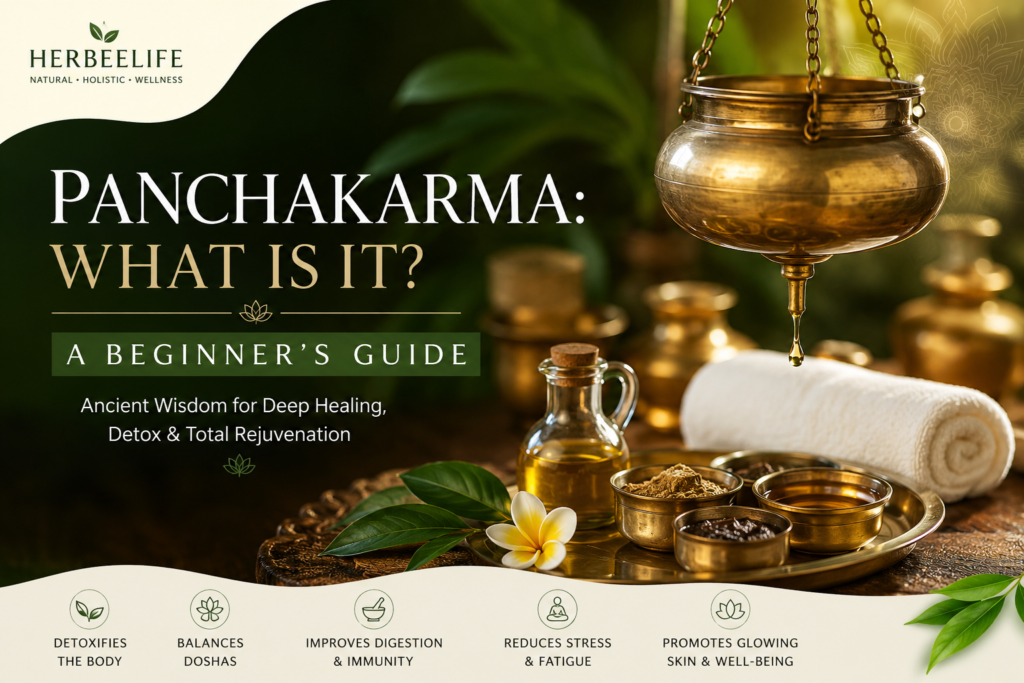

Panchakarma: A Complete Beginner's Guide to Ayurvedic Detox
What Panchakarma actually involves, the five therapies it's built on, and everything to know before trying it yourself.
If you've heard the word "Panchakarma" thrown around at wellness retreats or Ayurvedic clinics, it can sound intimidating — a mix of oils, herbs, and treatments with names that don't translate easily. But at its core, Panchakarma is simply Ayurveda's structured approach to deep detoxification and rejuvenation, built on principles thousands of years old.
This guide breaks down exactly what it is, how it works, and what a beginner should actually expect — no prior Ayurveda knowledge required.
The Three Phases of Panchakarma
Every Panchakarma program follows the same overall structure, regardless of which specific therapies are used.
Purvakarma
Preparation phase — oil massage and steam therapy to loosen toxins
Pradhanakarma
The main detox therapies themselves, tailored to your constitution
Paschatkarma
Post-treatment phase — diet and lifestyle guidance to rebuild strength
The Five Karmas of Panchakarma
"Panchakarma" literally translates to "five actions" — these are the five main therapies used during the main treatment phase.
Vamana (Therapeutic Emesis)
A controlled, medically supervised process used to clear excess Kapha, typically for respiratory or congestion-related concerns.
Virechana (Purgation Therapy)
A gentle, herb-based cleansing process aimed at balancing excess Pitta and supporting liver and digestive function.
Basti (Medicated Enema)
Considered one of the most important therapies for balancing Vata, using herbal oils or decoctions.
Nasya (Nasal Therapy)
Herbal oils administered through the nostrils, traditionally used for sinus, head, and neck-related concerns.
Raktamokshana (Blood Purification)
The least commonly used today, traditionally applied for specific skin and blood-related conditions under expert supervision.
Dosha connection: Which therapies you'd benefit from most depends heavily on your dosha constitution. Our guide on Ayurvedic anti-aging skin care covers the Vata-Pitta-Kapha framework in more detail if you're new to the concept.
Reported Benefits of Panchakarma
Deep relaxation & stress relief
Improved digestion
Better sleep quality
Clearer, more radiant skin
Sense of overall balance
Renewed energy levels
What to Expect as a Beginner
Natural Products to Bring Panchakarma Principles Home
A full clinical Panchakarma requires supervision, but you can borrow several of its principles into your own routine with these seven picks.
Triphala Herbal Detox Tea
A classical Ayurvedic blend traditionally used to support gentle digestive cleansing.
Check Price on AmazonDry Brushing Body Brush
Supports lymphatic circulation and exfoliation, echoing the herbal powder massage used in clinical Panchakarma.
Check Price on AmazonPure Sesame Oil for Self-Massage
The foundation of Purvakarma at home — a warm oil massage supports circulation and grounds the nervous system.
Check Price on AmazonCopper Tongue Scraper
A simple daily Ayurvedic practice believed to support digestion and remove overnight toxin buildup.
Check Price on AmazonAt-Home Ayurvedic Ritual Kit
A curated bundle of oils and herbal powders designed to bring several Panchakarma-inspired practices into one routine.
Check Price on AmazonManjistha Herbal Capsules
Traditionally used in Ayurveda to support blood purification and clear, healthy skin.
Check Price on AmazonPure Castor Oil
Used in small, guided amounts as a traditional gentle cleansing aid, echoing Virechana principles.
Check Price on AmazonWho Should Be Cautious
Consult a qualified practitioner and your doctor before starting if you are:
- Pregnant or breastfeeding
- Managing a chronic condition like heart disease, diabetes, or a compromised immune system
- Currently on medication that shouldn't be paused, since some therapies require dietary and medication adjustments
- Considering the more intensive therapies (Vamana, Basti) without professional supervision — these are not suited for DIY attempts
Gentle, at-home Ayurvedic practices are generally safe for most people, but full clinical Panchakarma should always be done under the guidance of a trained Ayurvedic doctor.
Continue Reading on HerBeeLife
Join the HerBeeLife Community
Follow us for daily Ayurvedic wisdom, wellness rituals, and natural remedies.
Frequently Asked Questions
What exactly is Panchakarma?
Panchakarma is a set of five traditional Ayurvedic detoxification therapies — Vamana, Virechana, Basti, Nasya, and Raktamokshana — designed to remove toxins and restore balance according to your individual dosha constitution.
Is Panchakarma really effective?
Many people report benefits like improved digestion, better sleep, and reduced stress after Panchakarma, though rigorous large-scale scientific research is still limited. It's best approached as a traditional wellness practice under professional guidance rather than a guaranteed medical cure.
How long does a Panchakarma treatment typically take?
Programs generally range from 7 to 21 days, depending on individual needs and which specific therapies are included, with longer programs typically recommended for more significant health concerns.
Can I do Panchakarma at home?
Gentle elements like oil self-massage (Abhyanga), dietary adjustments, and herbal teas can be practiced at home, but the core five therapies involve specific herbs and techniques that require supervision from a qualified Ayurvedic practitioner.
This article is for informational purposes only and is not a substitute for professional medical advice. Please consult a qualified Ayurvedic practitioner and your doctor before beginning any Panchakarma program.