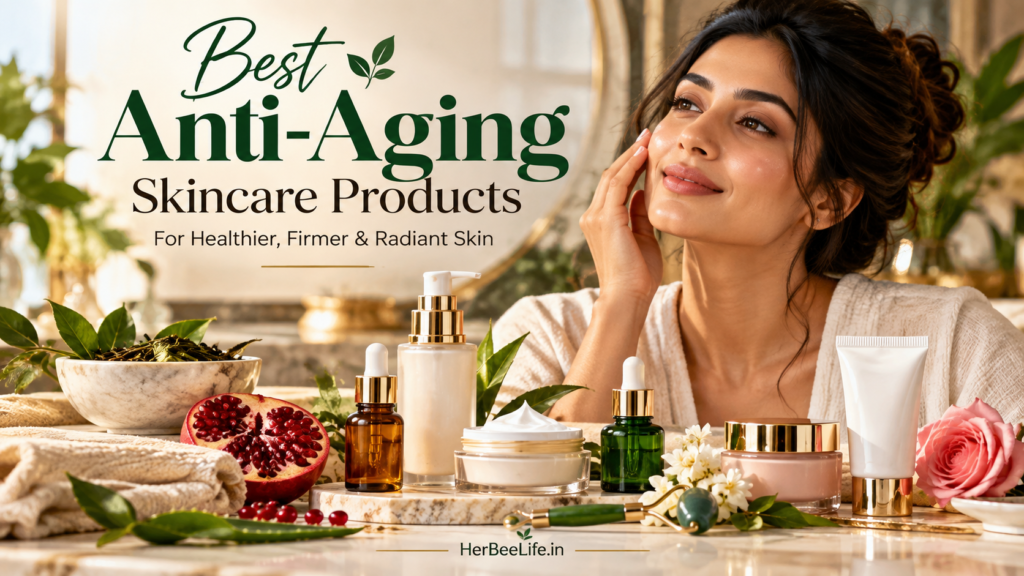

Anti-aging isn't about chasing youth — it's about protecting the collagen and elasticity your skin already has for as long as possible. The products that actually deliver on this are backed by real research, not just marketing language. This guide matches genuinely premium anti-aging products to specific concerns, alongside Ayurvedic home remedies that support the same goal from a different angle.
Not every anti-aging concern needs the same fix. Here's a quick way to match your priority to the right category of product.
Fine Lines & Wrinkles
Retinoids remain the most researched, most effective category for stimulating collagen and smoothing texture.
Loss of Firmness
Peptide-rich creams and neck-specific formulas target elasticity where skin thins fastest.
Dullness & Uneven Tone
Vitamin C and gentle acid exfoliants brighten and even out pigmentation over time.
Under-Eye Aging
Delicate eye-area skin needs dedicated formulas — regular face cream is often too heavy here.
Retinol remains a genuine blind spot for most people — it's a cornerstone ingredient for increasing cell turnover, smoothing texture, improving pigmentation, and stimulating collagen. It really is the gold standard in anti-aging.
— Dr. Dendy Engelman, Board-Certified Dermatologist, New York CitySeven Anti-Aging Products Genuinely Worth the Investment
Each of these earns its place through clinical backing or formulation quality — not hype.
For Serious, Research-Backed Retinization
Fine LinesA high-strength, encapsulated retinaldehyde formula that converts to retinoic acid faster than standard retinol, delivering visible smoothing with less irritation than many prescription-adjacent options.
Medik8 Crystal Retinal 6 →For an Indulgent, Peptide-Rich Daily Cream
FirmnessBuilt around a proprietary molecule designed to support the skin's own repair processes, this cream is a favorite among those wanting a genuinely luxurious daily ritual alongside visible firming benefits.
Dr. Barbara Sturm Anti-Aging Cream →For Brightening Without Irritation
DullnessA clean-formulated vitamin C oil that pairs squalane with brightening actives, offering antioxidant protection and glow without the stinging sensation some vitamin C formulas cause.
Biossance Squalane + Vitamin C Rose Oil →For a Truly Luxurious Eye Treatment
Under-Eye AgingA cult-status eye cream built on marine-derived caviar extract, designed to visibly lift and firm the delicate eye area — the kind of splurge product that genuinely earns its reputation.
La Prairie Skin Caviar Eye Lift Cream →For the Most Overlooked Aging Zone
Neck & DécolletageThinner, more fragile skin on the neck ages faster than the face but rarely gets dedicated care — this tightening formula is specifically built for that zone's unique needs.
StriVectin Tightening Neck Cream →For Weekly Resurfacing, Naturally
TextureA clean-beauty resurfacing mask that combines fruit enzymes and gentle acids to visibly refine texture and pores — a naturally-formulated alternative to harsher clinical peels.
Tata Harper Resurfacing Mask →For Supporting Collagen From Within
Internal SupportTopical care only goes so far — a daily collagen peptide supplement supports the skin's structural protein from the inside, complementing (not replacing) your topical routine.
Vital Proteins Collagen Peptides →Once these are in rotation, our Ayurvedic anti-aging skin care routine shows how to layer traditional herbs alongside this more clinical approach, and our daily skincare routine guide covers exactly where each of these steps fits into your morning and night sequence. For a gentler, more natural starting point, natural skin care products is worth a read too.
Key Ingredients, Explained Simply
Retinol / Retinoids
Vitamin A derivatives that speed cell turnover and stimulate new collagen production.
Peptides
Short amino acid chains that signal skin to behave younger and produce more structural protein.
Vitamin C
An antioxidant that brightens tone and helps defend against environmental, UV-driven damage.
Hyaluronic Acid
Draws and holds moisture, plumping fine lines caused by dehydration rather than true aging.
When to Start, By Decade
Prevention is everything here — daily sunscreen and a gentle antioxidant serum do more long-term good than any anti-aging cream will.
A good time to introduce retinol gradually, alongside continued sun protection and a solid moisturizer.
Layer in targeted treatments — eye cream, neck care, and possibly a dermatologist consult for stronger prescription options if over-the-counter care plateaus.
🌿 More skincare science, Ayurvedic wisdom, and honest product picks — follow along
Pinterest Instagram FacebookHow to Introduce Actives Without Irritation
Start any new retinoid or acid at 2-3 nights a week, not daily, and give your skin two to three weeks to adjust before increasing frequency. Always apply sunscreen the following morning without exception, since these ingredients increase sun sensitivity. And never introduce more than one strong active at a time — layering retinol, vitamin C, and exfoliating acids together is one of the fastest routes to a compromised, irritated barrier.
When to See a Dermatologist
Over-the-counter products handle a meaningful amount of early aging concern. If you're seeing deep, static wrinkles, significant volume loss, or skin that doesn't respond after several months of consistent care, a dermatologist can discuss prescription-strength retinoids or in-office treatments that go beyond what topical products alone can achieve.
Frequently Asked Questions
At what age should I start using anti-aging products?
Prevention-focused care like sunscreen and antioxidants is worth starting in your 20s. Retinol is typically introduced in the late 20s to early 30s, with more targeted treatments added as specific concerns appear.
Can natural remedies replace clinical anti-aging ingredients?
They can meaningfully support skin health and complement a routine, but ingredients like retinoids have significantly more clinical research behind them for reversing visible signs of aging than most natural alternatives currently do.
How long before anti-aging products show visible results?
Most people see improved texture within 4-6 weeks, while deeper changes like reduced fine lines typically take 3-6 months of consistent use to become clearly visible.
Is it necessary to use both a retinol and a vitamin C product?
Not necessarily at the same time, but many people find using vitamin C in the morning and retinol at night addresses both prevention and repair without overlapping or irritating the skin.
Do anti-aging supplements like collagen peptides actually work?
Several studies suggest oral collagen peptides can support skin elasticity and hydration over consistent, long-term use, though they work best as a complement to topical care rather than a replacement for it.