
Manjistha Benefits for Skin and Blood Purification
One of Ayurveda's classic "blood purifying" herbs, prized just as much for skin clarity — here's what it actually does and how to use it.
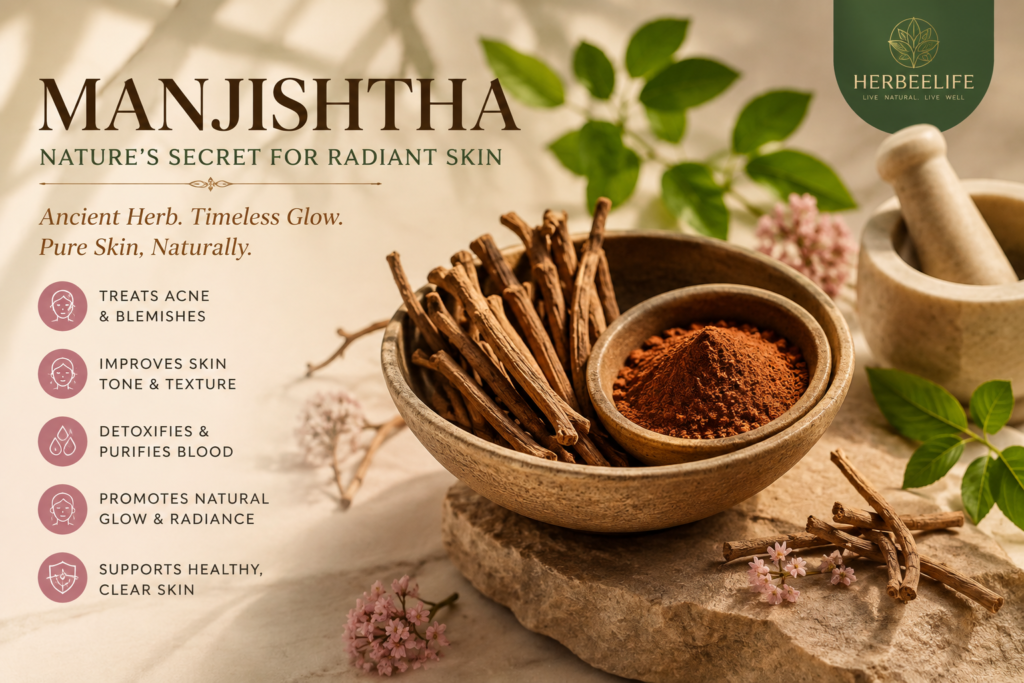
Manjistha is a climbing plant whose root has been used in Ayurveda for centuries — both as a natural red dye and as a trusted herb for skin and blood health. Its botanical name, Rubia Cordifolia, is where the common English "madder" dye family gets its name, and in classical Ayurvedic texts, it's classified as a Raktashodhak, or blood purifier.
This guide covers the real Manjistha benefits for skin and blood purification, how it's traditionally used, and its side effects.
Manjistha for Skin
✨ Why It's a Skincare Staple
- Evens out complexion: Traditionally used to help fade dark spots and pigmentation over consistent use
- Calms breakouts: Its traditional "blood purifying" reputation is often linked to clearer, less inflamed skin
- Supports natural glow: Used in face packs to brighten and refresh dull-looking skin
- Antioxidant properties: Contributes to general skin protection against everyday stressors
If pigmentation specifically is your concern, our dedicated guide on Ayurvedic remedies for dark spots and pigmentation pairs well with this one.
Manjistha for Blood Purification
🩸 What "Blood Purifying" Actually Means in Ayurveda
In Ayurveda, a "blood purifier" doesn't mean literally cleaning the bloodstream — it refers to herbs traditionally believed to support healthy circulation, lymphatic function, and the body's natural detoxification processes. Manjistha is one of the most classical herbs used for this purpose, often included in formulations aimed at supporting skin clarity from the inside out, since skin issues in Ayurveda are frequently traced back to blood and liver health.
💇 A Secondary Use: Hair
Manjistha is also used, less commonly, as part of hair oils and rinses, traditionally valued for supporting scalp health as part of its broader "purifying" reputation — though skin remains its far more established use.
Manjistha Side Effects to Know About
Possible side effects, usually mild
- Mild digestive discomfort in some people when taken internally
- Skin may temporarily take on a slightly reddish tint with very high internal doses, related to its natural dye properties
- Limited safety data for pregnancy and breastfeeding — best avoided without medical guidance
- Topical use (face packs, oils) is generally very low-risk for most people
Is Manjistha safe to consume daily?
For most healthy adults, moderate daily use — particularly topically or as an occasional internal tonic — is considered safe. As with most Ayurvedic herbs, ongoing daily internal use over long periods is best discussed with a practitioner rather than self-prescribed indefinitely.
Common Forms of Manjistha
Manjistha Products Worth Considering
Here are seven ways to bring this herb into your routine, across skin and internal use.
Pure Manjistha Root Powder
The classical, versatile form usable in face packs or mixed into water for internal use.
Check Price on AmazonManjistha Standardized Extract Capsules
A convenient, consistent daily option for those who prefer not to prepare a powder.
Check Price on AmazonManjistha & Neem Blood Purifier Tablets
A traditional pairing of two classical Ayurvedic blood-purifying herbs in one formula.
Check Price on AmazonManjistha Skin-Brightening Face Pack
A ready-to-use pack formulated around Manjistha's traditional complexion-brightening reputation.
Check Price on AmazonManjistha Infused Face Oil
A lightweight facial oil formulated for daily use to support even, calm-looking skin.
Check Price on AmazonManjistha & Rose Water Toner
A gentle daily toner pairing Manjistha with rose water for calm, refreshed skin.
Check Price on AmazonManjistha Herbal Kadha Tea Mix
A traditional decoction blend for those who prefer taking this herb as a daily warm tea.
Check Price on AmazonWho Should Be Cautious
Consult a doctor before internal use if you:
- Are pregnant or breastfeeding, given limited safety data
- Are on medication for a chronic condition, as with any herb affecting circulation
- Plan to use it internally long-term, rather than as an occasional tonic
Topical use for skin carries minimal risk for most people, but internal use — especially ongoing — is worth discussing with an Ayurvedic practitioner for personalized guidance.
Continue Reading on HerBeeLife
Join the HerBeeLife Community
Follow us for daily Ayurvedic wisdom, herb guides, and natural wellness tips.
Frequently Asked Questions
What are the main benefits of Manjistha for skin?
Manjistha is traditionally used to help even out complexion, fade dark spots and pigmentation, calm breakouts, and support a natural, healthy glow with consistent use.
What ayurvedic herbs help cleanse the blood?
Manjistha is one of the most classical Ayurvedic herbs classified as a Raktashodhak, or blood purifier, often used alongside herbs like Neem and Turmeric to support circulation and the body's natural detoxification processes.
Is Manjistha safe to consume daily?
Moderate use, particularly topically or as an occasional tonic, is generally considered safe for healthy adults. Long-term daily internal use is best discussed with an Ayurvedic practitioner rather than self-prescribed indefinitely.
What is Manjistha called in English?
Manjistha's scientific name is Rubia Cordifolia, sometimes referred to in English as Indian Madder, named for its traditional use as a natural red dye.
This article is for informational purposes only and is not a substitute for professional medical advice. Please consult a doctor or Ayurvedic practitioner before starting Manjistha internally, especially if pregnant, nursing, or on medication.