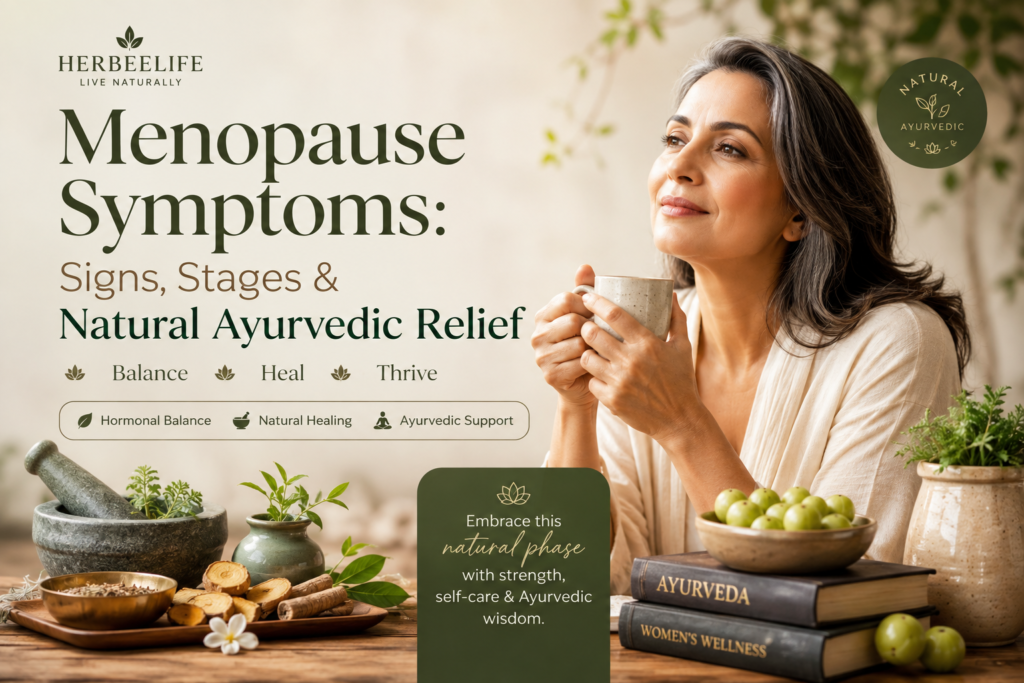

Menopause Symptoms: Signs, Stages & Natural Ayurvedic Relief
A clear, judgment-free guide to what's actually happening in your body — and the natural approaches that can genuinely help.
Quick Summary
- Menopause has three stages: perimenopause, menopause, and postmenopause — each with different symptoms
- Hot flashes, mood shifts, and sleep disruption are among the most common signs, but symptoms vary widely between women
- Ayurveda approaches this transition through diet, herbs, and lifestyle rather than treating it as a disorder to fix
- Several natural options — Shatavari, flaxseed, magnesium — have real supporting evidence alongside lifestyle changes
Menopause is one of the most universal experiences a woman will go through — and yet it's still talked about in whispers, if at all. That silence leaves a lot of women feeling blindsided by symptoms nobody warned them about, wondering if what they're feeling is even normal.
It is normal. Almost every woman experiences some combination of these menopause symptoms, and understanding what's happening — and why — is the first step toward feeling in control of it again.
This guide walks through the three stages of this transition, the full range of symptoms you might notice, and both the Ayurvedic and evidence-based natural approaches worth knowing about.
The Three Stages of Menopause
"Menopause" technically refers to a single point in time — 12 months after your last period — but most of what women experience happens in the stages around it.
Perimenopause
The transition phase, often starting in your 40s, lasting anywhere from a few months to several years as hormone levels fluctuate.
Menopause
The point marking 12 consecutive months without a period, typically occurring between ages 45–55.
Postmenopause
The years following menopause, when acute symptoms often ease but long-term changes like bone density need attention.
Common Menopause & Perimenopause Symptoms
Not every woman experiences every symptom, and severity varies enormously. Here's the full range of what's commonly reported.
of women experience some form of hormonal imbalance during their lifetime, yet most never connect their symptoms back to hormones until they specifically look into it.
How Ayurveda Approaches This Life Stage
Ayurveda doesn't frame menopause as a deficiency to correct — it views it as a natural shift into the Vata stage of life, where the body benefits from grounding, warmth, and nourishment rather than depletion. This is a helpful reframe: instead of fighting symptoms individually, the goal becomes supporting the whole system through the transition.
If mood swings and irritability are a significant part of your experience, it's worth understanding the role stress hormones play — our guide on how to reduce cortisol naturally covers this in depth. And for a broader picture of how hormones shape health beyond menopause, see how hormones affect your health.
Natural Products That Can Support This Transition
Alongside diet and lifestyle changes, these are seven well-regarded, thoughtfully formulated products our team has come across — each targeting a different symptom cluster.
Shatavari & Ashwagandha Balance Capsules
A traditional Ayurvedic pairing used to support hormonal balance and resilience to stress during transitional years.
Check Price on AmazonEvening Primrose Oil Softgels
Rich in GLA, a fatty acid some women find helpful for easing hot flashes and hormonal skin changes.
Check Price on AmazonGround Flaxseed & Omega-3 Blend
A daily dietary addition rich in lignans, plant compounds studied for their mild estrogen-like effects during menopause.
Check Price on AmazonMagnesium Glycinate Capsules
A highly absorbable magnesium form often used to support deeper sleep and steadier mood during hormonal shifts.
Check Price on AmazonCooling Bamboo Fiber Sleepwear
Breathable, moisture-wicking fabric designed specifically to ease the discomfort of night sweats without disrupting sleep.
Check Price on AmazonCalcium & Vitamin D3 Tablets
A well-reviewed daily supplement supporting bone density, which becomes especially important in the postmenopausal years.
Check Price on AmazonSage & Red Clover Herbal Tea
A traditional herbal blend many women incorporate as a calming daily ritual thought to support hot flash relief.
Check Price on AmazonA Simple Lifestyle Checklist for Symptom Relief
- Keep your bedroom cool and wear breathable fabrics to reduce night sweat disruption
- Prioritize strength training 2–3 times a week to protect bone density and muscle mass
- Limit caffeine and alcohol, both known to intensify hot flashes for many women
- Add phytoestrogen-rich foods like flaxseed, soy, and chickpeas to your regular diet
- Practice a consistent wind-down routine to support sleep despite hormonal fluctuation
- Stay socially connected — isolation tends to intensify the emotional symptoms of this stage
When to see a doctor: If symptoms are severely disrupting your daily life, if bleeding is unusually heavy, or if you experience any bleeding after 12 months without a period, it's important to consult a gynecologist promptly rather than managing symptoms alone.
Continue Reading on HerBeeLife
Join the HerBeeLife Community
Follow us for daily Ayurvedic wisdom, women's health guidance, and natural wellness tips.
Frequently Asked Questions
What are the earliest signs of perimenopause?
The earliest signs are often subtle changes in period regularity, mild sleep disruption, and shifts in mood or energy — many women notice these years before hot flashes begin.
How long do menopause symptoms typically last?
Perimenopause itself can last anywhere from a few months to over eight years. Some symptoms, like hot flashes, may continue for several years into postmenopause for a portion of women.
Can natural remedies really help with menopause symptoms?
Several natural approaches — including phytoestrogens, magnesium, and lifestyle changes — have supporting evidence for easing specific symptoms, though individual response varies. They work best combined with medical guidance for moderate to severe symptoms.
What is the average age for menopause in India?
Most women in India experience menopause between ages 45 and 55, with the average often cited slightly earlier than in Western countries, though individual timing varies based on genetics and health factors.
This article is for informational purposes only and is not a substitute for professional medical advice. Please consult a gynecologist or healthcare provider for personalized guidance during this transition.