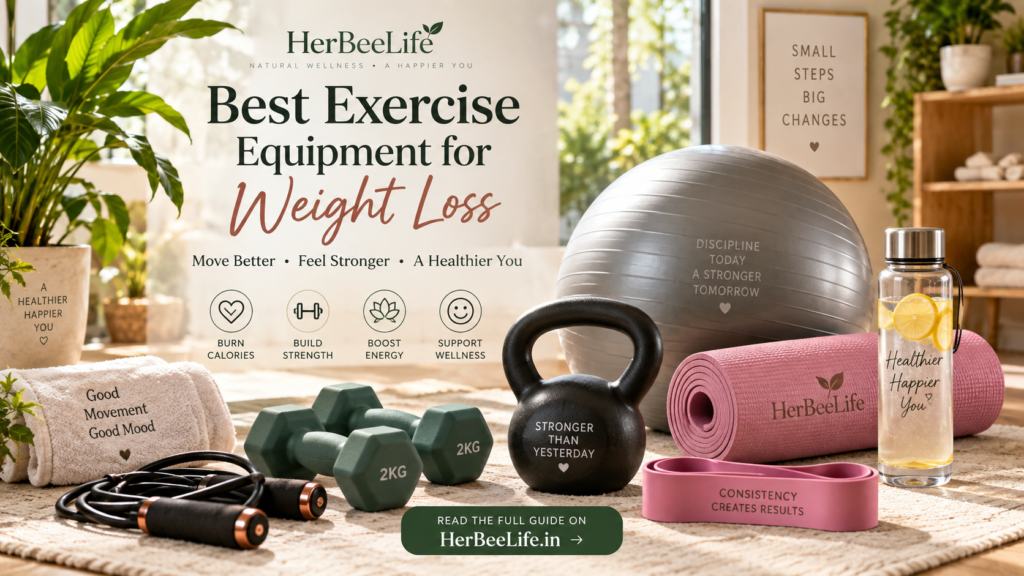

The best equipment isn't the one with the highest calorie-burn number — it's the one still sitting in the open, not shoved under the bed, three months from now. This guide picks genuinely well-made gear worth the investment, paired with the habits and Ayurvedic home remedies that make the effort actually count.
Before picking equipment, it helps to know what kind of workout actually fits your goals and your space. A quick gut-check first:
Short on Time
Prioritize equipment that maximizes calorie burn per minute — jump ropes and cycling win here.
Building Strength
Adjustable dumbbells or kettlebells let you progressively overload without buying a whole rack.
Joint-Friendly Needs
Stationary bikes and resistance bands offer real intensity with minimal impact on knees and hips.
Small Living Space
Bands, ropes, and a mat store in a drawer — no dedicated room required.
The best resistance training program is simply the one you'll actually stick with — training all the major muscle groups a couple of times a week matters far more than chasing a "perfect" or overly complicated plan.
— Stuart Phillips, PhD, Distinguished Professor of Kinesiology, McMaster UniversitySeven Pieces of Gear Genuinely Worth Owning
None of these need a home gym. Each one earns its place through versatility, build quality, or how well it fits into a routine you'll actually keep.
Professional-Grade Resistance Bands
Beginner-FriendlyClinically trusted for rehab and strength work alike, these bands offer graduated resistance for everything from squats to shoulder presses — genuinely joint-friendly and easy to pack for travel.
TheraBand Professional Resistance Bands →A Weighted, Coached Jump Rope System
Time-EfficientWeighted ropes intensify the cardio hit of a basic skip, and a structured program removes the guesswork of "how much is enough" — 15-20 focused minutes rivals a much longer steady-state cardio session.
Crossrope Get Lean Jump Rope System →Space-Saving Adjustable Dumbbells
Strength FocusA dial-based system that replaces an entire rack of weights with one compact pair — genuinely useful for progressive overload as you get stronger, without cluttering a small home.
Bowflex SelectTech 552 Adjustable Dumbbells →A Mat That Actually Holds Up
Every RoutineThick, grippy, and durable enough for daily floor work — planks, lunges, and stretching all feel noticeably better on a mat that doesn't slide or thin out within a month.
Lululemon The Mat, 5mm →A Stability Ball Kit With Real Accessories
Core & BalanceBeyond the ball itself, a kit with a pump and workout guide removes the "now what?" hesitation that leaves most stability balls forgotten in a closet within weeks.
Gaiam Total Body Balance Ball Kit →A Belt-Drive Indoor Cycling Bike
Low-Impact CardioA smooth, quiet belt-drive system and a real flywheel make this feel closer to a studio bike than a budget spin bike — genuinely joint-friendly while still delivering serious cardio intensity.
Schwinn IC4 Indoor Cycling Bike →A Recovery-Focused Fitness Tracker
Track ProgressBeyond step counts, tracking sleep quality and recovery helps you know when to push harder and when to dial back — often the missing piece between working out and actually seeing results.
WHOOP 4.0 Fitness & Recovery Tracker →Equipment is only half the equation — pairing consistent movement with the right internal support makes a real difference. Our guides on reducing belly fat naturally in 20 days and Guggul for cholesterol and weight management cover that side well, and if recovery and digestion need attention too, our beginner's guide to Panchakarma is worth a read.
A Realistic 4-Week Starting Plan
3 short sessions, 15-20 minutes each, mixing resistance bands and bodyweight moves — the goal is building the habit, not maximizing burn.
Add a cardio session with the jump rope or bike, 2-3 times a week, alongside your strength work.
Increase resistance or duration slightly across all sessions — progressive overload is what actually drives change from here.
Review what you've actually kept up with, drop what you haven't, and build your ongoing routine around what's realistically sustainable.
🌿 More fitness routines, Ayurvedic wellness tips, and honest gear reviews — join us
Pinterest Instagram FacebookMistakes That Waste Good Equipment
Buying the most expensive option before testing whether you'll actually use the exercise type it's built for is the single biggest waste of money in home fitness. Skipping warm-ups on strength days raises injury risk more than people expect, and increasing weight or resistance too fast — rather than progressing gradually — is one of the most common reasons people quit within the first month.
When to Check In With a Professional
If you're new to exercise, managing an existing injury, or have a chronic health condition, a quick consult with a doctor or certified trainer before starting is worth it — proper form on unfamiliar equipment prevents most avoidable injuries.
Frequently Asked Questions
What's the single best piece of equipment for weight loss?
There isn't one universal answer — the best equipment is whichever type of movement you'll actually do consistently. For most people starting out, resistance bands or a jump rope offer the best balance of low cost, versatility, and results.
Do I need cardio equipment, strength equipment, or both?
Both serve different purposes and work best together. Cardio equipment burns calories more directly during the session, while strength equipment builds muscle that raises your resting metabolic rate over time.
How much should I spend on home exercise equipment to start?
You can build an effective starting setup with resistance bands, a jump rope, and a mat for a fraction of the cost of a single cardio machine — bigger investments make sense once you've proven the habit sticks.
Can bodyweight exercises work as well as equipment for weight loss?
Yes, especially early on. Equipment adds progression options and variety, but consistent bodyweight training alone can produce meaningful fat loss and strength gains, particularly for beginners.
How often should I use exercise equipment to see real results?
Most people see meaningful changes with 3-5 sessions a week, combining both strength and cardio elements, sustained consistently over 8-12 weeks rather than sporadic high-intensity bursts.