


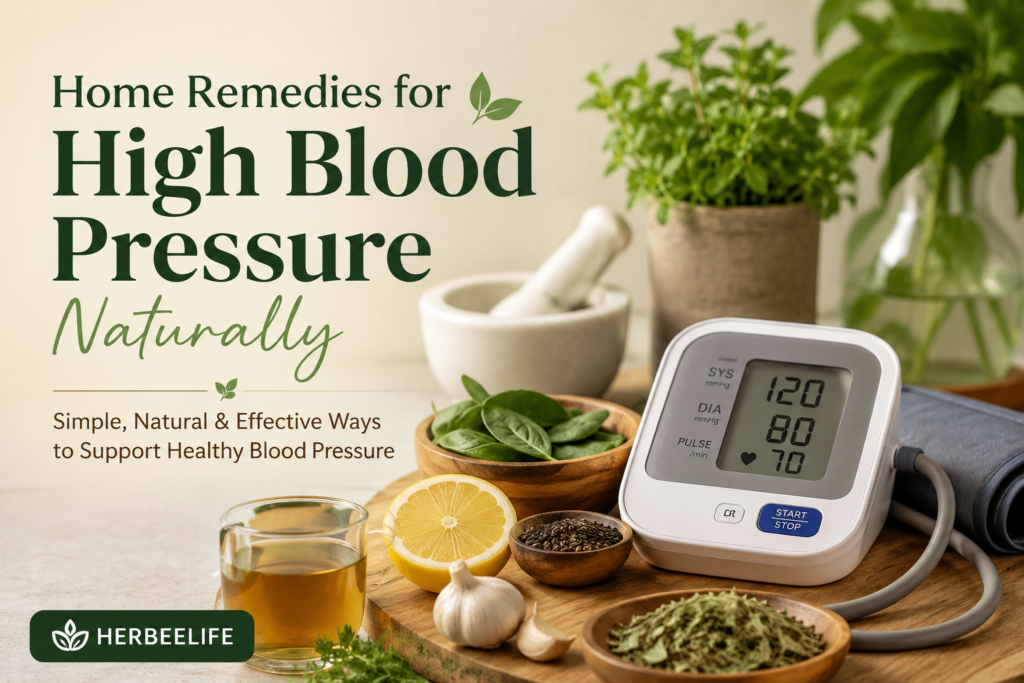
Home Remedies for High Blood Pressure Naturally: The Complete Guide
Food, movement, and daily habits that genuinely support healthier blood pressure — the sustainable way, alongside your doctor's guidance.
A high blood pressure reading can feel alarming, especially the first time you see it — but it's also one of the most responsive conditions to natural, consistent lifestyle change. Sodium intake, potassium levels, stress, sleep, weight, and daily movement all directly influence the pressure your blood exerts on your artery walls, which means every one of those levers is something you can actually work with.
This guide focuses on the natural remedies with genuine evidence behind them — foods and herbs that make a measurable difference, daily rituals that lower the stress response driving up your numbers, and where tracking your own data (rather than guessing) makes all the difference. If stress is a major piece of your picture, our guide to reducing cortisol naturally pairs well with everything covered here.
What's inside this guide
Understanding Blood Pressure Numbers
Blood pressure is recorded as two numbers: systolic (the pressure when your heart beats) over diastolic (the pressure when it rests between beats). A normal reading is generally considered to be below 120/80 mmHg, while consistent readings at or above 130/80 mmHg are typically classified as hypertension. A single high reading isn't a diagnosis — blood pressure naturally fluctuates through the day with stress, activity, and even how recently you've had caffeine — which is exactly why consistent home tracking (covered later in this guide) gives a much clearer picture than one-off numbers.
What Causes High Blood Pressure?
For most people, high blood pressure develops gradually from a combination of factors rather than one single cause:
- High sodium, low potassium diets — the single biggest dietary driver, and the most correctable.
- Chronic stress — repeated cortisol spikes keep blood vessels constricted more often than they should be.
- Excess body weight — extra weight makes the heart work harder to circulate blood.
- Poor sleep, especially sleep apnea — one of the most under-diagnosed contributors to stubborn high blood pressure.
- Sedentary lifestyle — regular movement is one of the most effective natural blood-pressure-lowering habits available.
- Family history and age — factors you can't change, but which make the ones above even more worth addressing.
Diet: The Most Powerful Natural Lever
1. Reduce sodium, but focus on potassium too
Cutting back on processed foods, papads, pickles, and added table salt matters — but increasing potassium-rich foods (bananas, spinach, sweet potatoes, coconut water) is equally important, since potassium helps your body flush out excess sodium and relax blood vessel walls.
2. Build meals around a DASH-style plate
A diet rich in vegetables, fruits, whole grains, and low-fat dairy — with limited red meat and added sugar — is one of the most extensively studied dietary approaches for lowering blood pressure. Our guide to plant-based diets is a gentle way to shift in this direction.
3. Lean on anti-inflammatory foods
Chronic inflammation contributes to arterial stiffness over time. Turmeric, leafy greens, and healthy fats all help counter this — see our full guide to anti-inflammatory foods.
4. Watch your weight, gently
Even a modest weight reduction can meaningfully lower blood pressure. Our guide to natural weight loss remedies covers a sustainable, non-crash approach.
Herbs & Kitchen Remedies That Help
Hibiscus tea
One of the best-studied natural remedies for blood pressure — several clinical trials show regular hibiscus tea consumption produces measurable reductions in both systolic and diastolic readings, working similarly to a mild diuretic.
Garlic
Garlic contains allicin, a compound shown to support healthy blood vessel relaxation and modest blood pressure reduction with regular use — a crushed clove or two added to daily cooking is an easy habit to build.
Cinnamon
Beyond its well-known blood sugar benefits, cinnamon has shown modest blood-pressure-lowering effects in several studies, likely through its impact on blood vessel function. See our complete cinnamon benefits guide.
Warm lemon water in the morning
A simple daily ritual that supports hydration and vitamin C intake, both of which play a supporting role in vascular health. See our warm lemon water benefits guide.
Movement, Sleep & Stress Management
- Walk daily — even 20-30 minutes of brisk walking is one of the most consistently effective natural blood-pressure-lowering habits studied.
- Practice slow, deep breathing — a few minutes of slow breathing has been shown to produce a measurable, if temporary, drop in blood pressure by activating the parasympathetic nervous system.
- Protect your sleep — poor sleep, and sleep apnea in particular, is strongly linked to stubborn high blood pressure. See our guide on improving sleep naturally.
- Build a daily stress-management practice — our guide on the power of meditation and our beginner-friendly yoga guide are both excellent starting points.
Why Tracking Your Numbers Matters
One of the most underrated "natural remedies" isn't a food or herb at all — it's simply knowing your actual numbers. Blood pressure readings taken occasionally at a clinic (often during a stressful visit) can be misleadingly high or miss patterns entirely. Regular home monitoring — at the same time each day, seated and relaxed — gives you and your doctor real data to work with, and often reveals which of your lifestyle changes are genuinely working.
Premium Products Worth Considering
Diet and daily habits are your foundation, but a handful of well-chosen products genuinely support the process — from accurate at-home tracking to well-studied natural compounds. Here's what I'd actually spend on.
❤️ HerBeeLife's Curated Heart-Health Edit
Higher-end picks chosen for real evidence and accuracy, not just pretty packaging.
Clinically-Validated Bluetooth Blood Pressure Monitor
Editor's Pick · Home TrackingAn app-connected, clinically validated upper-arm monitor that logs your readings automatically and shows trends over time — far more useful for genuine progress tracking than an unconnected basic device.
Check Latest Price →*Price varies by pack size and brand — verify on Amazon before purchase.
Organic Hibiscus Tea (Premium Loose-Leaf)
Premium · Evidence-Backed RitualLook for a whole-flower, organic loose-leaf blend rather than tea-bag dust — the tart, cranberry-like brew is one of the most pleasant "medicinal" daily rituals you can build, with genuine clinical backing behind it.
Check Latest Price →*Price varies by pack size and brand — verify on Amazon before purchase.
Aged Garlic Extract Capsules (Odourless, Standardised)
Premium · Vascular SupportThe aged, odourless extract form delivers the same active compounds as fresh garlic without the social downside — standardised extracts are the form most consistently used in clinical research on blood pressure.
Check Latest Price →*Price varies by pack size and brand — verify on Amazon before purchase.
CoQ10 Ubiquinol (High-Potency, Enhanced Absorption)
Premium · Heart & Vascular HealthThe ubiquinol form is significantly better absorbed than standard ubiquinone CoQ10, especially for anyone over 40 — several studies link CoQ10 supplementation with modest blood pressure improvements over consistent use.
Check Latest Price →*Price varies by pack size and brand — verify on Amazon before purchase.
Beetroot Nitric Oxide Complex (Concentrated Extract)
Premium · Circulation SupportBeetroot's natural nitrates convert into nitric oxide in the body, helping blood vessels relax and widen — a well-studied, food-based approach to supporting healthier circulation and blood pressure.
Check Latest Price →*Price varies by pack size and brand — verify on Amazon before purchase.
Magnesium Taurate (Cardiovascular-Specific Form)
Premium · Heart Rhythm & Vessel SupportUnlike general-purpose magnesium forms, taurate is specifically favoured in cardiovascular research for its combined benefits on blood vessel relaxation and heart rhythm support.
Check Latest Price →*Price varies by pack size and brand — verify on Amazon before purchase.
Low-Sodium Potassium-Rich Salt Substitute (Premium Himalayan Blend)
Premium · Kitchen SwapA thoughtfully blended salt alternative that swaps a portion of sodium for potassium chloride — an easy, tasteless-in-practice kitchen swap that directly targets the sodium-potassium balance covered earlier in this guide.
Check Latest Price →*Price varies by pack size and brand — verify on Amazon before purchase.
When to See a Doctor
Natural remedies work best as a foundation alongside, not instead of, medical care where it's needed. Please seek medical attention if you experience:
- A reading of 180/120 mmHg or higher, especially with chest pain, shortness of breath, or vision changes — seek emergency care immediately
- Consistent readings above 130/80 mmHg across multiple home checks
- Severe headaches, nosebleeds, or unusual fatigue alongside high readings
- You're already on blood pressure medication and considering adding supplements
- A family history of heart disease or stroke alongside elevated readings
Frequently Asked Questions
Can high blood pressure be lowered naturally without medication?
For mild or borderline high blood pressure, consistent changes to diet (especially sodium and potassium balance), daily movement, quality sleep, and stress management can meaningfully lower readings — often within a few weeks. For diagnosed hypertension, natural remedies work best alongside, not instead of, medical guidance.
What foods lower blood pressure the fastest?
Potassium-rich foods like bananas, spinach, and coconut water, along with hibiscus tea and garlic, are among the most consistently studied for a relatively quick, measurable effect on blood pressure readings.
Can stress really raise blood pressure?
Yes — stress triggers the release of hormones that temporarily constrict blood vessels and increase heart rate. While a single stressful moment causes a temporary spike, chronic stress keeps this response activated more often, contributing to sustained high blood pressure over time.
How often should I check my blood pressure at home?
Most doctors recommend checking at the same time each day — ideally morning and evening for the first week when starting to monitor — seated and relaxed for a few minutes beforehand, to get an accurate baseline pattern.
Is hibiscus tea safe to drink daily?
For most people, yes, in moderate amounts. However, it can interact with certain blood pressure medications and isn't recommended during pregnancy, so it's worth checking with your doctor if you're on medication or pregnant.
Related Reads on HerBeeLife
Follow HerBeeLife for daily wellness rituals
Ayurvedic tips, natural remedies, and heart-health inspiration — straight to your feed.
Affiliate Disclosure: This article contains Amazon affiliate links. HerBeeLife may earn a small commission on qualifying purchases at no extra cost to you — this helps us keep creating free wellness content.