
You have approximately 100 trillion microbial cells living inside you right now — outnumbering your human cells by a ratio of roughly 1.3 to 1. They govern your immunity, manufacture your mood chemicals, regulate your hormones, and communicate directly with your brain. And most people have absolutely no idea their gut is doing any of this. Gut health and overall wellness aren’t loosely connected. They are, according to the latest science, almost inseparable.
This isn’t going to be another article that says “eat more yogurt and take a probiotic.” The real science of gut health and overall wellness goes somewhere far more interesting — into why 95% of your serotonin is made in your intestine, why your gut lining is only one cell thick and what happens when it tears, why traditional Indian fermented foods are genuinely among the most powerful microbiome interventions on the planet, and why your gut may be the actual root cause of health problems you’ve been blaming on stress, aging, or bad luck for years.
What “Gut Health” Actually Means — And Why the Definition Matters
“Gut health” has become a wellness buzzword that gets attached to everything from kombucha brands to skincare lines. But clinically, gut health refers to something very specific: the functional and structural integrity of the gastrointestinal tract, and the diversity and balance of the gut microbiome — the ecosystem of bacteria, viruses, fungi, and archaea that inhabit it.
A healthy gut has three defining characteristics that most articles skip over entirely:
1. Microbiome diversity: The more different species of bacteria present, the more resilient and functional your gut ecosystem is. The American Gut Project — one of the largest microbiome studies ever — found that people eating 30+ different plant species weekly had dramatically more diverse microbiomes than those eating fewer than 10. Diversity, not just quantity, is what matters.
2. Gut barrier integrity: Your entire intestinal surface — an area roughly the size of a studio apartment when unfolded — is protected by a lining just one cell thick. When this barrier is compromised (known as intestinal permeability, or “leaky gut”), partially digested food particles and bacterial toxins enter the bloodstream, triggering systemic inflammation that drives disease across multiple organ systems.
3. Motility and transit: How efficiently food moves through your system matters as much as what you eat. Slow transit allows harmful bacteria to ferment undigested material, producing inflammatory compounds. Fast transit doesn’t allow adequate nutrient absorption. The rhythm matters as much as the roster.
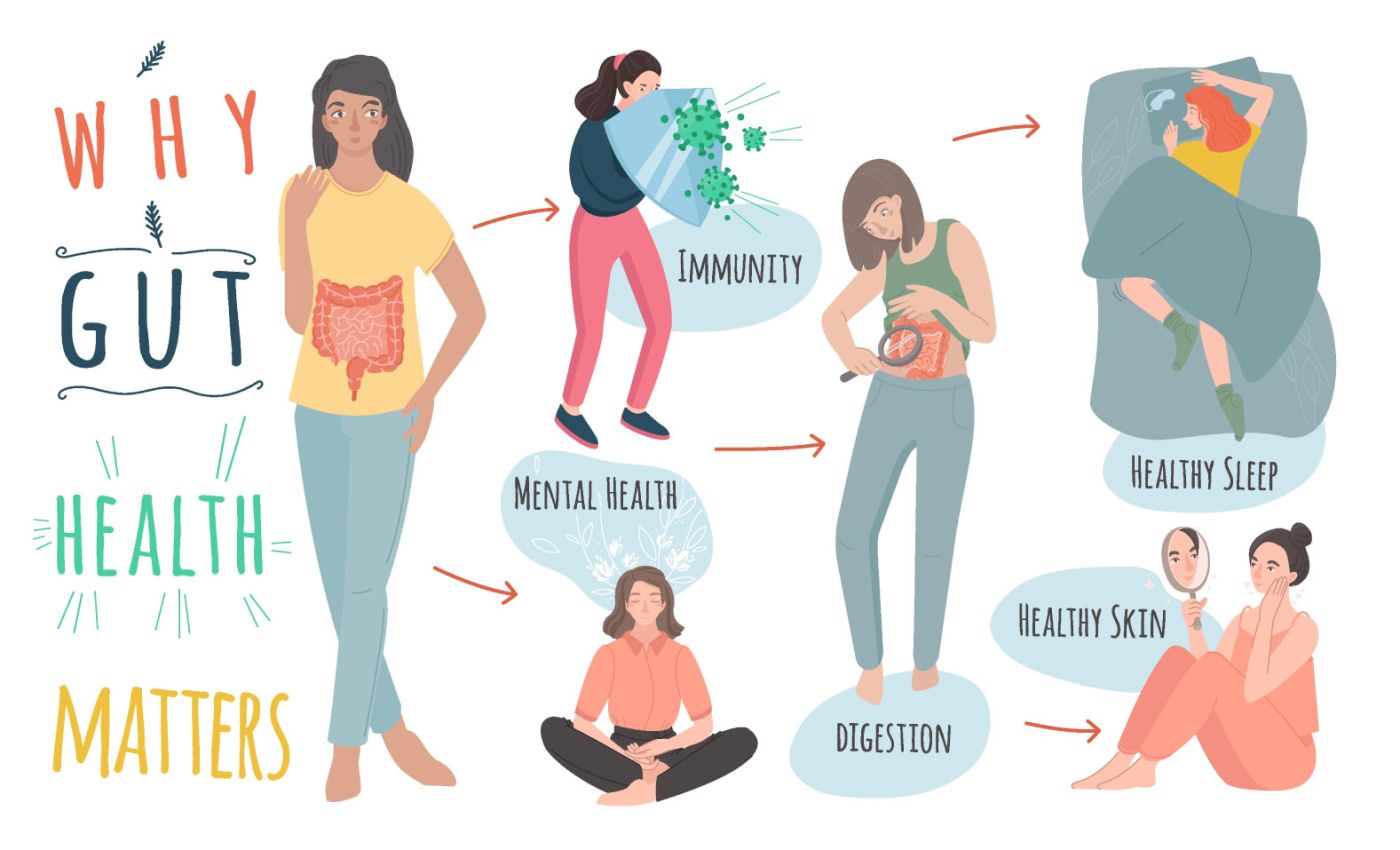
6 Powerful Ways Gut Health and Overall Wellness Are Directly Linked
Here is the single most underreported fact in popular health content: your gut produces approximately95% of your body’s serotonin. Not your brain. Your gut. The enteric nervous system — a network of 500 million neurons lining your gastrointestinal tract — is so sophisticated that neuroscientists call it the “second brain.” It can think, feel, and act independently of the central nervous system.
The gut-brain axis is a bidirectional communication superhighway running through the vagus nerve, immune signalling, and gut-derived neurotransmitters. When your microbiome is disrupted — a state called dysbiosis — serotonin synthesis drops, GABA production falls, and inflammatory cytokines rise. The result is not just digestive discomfort. It is clinically measurable increases in anxiety, depression susceptibility, and cognitive impairment. A 2019 meta-analysis in JAMA Psychiatry found significant associations between gut dysbiosis and major depressive disorder across 34 studies.
This means that treating depression or anxiety without addressing gut health is, in many cases, treating a symptom while ignoring its source.
⚗️ 95% of serotonin produced in gut | JAMA Psychiatry 2019 meta-analysisThe gut-associated lymphoid tissue (GALT) contains approximately 70% of the body’s immune cells — making the intestinal lining the single largest immune organ in the human body. This is not a coincidence. Your gut is the primary point of contact between your internal environment and the external world. Everything you ingest passes through it.
A diverse, balanced microbiome trains your immune system to distinguish between friend and foe. Beneficial bacteria produce short-chain fatty acids (SCFAs) — particularly butyrate, propionate, and acetate — that directly regulate immune cell activity, reduce intestinal inflammation, and maintain barrier integrity. When the microbiome is depleted or imbalanced, immune regulation collapses. You become simultaneously more susceptible to infections and more prone to autoimmune overreaction.
A 2020 study published in Cell identified specific gut bacterial species that directly modulate the effectiveness of cancer immunotherapy — demonstrating that the gut microbiome’s influence on immunity extends all the way to cancer treatment outcomes. If that isn’t a wake-up call for gut health and overall wellness, nothing is.
⚗️ GALT = 70% of immune cells | Cell 2020: gut bacteria + immunotherapy outcomesThe gut-skin axis is one of the most clinically established — and most underutilised — connections in dermatology. When gut barrier integrity is compromised, lipopolysaccharides (LPS) — toxic fragments of bacterial cell walls — leak into circulation. The immune system responds with systemic inflammation that manifests on the skin as acne, eczema, psoriasis, rosacea, and accelerated photoaging.
Multiple controlled studies have found that people with severe acne have measurably lower levels of Lactobacillus and Bifidobacterium species in their gut. A landmark 2011 study in the Gut Pathogens journal proposed the gut-brain-skin triangle as a unified model — demonstrating that psychological stress disrupts the gut microbiome, which in turn drives skin inflammation, which compounds psychological distress in a feedback loop.
For the Indian context: the widespread use of antibiotics for skin conditions — a common practice in urban dermatology — may clear skin short-term while simultaneously destroying the gut diversity that would have prevented the acne in the first place. The irony is as frustrating as it is clinically important.
⚗️ Gut-skin axis | LPS-driven systemic inflammation | Gut Pathogens 2011The relationship between gut microbiome and body weight is one of the most disruptive findings in modern nutrition science — because it fundamentally challenges the “calories in, calories out” model. Two people eating the exact same diet can extract significantly different numbers of calories from identical food depending on which bacterial species dominate their gut.
Specific bacterial imbalances are now linked to weight gain through multiple mechanisms: altered ghrelin (hunger hormone) signalling, reduced leptin sensitivity, increased intestinal permeability promoting fat storage, and impaired production of peptide YY — a gut hormone that signals satiety. A famous 2013 Nature study transplanted gut bacteria from obese humans into germ-free mice. The mice developed obesity without any change in diet. The bacteria alone drove the weight gain.
This doesn’t mean willpower is irrelevant. It means that sustainable weight management requires addressing the gut ecosystem — not just counting calories. The gut is upstream of the outcome.
⚗️ Nature 2013: bacterial transplant obesity study | ghrelin + leptin dysregulationThis is the connection that surprises people most, particularly women. A subset of gut bacteria collectively called theestrobolomeproduces enzymes that metabolise oestrogen — determining whether oestrogen is excreted from the body or recirculated into the bloodstream. When the estrobolome is disrupted, oestrogen recirculation increases, driving conditions including oestrogen dominance, PMS, PCOS, endometriosis, fibroids, and in the longer term, elevated breast cancer risk.
Research published in Maturitas (2019) demonstrated that women with reduced estrobolome diversity had measurably higher circulating oestrogen, worse menopausal symptoms, and greater risk of hormone-driven cancers. For Indian women — where PCOS prevalence is now estimated at 22.5% in reproductive-age women, one of the highest globally — the estrobolome connection deserves far more clinical and public attention than it currently receives.
⚗️ Estrobolome research | Maturitas 2019 | PCOS-gut microbiome linkCardiovascular disease, type 2 diabetes, Alzheimer’s disease, rheumatoid arthritis, and multiple cancers — all have chronic low-grade systemic inflammation as a common upstream driver. And gut health is one of the most powerful determinants of systemic inflammation. When the gut barrier is compromised and dysbiosis is present, the resulting inflammatory cascade doesn’t stay in the gut. It travels everywhere.
A 2021 review in Nature Reviews Immunology described this as “metaflammation” — metabolically triggered systemic inflammation originating in the gut — and identified it as the central mechanism connecting poor diet, gut dysbiosis, and chronic disease across organ systems. The gut, in other words, is not just a digestive organ. It is the inflammation control panel for your entire body.
⚗️ Nature Reviews Immunology 2021: metaflammation model10 Signs Your Gut Health Is Silently Failing — That Most People Miss
Most people only recognise gut problems when the symptoms are obvious. But gut dysbiosis sends earlier, subtler signals that are routinely misattributed to stress, aging, or “just how I am.”
Gut Health Myths vs. Facts — The Ones That Matter
“Taking a probiotic supplement fixes gut health.”
Most OTC probiotic supplements contain 1–10 strains. Your gut contains 500–1,000 species. Dietary diversity — especially 30+ plant varieties weekly — consistently outperforms supplements in studies measuring microbiome diversity outcomes. Supplements help in specific clinical contexts (post-antibiotics, IBS), not as a general fix.
“Gut health only affects digestion.”
As established above: your gut governs immunity, mental health, skin condition, hormone metabolism, weight regulation, and systemic inflammation. Digestion is merely the most visible function of what is, biologically, your body’s most consequential organ system.
“Leaky gut is not a real medical condition.”
Intestinal hyperpermeability (the clinical term) is well-documented and measurable via the lactulose-mannitol urine test. It has been identified in the research literature as a contributing factor in coeliac disease, Crohn’s disease, type 1 diabetes, and multiple sclerosis. The controversy is around which conditions it causes versus correlates with — not whether it exists.
“A clean diet is enough — I don’t need fermented foods.”
A 2021 Stanford University study in Cell directly compared a high-fibre diet against a high-fermented-food diet for microbiome diversity. The fermented food group showed significantly greater microbiome diversity and lower inflammatory markers. Fibre feeds existing bacteria. Fermented foods introduce new ones. Both are needed.
The Indian Kitchen’s Secret: You Already Have the World’s Best Gut Health Foods
Here is something genuinely worth being proud of: traditional Indian cuisine — before the processed food era — was one of the most gut-microbiome-intelligent food cultures ever developed. The combination of fermentation, spice diversity, legume variety, and plant richness represents exactly what modern microbiome science recommends. The problem isn’t cultural. It’s that we stopped eating our own food.
| Indian Food | Gut Health Benefit | Active Mechanism | Best Consumed As |
|---|---|---|---|
| Homemade curd (dahi) | Direct probiotic — Lactobacillus + Streptococcus thermophilus | Live culture colonisation of gut lining | Fresh, room temp, not sweetened |
| Idli / dosa batter | Fermented rice-lentil — rich in beneficial bacteria | LAB (lactic acid bacteria) fermentation | Freshly fermented, not commercial |
| Kanji (fermented black carrot) | Potent probiotic + antioxidant anthocyanins | Lactobacillus + gut barrier support | Traditionally prepared, winter drink |
| Raw banana (kaccha kela) | Resistant starch — premium prebiotic fuel | Feeds butyrate-producing bacteria | Cooked but not overripe |
| Methi (fenugreek seeds) | Galactomannan fibre — powerful prebiotic | Feeds Bifidobacterium, slows sugar absorption | Soaked overnight, add to sabzi / dal |
| Amla (Indian gooseberry) | Tannins + Vitamin C — prebiotic + anti-inflammatory | Shown to significantly increase Lactobacillus populations | Fresh, murabba, or powder in water |
| Haldi (turmeric) | Curcumin — anti-inflammatory + gut barrier repair | Reduces LPS-driven intestinal inflammation | With black pepper (10x bioavailability) |
| Dal (lentils — any variety) | Resistant starch + diverse fibre types | Feeds multiple bacterial species simultaneously | Freshly cooked, avoid tinned |
| Chaas / lassi (buttermilk) | Probiotic + digestive spices (jeera, ajwain) | Lactobacillus + carminative digestive support | Homemade, spiced, not commercial |
The American Gut Project found that 30+ plant species weekly is the threshold for dramatically enhanced microbiome diversity. A single dal tadka can contain 8–10 plant ingredients (lentils, tomato, onion, garlic, ginger, cumin, coriander, turmeric, chilli, curry leaves). A thali meal might hit 15–20. A week of traditional Indian home cooking almost effortlessly reaches the 30-plant target that Western diets struggle to achieve.
The erosion of traditional Indian cooking in favour of processed convenience food is, from a microbiome science perspective, one of the most significant public health losses of the last 30 years.
How to Restore Gut Health and Overall Wellness: A Practical Roadmap
Before adding anything, stop the damage. Remove ultra-processed foods (emulsifiers like polysorbate 80 directly disrupt the gut mucus layer), reduce alcohol (even moderate amounts alter microbiome composition within 24 hours), and cut artificial sweeteners (saccharin and sucralose have documented negative effects on gut bacteria in human trials). This single step begins microbiome repair within days.
Start with homemade curd at lunch or chaas after dinner. Do not start with a probiotic supplement — the research on food-based fermented intake is more consistent. One serving daily of a genuine fermented food begins microbiome seeding within 5–7 days. The Stanford 2021 Cell study showed that fermented food intake increased microbiome diversity measurably within two weeks.
Begin counting plant varieties per week, not portions. A new vegetable, a different dal, a new herb or spice — each counts. Prioritise resistant starch sources (raw banana, cooled cooked rice, oats) which are the premium fuel for butyrate-producing bacteria. Butyrate is the compound that heals gut lining integrity — the most critical structural element of gut health.
Chronic psychological stress increases intestinal permeability directly — via cortisol’s effect on tight junction proteins. This means you cannot fully restore gut health while living in chronic stress. Vagus nerve activation practices (the same 4-7-8 breathing from our sleep guide, cold water splashed on the face, humming or gargling) directly improve gut motility and reduce intestinal inflammation via the gut-brain axis.
By week 6–8, most people notice clear markers of improving gut health and overall wellness: more consistent energy, reduced bloating, improved bowel regularity, clearer skin, and better mood stability. These are your feedback signals. If any persist, investigate deeper with a functional medicine practitioner or gut microbiome testing (Viome and Gut Intelligence are available in India). Maintenance is achieved through dietary diversity consistency — not supplementation.
What Is Silently Destroying Your Gut Health Right Now
Unnecessary antibiotic courses: A single course of broad-spectrum antibiotics can reduce microbiome diversity by 25–50% — and recovery can take 6 months to 2 years. Antibiotics for viral infections (colds, flu) are completely ineffective against the virus and devastate the microbiome for no clinical benefit.
Chronic NSAIDs (ibuprofen, aspirin): Regular use of non-steroidal anti-inflammatory drugs directly increases intestinal permeability — a confirmed mechanism documented in gastroenterology literature. Occasional use is low risk; daily use is a significant gut barrier threat.
Emulsifiers in processed food: Polysorbate 80 and carboxymethylcellulose — found in almost every ultra-processed food — are shown in animal and emerging human studies to thin the protective mucus layer of the gut lining, enabling bacterial translocation. Check ingredient labels.
Eating too fast: Chewing is the first stage of digestion. Inadequately chewed food reaches the large intestine partially intact, where it ferments by the wrong bacteria, producing gas, inflammation, and endotoxin. The cultural habit of eating fast — especially at desk lunches — is a direct gut health risk.
Sedentary lifestyle: Exercise directly increases microbiome diversity, independent of diet. A 2019 meta-analysis found that physically active individuals consistently have greater Bifidobacterium and Lactobacillus populations and higher SCFA production than sedentary peers eating the same diet. Your gut needs you to move.
Frequently Asked Questions About Gut Health and Overall Wellness
Q: What are the most effective home remedies for better sleep?
A: The most science-backed home remedies for better sleep include ashwagandha warm milk, chamomile or brahmi tea, magnesium-rich foods, the 4-7-8 breathing technique, lavender or jatamansi aromatherapy, and a consistent nightly sleep ritual. These work best in combination rather than isolation.
Q: How quickly do home remedies for better sleep work?
A: Some work immediately — the 4-7-8 technique produces a calm response within 2 minutes. Room temperature changes help from the first night. Herbal remedies like ashwagandha and brahmi show their strongest effects after 3–6 weeks of consistent use. The sleep ritual’s conditioning effect builds over 2–4 weeks.
Q: Is warm milk actually proven to help sleep?
A: Yes. A 2015 study in the Journal of Medicinal Food found that warm milk combined with honey significantly improved sleep quality in ICU patients — a high-stress test environment. Milk contains tryptophan (melatonin precursor) and casein-derived bioactive peptides with mild sedative properties.
Q: What Indian-specific home remedies for better sleep exist?
A: Ashwagandha milk, brahmi tea, jatamansi aromatherapy, nutmeg in warm milk, Abhyanga with sesame oil, warm foot baths, and khichdi as an evening tryptophan-delivery meal are among the most effective Indian home remedies for better sleep — all with documented research or Ayurvedic clinical support.
Q: Can blue light really ruin sleep quality?
A: Yes. Harvard Medical School research documented that blue light suppresses melatonin production by up to 85% and shifts the circadian clock by up to 3 hours. Screens off 60–90 minutes before bed is the single most impactful structural change for better sleep.
Related Articles You’ll Love
You have been thinking about wellness the wrong way. Not because you’re uninformed — but because health content has consistently pointed you toward symptoms and away from systems. Your gut isn’t just where food goes. It’s where immunity is trained, mood is manufactured, hormones are metabolised, and inflammation is either contained or unleashed.
Fix the gut. Watch how many other things quietly stop being problems.
Which of these gut health connections surprised you most — the 95% serotonin stat, the estrobolome-PCOS link, or the bacteria transplant obesity study? Drop it below. And share this with someone who thinks their anxiety, skin problems, or fatigue are “just stress.” 👇
Sources & Further Reading
- JAMA Psychiatry (2019) — Gut Dysbiosis and Major Depressive Disorder: Meta-Analysis of 34 Studies
- Cell (2020) — Gut Microbiome Composition Modulates Cancer Immunotherapy Effectiveness
- Cell (2021) — High-Fermented-Food vs. High-Fibre Diet: Microbiome Diversity RCT (Stanford)
- Nature (2013) — Human Gut Microbiota Transplant and Obesity in Germ-Free Mice
- Maturitas (2019) — Estrobolome, Gut Microbiome, and Oestrogen Metabolism in Women
- Nature Reviews Immunology (2021) — Metaflammation: Gut-Origin Systemic Inflammation Model
- Gut Pathogens (2011) — The Gut-Brain-Skin Triangle
- American Gut Project — Plant Diversity and Microbiome Diversity
- HerbeeLife — Natural Health & Ayurvedic Wellness
Disclaimer: This content is for informational purposes only and does not constitute medical advice. Always consult a qualified healthcare professional before making significant changes to your health routine. Read full disclaimer →