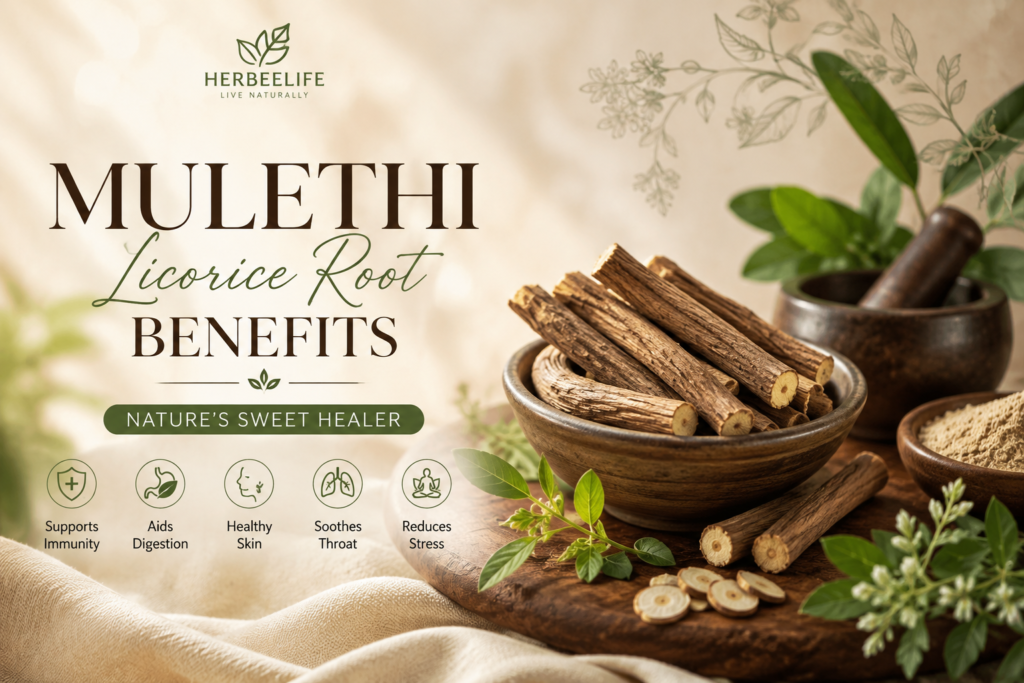

Mulethi (Licorice Root) Benefits for Throat, Skin, and Hair
One herb, three very different traditional uses — here's what Mulethi actually does for your throat, skin, and hair, and how to use it safely.
If you grew up with a grandmother who reached for a small root whenever a sore throat showed up, there's a good chance it was Mulethi. Known in English as licorice root, this naturally sweet root has been a fixture in Ayurvedic households for generations — not just for the throat, but for skin and hair too, which surprises a lot of people learning about it for the first time.
This guide covers exactly what Mulethi (licorice root) benefits actually are across all three areas, how to use it, and a few real precautions worth knowing before you start.
What Mulethi Is Actually Used For
Throat
The most well-known use — soothing sore throats, coughs, and hoarseness
Skin
Used traditionally for brightening tone and calming redness or irritation
Hair
Applied as an oil or rinse to support scalp health and reduce dandruff
Is Mulethi Good for the Throat?
🗣️ For Sore Throat & Cough
Yes — this is Mulethi's most established traditional use. Chewing a small piece of the root, or sipping tea made from it, is commonly used to soothe throat irritation, ease coughing, and support vocal comfort. Its naturally sweet, demulcent (soothing, coating) quality makes it a gentle option when your throat feels raw. If a cold or flu is behind your sore throat, our cold and flu remedies guide covers additional support alongside this.
✨ For Skin
Licorice root contains compounds studied for their skin-brightening and calming properties, which is why you'll find it in many natural skincare formulations aimed at uneven tone and redness. Applied as a paste or included in a face mask, it's traditionally used to support a clearer, more even complexion over consistent use.
💇 Does Mulethi Increase Hair Growth?
Mulethi is traditionally used more for scalp comfort than direct hair growth — it's often applied to help soothe an itchy, flaky scalp and reduce dandruff, which indirectly supports a healthier growing environment for hair. If hair fall itself is your main concern, our 15 home remedies for hair fall guide covers more targeted options.
Ways to Use Mulethi
Simple starting point: A pinch of Mulethi powder in warm water with a little honey is the most traditional, gentlest way to try it for the first time.
Mulethi Products Worth Considering
Here are seven ways to use this herb across all three traditional applications.
Mulethi (Licorice Root) Powder
The most flexible form — usable in tea, face masks, or mixed with honey for throat relief.
Check Price on AmazonMulethi Sticks (Whole Dried Root)
Chewable sticks for direct, traditional throat and voice support.
Check Price on AmazonLicorice Root Face Brightening Serum
A modern formulation harnessing licorice's traditional skin-brightening reputation.
Check Price on AmazonMulethi & Honey Throat Lozenges
A convenient, naturally sweetened option for soothing an irritated throat throughout the day.
Check Price on AmazonLicorice Root Hair Oil
Formulated for scalp massage, traditionally used to ease itchiness and dandruff.
Check Price on AmazonMulethi Herbal Tea Bags
A naturally sweet, caffeine-free tea for easy daily throat and digestive comfort.
Check Price on AmazonLicorice Root Face Pack
A ready-to-use pack for a weekly skin-brightening ritual, formulated around Mulethi's traditional use.
Check Price on AmazonImportant Safety Notes
Please be aware, especially with internal use:
- Licorice root contains glycyrrhizin, which in large or prolonged amounts can raise blood pressure and lower potassium levels
- Not recommended for people with high blood pressure, heart conditions, or kidney disease without medical guidance
- Should be avoided during pregnancy, as high intake has been linked to potential risks
- Topical use (skin and hair) generally carries far fewer concerns than regular internal use
Occasional traditional use — like chewing a stick for a sore throat — is generally considered safe for most healthy adults, but daily or high-dose internal use is where caution matters most.
Continue Reading on HerBeeLife
Join the HerBeeLife Community
Follow us for daily Ayurvedic wisdom, herb guides, and natural wellness tips.
Frequently Asked Questions
What is Mulethi called in English?
Mulethi is the Hindi/Ayurvedic name for licorice root, a naturally sweet root used traditionally in India for throat, skin, and hair care.
Is Mulethi good for the throat?
Yes — this is its most well-established traditional use. Chewing the root or drinking Mulethi tea is commonly used to soothe sore throats, ease coughing, and support vocal comfort.
Does Mulethi increase hair growth?
Mulethi is traditionally used more for scalp comfort — easing itchiness and dandruff — than as a direct hair growth stimulant, though a healthier scalp environment can indirectly support hair health.
Does Mulethi help remove facial hair or skin concerns?
Mulethi is traditionally used for skin brightening and calming redness or pigmentation rather than facial hair removal — its skin benefits are more about tone and clarity than hair reduction.
This article is for informational purposes only and is not a substitute for professional medical advice. Please consult a doctor before regular internal use, especially if you have high blood pressure, heart, or kidney conditions, or are pregnant.