


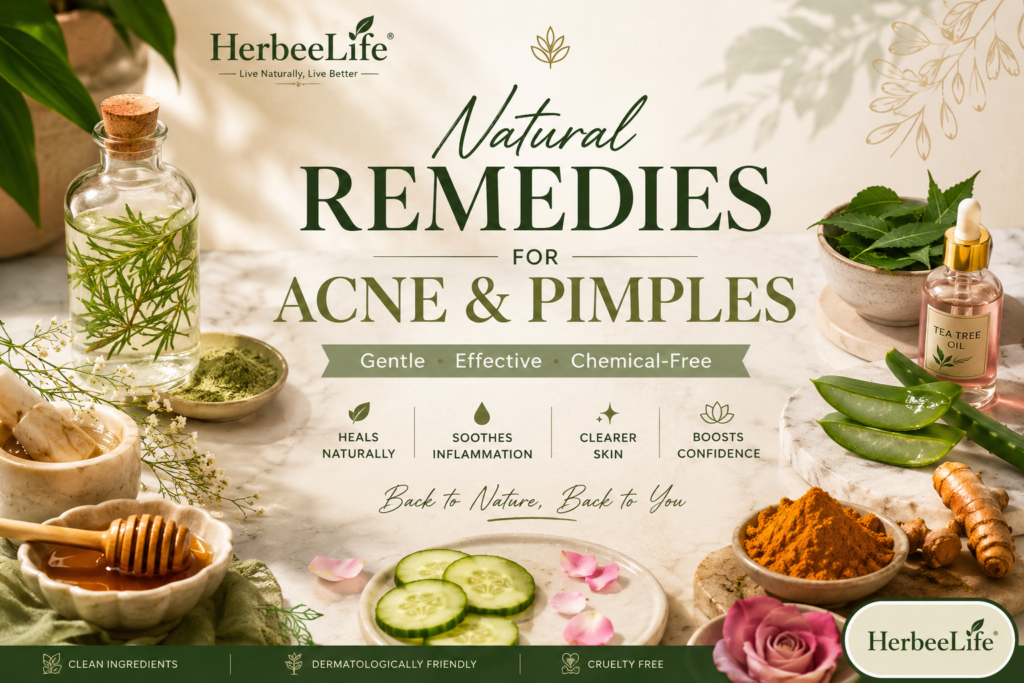
Natural Remedies for Acne and Pimples: 15 Home Solutions That Actually Work
A stubborn breakout the night before something important, a cluster of pimples that won't budge, or acne that keeps coming back to the same patch of skin — few things dent your confidence quite like it. The reassuring truth is that most mild to moderate acne responds well to consistent, natural care.
Acne and pimples are among the most universally experienced skin concerns — nearly everyone deals with a breakout at some point, whether it's the occasional pimple before a big event or a more persistent pattern of acne that seems to flare up on a schedule of its own. Despite how common it is, acne remains genuinely frustrating: the causes are rarely simple, popular advice online is often contradictory, and what works for one person's skin can do very little for another's.
This guide breaks down what's actually behind most breakouts, 15 natural remedies you can start using tonight, the foods that tend to trigger flare-ups, a simple daily skincare routine, and the warning signs that mean it's time to see a dermatologist instead of continuing to self-treat.
⚡ Quick Answer
- Fastest spot treatment: Diluted tea tree oil or a small dab of raw honey directly on the pimple overnight
- Best daily habit: Washing your face twice daily with a gentle cleanser and never sleeping in makeup
- Best for inflammation: A cold compress or ice wrapped in cloth held on the area for a few minutes
- Best long-term remedy: A multani mitti or neem face pack, 1–2 times a week, alongside gut-friendly eating habits
- Avoid: Popping or picking at pimples, over-washing, and harsh scrubbing
- See a dermatologist if: Acne is painful, cystic, scarring, or not improving after several weeks of consistent care
📋 Table of Contents
What Causes Acne and Pimples?
Interest in understanding the actual cause of pimples has surged recently, and for good reason — acne is rarely about just one thing. It typically develops when hair follicles become clogged with excess oil (sebum) and dead skin cells, creating an environment where acne-causing bacteria multiply, triggering the inflammation, redness, and swelling we recognise as a pimple or breakout.
The most common underlying contributors include: hormonal fluctuations (especially around puberty, menstrual cycles, and stress), excess oil production (often genetic or climate-related), clogged pores from sweat, pollution, or heavy makeup left on too long, poor diet particularly high sugar and dairy intake in some individuals, stress, which raises cortisol and can increase oil production, poor sleep, which disrupts skin's natural repair cycle, and touching your face frequently or resting your phone against your cheek, both of which transfer bacteria and oil onto the skin.
In Ayurveda, acne (Yauvanapidika) is primarily linked to a Pitta and Kapha imbalance — excess heat and oil in the system manifesting on the skin — which is why many traditional remedies focus on cooling, purifying ingredients like neem, sandalwood, and turmeric rather than harsh, drying treatments.
Your Skin Type and Acne Pattern
Pitta-Type Acne
Red, inflamed, sometimes painful pimples, often with a burning sensation. Responds best to cooling remedies like sandalwood, aloe vera, and neem.
Kapha-Type Acne
Larger, whitehead-dominant breakouts on naturally oily skin. Responds best to purifying, oil-balancing remedies like multani mitti and turmeric.
Vata-Type Acne
Smaller, drier pimples on skin that's otherwise dehydrated. Responds best to gentle, hydrating remedies rather than drying treatments.
Recognising your pattern helps you choose remedies that work with your skin rather than accidentally over-drying or over-oiling it further.
15 Natural Remedies for Acne and Pimples
The remedies below work by reducing inflammation, controlling excess oil, fighting acne-causing bacteria, or calming the skin — most people see the best results combining 2–3 of these consistently rather than switching between all of them.
🌿 Diluted Tea Tree Oil
Tea tree oil has natural antibacterial and anti-inflammatory properties, making it one of the most well-studied natural spot treatments for individual pimples and general breakouts.
🛒 Recommended: Pure Tea Tree Essential Oil
Look for a 100% pure, steam-distilled tea tree oil without added fillers — it's far more effective diluted correctly than a pre-mixed, low-concentration product.
Check Price on Amazon →🍯 Raw Honey Spot Treatment
Raw honey has natural antibacterial and wound-healing properties, and its slight stickiness helps draw out impurities from an inflamed pore without over-drying the surrounding skin.
🌿 Neem Paste or Neem Water
Neem is one of Ayurveda's most trusted purifying herbs, known for its strong antibacterial and blood-purifying properties, both of which make it especially effective against recurring, inflamed acne.
🟡 Turmeric and Sandalwood Paste
Turmeric's curcumin has genuine anti-inflammatory and antibacterial properties, while sandalwood cools irritated, Pitta-type inflamed skin — together they make a classic Ayurvedic combination for calming active breakouts.
🌿 Aloe Vera Gel
Aloe vera calms redness and inflammation while hydrating without clogging pores, making it one of the safest daily remedies for acne-prone skin of any type, including sensitive, Pitta-dominant skin.
🧊 Ice Cube or Cold Compress
Cold temperature constricts blood vessels and reduces swelling almost immediately, making this a genuinely fast way to calm down a large, inflamed, painful pimple before an important day.
🌸 Multani Mitti (Fuller's Earth) Mask
Multani mitti draws out excess oil and impurities from clogged pores, making it especially effective for Kapha-type, oily, whitehead-prone acne that tends to worsen in humid weather.
🍵 Green Tea (Topical and as a Drink)
Green tea is rich in antioxidants (particularly EGCG) that have been studied for their ability to reduce sebum production and calm inflammation, working both as a topical application and as a daily beverage.
🍎 Diluted Apple Cider Vinegar (Use With Caution)
Apple cider vinegar contains organic acids with mild antibacterial properties and can help balance skin's pH, but it's also one of the easier remedies to overdo, since undiluted vinegar can burn and irritate skin.
🌿 Fenugreek (Methi) Paste
Fenugreek seeds have natural antibacterial and anti-inflammatory properties and have long been used in Ayurvedic skincare to calm active breakouts and reduce the redness that lingers after a pimple heals.
🥣 Oatmeal and Honey Gentle Scrub
Finely ground oatmeal gently exfoliates without the micro-tears caused by harsher scrubs, while honey adds antibacterial support — a combination that's gentle enough for regular use on already-inflamed, acne-prone skin.
🌿 Tulsi (Holy Basil) for Purifying Skin
Tulsi has antibacterial and anti-inflammatory properties, plus a calming effect on stress — one of the underrated hormonal triggers behind recurring acne, especially breakouts that seem to appear whenever life gets stressful.
🚫 Never Popping or Picking
This isn't something you apply, but it might be the single most important habit on this list — popping a pimple pushes bacteria and inflammation deeper into the skin, increasing the risk of scarring and often making the breakout worse and longer-lasting.
🧼 Clean Pillowcases and Phone Screens
Pillowcases and phone screens quietly accumulate oil, bacteria, and dead skin cells that transfer straight back onto your face every night and every call — a frequently overlooked contributor to recurring breakouts in the same spot.
💧 Hydration and Gut Health
Chronic dehydration and poor gut health both show up on skin as increased inflammation and breakouts. Addressing digestion is often the missing piece for people whose acne doesn't fully respond to topical remedies alone.
🛒 Recommended: Neem & Tulsi Purifying Face Wash
A gentle, sulphate-free face wash built around neem and tulsi supports daily oil control and purification without stripping the skin barrier the way harsher acne washes often do.
Check Price on Amazon →A Simple Daily Skincare Routine for Acne-Prone Skin
Morning: Cleanse with a gentle, sulphate-free face wash, follow with aloe vera gel or a light, non-comedogenic moisturiser, and always finish with SPF, even on cloudy days.
Through the day: Avoid touching your face, keep hair (especially oily hair) away from your forehead and cheeks, and blot excess oil with tissue rather than washing your face repeatedly, which can actually trigger more oil production.
Evening: Double cleanse if you've worn makeup or sunscreen, treat active breakouts with a spot treatment (tea tree oil or honey), and use a purifying mask (multani mitti, neem, or turmeric) 1–2 times a week rather than daily.
Ongoing: Change pillowcases regularly, keep phone screens clean, stay hydrated, and prioritise consistent sleep — all of which support the topical remedies rather than working against them.
Foods That Can Trigger Breakouts
Diet doesn't affect everyone's acne the same way, but these are the most commonly reported triggers worth paying attention to.
| Common Trigger | Why It's a Problem | Better Swap |
|---|---|---|
| High-sugar foods and sweets | Can spike insulin, which may increase oil production | Fresh fruit, jaggery in moderation |
| Excess dairy (for some people) | Linked to hormonal breakouts in sensitive individuals | Reduce intake and observe your skin's response |
| Deep-fried and processed snacks | Can promote inflammation throughout the body | Roasted or lightly cooked alternatives |
| Excess refined flour (maida) | High glycaemic load, linked to breakouts in some people | Whole wheat, oats, millets |
| Low water intake | Reduces the skin's ability to flush out toxins | 3–4 litres of water daily |
🚩 When to See a Dermatologist
Mild, occasional pimples usually respond well to the remedies above within 1–2 weeks. However, please consult a dermatologist if you experience: painful, deep cystic acne, breakouts that leave scarring, acne that doesn't improve after several weeks of consistent home care, sudden severe flare-ups, or acne accompanied by other symptoms like excessive hair growth or irregular periods, which can occasionally point to an underlying hormonal condition worth investigating properly.
Frequently Asked Questions
What is the fastest home remedy for a sudden pimple?
An ice compress reduces swelling almost immediately, while diluted tea tree oil or a dab of honey applied overnight tends to visibly calm a pimple within a day or two.
What is the actual cause of pimples?
Pimples form when hair follicles get clogged with excess oil and dead skin cells, allowing acne-causing bacteria to multiply and trigger inflammation. Hormones, stress, diet, and hygiene habits all influence how often and how severely this happens.
Can natural remedies really treat acne, or do I need medical treatment?
Mild to moderate acne and occasional pimples often respond well to consistent natural remedies. Painful cystic acne, scarring, or acne linked to a hormonal condition typically needs a dermatologist's evaluation alongside, or instead of, home remedies.
Does diet actually affect acne and breakouts?
For many people, yes — high-sugar foods, excess dairy, and processed food are commonly reported triggers. The effect varies by individual, so tracking your own skin's response to specific foods is more useful than following generalised diet advice.
Is it bad to pop a pimple?
Yes — popping pushes bacteria and inflammation deeper into the skin, increasing the risk of scarring, spreading infection, and often making the breakout last longer than if it had simply been left alone with a gentle spot treatment.
How long does it take for natural acne remedies to show results?
Spot treatments like ice or tea tree oil can visibly calm a single pimple within 1–2 days. For overall skin clarity and reduced breakout frequency, consistent use of remedies alongside diet and hygiene changes typically takes 3–4 weeks to show a clear difference.
📖 Related Reads on HerbeeLife
🌿 Loved These Remedies?
Follow HerbeeLife for daily Ayurvedic tips, natural remedies, and wellness inspiration you won't find anywhere else.