
We go beyond the standard list of benefits into the mechanisms — the secretory IgA cascade, the human milk oligosaccharides that feed only beneficial bacteria, the epigenetic programming through breast milk microRNA, and the 50% lifetime breast cancer risk reduction that accumulates per year of nursing. Plus the full latch guide, Indian galactagogue foods validated by Ayurveda and emerging clinical research, the honest troubleshooting guide for the most common challenges, and the myths that make breastfeeding harder than it needs to be. With warmth and without judgment — because every mother’s journey is unique.
What Breast Milk Actually Is — The Biology That Makes It Irreplaceable
Breast milk is not simply a food. It is a living biological fluid — the only food that changes its composition in real time in response to the baby’s needs. It contains cells, hormones, immune factors, enzymes, stem cells, and over 200 biologically active compounds. No formula, however advanced, replicates this dynamic biological system.
1. Secretory IgA (sIgA) — The Protective Antibody Coating: The dominant immunoglobulin in breast milk, sIgA coats the baby’s intestinal lining, blocking pathogen attachment without triggering inflammation. The mother’s immune system samples pathogens in her environment and manufactures targeted sIgA — meaning a nursing mother in the same household as a sick child is actively creating antibodies specific to that pathogen and delivering them to the baby. This is real-time, environment-specific immune protection.
2. Human Milk Oligosaccharides (HMOs) — The Prebiotic Architecture: There are over 200 different HMOs in breast milk — complex sugars that the infant cannot digest and that serve no caloric purpose for the baby. Their sole function is to feed Bifidobacterium longum subspecies infantis (B. infantis) — a bacterial species that colonises the infant gut exclusively during breastfeeding, producing SCFAs and butyrate that seal intestinal permeability and train the immune system. Formula cannot contain the full spectrum of HMOs.
3. Living Cells: Breast milk contains macrophages (comprising up to 40% of cells in colostrum), T and B lymphocytes, stem cells, and neutrophils — active immune cells that survive the infant gastrointestinal tract and function in baby’s body. A breastfed baby is receiving immune cells from its mother with every feed.
4. Epigenetic microRNA: Breast milk contains hundreds of microRNA molecules that pass through the infant’s gut wall into systemic circulation and directly regulate gene expression — influencing immune programming, metabolic pathways, and neural development. This epigenetic dimension of breast milk is among the most cutting-edge areas of lactation research.
5. Hormones and growth factors: Insulin, leptin, adiponectin, IGF-1, EGF (epidermal growth factor), and nerve growth factor are all present in breast milk in biologically significant concentrations. These are not passive compounds — they actively regulate the baby’s metabolic set points, gut maturation, and neural development during the most critical window of these systems’ formation.
Colostrum — Why “Liquid Gold” Is Not Marketing Language
Colostrum — the thick, yellowish fluid produced in the first 2–5 days postpartum — is produced in volumes that shock many new mothers: typically 5–20ml per feed in the first day, gradually increasing to 30–60ml by day 3. New mothers sometimes worry this is insufficient. It is not. It is precisely calibrated.
A newborn’s stomach holds approximately 5–7ml on day one. The kidneys cannot yet concentrate urine effectively. The intestinal barrier is immature and highly permeable — which is simultaneously a vulnerability and an opportunity. Colostrum’s small, concentrated volume is designed to pass through this permeable gut in its entirety, delivering immune factors systemically to a body that has never encountered the external microbial world. Large volumes would overwhelm this system.
The Ayurvedic validation: Traditional Indian practice of pehla doodh (giving the first milk) is aligned perfectly with modern neonatology. The WHO recommends initiating breastfeeding within one hour of birth — exactly the window when colostrum flow is most abundant and the infant suckling reflex is strongest. The traditional Indian practice of discarding colostrum (sometimes still practiced in rural areas) and feeding the newborn honey or jaggery water is one of the most harmful newborn care interventions that exists, associated with increased neonatal sepsis, gut infection, and death.
10 Breastfeeding Benefits Backed by Science — For Baby and Mother
The immune protection conferred by breastfeeding is not passive in the ordinary sense — it is dynamically responsive. When the mother is exposed to a pathogen (through a sick household member, environmental exposure, or subclinical infection), her mucosa-associated lymphoid tissue (MALT) generates pathogen-specific sIgA antibodies within 24–48 hours. These appear in breast milk and coat the infant’s gut before symptomatic illness can establish.
A landmark study demonstrated that breastfed babies in households where the mother had been exposed to rotavirus had measurable rotavirus-specific sIgA in their gut — despite never being directly exposed. The mother was acting as a biological immune intelligence system, sensing environmental threats and delivering targeted defences through milk. No formula achieves this.
The practical outcome: exclusively breastfed babies have significantly reduced rates of gastroenteritis, respiratory tract infections, ear infections (otitis media), and urinary tract infections compared to formula-fed infants — with the protection scaling with exclusivity and duration of breastfeeding.
⚗️ Pathogen-specific sIgA | MALT-breast milk axis | Duration-dependent infection protectionThe infant gut at birth is essentially sterile. The first microbes to colonise it define the microbiome architecture for life — influencing immune development, metabolic programming, and even neurological function. Breast milk provides the two components the infant gut needs most: the bacteria themselves (breast milk is not sterile — it contains its own microbiome including Lactobacillus, Bifidobacterium, and Staphylococcus species delivered through the enteromammary pathway) and the HMOs that selectively feed the most beneficial colonisers.
Bifidobacterium longum subspecies infantis (B. infantis) — the keystone infant gut species — can consume the full spectrum of breast milk HMOs and in doing so produces compounds that seal the infant’s leaky gut barrier, reducing systemic inflammatory exposure. Formula-fed infants have significantly less B. infantis and more opportunistic pathogenic bacteria in the first weeks of life — a difference associated with higher rates of necrotising enterocolitis (NEC), a devastating preterm complication, and higher lifetime allergy and autoimmune disease risk.
⚗️ HMO → B. infantis → gut barrier sealing | Enteromammary pathway | NEC risk reductionThe breastfeeding-cognition relationship has been studied more rigorously than almost any other nutrition-development question in infancy. The most definitive evidence comes from the PROBIT trial (Promotion of Breastfeeding Intervention Trial) — a randomised cluster trial in Belarus involving 17,046 mother-infant pairs. At age 6.5 years, children in the breastfeeding-promotion arm (higher rates and duration of breastfeeding) scored significantly higher on cognitive tests and teacher evaluations. At age 16, the same cohort showed sustained IQ advantages.
The mechanism is multifactorial: DHA (docosahexaenoic acid) in breast milk is directly incorporated into developing cortical synaptic membranes. Breast milk leptin regulates hypothalamic development. Brain-derived neurotrophic factor (BDNF) in breast milk crosses the gut-brain axis. And the long-chain polyunsaturated fatty acids (LCPUFAs) in breast milk — particularly AA and DHA — are present in concentrations that formula has struggled to replicate biologically.
A 2015 Lancet Global Health analysis estimated that in countries with low breastfeeding rates, the income foregone due to IQ loss related to not breastfeeding is approximately $302 billion annually. Breastfeeding is an economic and developmental investment as much as a health one.
⚗️ PROBIT RCT: sustained IQ advantage at 16 years | DHA cortical incorporation | Lancet 2015 economic analysisSudden infant death syndrome (SIDS) — the unexplained death of an apparently healthy infant during sleep — remains one of the most feared outcomes for new parents. Breastfeeding is one of the most consistently protective factors identified. A 2011 meta-analysis published in Pediatrics found that any breastfeeding was associated with a 60% reduced SIDS risk, and exclusive breastfeeding with a 73% reduction. These are among the largest protective effect sizes identified for any single intervention in SIDS prevention.
The proposed mechanisms include: breastfed babies arouse more easily from sleep (particularly important during the critical window for SIDS), breast milk’s serotonin precursors support normal brainstem cardiorespiratory regulation (the pathway implicated in SIDS pathophysiology), and the reduced incidence of respiratory infections in breastfed babies (a recognised SIDS trigger) contributes to the protection.
⚗️ Meta-analysis Pediatrics 2011: 73% SIDS reduction with exclusive breastfeedingThe metabolic programming role of breast milk is increasingly recognised as one of the most important breastfeeding benefits for long-term health. Breastfed babies have lower rates of childhood and adult obesity — partly because breastfeeding teaches infants appetite self-regulation (they stop feeding when full, unlike bottle-fed infants who can be encouraged to finish a predetermined volume), and partly because breast milk leptin directly programmes hypothalamic satiety centres during a critical developmental window.
Type 1 diabetes risk is reduced by 30% with breastfeeding in genetically susceptible infants (TRIGR study data). Type 2 diabetes risk is reduced by 40% (meta-analysis). Asthma and eczema risk are significantly reduced — particularly in families with atopic history — through the gut microbiome and immune programming effects described above. Childhood leukaemia risk is reduced by approximately 20% per six months of breastfeeding (Lancet Oncology 2015 meta-analysis of 18 studies).
⚗️ Leptin hypothalamic programming | T1DM 30% reduction | Childhood leukaemia 20% per 6 monthsThis is among the most under-communicated breastfeeding benefits for mothers — and the numbers are extraordinary. A landmark 2002 Collaborative Group analysis in The Lancet, pooling data from 47 studies across 30 countries involving 50,000 women with breast cancer and 97,000 controls, found that for each 12 months of cumulative breastfeeding, breast cancer risk decreased by 4.3%. Over a lifetime of breastfeeding across multiple children, this produces a 50% lifetime risk reduction for breast cancer.
The mechanisms: breastfeeding accelerates differentiation of breast tissue cells, making them less susceptible to malignant transformation. Prolactin-driven mammary epithelial apoptosis (cell death) during weaning eliminates potentially pre-malignant cells. Lactational amenorrhoea reduces lifetime oestrogen exposure, which drives hormone-receptor-positive breast cancer. And the physical transformation of breast tissue through lactation changes its architecture in ways that appear to be durably protective.
Ovarian cancer risk is reduced by 28% per year of breastfeeding (meta-analysis). The mechanisms overlap: reduced ovulation cycles (lowering ovarian epithelial cell turnover and malignant transformation risk) and the immunological changes of lactation that suppress inflammatory cancer-driving pathways.
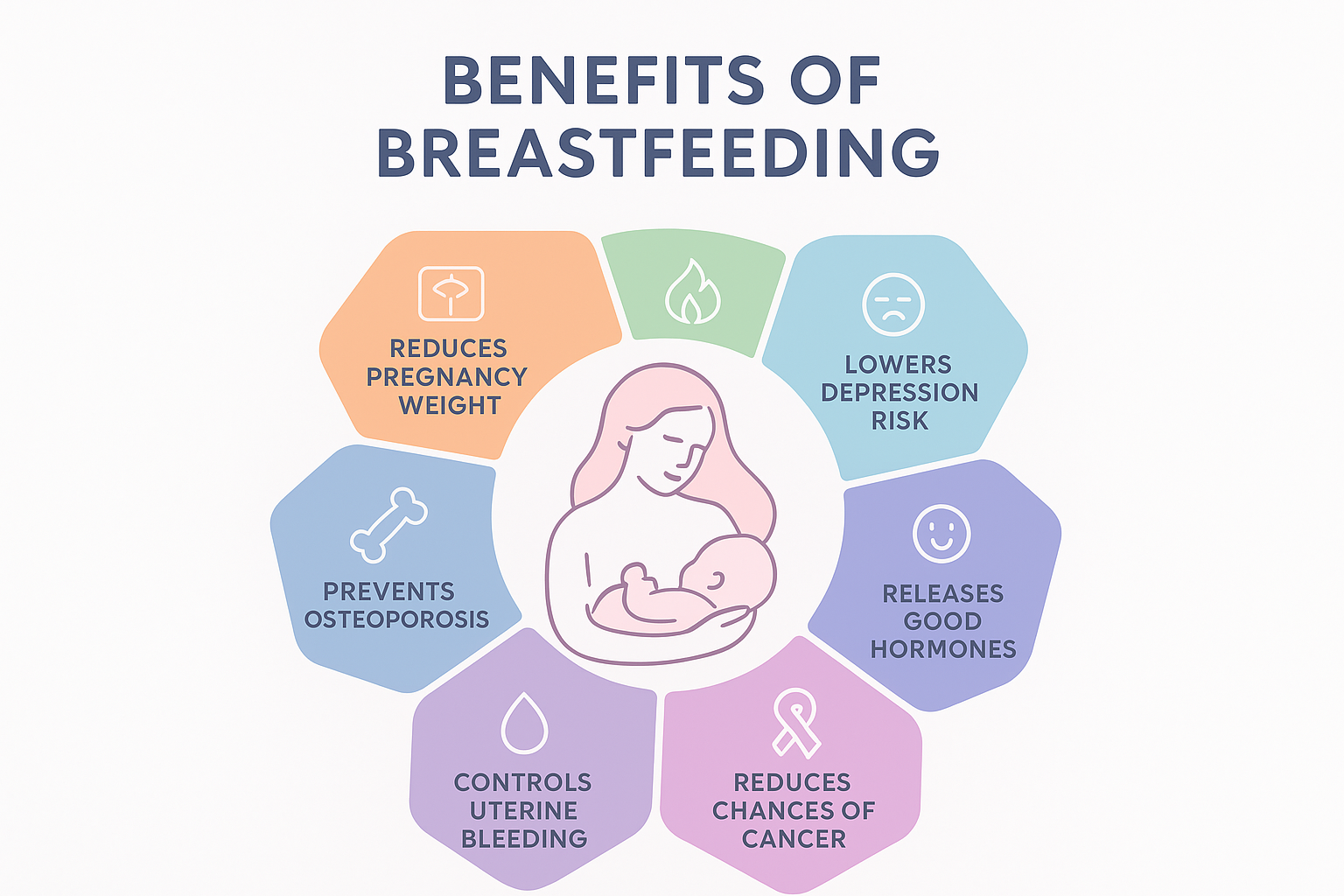
⚗️ Lancet 2002 Collaborative Group: 4.3% breast cancer risk reduction per 12 months | Ovarian cancer 28%/yearBreastfeeding is one of the most effective postpartum recovery tools available — and it begins working within minutes of the first feed. Infant suckling triggers oxytocin release from the maternal pituitary. Oxytocin causes uterine smooth muscle contraction — the sometimes uncomfortable “afterpains” felt during early breastfeeding feeds are the uterus contracting back to its pre-pregnancy size. This process, called uterine involution, reduces postpartum haemorrhage risk and accelerates the return of uterine tone.
Oxytocin also has profound psychological effects. It is the neurochemical foundation of bonding, trust, and social attachment — and its sustained elevation during lactation provides a measurable anxiolytic (anti-anxiety) effect that contributes to the lower rates of postpartum depression observed in breastfeeding mothers. A 2012 study in Archives of Women’s Mental Health found that mothers who breastfed had significantly lower postpartum depression scores than those who did not, with the protective effect scaling with duration.
Additional maternal metabolic breastfeeding benefits: exclusive breastfeeding requires approximately 500 extra calories daily — energy drawn from maternal fat stores accumulated during pregnancy. This is one mechanism for postpartum weight normalisation. Long-term, breastfeeding reduces risk of type 2 diabetes by 32%, hypertension, cardiovascular disease, and osteoporosis in the mother.
⚗️ Oxytocin → uterine involution + anxiolytic effect | PPD reduction | 500kcal/day maternal expenditureThe emotional bonding between breastfeeding mother and infant has a neurochemical architecture that is far richer than the sentimental language typically used to describe it. The oxytocin released during feeding creates a neurobiological state of affiliative bonding — reducing maternal stress reactivity, increasing sensitivity to infant cues, and creating a positive feedback loop where the infant’s satisfaction reinforces the mother’s nurturing behaviour.
From the infant’s perspective: at the breast, the baby experiences simultaneous satisfaction of hunger, physical warmth, familiar heartbeat sounds, maternal scent (the greatest orienting cue for newborns), skin-to-skin contact (which regulates temperature, heart rate, and cortisol), and the mechanical comfort of suckling. This multisensory regulation has documented effects on infant stress response — breastfed infants show lower cortisol reactivity to stressors, which is associated with better emotional regulation throughout childhood.
For Indian mothers specifically: the kangaroo care component of breastfeeding — skin-to-skin contact — is one of the most evidence-backed neonatal interventions for low-birth-weight babies, reducing mortality by up to 36% compared to standard care in resource-limited settings (Lancet 2016).
⚗️ Oxytocin bonding neuroscience | Cortisol reactivity reduction | Kangaroo care: 36% mortality reductionThe Perfect Latch — A Step-by-Step Guide That Actually Works
The single most important breastfeeding technique — and the root cause of most early breastfeeding challenges — is latch. Nipple pain, low milk transfer, low weight gain in the baby, and early weaning all commonly trace back to a suboptimal latch that, when corrected, resolves most downstream problems.
Good latch signs: Baby’s mouth covers most of the areola (not just the nipple). Lips are flanged outward like a fish. Chin is touching the breast. Nose is clear of the breast (slight tilt back of the head). Cheeks are rounded and full — not dimpled or sucked in. You hear rhythmic swallowing after a few sucks. No nipple pain after the initial 15–30 seconds of feeding. Baby releases naturally when satisfied.
Problem signs: Pain throughout the feed (not just at initial latch). Clicking or smacking sounds (air is entering with milk). Dimpled cheeks (baby is not getting adequate breast tissue). Baby feeds for very long periods but seems unsatisfied. Nipple comes out flattened, compressed, or with a crease mark after the feed. Baby loses weight beyond the normal 7–10% in the first week.
Position yourself comfortably first with good back support. Hold the baby facing your breast at nipple height — tummy to tummy. The most common latch error is hunching forward to bring breast to baby, which creates maternal back and shoulder pain and changes the angle of attachment. A nursing pillow (or rolled sari/towel) under the baby helps achieve the correct height without straining.
Tickle the baby’s lips with the nipple. Wait for the widest possible mouth opening — like a yawn. Many latching difficulties occur because the baby latches at 70% mouth opening rather than 100%. The wider the mouth, the more areola is captured and the more effective the milk transfer. Patience here prevents nipple pain later.
As baby opens wide, move the baby onto the breast aiming the nipple toward the palate — not straight into the centre of the mouth. This ensures the tongue is positioned under the breast tissue where it can compress the lactiferous ducts effectively. The lower jaw should take in significantly more breast than the upper jaw.
Immediately after latching, check that both lips are flanged (turned outward). If the lower lip is tucked in, gently use a clean finger to flange it outward without breaking the latch. The chin should be pressed into the breast — not hovering above it. If there is nipple pain after 30 seconds, break the seal with a clean finger inserted at the corner of the mouth and reposition.
After the initial rapid suckling to trigger let-down (typically 30–60 seconds), the rhythm should change to slow, deep sucks with audible swallowing — a soft “kuh” sound. This rhythm (suck-suck-swallow or suck-swallow-suck-swallow as milk flow increases) confirms effective milk transfer. If you never hear swallowing, the latch may need adjustment or let-down support.
Common Breastfeeding Challenges — Honest Solutions That Work
True physiological low milk supply — caused by insufficient glandular tissue, uncontrolled hormonal conditions, or certain medications — is less common than perceived. More frequently, what mothers experience as “low supply” is actually: ineffective latch reducing milk removal (the breast reads this as reduced demand), supplementation with formula reducing nursing frequency (reducing demand signal), scheduling feeds rather than feeding on demand (spacing out demand), or normal infant cluster feeding being interpreted as insufficiency.
The fundamental supply law: Milk production is a supply-and-demand system. The breast produces milk at the rate it is removed. Any practice that reduces milk removal — infrequent feeding, poor latch, introduction of formula, pacifier use before supply is established — signals the body to reduce production. The single most effective intervention for low supply is more frequent, more effective milk removal.
Evidence-based natural approaches: Power pumping (pumping for 10 minutes, resting 10, pumping 10, for an hour daily) mimics cluster feeding and signals demand. Skin-to-skin contact increases prolactin release. Oatmeal consumed daily has observational evidence for supply support (mechanism uncertain). Staying well-hydrated and adequately nourished (breastfeeding requires 500 extra calories daily — undernourished mothers produce less milk). And the Indian galactagogue tradition — see the section below.
⚗️ Supply-demand physiology | Power pumping protocol | Skin-to-skin prolactin elevationInitial latch discomfort in the first 5–10 seconds is common and normal, particularly in the first week as nipple skin adapts. Persistent pain throughout feeds, pain that worsens over days (rather than improving), and nipple trauma (cracking, bleeding, blistering) are signals of a latch problem — not of fragile anatomy. The solution is almost always latch correction, not endurance.
When to suspect tongue-tie (ankyloglossia): If latch correction does not resolve pain and the baby has difficulty maintaining suction, poor weight gain, clicking during feeds, or fatigue at the breast — tongue-tie assessment by a lactation consultant or paediatric dentist is warranted. Posterior tongue-tie is frequently missed on standard newborn examination. Frenotomy (tongue-tie release) is a rapid minor procedure with high success rates for improving latch and maternal comfort.
Between-feed nipple care: After each feed, express a few drops of hindmilk and allow to air dry on the nipple — hindmilk has antimicrobial and wound-healing properties. Medical-grade lanolin provides a moist healing environment for cracked nipples. Avoid soap on nipple skin — it strips the natural Montgomery gland secretions that have antimicrobial and lubricating properties.
⚗️ Tongue-tie (ankyloglossia) assessment | Hindmilk wound healing properties | Lanolin moist wound healingMastitis — inflammation of breast tissue, with or without bacterial infection — presents as a painful, red, hard area of breast tissue, often accompanied by flu-like symptoms (fever, chills, body aches). It occurs when milk stasis (milk remaining in the breast) triggers an inflammatory response, with or without secondary bacterial colonisation (most commonly Staphylococcus aureus).
The most important mastitis management principle: Continue breastfeeding. This is the single most effective treatment and the most counterintuitive for most mothers. Stopping breastfeeding leads to further milk stasis, worsening inflammation, and increases the risk of abscess formation. The milk is safe for the baby even with bacterial mastitis (the baby’s mouth is the source of the bacteria). Frequent drainage — ideally by nursing, or by pumping if nursing is too painful — is the primary treatment.
Additional management: Warm compresses before feeds (loosens stasis). Gentle breast massage toward the nipple during feeds. Position the baby’s chin or nose toward the affected area (the hardest-working drainage comes from where the chin points). Rest is essential — mastitis is most common in mothers who are overtired and stressed, and cortisol reduces immune response. Antibiotic therapy (usually flucloxacillin or dicloxacillin) is indicated for bacterial mastitis with systemic symptoms — your doctor will prescribe accordingly, and most antibiotics used for mastitis are safe during breastfeeding.
⚗️ Continue breastfeeding = primary mastitis treatment | Milk stasis → inflammatory cascade | Abscess preventionIndian Galactagogue Foods — Milk-Boosting Wisdom Your Grandmother Knew First
A galactagogue is any substance that promotes breast milk production. Indian traditional postpartum care (called Sutika Paricharya in Ayurveda) has a sophisticated dietary system for supporting lactation — and modern research is beginning to explain the mechanisms behind practices that have been followed for centuries.
| Indian Galactagogue | Active Mechanism | Evidence Level | Traditional Form | Important Notes |
|---|---|---|---|---|
| Methi (Fenugreek seeds) | Diosgenin — phytoestrogen that stimulates mammary gland prolactin receptor activity | Multiple clinical studies; most studied herbal galactagogue globally | Methi ladoo (with jaggery + ghee), methi seeds soaked and eaten, methi paratha | Can cause maple syrup odour in baby’s urine (harmless). Avoid in mothers with thyroid conditions — may interfere with medication absorption. Start with small amounts. |
| Saunf (Fennel seeds) | Anethole — phytoestrogen with prolactin-stimulating effect; also reduces infantile colic when passed through milk | Observational and traditional — clinical trials limited | Saunf water (boiled), saunf in dal tadka, fennel tea post-meals | One of the safest galactagogues — also benefits the baby through breast milk by reducing gas and colic. Widely used across Indian regions postpartum. |
| Ajwain (Carom seeds) | Thymol — digestive enzyme stimulation + traditional belief in uterine tonic effect | Traditional (Ayurvedic); limited formal trials | Ajwain water, ajwain in ghee (traditionally given postpartum), ajwain paratha | Also supports postpartum digestion — particularly valued for reducing maternal gas and bloating in the post-delivery period. |
| Satavari (Asparagus racemosus) | Steroidal saponins (shatavarins) — support oestrogen-like receptor activity and prolactin secretion | 2 small RCTs showing milk volume increase; growing clinical evidence base | Satavari powder in warm milk with ghee and jaggery (Satavari kalpa); Satavari churna | The primary Ayurvedic herb for lactation — used for millennia specifically in Stanyajanana (milk-producing) formulations. Available in Ayurvedic pharmacy. Consult an Ayurvedic practitioner for dosing. |
| Jeera (Cumin seeds) | Phytosterols — possible prolactin pathway support; also improves maternal digestion and iron absorption | Observational; culturally consistent use across millennia | Jeera water (boiled and cooled), jeera in tadka, jeera rice | Also improves postpartum iron absorption — important given high rates of postpartum anaemia in Indian mothers. A dual benefit galactagogue. |
| Dink (Edible gum / Gondh) | Complex polysaccharides providing energy and traditional belief in uterine healing and milk support | Traditional; limited formal trials — widely used across Gujarat, Maharashtra, Rajasthan postpartum | Gondh ladoo (with ghee, nuts, jaggery) — the quintessential Indian postpartum food | High caloric density — supports the 500 extra calories per day required for breastfeeding. The ghee and nut components provide fat and protein essential for milk production. |
| Til (Sesame seeds) | Phytoestrogens (lignans); calcium and iron for maternal recovery; energy for milk production | Traditional; nutritional rationale well-established | Til ladoo (with jaggery + ghee), til chutney, til in khichdi | The calcium in til is particularly valuable for breastfeeding mothers — breastfeeding draws approximately 250–300mg calcium daily from maternal bone stores if intake is insufficient. Til is the richest plant calcium source. |
What Breastfeeding Mothers Should Eat — The Evidence Beyond “Eat Well”
Breastfeeding imposes the highest nutritional demands of any life stage — higher than pregnancy in many respects. A breastfeeding mother needs approximately 500 extra calories daily, and specific nutrients at increased levels to maintain both her own stores and milk quality.
Iodine (critical — most overlooked): Breast milk iodine is entirely dependent on maternal intake, and iodine is the most critical nutrient for infant brain development. Always use iodised salt. Many Indian mothers switch to rock salt (sendha namak) or black salt during and after pregnancy — neither is iodised. This is a serious error with real cognitive consequences for the infant.
Vitamin D: Breast milk is naturally low in Vitamin D — it is the one nutritional gap that breastfeeding cannot fully fill without supplementation. Paediatric guidelines globally recommend Vitamin D supplementation for exclusively breastfed infants (400 IU daily). Sun exposure for both mother and baby helps, but is rarely sufficient to meet infant Vitamin D needs through breast milk alone, particularly in urban Indian conditions with limited outdoor time.
Omega-3 DHA: The DHA content of breast milk reflects maternal intake. For vegetarian/vegan mothers: algae-based DHA supplementation (400mg/day) is the most direct intervention. Walnuts and flaxseed provide ALA (which partially converts to DHA) — eat both daily. Cooking with mustard oil (higher in ALA than most refined oils) provides additional omega-3.
Calcium: Breastfeeding draws approximately 250–300mg calcium daily from maternal bone — which is largely recovered post-weaning, but adequate maternal intake during lactation matters. Ragi (finger millet), til, homemade curd, and dairy provide calcium efficiently in the Indian diet.
Iron: Breast milk iron is low by design — HMOs ensure it is used efficiently by the infant gut rather than by pathogenic bacteria. Maternal iron stores matter for maternal energy and mood, not for milk iron content. Continue iron-rich foods (spinach with amla, horse gram, jaggery, ragi) to support postpartum maternal recovery.
B12 (critical for vegetarians): Breast milk B12 depends entirely on maternal intake. Vegetarian Indian mothers on no supplement are at high risk of B12 deficiency — and B12-deficient breast milk is a direct cause of infant B12 deficiency with serious neurological consequences (infantile B12 deficiency presents as developmental regression, irritability, and neurological signs). B12 supplementation for vegetarian/vegan breastfeeding mothers is non-negotiable.
Breastfeeding Myths vs. Facts — The Ones That Make It Harder
“If my baby feeds constantly, I must not have enough milk.”
Cluster feeding — periods of frequent nursing, often in the evenings — is normal infant behaviour and how babies stimulate supply increases during growth spurts. It is not evidence of insufficient milk. A baby having 6+ wet nappies daily and appropriate weight gain is getting enough milk, regardless of feeding frequency.
“Small breasts produce less milk than large breasts.”
Breast size reflects adipose (fat) tissue — not glandular tissue. Milk-producing glandular tissue is not correlated with breast size. Women with small breasts can and do breastfeed exclusively and produce abundant milk. Breast size is not a predictor of milk supply capacity.
“You must not eat spicy food while breastfeeding — it will upset the baby.”
There is no evidence that maternal consumption of spicy food upsets breastfed babies. In fact, flavours from the mother’s diet pass into breast milk and provide infant flavour learning — babies of mothers who eat spicy, varied food accept diverse foods more readily when weaned. The “bland diet for breastfeeding mothers” advice is not evidence-based and unnecessarily restricts maternal nutrition.
“You should breastfeed for only 6 months — after that, breast milk has no nutritional value.”
WHO recommends continued breastfeeding alongside complementary foods for 2 years or beyond. After 6 months, breast milk still provides 50% of caloric needs at 6–12 months, 30% at 12–24 months, and continues to provide immune factors, growth factors, and protective antibodies for as long as nursing continues. The composition adapts — not declines — over time.
“You should stop breastfeeding if you’re ill.”
For most common illnesses (cold, flu, gastroenteritis), continuing to breastfeed protects the baby. The mother’s immune system generates pathogen-specific antibodies within 24–48 hours of exposure, which appear in breast milk. Stopping breastfeeding removes the baby’s most active immune protection at exactly the moment it’s most needed. Only specific infections (HIV in certain contexts, active untreated TB, active herpes lesions on the breast) require cessation or modification.
Frequently Asked Questions About Breastfeeding Benefits
The most evidence-backed breastfeeding benefits for babies are: passive immunity via pathogen-specific sIgA, gut microbiome seeding through HMOs, cognitive advantage (8-point IQ advantage per standard deviation of breastfeeding in the PROBIT trial), 73% reduced SIDS risk, reduced risk of obesity, type 1 and type 2 diabetes, asthma, eczema, and childhood leukaemia, and epigenetic programming through breast milk microRNA that influences immune and metabolic development for life.
Key breastfeeding benefits for mothers include: 4.3% breast cancer risk reduction per 12 months of breastfeeding (cumulating to ~50% lifetime reduction), 28% reduced ovarian cancer risk per year, faster uterine involution via oxytocin, postpartum weight normalisation through 500kcal/day expenditure, reduced postpartum depression risk, lower rates of type 2 diabetes, hypertension, and osteoporosis long-term, and lactational amenorrhoea providing natural birth spacing.
Colostrum is the thick, yellowish first milk produced in the first 2–5 days postpartum. It is called liquid gold because it contains 100x more secretory IgA than mature milk, high lactoferrin (antimicrobial), active immune cells (macrophages, lymphocytes), growth factors for intestinal maturation, and HMOs that seed the infant gut microbiome. It is produced in small volumes (5–20ml per feed day 1) precisely calibrated for the newborn stomach — never discard it.
The most effective ways to increase supply: nurse or pump more frequently (supply is demand-driven), ensure correct latch, skin-to-skin contact (raises prolactin and oxytocin), stay well-hydrated and eat adequate calories (500 extra/day), and sleep as much as possible (prolactin peaks during sleep). Indian galactagogue foods with evidence include methi seeds, saunf, satavari, and the nutritional support from gondh ladoo and til preparations. Power pumping (10 min on, 10 off, 10 on, for 1 hour) mimics cluster feeding and signals supply increase.
WHO recommends exclusive breastfeeding for 6 months, then continued breastfeeding alongside complementary foods for 2 years or beyond. The breastfeeding benefits are dose-dependent — any breastfeeding is beneficial, and longer duration produces greater outcomes for mother and baby. Even a few weeks of colostrum provides immunological benefit that cannot be replicated. The weaning decision is personal and should be made free of social pressure in either direction.
A correct latch: baby’s mouth covers most of the areola, lips flanged outward, chin touching breast, nose clear, cheeks rounded (not dimpled), audible swallowing after a few sucks, no pain after first 30 seconds. To achieve: bring baby to breast (not breast to baby), wait for wide-open mouth, aim nipple toward palate. If latch is painful after 30 seconds — break suction with a clean finger and reposition. Persistent pain despite latch correction warrants tongue-tie assessment by a lactation consultant.
Related Articles You’ll Love
In a few teaspoons of yellowish milk, there is more immune intelligence than in any pharmaceutical preparation ever developed. In the act of nursing, there is oxytocin science, microbiome architecture, epigenetic programming, and the oldest and most tested form of maternal love that exists. The breastfeeding journey is not always easy. It asks something real of mothers — time, pain tolerance, patience, and often a willingness to ask for help.
But the science is unambiguous: it is worth it. And every mother who struggles with it deserves support, knowledge, and the understanding that the difficulties are common, temporary, and solvable.
If you are breastfeeding right now — you are doing something extraordinary. Your body knows it, even when it’s hard. 🌸Which breastfeeding benefit surprised you most — the 50% breast cancer risk reduction, the SIDS protection, or the microchimerism-like immune intelligence of the sIgA system? Share this with a new or expecting mother who needs the full picture. 👇
Sources & Further Reading
- The Lancet (2002) — Collaborative Group: Breastfeeding and Breast Cancer Risk — 4.3% Reduction per 12 Months
- Lancet (2008) — PROBIT Trial: Breastfeeding and Cognitive Development at Age 6.5 Years
- Pediatrics (2011) — Meta-Analysis: Breastfeeding and SIDS Risk Reduction (73% with exclusive breastfeeding)
- Lancet Global Health (2015) — Victora et al.: Economic Impact of Low Breastfeeding Rates — $302 Billion Analysis
- Lancet Oncology (2015) — Childhood Leukaemia and Breastfeeding: Meta-Analysis of 18 Studies
- The Lancet (2016) — Kangaroo Care and Neonatal Mortality: 36% Reduction
- WHO — Infant and Young Child Feeding: Global Recommendations
- Archives of Women’s Mental Health (2012) — Breastfeeding and Postpartum Depression: Meta-Analysis
- HerbeeLife — The Pregnancy Journey: Trimester-by-Trimester Science Guide for Indian Mothers
- HerbeeLife — Natural Health & Ayurvedic Wellness
Disclaimer: This content is for informational purposes only and does not constitute medical advice. Always consult your paediatrician, lactation consultant, or qualified healthcare professional for breastfeeding support. Read full disclaimer →


