
Before You Brew: The Science That Makes Herbal Tea Actually Work
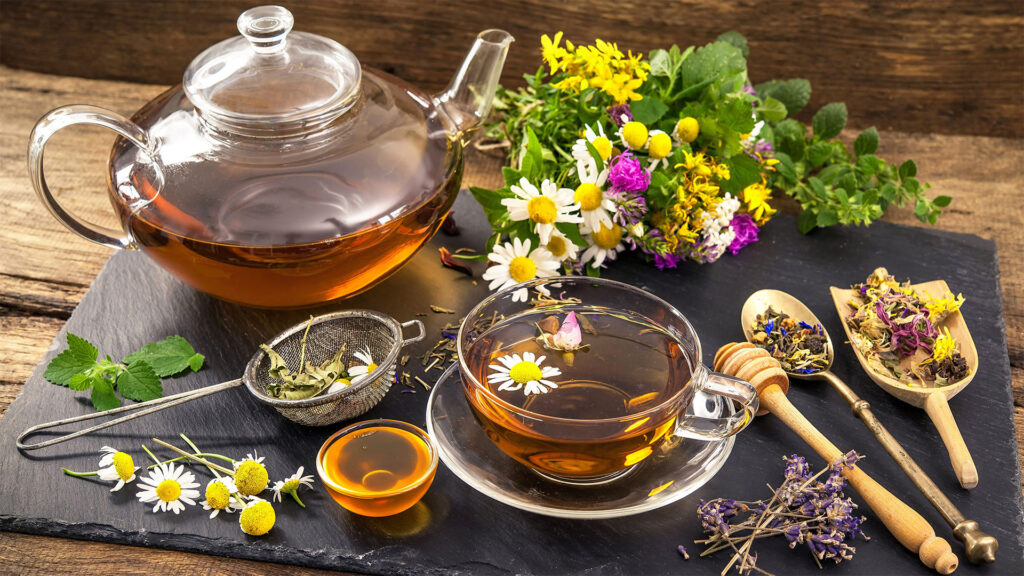
Herbal tea is not placebo dressed in warm water. The active compounds in plants — polyphenols, terpenoids, alkaloids, saponins, volatile oils — dissolve in hot water and are absorbed through the gastrointestinal mucosa and nasal inhalation (from the steam). Understanding three things makes every cup more effective:
Water temperature: Most volatile aromatic compounds (the terpenoids responsible for the calming effects of tulsi, brahmi, and chamomile) are destroyed at full boiling. Brew delicate herbs at 80–90°C — water that has just gone off the boil or been left to cool for 2 minutes. Hard roots and spices (ashwagandha, ginger, cinnamon, black pepper) require full simmering to extract their water-insoluble or slow-dissolving compounds.
Steep or simmer: Leaves and flowers: steep (pour hot water, cover, wait). Roots, bark, and seeds: simmer (add to cold water, bring to boil, reduce heat, simmer 10–20 minutes). Covering the pot during steeping traps the volatile aromatic compounds that would otherwise escape with the steam — these compounds include many of the most therapeutically active constituents.
Bioavailability enhancers: Fat-soluble compounds (curcumin in turmeric, withanolides in ashwagandha) absorb far better with a small amount of fat — adding a few drops of ghee or drinking with full-fat milk dramatically improves delivery. Piperine in black pepper increases absorption of dozens of plant compounds, including curcumin, by up to 2,000%. Adding a small piece of black pepper or a pinch of pepper powder to most herbal teas improves the bioavailability of their active compounds at no additional cost.
| Indian Herb | Key Active Compound(s) | Primary Mechanism | Best Brewing Method |
|---|---|---|---|
| Tulsi (Holy Basil) | Eugenol, ursolic acid, orientin | HPA axis normalisation → cortisol reduction | Antimicrobial | Steep fresh leaves 5–7 min at 85°C. Cover pot. |
| Ashwagandha root | Withanolides, triethylene glycol | Cortisol reduction (44% in RCT) | Non-REM sleep promotion | Simmer root powder 10–12 min. Best in warm milk. |
| Brahmi (Bacopa) | Bacosides A & B | GABAergic modulation | Acetylcholinesterase inhibition | Simmer fresh leaves 15 min or steep dried leaves 10 min. |
| Adrak (Ginger) | Gingerols, shogaols | COX inhibition (anti-inflammatory) | Prokinetic gastric emptying | 5-HT3 anti-nausea | Simmer fresh slices 8–10 min. Thin slices = more surface area. |
| Mulethi (Licorice root) | Glycyrrhizin, glabridin | Demulcent throat coating | Adrenal tonic | Anti-inflammatory | Simmer stick 10–15 min. Small amounts — sweet and potent. |
| Saunf (Fennel seeds) | Anethole, fenchone | Smooth muscle antispasmodic → digestive | Mild oestrogenic | Boil seeds 7–8 min or steep crushed seeds 10 min. |
| Ajwain (Carom seeds) | Thymol (35–60% of oil) | Calcium channel blockade → gut muscle relaxation | Carminative | Boil seeds 5–7 min. Strong and immediate. |
| Dalchini (Cinnamon) | Cinnamaldehyde, eugenol | AMPK activation → insulin sensitivity | Antimicrobial | Simmer stick 15 min — cinnamaldehyde needs heat + time. |
| Elaichi (Cardamom) | 1,8-Cineole, α-terpinyl acetate | Bronchodilator | Digestive enzyme stimulant | Antioxidant | Crush pods, steep 5 min or add to simmering kadha. |
| Chamomile | Apigenin, bisabolol | GABA-A modulation (anxiolytic) | Anti-inflammatory bisabolol | Steep flowers 5–7 min at 85°C. Do not boil. |
| Methi (Fenugreek) | 4-Hydroxyisoleucine, galactomannan | Insulin sensitisation | Mucilaginous throat/stomach coat | Boil seeds 8–10 min. Slightly bitter — add honey. |
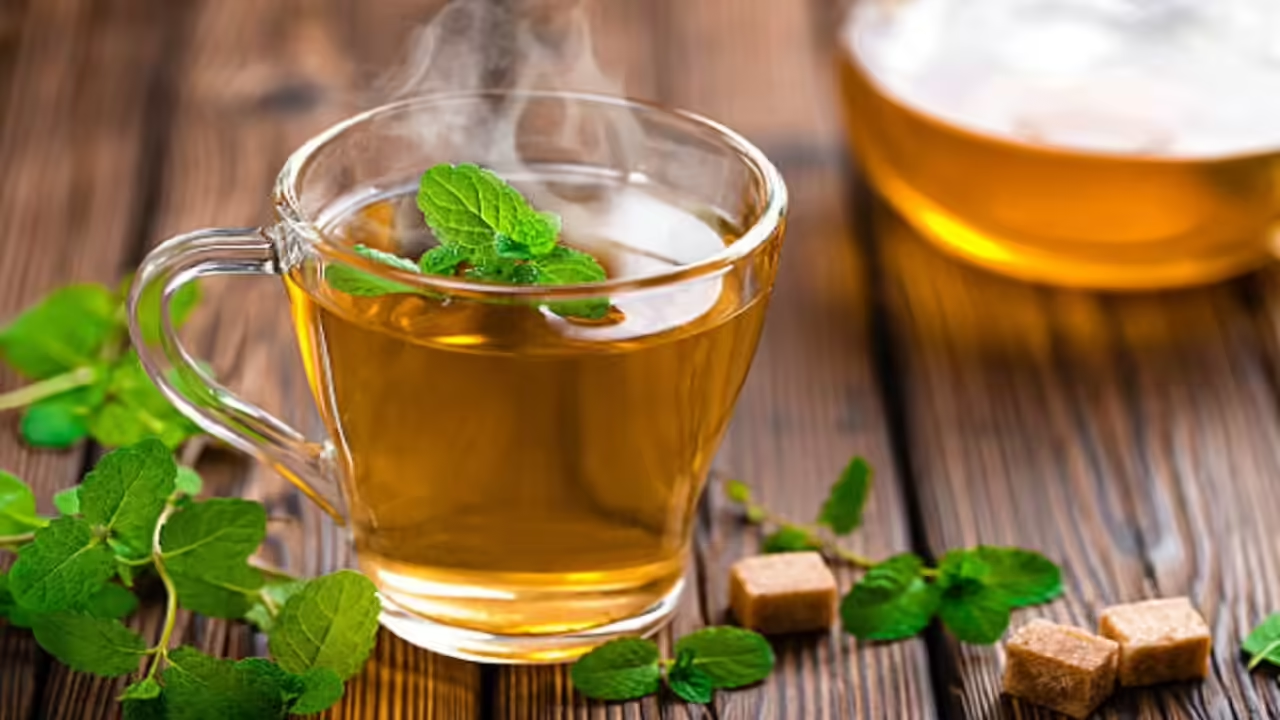
| Pudina (Peppermint) | Menthol, menthone | GI smooth muscle relaxation | Nasal decongestant | Cooling | Steep fresh leaves 5 min at 85°C. Never boil — destroys menthol. |
The morning kadha is not a wellness trend — it is a pharmacologically precise morning preparation that has kept Indian respiratory health robust through monsoon seasons and winter months for millennia. Tulsi provides eugenol and ursolic acid that suppress morning cortisol spikes and provide broad-spectrum antimicrobial coverage against respiratory pathogens. Ginger accelerates gastric emptying — activating the gastrocolic reflex that produces the morning bowel movement — and provides gingerol-mediated COX inhibition reducing overnight inflammatory cytokine accumulation. Black pepper’s piperine acts as a bioavailability enhancer for all other compounds in the preparation, including turmeric if added, while providing its own mild bronchodilatory effect.
- Add water, crushed peppercorns, ginger slices, and mulethi (if using) to a small saucepan. Bring to a boil.
- Reduce heat to low simmer. Add tulsi leaves. Cover the pan.
- Simmer 8–10 minutes until the liquid reduces slightly and deepens in colour.
- Strain into a cup. Allow to cool to comfortable drinking temperature (below 65°C — very hot tea increases oesophageal cancer risk with regular consumption).
- Stir in honey only after cooling — heating honey above 60°C produces hydroxymethylfurfural (HMF), reducing its therapeutic activity and creating mild toxic compounds.
This is the most pharmacologically dense anti-inflammatory tea in this guide. Curcumin (turmeric) inhibits NF-kB — the master inflammatory transcription factor driving chronic low-grade inflammation. Cinnamaldehyde (cinnamon) activates AMPK — improving insulin sensitivity and reducing the metabolic inflammation that underlies most chronic disease. Gingerols (ginger) inhibit COX-1 and COX-2 — the prostaglandin-producing enzymes also targeted by NSAIDs. Black pepper’s piperine increases curcumin bioavailability by 2,000% — without it, curcumin has approximately 1% oral bioavailability. A small amount of fat (milk or ghee) further improves curcumin absorption as a fat-soluble compound.
- Add water, cinnamon stick, ginger, and black pepper to a saucepan. Bring to a gentle simmer.
- Add turmeric powder and stir well — turmeric does not dissolve easily without stirring.
- Simmer 10–12 minutes. Add milk in the last 2 minutes if using.
- Strain into cup. Cool to below 65°C. Add honey.
- The slight yellow colour of your cup and lips after drinking is the curcumin — it confirms the compound has dissolved and is bioavailable.
This is the closest the Indian kitchen comes to pharmaceutical anxiolytic support — and it has multiple clinical trials supporting it. Ashwagandha (Withania somnifera) contains withanolides that reduce serum cortisol, inhibit stress-induced neural inflammation, and normalise HPA axis reactivity. A 2012 randomised, double-blind clinical trial found 300mg ashwagandha root extract daily reduced perceived stress by 44% and serum cortisol by 27.9% vs placebo over 60 days. Brahmi (Bacopa monnieri) contains bacosides A and B — which modulate GABAergic neurotransmission (improving the brain’s inhibitory tone) and have documented anxiolytic effects in human trials. Mulethi (licorice root) provides glycyrrhizin that supports adrenal cortex function — reducing adrenal fatigue that amplifies anxiety in chronically stressed individuals.
- Bring water or milk to a gentle simmer. Add ashwagandha powder and mulethi. Stir.
- Simmer 10–12 minutes on low heat — ashwagandha’s withanolides require extended heat extraction.
- Add brahmi leaves or powder in the last 3 minutes.
- Strain. Cool to below 65°C. Add honey and cardamom.
- In warm milk: the tryptophan in milk adds additional serotonin-pathway support. This combination in warm milk at bedtime is the most complete natural evening stress-relief and sleep preparation available.
For day-to-day stress that doesn’t require the full adaptogenic protocol. Chamomile’s apigenin binds GABA-A receptors at the benzodiazepine binding site — producing anxiolytic effects without sedation at the concentrations achievable in tea. A 2009 double-blind clinical trial confirmed chamomile extract significantly reduced anxiety. Tulsi’s eugenol and carvacrol reduce reactive oxygen species in the hypothalamus (oxidative stress in the hypothalamus drives anxiety amplification). Saunf/fennel’s anethole has mild antispasmodic effects on intestinal smooth muscle — addressing the gut-brain axis component of anxiety (the nervous gut that accompanies stress). The aroma of chamomile alone produces measurable reductions in cortisol through olfactory-limbic system activation.
- Heat water to 85°C (just off the boil — or boiled water left for 2 minutes).
- Crush fennel seeds lightly with the back of a spoon. Place in cup or teapot with chamomile and tulsi.
- Pour hot water over. Cover immediately — the aromatic terpenes that produce calming effects escape with steam.
- Steep 6–7 minutes. Strain and cool to comfortable temperature.
- Breathe the steam before drinking — the inhalation of chamomile aromatics directly activates the olfactory-limbic-hypothalamic calming pathway even before the compounds are absorbed from the gut.
The Ayurvedic preparation of ashwagandha in warm milk at bedtime is documented in the Charaka Samhita as a rejuvenating nighttime tonic. Modern pharmacology explains precisely why it works for sleep: triethylene glycol in ashwagandha was identified in a 2017 study as the specific compound that promotes non-REM sleep; withanolides reduce cortisol enabling the natural cortisol decline that must occur for sleep onset; brahmi’s bacosides improve GABAergic tone (the neurochemistry of relaxation); and nutmeg (jaiphal) contains myristicin and elemicin — mild MAO inhibitors and serotonergic compounds that, at culinary doses, produce gentle sedation and mood quieting without the risks of pharmaceutical MAOIs. Warm milk provides tryptophan — a serotonin and melatonin precursor that completes the sleep neurochemistry. For more on sleep remedies: Home Remedies for Better Sleep
- Add milk to a small saucepan. Warm on low heat — do not boil (boiling milk destroys tryptophan and B vitamins).
- Add ashwagandha powder and brahmi. Stir continuously while warming for 5–7 minutes.
- Remove from heat. Add the tiny pinch of nutmeg and cardamom.
- Cool to comfortable drinking temperature. Add honey.
- Drink 30–45 minutes before intended bedtime. The preparation time is the beginning of the wind-down — treat the brewing as ritual.
This is the most targeted anti-gas, anti-bloat tea available from the Indian kitchen — combining three different carminative mechanisms in one cup. Ajwain’s thymol (35–60% of essential oil) blocks calcium channels in intestinal smooth muscle — producing direct relaxation that releases trapped gas within 15–20 minutes. Saunf’s anethole relaxes the gastrointestinal smooth muscle along the entire digestive tract. Ginger’s gingerols are prokinetic — accelerating gastric emptying and intestinal transit, moving gas through the system. A tiny pinch of hing (asafoetida) in the finished tea adds ferulic acid that dissolves gas bubbles at a physical level. This combination addresses the same problem from four different angles — it works where single-herb preparations often don’t. For the full science on digestion: Boost Digestion Naturally
- Add water, ginger, ajwain, and saunf to a small pan. Bring to a boil.
- Boil 5–6 minutes. The seeds need direct boiling to release their volatile oils fully into the water.
- Remove from heat. Add hing and stir — dissolve in the hot water rather than boiling to prevent bitter compounds from the resin forming.
- Strain into cup. Add a pinch of kala namak (the sulphur compounds in kala namak stimulate digestive enzyme secretion).
- Drink warm — ideally while still feeling the warmth of the steam against your face, which provides additional carminative benefit through direct inhalation of volatile compounds.
This is the Ayurvedic Pitta-cooling tea — designed specifically for hyperacidity, GERD symptoms, and the burning sensation of gastric excess acid. Mulethi (licorice root) contains glycyrrhizin and carbenoxolone precursors that stimulate mucus production in the gastric lining — creating the protective mucus layer that separates stomach acid from the epithelial cells beneath. This is the same mechanism as misoprostol (a gastric cytoprotective drug). Coriander seeds (dhania) are alkalinising and have mild antacid properties through mineral-buffering activity. Saunf provides antispasmodic lower oesophageal sphincter relaxation (note: if you have GERD, saunf may worsen sphincter laxity — use with awareness). Mishri (rock candy) is hygroscopic and demulcent, coating the oesophageal lining gently. This preparation should be made cool or at room temperature for GERD — warm preparations can worsen reflux symptoms.
- For GERD: soak all ingredients in room-temperature water for 2–4 hours (cold infusion). Strain and drink at room temperature. Warm liquids can worsen reflux.
- For general hyperacidity (without reflux): bring water and ingredients to a gentle simmer for 10 minutes. Strain. Cool to warm (not hot) before drinking.
- Add mishri at the end — dissolve in the prepared liquid. Do not boil mishri as it loses its demulcent character.
- Drink slowly — the slower the consumption, the more coating contact time the mulethi-infused liquid has with the oesophageal and gastric lining.
The COVID-19 pandemic brought kadha back to national prominence — but this preparation was prescribed in Ayurvedic texts for respiratory immunity centuries before any virus had a name. Each ingredient addresses a different dimension of respiratory health: tulsi’s eugenol has documented antiviral activity against influenza and respiratory RNA viruses. Ginger’s shogaols are mucolytic — thinning the mucus secretions that harbour respiratory pathogens. Clove (laung) contains eugenol at even higher concentration than tulsi, with the strongest antibacterial activity of any common Indian spice (MIC against respiratory pathogens well-documented). Cinnamon’s cinnamaldehyde disrupts bacterial cell membranes. Black pepper piperine is a bioavailability multiplier for all other compounds and has independent bronchodilatory effects. Mulethi glycyrrhizin has specific antiviral activity documented against influenza, RSV, and other respiratory viruses in laboratory studies.
- Add all hard ingredients (clove, cinnamon, peppercorns, mulethi, ginger) to water. Bring to boil.
- Reduce to a low simmer. Cover. Simmer 15–18 minutes — the extended simmer is essential for cinnamaldehyde, eugenol (clove), and glycyrrhizin extraction.
- Add tulsi leaves in the last 3 minutes only — their volatile terpenes dissipate with extended boiling.
- Strain. Reduce should be approximately 1–1.5 cups from original 2 cups — concentration indicates adequate extraction.
- Cool to below 65°C. Add honey generously — honey’s hydrogen peroxide provides independent antimicrobial activity in the throat.
- Inhale the steam while straining — the volatile oils in the steam provide direct nasal antimicrobial and decongesting benefit.
When the illness has set in and the airways need clearing, this tea addresses the mucolytic and bronchodilatory dimensions. Cardamom’s primary compound 1,8-cineole (eucalyptol) is a direct bronchodilator — it relaxes bronchial smooth muscle through the same calcium channel mechanism as pharmaceutical bronchodilators, improving airflow in congested airways. Cineole is also mucolytic — it reduces the viscosity of mucus secretions, making them easier to expel. Ginger’s shogaols (the dehydrated form of gingerols, predominant in dried ginger/saunth) specifically break up bronchial mucus through proteolytic activity. Mulethi has expectorant properties — stimulating the bronchial glands to produce more fluid secretions that help shift thick, sticky mucus.
- Simmer all ingredients in water for 12–15 minutes, covered.
- When straining: lean over the pot and inhale the steam through the nose for 2–3 minutes before drinking — the 1,8-cineole in the steam directly reaches the bronchial mucosa through inhalation, before even being ingested.
- Strain into cup. Cool to comfortable temperature. Add honey generously.
- Sip slowly. The slower the consumption, the longer the demulcent and expectorant compounds coat the pharynx and larynx.
This tea targets blood glucose through three complementary mechanisms simultaneously. Methi (fenugreek) seeds contain 4-hydroxyisoleucine — a unique amino acid that directly stimulates insulin secretion from pancreatic beta cells — and galactomannan (soluble fibre) that slows carbohydrate absorption in the small intestine. Cinnamon’s cinnamaldehyde activates AMPK (AMP-activated protein kinase) — improving insulin receptor sensitivity in muscle cells through the same pathway as the diabetes drug metformin. Ginger’s gingerols inhibit alpha-glucosidase (the intestinal enzyme that breaks down complex carbohydrates), slowing glucose absorption from meals. Cardamom’s cineole improves pancreatic beta cell function. For the full blood sugar picture: Lower Blood Sugar Naturally
- If possible, soak methi seeds overnight in the water — soaking pre-dissolves galactomannan and reduces bitterness.
- The next morning: add soaked methi with soaking water, cinnamon, ginger, and cardamom to saucepan. Simmer 12–15 minutes.
- Strain. Drink warm — no sweetener. The mild bitterness of methi is part of the therapeutic effect.
- If bitterness is difficult: add a small piece of mulethi to the simmer — its natural sweetness balances the taste without sugar.
Green tea’s caffeine provides gentle stimulation — but what makes green tea uniquely superior to coffee for sustained energy is L-theanine, an amino acid that crosses the blood-brain barrier and promotes alpha-wave brain activity (the brain state of relaxed alertness, enhanced focus without agitation). L-theanine combined with caffeine produces “calm alertness” — documented in multiple human trials to improve attention and reaction time without the anxious jitteriness of caffeine alone. EGCG (epigallocatechin gallate) adds anti-inflammatory support and mild thermogenic fat-oxidation. Tulsi’s adaptogens maintain the energy without the cortisol spike that strong caffeine triggers. Ginger’s prokinetic properties improve morning gut motility. Lemon’s Vitamin C stabilises EGCG, preventing its degradation — significantly improving catechin bioavailability.
- Heat water to 75–80°C — not boiling. Boiling water destroys EGCG catechins. If you don’t have a thermometer: boil water, then wait 3–4 minutes before using.
- Add tulsi and ginger to the hot water first. Steep 2 minutes.
- Add green tea leaves. Steep a total of 3 minutes from this point — not longer. Over-steeping green tea at any temperature releases excess tannins creating excessive bitterness and reducing catechin bioavailability.
- Strain. Add lemon juice after straining, not before — citric acid slightly lowers the brewing temperature and preserves EGCG from oxidation.
- Do not add milk — milk proteins bind to catechins, reducing their absorption significantly.
The Brew Master’s Corner — Precision Tips That Double Your Tea’s Potency
Herbal teas are supportive medicine — appropriate for mild-to-moderate, functional, everyday health concerns. They are not appropriate as the sole management for: diagnosed anxiety disorders or clinical depression (require professional assessment and often pharmacological or psychotherapeutic treatment); sleep disorders with underlying pathology (sleep apnoea, restless legs syndrome — require medical diagnosis); bacterial or viral infections with fever above 38.5°C for more than 2 days; blood glucose levels requiring medication adjustment; or any condition where you are already on prescribed medication without discussing herb-drug interactions with your doctor. Several herbal compounds have documented interactions with common medications — ashwagandha can interfere with thyroid medication, mulethi can raise blood pressure, methi can potentiate diabetes drugs, green tea can reduce iron absorption. Inform your doctor of any herbal teas taken regularly.
Frequently Asked Questions
Strongest clinical evidence for anxiety: ashwagandha tea (2012 RCT: 44% stress reduction, 27.9% cortisol reduction), chamomile tea (2009 clinical trial: significant anxiety reduction through GABA-A apigenin binding), brahmi tea (bacosides: GABAergic modulation in human trials), and tulsi/holy basil tea (multiple studies: HPA axis normalisation, cortisol reduction). For immediate daily calm: chamomile + tulsi + saunf tea. For deeper, sustained anxiety management: ashwagandha + brahmi in warm milk at bedtime, consistently over 4–8 weeks.
The most evidence-backed Indian sleep tea: ashwagandha + brahmi in warm milk at bedtime. Triethylene glycol in ashwagandha specifically promotes non-REM sleep (2017 study). Bacosides improve GABAergic sleep neurotransmission. Milk tryptophan provides melatonin precursor. A small pinch of nutmeg (jaiphal) adds mild serotonergic sedation. Chamomile tea alone is also effective and more gentle — suitable when ashwagandha is not available or tolerated. Consistency matters more than any single ingredient — establish a nightly tea ritual 30–45 minutes before sleep.
Kadha is the traditional Indian medicinal decoction — herbs simmered in water for 15–30 minutes, producing a concentrated, more therapeutically potent preparation than Western-style herbal tea (5–10 minute steep). Simmering extracts water-insoluble and slow-dissolving compounds from hard spices (cinnamon, cloves, pepper, ginger) that steeping cannot. The reduced liquid (typically reducing from 2 cups to 1–1.5 cups) indicates adequate compound extraction. Kadha is the standard Ayurvedic preparation for immunity, respiratory health, and concentrated herbal medicine.
Yes — for most healthy adults. Tulsi is an adaptogen that modulates rather than forces physiological responses, suitable for ongoing daily use. Daily tulsi tea provides anti-stress adaptogenic activity, antimicrobial protection, mild blood glucose moderation, and antioxidant benefit. Cautions: pregnant women — moderate culinary amounts only (not concentrated medicinal doses; tulsi has mild uterotonic properties at high concentrations). People on blood thinners: discuss with doctor (eugenol has mild anticoagulant activity). At typical tea concentrations (4–6 fresh leaves), tulsi is considered safe for daily use.
Delicate herbs (fresh tulsi, chamomile flowers, fresh mint): 5–7 minutes, covered, at 85°C. Never boil these — destroys volatile aromatic compounds. Roots and hard spices (ashwagandha, mulethi, cinnamon, cloves, ginger): 10–20 minutes simmering — these require heat and time for water extraction. Seeds (methi, ajwain, saunf, coriander): 7–10 minutes boiling. The key rule: cover the pot always. And do not over-steep — beyond optimal time, tannins are released making tea bitter without additional therapeutic benefit.
Related Articles You’ll Love
Every cup your grandmother made was pharmacology she hadn’t named. Tulsi for cortisol. Mulethi for the throat. Ajwain for the stomach. Ashwagandha in warm milk for the sleep that couldn’t come. The compounds were there. The mechanisms were real. The clinical trials eventually arrived to confirm what the kitchen had always known.
Cover the pot. Don’t boil honey. Add black pepper. Use fresh herbs when you can. Simmer the roots. Steep the flowers. And drink slowly — the aroma alone is half the medicine.
Your kitchen has a pharmacy. It has always had one. Now you know exactly how to use it. 🍵Which brew mechanism surprised you most — the ashwagandha triethylene glycol sleep compound, piperine’s 2,000% bioavailability enhancement, or cardamom’s bronchodilatory mechanism identical to pharmaceutical bronchodilators? Share this guide with every tea-drinking household that deserves to know what is actually in their cup. 👇
Sources & Further Reading
- Indian Journal of Psychological Medicine (2012) — Ashwagandha RCT: 44% Stress Reduction, 27.9% Cortisol Reduction vs Placebo
- Journal of Clinical Psychopharmacology (2009) — Chamomile Extract Double-Blind RCT: Significant GAD Anxiety Reduction
- PLOS ONE (2017) — Triethylene Glycol in Ashwagandha: Specific Compound Promoting Non-REM Sleep
- Planta Medica (2002) — 1,8-Cineole (Cardamom/Eucalyptus): Bronchodilatory Mechanism via Calcium Channel
- Planta Medica (1998) — Piperine: 2,000% Enhancement of Curcumin Bioavailability in Human Subjects
- Nutrition Journal (2006) — L-Theanine and Caffeine: Human RCT — Calm Alertness Without Anxious Stimulation
- HerbeeLife — Home Remedies for Better Sleep: Complete Science Guide
- HerbeeLife — Natural Health & Ayurvedic Wellness
Disclaimer: This content is for informational purposes only and does not constitute medical advice. Herbal teas can interact with medications and may not be appropriate for all health conditions. Pregnant women, people on regular medication, and those with chronic health conditions should consult a healthcare provider before making any herbal tea a regular part of their routine. Read full disclaimer →