
We go significantly beyond the standard “high water content, good for hydration” description into the actual phytochemistry — the cucurbitacin-free safety profile, the flavonoids that produce the anxiolytic effect, the alpha-glucosidase inhibition mechanism behind the blood glucose benefit, the anti-ulcer prostaglandin pathway, and the ancient Ayurvedic formulation kushmanda rasayana that modern neuroscience is beginning to explain. Ash gourd deserves to be understood at the level of the science it has generated.
What Ash Gourd Actually Is — Botany, Regional Names, and Why It’s Different from Other Gourds
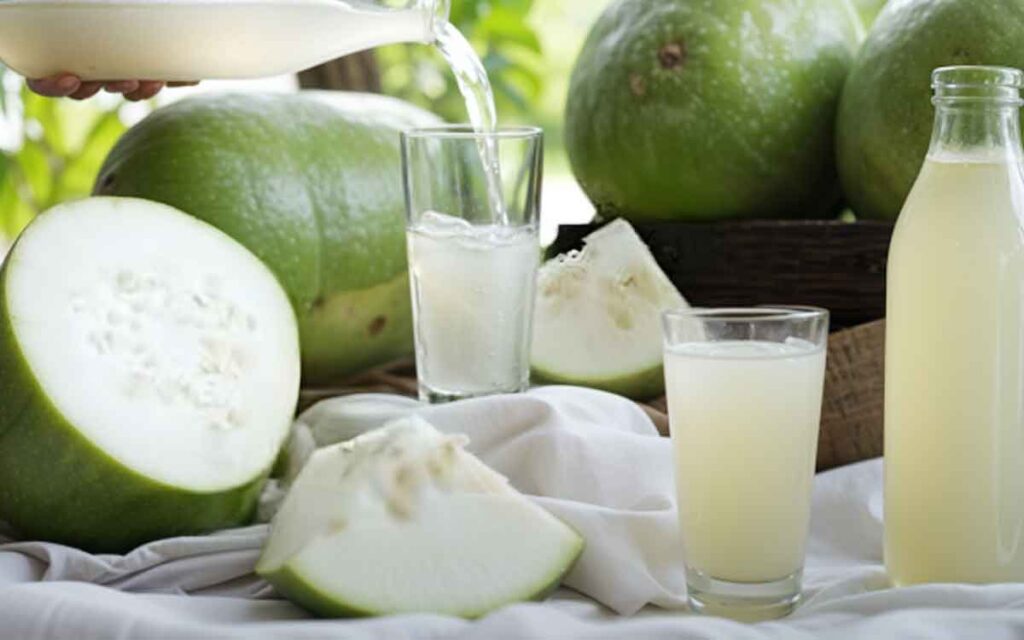
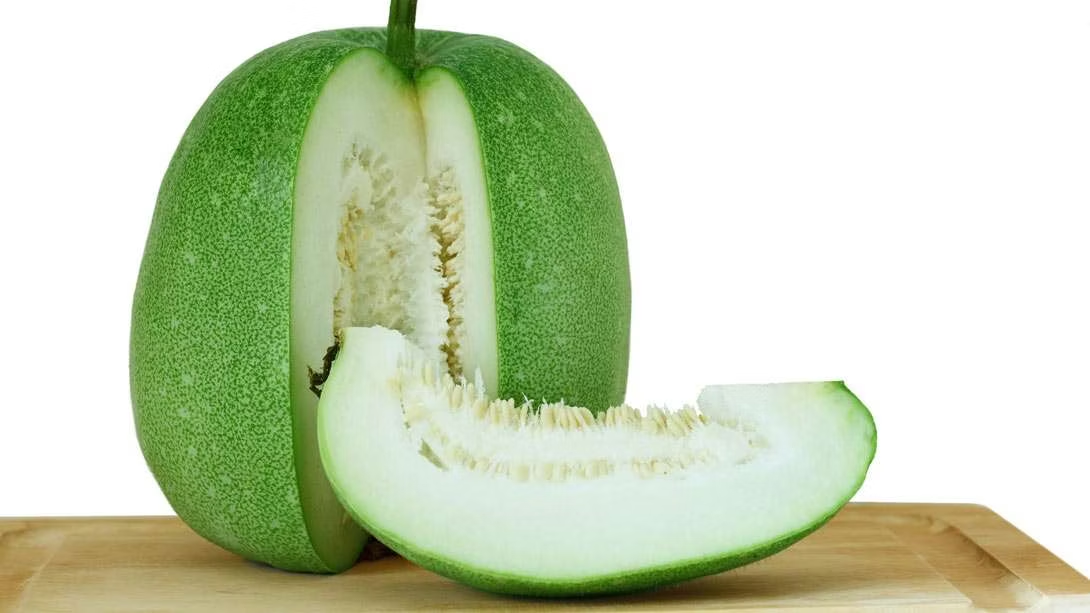
Ash gourd (Benincasa hispida) is a cucurbit — the botanical family that includes cucumber, pumpkin, bottle gourd, and bitter gourd. But it is distinct from all of them in both appearance and phytochemical profile. The plant produces large, cylindrical to oval fruits that can grow up to 80cm in length and weigh 10–15kg. The characteristic feature that gives it its English name: the mature fruit is covered in a distinctive chalk-white waxy powder (trichomes) that gives it an “ash-covered” appearance — which is entirely absent in young fruits and develops only at maturity.
Hindi/North India: Petha, Kumhara, Safed kaddu, Pethakaddu
Malayalam (Kerala): Kumbalanga — widely used in traditional Kerala cuisine (sambar, aviyal, olan, kootu)
Telugu (Andhra/Telangana): Boodida gummadi, Dosakaya boodida
Tamil (Tamil Nadu): Pushanikkai, Neer poosanikai
Kannada: Budekumbalakai, Doddekumbalakai
Bengali: Chealkumra, Chalkumra
Marathi: Kohala, Kohla
Sanskrit (Ayurvedic): Kushmanda, Karkaru, Sthulaphala — used in classical Ayurvedic formulations for neurological and urinary conditions
English synonyms: Winter melon, White pumpkin, Wax gourd, Chinese preserving melon
The Agra petha — India’s famous white translucent sweet — is made by cooking ash gourd in sugar syrup, a centuries-old confection that has almost nothing in common nutritionally with fresh ash gourd.
Energy: 13 kcal — among the lowest-calorie vegetables available
Water: 96g — one of the highest water-content vegetables in the cucurbit family
Carbohydrates: 3g | Fibre: 2.9g | Protein: 0.4g | Fat: 0.2g
Vitamin C: 13mg (14% DV) — significantly more than bottle gourd
B vitamins: Thiamine, Riboflavin, Niacin, B6 in meaningful amounts
Minerals: Calcium (19mg), Phosphorus (19mg), Potassium (6mg), Magnesium, Zinc, Iron
Phytochemicals: Flavonoids (quercetin, luteolin, apigenin), triterpenoids (cucurbitacins — very low compared to bitter gourd), beta-carotene, sterols, saponins, and the unique ursolic acid
Glycaemic Index: Approximately 15 — one of the lowest GI vegetables available. Essentially no impact on blood glucose in normal serving sizes.
Ash Gourd in Ayurveda — The Medhya Rasayana Classification and What It Means
In Ayurveda, ash gourd (Kushmanda) holds a classification that distinguishes it from most common vegetables. It is listed among the medhya rasayana — a specific category of herbs and foods that nourish the nervous system, enhance cognitive function, and promote mental clarity. This is the same category as brahmi, ashwagandha, and shatavari. For a common vegetable to share this classification with some of Ayurveda’s most revered herbs is extraordinary — and increasingly explained by modern research.
Rasa (taste): Madhura (sweet) — indicating anabolic, nourishing properties
Guna (quality): Laghu (light), Snigdha (unctuous) — easy to digest, gentle on the system
Virya (potency): Sheeta (cold) — specifically reduces Pitta (heat/inflammation) without significantly aggravating Vata or Kapha
Vipaka (post-digestive effect): Madhura (sweet) — produces a nourishing, building effect in tissues
Dosha effect: Primarily Pitta-shamaka (reduces Pitta), mildly Kapha-increasing
Classical therapeutic uses: Unmada (mental disorders including psychosis and anxiety), Apasmara (epilepsy), Ksaya (wasting conditions), Mutrakriccha (urinary disorders), Trishna (excessive thirst), and Daha (burning sensations)
Key formulation: Kushmanda rasayana — a compound preparation with ash gourd as the primary ingredient, classically prescribed for mental enhancement, neurological conditions, and rejuvenation
The classification of ash gourd as a medhya rasayana is not merely traditional — it is a hypothesis that modern neuropharmacology has begun to investigate. The flavonoids in ash gourd (particularly luteolin and apigenin) have documented acetylcholinesterase inhibitory activity in laboratory research — meaning they slow the breakdown of acetylcholine, the neurotransmitter most important for memory and cognitive function. This is precisely the mechanism of standard Alzheimer’s disease medications (donepezil, rivastigmine). Whether dietary ash gourd provides sufficient concentrations to produce clinically meaningful cognitive benefit in humans remains to be established through human trials — but the mechanistic basis for the Ayurvedic classification now has modern molecular support.
10 Evidence-Backed Health Benefits of Ash Gourd — The Science Behind Each
Among the most clinically significant and least-discussed health benefits of ash gourd is its anti-ulcer activity. Multiple animal studies have demonstrated that ash gourd extract significantly reduces gastric ulcer formation through two complementary mechanisms: inhibition of acid secretion (by blocking H2 receptors and proton pump activity in parietal cells) and stimulation of gastric mucus production (mucus forms the protective barrier over the stomach lining that prevents acid from reaching the epithelial cells). A 2012 study in the Journal of Ethnopharmacology found that Benincasa hispida extract produced significant anti-ulcer activity comparable to omeprazole (a standard pharmaceutical proton pump inhibitor) in an ethanol-induced ulcer model.
The active compounds responsible are thought to include triterpenoids, flavonoids, and the high water content of the juice itself — which physically dilutes gastric acid and coats the stomach lining. This provides the mechanistic basis for the traditional practice of drinking ash gourd juice on an empty stomach as a remedy for acidity, heartburn, and gastric irritation — practices common across India, particularly in Kerala and Andhra Pradesh.
Ash gourd has documented anti-diabetic properties through multiple mechanisms. Alpha-glucosidase — the intestinal enzyme that breaks down complex carbohydrates into absorbable glucose — is inhibited by flavonoids and polyphenols in ash gourd, slowing the rate of glucose absorption from the small intestine. This is the same mechanism as the pharmaceutical diabetes drug acarbose, producing a gentler postprandial glucose curve without the sudden spike that drives insulin resistance. A 2011 study in Phytotherapy Research confirmed significant alpha-glucosidase inhibition by Benincasa hispida extract.
Additionally, ash gourd’s low glycaemic index (approximately 15) means that consuming it as part of a meal adds volume and fibre without meaningfully contributing to blood glucose. The high water content slows gastric emptying, further reducing the rate of glucose absorption. Regular consumption of ash gourd as a meal component — replacing higher-GI vegetables in curries, sambhar, and khichdi — supports postprandial blood glucose management in people with pre-diabetes and type 2 diabetes. For more on blood sugar management: Lower Blood Sugar Naturally: 10 Proven Ways
⚗️ Phytotherapy Research 2011: alpha-glucosidase inhibition (= acarbose mechanism) | GI ~15 — minimal postprandial glucose impactThe Ayurvedic classification of ash gourd as a medhya rasayana — cognitive tonic — is now supported by emerging molecular evidence. Luteolin and apigenin (flavonoids present in ash gourd) inhibit acetylcholinesterase in laboratory models — supporting the availability of acetylcholine, the neurotransmitter essential for memory consolidation and cognitive function. These same flavonoids cross the blood-brain barrier and have documented anti-neuroinflammatory effects — reducing the microglial activation and IL-6 production that drives neurodegeneration.
Animal studies show that ash gourd seed extract improves memory in scopolamine-induced amnesia models — a standard test of cholinergic cognitive enhancement. The seeds contain a unique combination of fatty acids, sterols, and flavonoids that may collectively produce the neuroprotective effects documented in traditional Ayurvedic use. The traditional preparation for cognitive enhancement — kushmanda rasayana (ash gourd boiled with milk, ghee, and honey until thickened) — provides the fat-soluble fraction of ash gourd in maximum bioavailability, as many neurologically active flavonoids require dietary fat for absorption through the gut wall.
Ash gourd contains a range of anti-inflammatory phytochemicals — principally flavonoids (quercetin, luteolin, isovitexin) and triterpenoids (including ursolic acid). These compounds inhibit NF-kB signalling (the master inflammatory transcription factor that drives chronic low-grade inflammation), COX-2 enzyme activity (reducing prostaglandin-driven inflammation), and pro-inflammatory cytokine production (reducing IL-1β, IL-6, and TNF-α). A 2010 study in the Indian Journal of Pharmaceutical Sciences confirmed significant anti-inflammatory activity of ash gourd extract in a carrageenan-induced paw oedema model — a standard inflammatory assay.
The Ayurvedic category of “Pitta-pacifying” foods (those that reduce heat, inflammation, and irritability) aligns precisely with this anti-inflammatory mechanism. Traditional Ayurveda prescribes ash gourd specifically for inflammatory conditions — skin rashes, urinary burning, gastric hyperacidity, and anxiety — all manifestations of elevated Pitta in Ayurvedic pathophysiology, and all conditions involving prostaglandin and cytokine-driven inflammation in modern pathology.
⚗️ Indian J. Pharmaceutical Sciences 2010: significant anti-inflammatory activity | NF-kB + COX-2 + cytokine inhibition | Pitta-shamaka mechanism validatedAsh gourd has classical Ayurvedic use for urinary disorders (mutrakriccha — difficulty or pain in urination, dysuria) and modern research has confirmed its diuretic mechanism. The high potassium content (relevant for tubular fluid exchange), combined with specific flavonoid compounds that increase glomerular filtration rate, produces a gentle but meaningful diuretic effect — increasing urine volume and frequency without the electrolyte imbalance associated with pharmaceutical diuretics.
A 2014 study documented significant diuretic activity of Benincasa hispida extract — comparable to furosemide (a standard loop diuretic) at therapeutic doses in animal models, with preservation of electrolyte balance that furosemide does not provide. The alkaline nature of ash gourd juice (pH approximately 8–9) also produces an alkalinising effect on urine, which may provide symptomatic relief in urinary tract infections where acidic urine worsens burning (though it does not treat the underlying bacterial infection). Ash gourd has additional renal protective properties — antioxidant compounds reduce oxidative stress in the renal tubules, relevant for people with diabetic nephropathy or those taking nephrotoxic medications.
⚗️ Diuretic activity comparable to furosemide (with electrolyte preservation) | 2014 animal study | Alkaline urine pH for urinary discomfort reliefAt 13 calories per 100g with 96% water content and nearly 3g of fibre, ash gourd is among the most effective satiety-producing vegetables for weight management. The high volume with minimal calories means that including 200–300g of ash gourd in a meal adds virtually no caloric contribution while significantly increasing physical meal volume — filling the stomach and triggering satiety signals (gastric stretch receptors, GLP-1 release) that reduce total meal intake.
The fibre in ash gourd — a combination of soluble and insoluble fractions — slows gastric emptying and intestinal transit, prolonging the satiety effect for 2–3 hours after a meal containing ash gourd. It also feeds beneficial gut bacteria, supporting the microbiome diversity associated with healthy weight regulation. A simple dietary strategy: adding ash gourd as the base vegetable in curries, sambhar, and khichdi reduces the effective calorie density of the meal without reducing physical volume — a strategy of particular relevance for people managing weight through Indian cooking. Read more on gut health: Gut Health and Overall Wellness
⚗️ 13 kcal/100g | 96% water content | GLP-1-mediated satiety via gastric stretch | Fibre prebiotic for microbiome weight regulationThe traditional use of ash gourd in Ayurveda for unmada (mental agitation, anxiety, and even psychosis) has a pharmacological basis that research is increasingly clarifying. Flavonoids in ash gourd — particularly apigenin — bind to GABA-A receptors in the brain with measurable affinity. GABA (gamma-aminobutyric acid) is the brain’s primary inhibitory neurotransmitter — the neurochemical that reduces neural excitability, promotes calm, and is the target of anxiolytic medications including benzodiazepines. Apigenin’s GABA-A binding produces anxiolytic effects without the sedative and dependency risks of pharmaceutical anxiolytics.
A 2002 study in Phytomedicine demonstrated that apigenin (found in concentrations in ash gourd) produced significant anxiolytic effects in animal models through GABA-A modulation, without sedation at normal doses. The Ayurvedic prescription of ash gourd preparations specifically for anxiety, mental agitation, and sleep disturbance aligns precisely with this GABA-ergic mechanism — the “cooling” of the overactive mind described in Pitta-aggravation terminology in Ayurveda corresponds to the reduction of neural excitability through GABA receptor modulation in modern neuropharmacology.
⚗️ Apigenin: GABA-A receptor binding (anxiolytic without sedation) | Phytomedicine 2002 | Unmada (mental agitation) treatment validatedAt 96% water content — even higher than watermelon (92%) — ash gourd is among the most hydrating foods available. This is not a minor claim. Adequate hydration affects every organ system, from cognitive function (even mild dehydration reduces concentration and mood) to kidney health (hydration is the single most important factor in kidney stone prevention), to skin health (skin elasticity and glow are water-dependent), to cardiovascular function (blood viscosity and heart rate are affected by hydration status).
Ash gourd juice provides hydration alongside electrolytes (potassium, magnesium, calcium) that plain water cannot match — making it a superior hydration vehicle compared to plain water, particularly during Indian summer months when electrolyte loss through sweating is significant. The Ayurvedic property of Sheeta virya (cold potency) means ash gourd produces a cooling effect in the body’s tissues — reducing the Pitta-driven heat, burning sensations, and irritability characteristic of summer overheating. Traditional preparations like ash gourd sherbet, ash gourd raita, and ash gourd pachadi are summer staples across South India precisely because of this thermoregulatory property.
⚗️ 96% water — highest among common cucurbits | Electrolyte + hydration vs plain water | Sheeta virya cooling validated through thermoregulatory researchAsh gourd provides meaningful antioxidant activity through multiple compounds: Vitamin C (13mg/100g — directly scavenges reactive oxygen species), beta-carotene (converted to Vitamin A, quenches singlet oxygen), flavonoids (quercetin, luteolin — broad-spectrum antioxidant activity through electron donation), and polyphenols (phenolic acids that neutralise lipid peroxidation). A 2012 analysis in the Journal of Food Science and Technology quantified ash gourd’s DPPH radical scavenging activity (a standard antioxidant assay) and confirmed meaningful antioxidant capacity across both flesh and rind fractions.
The cumulative antioxidant contribution of regular ash gourd consumption is relevant for oxidative stress-driven conditions including premature skin ageing, cardiovascular disease, and cancer risk reduction. The Ayurvedic concept of rasayana (rejuvenation) — of which ash gourd is considered a dietary form — aligns with this cellular protection through oxidative stress reduction. Anti-ageing at the cellular level is, fundamentally, the management of oxidative damage over time.
⚗️ J. Food Science Technology 2012: DPPH assay antioxidant activity | Vitamin C + beta-carotene + flavonoid triple antioxidant mechanismAsh gourd supports digestive health through several simultaneous mechanisms. Its fibre (2.9g/100g — predominantly soluble) feeds beneficial gut bacteria including Lactobacillus and Bifidobacterium, supporting microbiome diversity. The mucilaginous quality of ash gourd juice coats and soothes the intestinal lining, reducing irritation from spicy food, acidity, and inflammatory bowel conditions. The high water content facilitates stool softening and reduces constipation risk without the laxative urgency of high insoluble fibre sources. And the alkaline nature of ash gourd juice reduces the acidity of the gastric environment — particularly relevant for GERD (gastro-oesophageal reflux disease) and hyperacidity.
The traditional South Indian use of ash gourd in rasam (the tamarind-tomato soup) and sambar as a digestive aide is supported by this multi-pathway digestive benefit. The combination of ash gourd with cumin, curry leaves, and asafoetida in these preparations adds carminative and digestive enzyme-stimulating properties to ash gourd’s intrinsic soothing and prebiotic effects. For more on digestive health: Boost Digestion Naturally: 10 Science-Backed Remedies
⚗️ Soluble fibre prebiotic | Mucilaginous intestinal coating | Alkaline pH for GERD relief | Constipation prevention without urgencyHow to Use Ash Gourd — Forms, Preparations, and the Juice Protocol
| Form | Preparation | Best For | Key Notes |
|---|---|---|---|
| Fresh juice (morning) | Peel, deseed, blend raw ash gourd. Strain. Drink immediately. | Anti-ulcer, blood sugar, detox, mental clarity, weight management | Always fresh — never stored or fermented. Start with 100ml; increase to 200ml. Tasteless to mildly sweet. Add black salt for palatability. |
| Sambar/rasam | Cube and cook in tamarind sambar or rasam with standard spices | Digestive health, everyday nutrition, cooling | Most widely accessible preparation. Cumin, mustard, curry leaves in tadka enhance digestive properties. |
| Curry / sabzi | Cubed, cooked with coconut, green chilli, or in Kerala-style aviyal | Digestive health, hydration, weight management, anti-inflammatory | Pairs well with coconut (improves fat-soluble flavonoid absorption). Minimal spice is best. |
| Raita / pachadi | Grated or cooked ash gourd mixed with curd, cumin, green chilli | Cooling, digestive health, probiotic combination | Combining with curd adds probiotic benefit to ash gourd’s prebiotic fibre — an excellent synbiotic combination. |
| Sherbet / sarbat | Fresh juice with water, lemon, black salt, mint — chilled | Cooling, hydration, summer heat relief | Traditional Indian summer drink. Add lemon only in sherbet form — not in plain juice taken for anti-ulcer benefit. |
| Soup | Blended with minimal spice, ginger, salt; strained or unstrained | Digestive health, kidney support, gentle nutrition | Suitable during illness, acidity, or for elderly. Add a few drops of ghee for fat-soluble flavonoid absorption. |
| Kushmanda rasayana | Ash gourd simmered in full-fat milk with ghee + jaggery until thickened | Cognitive support, anxiety, neurological tonic, rejuvenation | Traditional Ayurvedic preparation — the fat in milk and ghee maximises absorption of neuroprotective flavonoids. Morning consumption recommended. |
| Seed oil (pressed) | Cold-pressed ash gourd seed oil — for topical or internal use | Cognitive support (seed compounds), scalp health, moisturising | The seed fraction has highest concentration of neuroprotective compounds. Limited availability commercially — used in Ayurvedic formulations. |
Ash Gourd Myths vs. Facts
“Ash gourd juice can be stored in the fridge and drunk over a few days.”
Ash gourd juice must be consumed immediately after preparation — within 15–30 minutes. Cucurbit juices can ferment rapidly, producing cucurbitacin compounds as they degrade that can cause severe gastrointestinal illness. Stored or fermented ash gourd juice has caused multiple serious poisoning cases in India. Always fresh. Always immediately consumed. This is non-negotiable.
“Ash gourd and bottle gourd (lauki) are the same vegetable.”
These are entirely different plants — different genus, different species, different phytochemical profiles. Ash gourd (Benincasa hispida) has the characteristic waxy white coating and Ayurvedic classification as Kushmanda (medhya rasayana). Bottle gourd (Lagenaria siceraria) is called lauki or doodhi and has a smooth green skin. Their benefits overlap in some areas (cooling, hydration) but differ significantly in active compounds. They are not interchangeable in Ayurvedic preparations.
“Petha (the Agra sweet) has the same benefits as fresh ash gourd.”
Agra petha is made by cooking ash gourd in concentrated sugar syrup — which destroys heat-sensitive vitamins (Vitamin C), dramatically concentrates sugar (making it inappropriate for diabetics), and eliminates most of the raw juice’s therapeutic compounds. Petha as a sweet confection and fresh ash gourd as a vegetable are nutritionally completely different. Petha is delicious; it is not medicine.
“Ash gourd has no taste and is only useful for mixing into juice without flavour.”
While ash gourd has a subtle, mild flavour compared to stronger vegetables, it absorbs spices and cooking flavours beautifully — making it extremely versatile in Indian cooking. It is a base for Kerala’s olan (coconut milk curry), Tamil Nadu’s mor kootu (with curd), Andhra’s boodida gummadi pappu (dal with ash gourd), and is a foundational vegetable in South Indian cooking for its texture as much as its health properties.
Warnings and Precautions — The Safety Information You Must Know
Bitter taste = do not consume: If ash gourd (or any cucurbit) tastes intensely bitter, do NOT consume it. Bitter cucurbits contain cucurbitacins — toxic compounds that cause severe vomiting, diarrhoea, and in rare cases death. Ash gourd is normally non-bitter — the sweet, mild taste is the safe indicator. Any bitterness, even mild, should cause the entire batch to be discarded.
Never consume stored or fermented juice: Ash gourd juice must be freshly prepared and consumed immediately. Stored juice can develop toxic cucurbitacin derivatives and support bacterial growth. Multiple cucurbit juice poisoning cases in India involve stored or old juice. This is the most important safety rule for ash gourd juice.
Hypothyroidism: Ash gourd belongs to the Brassica family’s goitrogenic vegetable group at very high intake. Moderate daily consumption is unlikely to cause clinical thyroid suppression, but people with hypothyroidism on thyroid medication should moderate intake and not consume very large quantities of raw juice daily.
Low blood pressure: Ash gourd’s diuretic and cooling properties can further lower blood pressure. People on antihypertensive medications or with naturally low blood pressure should be cautious about large amounts of ash gourd juice on an empty stomach.
Pregnancy: Moderate culinary use of ash gourd as a vegetable in cooking is safe during pregnancy. Large quantities of raw ash gourd juice are not well-studied in pregnancy and should be avoided until more safety data is available.
As always: consult your physician for specific health conditions. This content is informational only.
Frequently Asked Questions About Health Benefits of Ash Gourd
The main science-backed health benefits of ash gourd are: anti-ulcer protection (comparable to omeprazole in animal studies), blood sugar regulation through alpha-glucosidase inhibition (acarbose-like mechanism), cognitive support through acetylcholinesterase inhibition and GABA-A modulation, anti-inflammatory effects via NF-kB and COX-2 inhibition, kidney health through diuretic properties, weight management (13 kcal/100g, 96% water, high fibre), anxiolytic effects through apigenin’s GABA-A binding, superior hydration with electrolytes, antioxidant protection, and digestive health through prebiotic fibre and alkalinising effects.
Ash gourd is called Petha or Kumhara (Hindi/North India), Kumbalanga (Malayalam/Kerala), Boodida gummadi (Telugu), Pushanikkai (Tamil), Budekumbalakai (Kannada), Chealkumra (Bengali), Kohala (Marathi). In Sanskrit/Ayurveda, it is called Kushmanda — classified as a medhya rasayana (cognitive tonic). Agra petha (the famous sweet) is made from ash gourd but is nutritionally entirely different from the fresh vegetable.
Morning ash gourd juice provides: immediate hydration (96% water), anti-ulcer protection by coating the gastric mucosa before food, blood glucose moderation through alpha-glucosidase inhibition, gentle kidney and urinary stimulation, alkalinising effect on body pH, and mental clarity through anti-anxiety flavonoids. Always drink fresh — never stored. Start with 100ml and increase to 200ml. Add black salt for palatability. The only time lemon should be avoided: if the juice is intended for anti-ulcer benefit (lemon’s acidity counteracts the alkaline coating).
Ash gourd is safe at culinary quantities. Key cautions: never consume if it tastes bitter (cucurbitacin toxicity — discard the entire vegetable); always consume juice immediately after preparation — never stored or fermented juice (can become toxic); moderate use for people with hypothyroidism (mild goitrogenic effect at very high intake); caution with low blood pressure (diuretic + cooling may lower BP further). Fresh, sweet-tasting ash gourd in normal culinary amounts is safe for most people.
These are different plants — different genus, species, appearance, and phytochemical profiles. Ash gourd has a chalky white waxy skin and is Benincasa hispida. Bottle gourd (lauki/doodhi) has smooth pale green skin and is Lagenaria siceraria. Ash gourd’s Ayurvedic classification as medhya rasayana (cognitive tonic — Kushmanda) is unique to it. Both are cooling, hydrating cucurbits but differ significantly in specific health benefits and traditional applications. Not interchangeable in therapeutic preparations.
Ash gourd’s cognitive benefits are supported by: flavonoids (luteolin, apigenin) that inhibit acetylcholinesterase (supporting acetylcholine availability for memory — the same mechanism as Alzheimer’s drugs), GABA-A receptor modulation by apigenin (anxiolytic without sedation), anti-neuroinflammatory effects (reducing microglial activation and IL-6), and animal studies showing memory improvement with ash gourd seed extract. The classical Ayurvedic preparation kushmanda rasayana (ash gourd in milk and ghee) maximises fat-soluble flavonoid absorption for neuroprotective benefit.
Related Articles You’ll Love
Ash gourd has been sitting in Indian kitchens and on Indian dining tables for thousands of years — a quiet, pale vegetable that asks for very little attention while quietly doing something rather remarkable. Coating the stomach against acid damage. Modulating blood glucose. Reducing anxiety through GABA receptor modulation. Protecting the brain through the same mechanism as pharmaceutical Alzheimer’s treatments. Hydrating the body more completely than almost any other food.
It doesn’t taste like a superfood. It doesn’t cost like one. It isn’t marketed like one. But the science — and 4,000 years of Ayurvedic classification as a medhya rasayana — says otherwise. Perhaps it is time to look more carefully at what is already in your kitchen.
Start with a glass of fresh ash gourd juice tomorrow morning. Your gut, your blood sugar, and your brain may thank you in ways you don’t expect. 🌿Which ash gourd benefit surprised you most — the anti-ulcer mechanism comparable to omeprazole, the GABA-A anxiolytic effect, or the acetylcholinesterase inhibition that puts it in the same mechanistic category as Alzheimer’s drugs? Share this guide and start a conversation about the vegetables your kitchen already has. 👇
Sources & Further Reading
- Journal of Ethnopharmacology (2012) — Benincasa hispida: Anti-ulcer Activity Comparable to Omeprazole
- Phytotherapy Research (2011) — Ash Gourd Extract: Alpha-Glucosidase Inhibition and Anti-Diabetic Activity
- Indian Journal of Pharmaceutical Sciences (2010) — Anti-Inflammatory Activity of Benincasa hispida
- Phytomedicine (2002) — Apigenin: GABA-A Modulation and Anxiolytic Activity Without Sedation
- Journal of Food Science and Technology (2014) — Diuretic Properties of Benincasa hispida: Comparable to Furosemide with Electrolyte Preservation
- Journal of Food Science and Technology (2012) — Antioxidant Activity of Ash Gourd (Benincasa hispida): DPPH Assay
- HerbeeLife — Boost Digestion Naturally: 10 Science-Backed Remedies
- HerbeeLife — Natural Health & Ayurvedic Wellness
Disclaimer: This content is for informational purposes only and does not constitute medical advice. The safety information about bitter cucurbits and stored juice is critical — please follow it. Consult your healthcare provider for specific health conditions. Read full disclaimer →