
The Hair Cycle — Why Sudden Loss Happens 2–4 Months After the Real Trigger
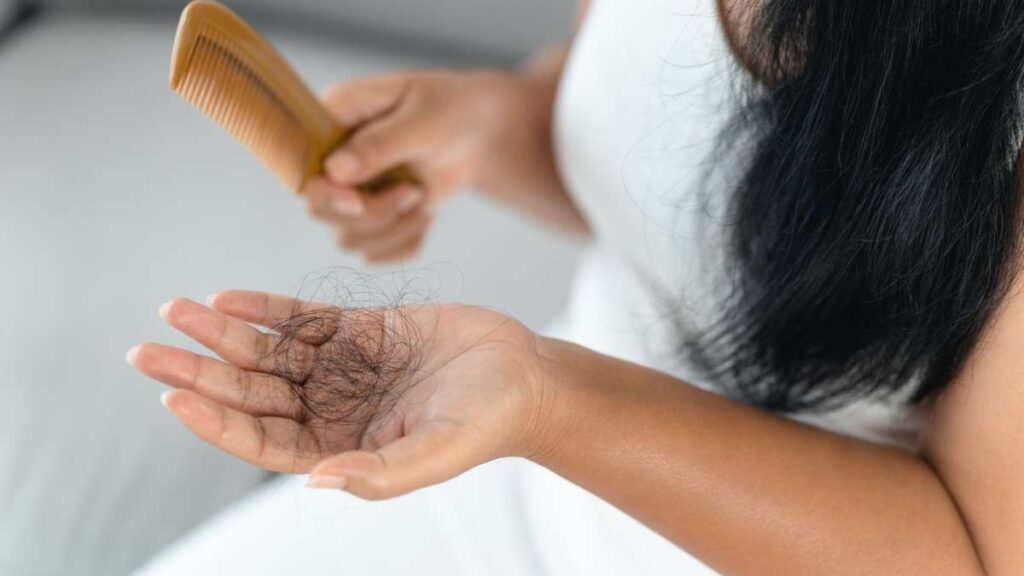
The most disorienting thing about sudden hair loss is its timing. The hair you are losing today did not start dying today. It started dying 2–4 months ago — and understanding this delay changes everything about diagnosis and worry.
2–6 years
2–3 weeks
3–4 months
Normally, approximately 10–15% of follicles are in the telogen (resting/shedding) phase at any time — staggered so that hair loss is gradual and imperceptible. When a significant physical or psychological stressor occurs, large numbers of follicles are simultaneously pushed from the active anagen phase into telogen. They rest for 3–4 months, then shed together — producing the alarming, sudden-seeming clumps of hair loss that typically begins 8–12 weeks after the triggering event. This is telogen effluvium — the most common cause of sudden diffuse hair loss globally.
Count back 8–12 weeks from when you first noticed increased shedding. What happened in that window? A high fever? COVID-19 infection? Typhoid? Surgery or hospitalisation? A period of extreme stress or grief? Childbirth? Rapid weight loss or a crash diet? Stopping birth control pills? Starting a new medication? Finding the event in that 2–4 month window is almost always the diagnosis for diffuse sudden hair loss in otherwise healthy individuals.
If there is no identifiable event in that window — or if hair loss is progressive over months without a clear acute trigger — look to the ongoing underlying causes: nutritional deficiency (iron, protein, zinc, Vitamin D), thyroid dysfunction, hormonal imbalance (PCOS, postpartum), or androgenetic alopecia beginning its gradual progression.
Sudden hair Loss Causes — Identified, Explained, and Addressed
Telogen effluvium (TE) is the mechanism behind the hair loss that follows illness, surgery, emotional trauma, extreme diet, childbirth, or any significant physical stressor. When the body perceives a threat — high fever, systemic inflammation, caloric deprivation, surgery — it triages its resources. Hair growth is metabolically expensive and non-essential for survival. The hypothalamus signals follicles to pause growth and enter the telogen phase. When the stressor resolves, the follicles restart anagen — and the resting hairs shed as new growth pushes them out. This is healthy follicle behaviour. The follicles are not damaged.
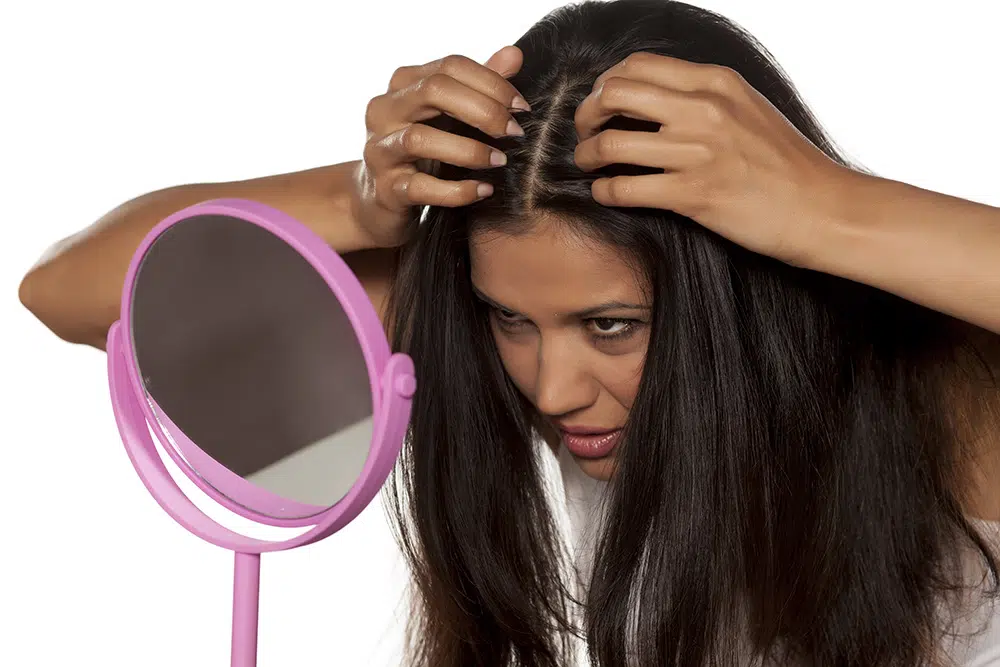
Post-COVID telogen effluvium has become one of the most common presentations in India since 2020–2021. Studies estimate 20–30% of COVID-19 survivors experience significant TE, with peak shedding 3–5 months post-infection. The severity correlates with the severity of the acute illness and the degree of inflammation, not with any permanent follicle damage. Post-typhoid TE follows the same pattern. The shedding is self-limiting — it stops when the follicle cohort that was simultaneously forced into telogen has completed its shed cycle.
⚗️ Follicular triage response | Follicles NOT permanently damaged | Self-limiting 6–12 months
Iron deficiency is the most prevalent nutritional cause of hair loss in India — and the most commonly missed, because most people test haemoglobin rather than ferritin. The distinction is critical. Haemoglobin measures circulating iron in red blood cells; ferritin measures stored iron. Hair follicle matrix cells require stored iron (ferritin) for their rapid mitosis (cell division). When ferritin drops below 30ng/mL — which can occur while haemoglobin remains within normal range — the follicle matrix cells are iron-starved and cell division slows. Hair shifts from anagen to telogen. A study published in the Journal of Korean Medical Science found ferritin was significantly lower in women with hair loss compared to controls; multiple subsequent studies confirm ferritin below 70ng/mL may impair optimal hair growth even when traditional anaemia is absent.
The India-specific burden: the WHO estimates 53% of Indian women of reproductive age are iron deficient. Indian vegetarian diets provide predominantly non-haeme iron (from plant sources) — which has 2–3 times lower absorption than haeme iron from meat, and is further reduced by phytates in whole grains, tannins in chai, and calcium competing for absorption. Indian women routinely drink chai with meals (tannins bind iron), eat high-phytate diets (whole wheat roti, brown rice), and often have inadequate Vitamin C intake to support non-haeme iron absorption. The combination makes iron deficiency the default state for many Indian women.
⚗️ Ferritin <30ng/mL → follicle matrix cell iron starvation → anagen arrest | 53% Indian women deficient
Thyroid hormones (T3 and T4) are required for the anagen phase of hair growth — they directly stimulate follicular matrix cell proliferation and regulate the expression of keratin proteins. Both hypothyroidism (too little thyroid hormone) and hyperthyroidism (too much) cause hair loss, but hypothyroidism is significantly more prevalent — particularly in Indian women. The Thyroid Federation of India estimates that thyroid disorders affect approximately 42 million Indians, with hypothyroidism disproportionately affecting women (1 in 10 Indian women).
Hypothyroid hair loss has a specific pattern: diffuse thinning all over the scalp, combined with loss of the outer third of the eyebrows (a particularly characteristic sign of hypothyroidism), dry and coarse hair texture, dry skin, and unexplained weight gain alongside fatigue. The diagnosis requires TSH testing — but there is an important nuance. Many Indian doctors consider TSH up to 4.5 mIU/L “normal” by older ranges. However, multiple studies suggest that subclinical hypothyroidism (TSH 2.5–4.5) may cause hair loss symptoms in genetically predisposed individuals. If TSH is in the upper range of normal and you have multiple hypothyroid symptoms, request Free T3 and Free T4 in addition to TSH for a complete picture.
⚗️ T3/T4 required for follicular matrix mitosis | Outer third eyebrow loss = classic hypothyroid sign | Anti-TPO: autoimmune thyroiditis (Hashimoto’s) increasingly common in India
PCOS (polycystic ovary syndrome) causes what is called female pattern hair loss (FPHL) — hair loss at the crown and frontal hairline with preserved hairline, rather than diffuse all-over shedding of telogen effluvium. The mechanism: elevated androgens (testosterone and DHEA-S) are converted to dihydrotestosterone (DHT) by 5-alpha reductase in scalp follicles. DHT binds to androgen receptors in the follicles, progressively shortening the anagen (growth) phase and miniaturising the follicle — producing progressively thinner, shorter hair until follicular atrophy. Simultaneously, DHT stimulates hair growth in androgen-sensitive areas of the face and body — producing the paradox of scalp hair loss alongside facial hair growth (hirsutism) that characterises androgen excess.
PCOS is significantly more prevalent in Indian women than in Western populations — a 2019 Indian study found a 22.5% prevalence. The insulin resistance central to PCOS drives androgen excess by reducing SHBG (sex hormone-binding globulin), increasing free androgen availability. This connects PCOS hair loss directly to metabolic health — addressing insulin resistance through diet and lifestyle reduces androgen-driven hair loss through reducing the free androgen load on follicles. For the complete PCOS picture: PCOD Problem in Women: Complete Guide
⚗️ Insulin resistance → reduced SHBG → elevated free androgens → DHT → follicle miniaturisation | 22.5% Indian women affected
Hair is approximately 95% keratin — a protein. Follicle matrix cells are among the fastest-dividing cells in the human body, with extremely high protein synthesis demand. When dietary protein is insufficient, the body’s protein allocation hierarchy prioritises vital organ function. Hair is not vital — it is metabolically dispensable. The body reduces keratin synthesis, follicles shift to telogen, and hair thins and falls. The specific amino acids most critical for hair: cysteine (the sulphur amino acid that forms the disulphide bonds giving keratin structural strength), methionine, lysine, and arginine. Most Indian vegetarian diets are adequate in total protein but may be suboptimal in cysteine and methionine specifically — which are found in higher concentrations in eggs, dairy, and meat than in most plant sources.
Crash diets, prolonged fasting, and restrictive “detox” programmes are common acute triggers for protein-deficiency hair loss in India. The rising trend of extreme calorie restriction for weight loss — often without adequate protein preservation — is producing an epidemic of diet-related TE particularly among urban Indian women in their 20s and 30s.
⚗️ Hair = 95% keratin | Protein hierarchy: organs first, hair last | Cysteine + methionine: most critical sulphur amino acids for disulphide bond strength
Vitamin D: Vitamin D receptors (VDRs) are expressed in hair follicles — Vitamin D signalling through VDRs is directly involved in regulating follicle cycling (the anagen-catagen-telogen sequence). Multiple studies confirm that Vitamin D deficiency is significantly associated with both telogen effluvium and alopecia areata. A 2013 study found women with hair loss had significantly lower Vitamin D levels than controls. The India paradox: despite being a tropical country with abundant sunlight, approximately 70% of urban Indians are Vitamin D deficient — office-based indoor lifestyles, full skin coverage, high melanin (darker skin requires longer sun exposure for equivalent Vitamin D synthesis), and air pollution blocking UVB radiation all contribute.
Zinc: Zinc is a cofactor for over 200 enzymes including DNA polymerase (essential for follicle matrix cell rapid division), 5-alpha reductase modulation (affecting DHT production in follicles), and keratin synthesis enzymes. Zinc deficiency produces characteristic “flag sign” hair — alternating pigmented and depigmented bands reflecting periods of adequate and deficient zinc intake. Serum zinc below 70 µg/dL is associated with increased hair shedding in multiple studies.
⚗️ VDR signalling in follicles regulates cycling | 2013: women with hair loss have significantly lower Vitamin D | Zinc: cofactor for 200+ follicle enzymes
Traction alopecia: Chronic mechanical tension on hair follicles — from tight braids, tight ponytails, buns worn for extended periods, or heavy hair extensions — produces progressive follicle damage along the hairline. In Indian women, the traditional practice of tight plaiting and buns worn daily for years produces a characteristic hairline recession that is often attributed to “genetics” but is actually entirely mechanical. Early traction alopecia is reversible; prolonged tension causes permanent follicle scarring. The first sign: small papules (bumps) and redness along the hairline where tension is highest. If you change your hairstyle and hairline recession stops — it was traction alopecia.
Seborrheic dermatitis / dandruff: Chronic scalp inflammation from Malassezia yeast overgrowth (the fungal cause of dandruff and seborrheic dermatitis) produces low-grade inflammation around follicles that shortens the anagen phase and increases shedding. This is chronically underestimated as a hair loss driver in India — where humidity, heavy oiling practices (which increase scalp lipid availability for Malassezia), and lack of antifungal scalp treatment allow the condition to persist for years. If your hair loss is accompanied by visible flaking, scalp itch, and oiliness — treating the scalp condition is the primary intervention, not hair growth supplements.
Hard water damage: Most Indian cities supply hard water (high in calcium and magnesium ions). Hard water deposits calcium on the hair shaft, disrupting the cuticle layer, reducing tensile strength, and increasing breakage. A 2016 study confirmed that hair samples washed in hard water showed significantly more breakage than those washed in soft water. The hair is not actually falling from the follicle — it is breaking mid-shaft, which looks identical to shedding but requires completely different solutions (clarifying washes, water filters, lower pH rinses with diluted apple cider vinegar).
⚗️ Traction: mechanical follicle trauma → irreversible if prolonged | Malassezia: scalp inflammation → shortened anagen | Hard water: shaft breakage ≠ follicle shedding
The Hair Loss Blood Test Guide — What to Ask Your Doctor For
| Test | What It Checks | Target Range for Hair Health | If Deficient |
|---|---|---|---|
| Serum ferritin | Stored iron — the most sensitive hair loss marker | Above 70 ng/mL for optimal hair | Above 30 ng/mL minimum | Iron supplementation + Vitamin C + dietary correction |
| CBC (Haemoglobin) | Iron in red blood cells (anaemia screen) | Above 12g/dL (women), 13g/dL (men) | Treat underlying anaemia cause with doctor |
| TSH | Thyroid function — screens for hypo/hyperthyroidism | 0.5–2.5 mIU/L (optimal), up to 4.5 per lab normals | Endocrinologist assessment, T3/T4, anti-TPO |
| Free T3 + Free T4 | Active thyroid hormone levels | As per lab reference range | Thyroid hormone treatment under physician |
| 25-OH Vitamin D | Vitamin D storage levels | 40–60 ng/mL optimal | Below 20: deficient | Vitamin D3 + K2 supplementation + sunlight |
| Serum zinc | Zinc status | Above 70–80 µg/dL | Zinc bisglycinate 15–30mg daily with food |
| Serum albumin + Total protein | Protein nutritional status | Albumin above 3.5g/dL | Increase dietary protein to 1.2–1.5g/kg/day |
| Fasting glucose + HbA1c | Undiagnosed diabetes (impairs scalp circulation) | FBG below 100, HbA1c below 5.7% | Dietary management + physician assessment |
| Total + free testosterone, DHEA-S | Androgen excess (PCOS) | Per lab female reference range | PCOS workup with gynaecologist |
| LH:FSH ratio | PCOS screening | LH:FSH below 2:1 normal | PCOS evaluation |
Hair Loss Myths vs. Facts — The Indian Edition
“Oiling every night prevents hair fall.”
Heavy nightly oiling does not prevent hair fall from internal causes (iron, thyroid, PCOS, protein). It may worsen seborrheic dermatitis by providing additional lipid substrate for Malassezia yeast. Coconut oil specifically reduces hair shaft protein loss — but the scalp massage during oiling is likely as therapeutic as the oil itself (mechanical stimulation promotes follicular blood flow). Light oiling + scalp massage 30–60 minutes before washing is the evidence-based approach.
“Washing hair frequently causes hair fall.”
Washing doesn’t cause hair to fall — it delivers the loose telogen hairs that would have shed anyway. If you wash every day, you collect daily telogen shed. If you wash once a week, you see 7 days of shedding at once. The absolute number of hairs shed per unit time doesn’t change with wash frequency. Infrequent washing in hot, humid Indian climates actually worsens scalp health by allowing sebum, sweat, and Malassezia overgrowth — all of which impair follicle health.
“If parents have hair loss, I will too and nothing can be done.”
Androgenetic alopecia (pattern baldness) has significant genetic components — but genetics is risk, not destiny. The expression of pattern hair loss depends heavily on modifiable factors: DHT levels (influenced by insulin resistance and PCOS — both treatable), age at onset (earlier onset = more aggressive, later = milder), nutritional status (deficiencies accelerate genetic pattern loss), and treatment (minoxidil and finasteride have strong clinical trial evidence for slowing genetic hair loss). Genetic risk managed well is a mild condition; genetic risk ignored and compounded with deficiencies and PCOS becomes severe.
“Hair growth serums and topicals can reverse internal-cause hair loss.”
No topical product addresses iron deficiency, thyroid dysfunction, PCOS-driven DHT, or protein deficiency — all internal causes that require internal correction. Topical minoxidil (the only globally evidence-backed topical hair growth treatment) works for androgenetic alopecia by prolonging anagen — it is ineffective for nutritional or hormonal deficiency hair loss. The most important question before buying any topical product: has the internal cause been diagnosed and addressed?
⚠️ See a Dermatologist or Trichologist If:
Hair loss in patches (circular bald patches = possible alopecia areata — an autoimmune condition requiring specific treatment). Progressive hairline recession in a male pattern (temples + crown) — androgenetic alopecia that may benefit from medication. Scalp scarring, redness, or pustules alongside hair loss (scarring alopecias require urgent assessment — follicle destruction in scarring alopecia is permanent if untreated). Hair loss with scalp visible through existing hair that has not responded to 3–4 months of nutritional correction. Any hair loss in a child under 10.
Frequently Asked Questions
Sudden diffuse hair loss is most commonly telogen effluvium — a delayed (8–12 week) response to a physical or emotional stressor that forced follicles to simultaneously shift from active growth to resting/shedding. Common Indian triggers: COVID-19 and post-fever illness, childbirth, crash dieting, surgery, or severe stress. Less acutely — iron/ferritin deficiency (53% of Indian women), thyroid dysfunction, PCOS-driven androgen excess, and protein deficiency can all produce gradual-onset hair loss that feels sudden when you notice the accumulation.
50–100 hairs daily is normal. The perception of “more” on wash days is not more shedding — it is accumulated daily shedding delivered at once as shampooing loosens telogen hairs. Seasonal variation is also normal — slightly more shedding in autumn/winter. The diagnostic markers are: your specific baseline increasing, visible thinning of the scalp in patches or diffusely, or hairline/part width changing. Counting hairs on a pillow or in a brush is not reliable — compare to your personal previous baseline.
The complete Indian hair loss panel: serum ferritin (target above 70ng/mL — most sensitive iron-related hair marker), CBC/haemoglobin, TSH + Free T3/T4, 25-OH Vitamin D, serum zinc, total protein + albumin, fasting glucose + HbA1c. Women with PCOS features: add total + free testosterone, DHEA-S, LH:FSH ratio. Request the full panel in one blood draw — isolated results miss the multiple-deficiency pattern that drives most Indian hair loss. Print the table from this article and bring it to your appointment.
Yes — post-COVID telogen effluvium is temporary and self-limiting. Follicles are resting, not permanently damaged. Peak shedding typically occurs 3–5 months post-COVID infection; shedding gradually reduces and stops by 6–9 months. New growth appears as fine regrowth hairs within 3–6 months of the shedding peak. Accelerate recovery with: adequate protein (1.2g/kg/day), check and correct ferritin if low, manage ongoing stress, and be patient. Do not start aggressive topical treatments during the recovery phase — the follicles are rebooting independently.
Yes — significantly more common than in Western contexts. Indian vegetarian diets lacking adequate dal, curd, or paneer can be insufficient in the sulphur amino acids (cysteine, methionine) most critical for keratin synthesis. Crash dieting and restrictive “detoxes” compound this. Target 1.2–1.5g protein/kg body weight daily for optimal hair health. Best Indian sources: eggs, paneer, curd, moong dal, rajma, sattu. For vegetarians: the traditional dal + rice or dal + roti combination provides complete amino acid profile through protein complementarity — the dietary wisdom your grandmother was teaching with every meal.
Related Articles You’ll Love
Hair does not fall without reason. It falls because the body is telling you something — about iron stores it cannot access, about thyroid hormones not being produced, about androgens running too high, about protein rationed away from a non-vital structure, about follicles pushed into rest by a body that experienced a significant stress two months ago.
The right response is not the most expensive serum. It is finding the cause. A blood test panel that costs a few hundred rupees identifies the correctable nutritional and hormonal drivers behind the majority of Indian hair loss. Fix what the blood test finds, give it 6–12 months, and most cases of sudden hair loss resolve entirely.
Your hair is not failing. It is communicating. Listen to it. 🌿Which cause resonated most with your experience — the post-COVID telogen effluvium timing, the ferritin-below-70 finding that’s missed because haemoglobin is “normal,” or the traction alopecia from tight braiding? Share this guide with every woman managing unexplained hair fall — the diagnosis changes everything. 👇
Sources & Further Reading
- Journal of the American Academy of Dermatology (2006) — Ferritin and Hair Loss: Women with Hair Loss Have Significantly Lower Ferritin vs Controls
- Dermatology Research and Practice (2013) — Vitamin D and Hair Loss: Women with Alopecia Have Significantly Lower 25-OH Vitamin D
- Phytotherapy Research (2010) — Spearmint Tea RCT: Significant Reduction in Free Testosterone in Women with PCOS
- International Journal of Dermatology (2016) — Hard Water and Hair Breakage: Significantly Increased Breakage vs Soft Water
- Journal of Cosmetic Science (2003) — Coconut Oil: Only Vegetable Oil Shown to Reduce Protein Loss from Both Damaged and Undamaged Hair
- Journal of Clinical and Aesthetic Dermatology (2019) — Post-COVID Telogen Effluvium: Prevalence, Mechanism and Natural History
- HerbeeLife — PCOD in Women: Androgen Excess and Hair Loss Connection
- HerbeeLife — Natural Health & Ayurvedic Wellness
Disclaimer: This content is for informational and educational purposes only and does not constitute medical advice. Hair loss can be a symptom of underlying medical conditions — always consult a qualified dermatologist, trichologist, or physician for diagnosis and treatment. Read full disclaimer →