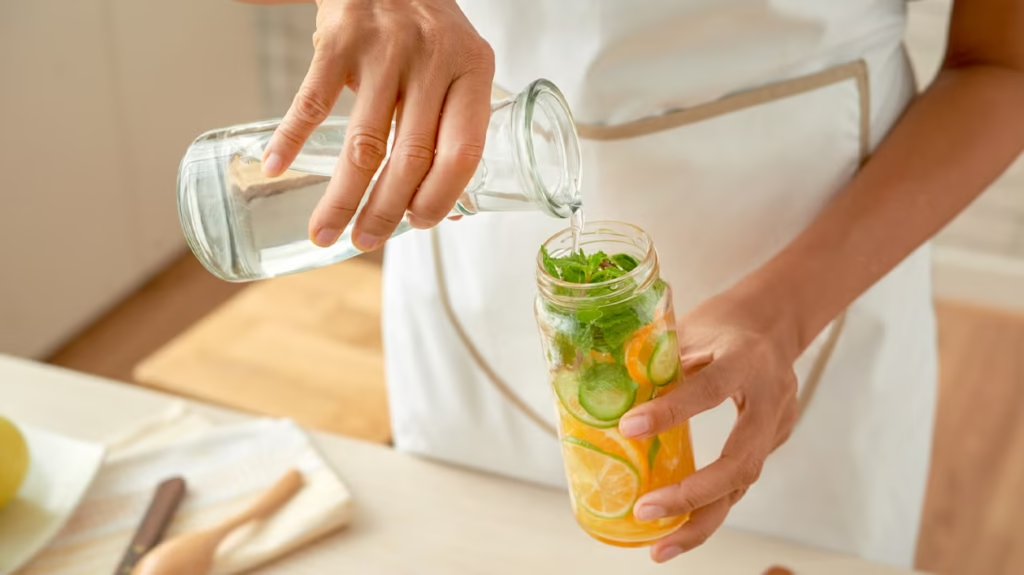

Detox water — water infused with fruits, vegetables, herbs, and spices — has become one of the most widely practised and most widely misunderstood wellness habits of the past decade. Social media feeds are full of beautiful glass pitchers of cucumber-lemon water, pink rose petal infusions, and elaborate fruit-and-herb combinations labelled as “fat-burning,” “metabolism-boosting,” and “toxin-flushing.” The wellness industry has embraced detox water with enormous enthusiasm — and modest scientific rigour.
The truth about detox water health benefits is more nuanced than either the enthusiastic wellness industry or its equally enthusiastic debunkers suggest. Several specific detox water formulations do have genuinely documented health effects — through the bioactive compounds they deliver, their effects on appetite hormones, their metabolic impacts, and the foundational improvement in hydration they encourage. And several popular claims about detox water are simply not supported by evidence and deserve honest examination.
This guide separates the two categories clearly — with the specific evidence for what different infused waters genuinely do, why the basic hydration improvement from drinking more water of any type is itself profoundly health-supportive, and 10 Indian-specific detox water recipes with their precise health rationales.
What “Detox” Actually Means — And Why the Word Is Both Accurate and Misleading
The word “detox” in the context of detox water carries two very different meanings that are consistently conflated — and distinguishing between them is essential for understanding what these beverages can and cannot do.
The first meaning — the one used by the wellness industry and generally not supported by evidence — is the idea that specific beverages can help the body eliminate specific accumulated “toxins” that would otherwise remain stored. This version of detox implies that the body’s natural elimination systems are insufficient without external supplementation, that specific ingredients “flush” named toxins, and that periodic intensive “cleansing” is necessary to restore normal function. This framework is not well-supported by human physiology — the liver, kidneys, lymphatic system, and skin continuously eliminate waste products through well-characterised mechanisms that do not require specific beverage interventions to function, as covered comprehensively in our liver cleanse and natural detox guide.
The second meaning — the one that is both accurate and clinically supported — is that certain beverage ingredients contain bioactive compounds that support the liver’s and kidneys’ own natural detoxification enzyme systems. This is a different and more defensible claim: not that the beverage performs detoxification that the body cannot, but that it provides specific cofactors, substrates, and protective compounds that enhance the efficiency of the body’s own detoxification machinery. In this sense, several detox water ingredients genuinely do support detoxification — by providing the Vitamin C needed for Phase I liver enzyme function, the citric acid that stimulates bile production and flow, the polyphenols that activate Phase II conjugation enzyme expression, or the simple hydration that maintains the renal filtration capacity needed for continuous waste elimination.
Understanding this distinction allows you to appreciate what detox waters genuinely offer while maintaining appropriate scepticism about the more extravagant marketing claims.
The Foundational Benefit — Why Any Detox Water That Gets You Drinking More Water Is Working
Before reviewing specific ingredients, acknowledging the most fundamental and most consistently supported detox water health benefit is essential: any preparation that makes water more enjoyable to drink consistently increases daily fluid intake — and that increased hydration produces real, documented health benefits that have nothing to do with the specific ingredients.
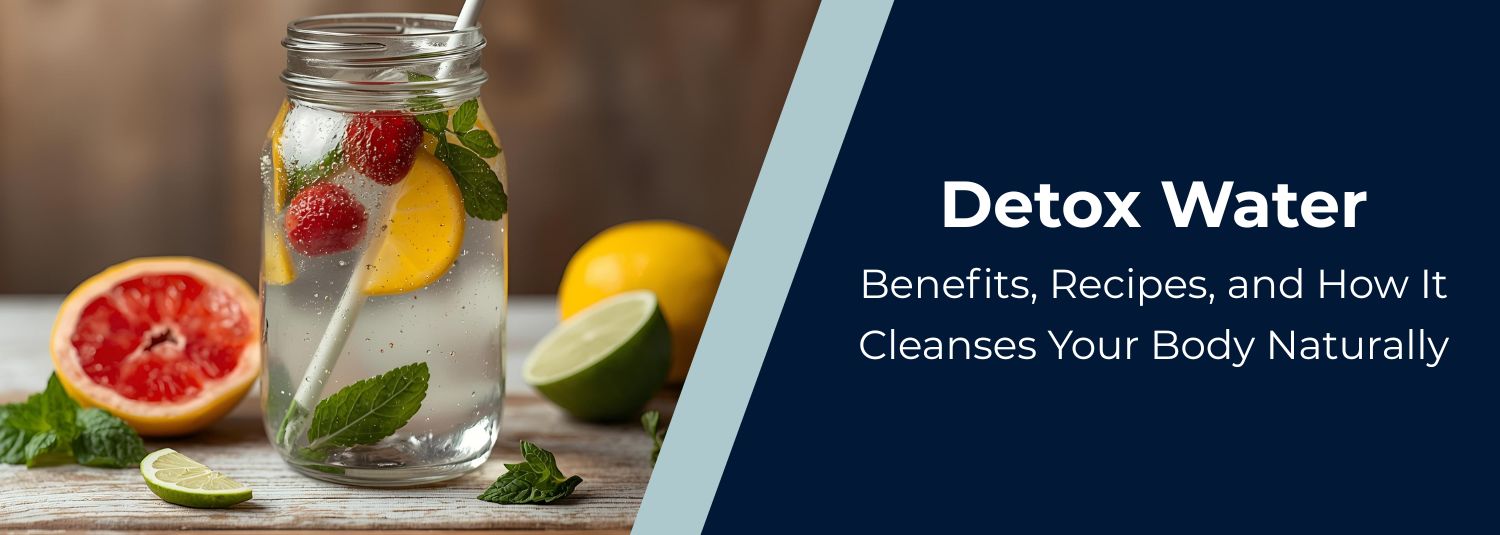
As covered in depth in our article on the role of hydration in weight loss, adequate hydration increases metabolic rate by 30% per 500ml consumed (Boschmann et al., 2003), reduces post-meal caloric intake through gastric distension signalling, supports the liver’s and kidneys’ filtration capacity, reduces the dehydration-driven vasopressin release that promotes insulin resistance, and maintains the cognitive function required for dietary adherence and lifestyle consistency. Research published in the European Journal of Clinical Nutrition found that overweight adults who replaced one daily sweetened or caloric beverage with infused water over 12 weeks showed significant reductions in body weight, blood pressure, and inflammatory markers — with most of the benefit attributable to the displacement of caloric beverages rather than to specific bioactive compounds in the infused water itself.
This foundational benefit — adequate hydration and displacement of caloric beverages — is the most reliable and most broadly applicable of all detox water health benefits, and it is achieved by any pleasant-tasting infused water regardless of its specific ingredients. The additional specific benefits described below are additive to this foundation, not instead of it.
The Real Science: What Specific Detox Water Ingredients Actually Do
Lemon — The Best-Studied Detox Water Ingredient
Lemon is the most commonly used and most scientifically supported detox water ingredient — with multiple well-characterised bioactive compounds producing specific, documented health effects.
D-limonene — the primary component of lemon peel essential oil — has documented hepatoprotective effects, with research showing it reduces hepatic inflammation, supports the expression of Phase I and II liver detoxification enzymes, and protects against experimentally induced hepatic damage. When lemon slices (including peel) are added to water, d-limonene infuses into the water over time — making lemon slice water genuinely different from lemon juice water in its hepatoprotective compound profile.
Citric acid — the dominant organic acid in lemon — stimulates bile production and bile flow (choleretic effect), supporting the excretion of liver-processed conjugated compounds through the biliary route. Citric acid also chelates calcium oxalate in urine, significantly reducing kidney stone formation risk — a specific medical benefit confirmed in clinical research showing that lemon water consumption significantly reduces recurrence rates in patients with calcium oxalate kidney stones.
Hesperidin and naringenin — flavonoids concentrated in the white pith and peel of lemons — have documented anti-inflammatory effects (reducing CRP, IL-6, and TNF-α), endothelial protective effects (improving flow-mediated dilation of blood vessels), and AMPK-activating properties that improve cellular energy metabolism. These compounds are minimally present in lemon juice alone but are released into water over 2–4 hours of infusion when lemon slices with pith are used.
Vitamin C from lemon contributes to the Phase I liver enzyme cofactor supply, to glutathione synthesis, and to the immune function effects covered in our natural ways to boost your immune system guide — though the actual Vitamin C content of lemon water is modest compared to whole citrus or amla consumption.
Practical optimisation: Use organic lemon slices (including peel, which contains the highest concentration of d-limonene and hesperidin). Infuse in room temperature or warm (not boiling) water for 2–4 hours to maximise bioactive compound extraction. The traditional Indian practice of warm water with lemon and honey in the morning optimises bile stimulation, Phase I cofactor delivery, and digestive system activation through the warmth effect on gut motility — all supported by specific mechanism-based evidence.
Ginger — The Most Bioactive Detox Water Spice
Ginger’s bioactive compounds — primarily gingerols and shogaols — have among the most extensively studied mechanisms of any commonly used detox water ingredient. Their specific relevance to the detox water health benefits framing includes: accelerated gastric emptying (addressing the bloating and digestive discomfort from delayed gastric emptying that most people associate with needing a “detox”), inhibition of inflammatory prostaglandin and thromboxane production through dual COX-1 and COX-2 inhibition (producing genuine anti-inflammatory effects comparable in mechanism to ibuprofen at sufficient doses), antiemetic activity through 5-HT3 receptor antagonism, and AMPK activation that improves insulin sensitivity in peripheral tissues.
A systematic review published in Critical Reviews in Food Science and Nutrition confirmed ginger’s anti-inflammatory, anti-obesity, and glucose-regulating properties across multiple clinical trials — providing evidence that ginger water consumed regularly is not merely a pleasant beverage but delivers clinically meaningful quantities of anti-inflammatory compounds through consistent use. The full digestive benefits of ginger are covered in our guide to improving digestion naturally.
Practical optimisation: Fresh ginger root (not dried powder) steeped or boiled in water produces higher gingerol content than cold infusion. A 1-inch piece of fresh ginger in 500ml of warm water with lemon produces a beverage with measurable anti-inflammatory compound content. Ginger water consumed before meals also has modest appetite-suppressing effects through cholecystokinin release — making it one of the few detox water ingredients with direct evidence for reducing subsequent meal caloric intake.
Cucumber — Hydration, Silica, and Anti-Inflammatory Compounds
Cucumber’s popularity in detox water reflects both its pleasant, neutral flavour (making water significantly more palatable and increasing consumption) and specific nutritional contributions. Cucumbers are approximately 96% water — infusing water with cucumber slices adds minimal additional caloric content while contributing silica (important for collagen synthesis and skin health), caffeic acid and flavonoids (with documented anti-inflammatory activity), and cucurbitacins (bitter compounds with anti-inflammatory and antioxidant effects).
The skin hydration benefits of cucumber-infused water are partly direct (the silica and flavonoids that support collagen matrix integrity) and partly mediated by improved overall hydration — which is itself the most evidence-backed intervention for skin moisture, elasticity, and barrier function. Research from the University of Missouri found that adequate daily water intake significantly improved skin hydration, elasticity, and appearance in study participants — effects mediated through improved dermal blood flow and intercellular fluid maintenance that better skin hydration supports.
Mint — Digestion, Cooling, and Appetite Suppression
Mint (pudina) — one of the most widely used herbs in Indian cooking and in traditional Ayurvedic medicine — contains menthol and menthone compounds with specific documented effects relevant to detox water’s digestive and appetite-related benefit claims. Menthol activates cold-sensitive TRPM8 receptors in the mouth and gastrointestinal tract, producing the characteristic cooling sensation and, in the GI context, reducing smooth muscle spasm through calcium channel antagonism — providing the antispasmodic effect that makes mint genuinely effective for IBS-type abdominal cramping, bloating, and urgency.
The appetite suppression claimed for mint water has a specific mechanistic basis: research published in the Journal of Neurological and Orthopaedic Medicine found that inhaling peppermint aroma every two hours significantly reduced hunger, caloric intake, and total weekly calories consumed — attributed to menthol’s olfactory satiety signalling effects on the hypothalamus. While this research used concentrated peppermint aroma rather than mint-infused water, the principle of menthol’s hypothalamic signalling provides a plausible mechanism for the observed appetite-suppressing effects of mint water consumption that most users report.
Coriander (Dhania) Seeds — The Underrated Detox Water Star
Coriander seeds are one of the most overlooked ingredients for genuinely functional Indian detox water — with specific documented benefits that far exceed the generic wellness claims typically associated with detox water marketing.
Coriander seed water — prepared by soaking or boiling coriander seeds in water overnight — contains linalool, camphor, and alpha-pinene along with potassium and B vitamins in meaningful concentrations. Research published in the Journal of Ethnopharmacology found coriander seed extract significantly reduced blood glucose levels through mechanisms including alpha-glucosidase inhibition (reducing intestinal glucose absorption) and insulin secretagogue activity. Its diuretic properties — documented in multiple studies — reduce water retention and oedema without the electrolyte imbalances of pharmaceutical diuretics, since coriander water’s potassium content compensates for the increased urinary potassium loss that most diuretics produce. The anti-inflammatory and thyroid-supportive properties of coriander are particularly valued in Ayurvedic practice for their gentle systemic effects.
Jeera (Cumin) Water — India’s Traditional Metabolic Detox Water
Jeera water deserves its own prominent discussion in any guide to detox water health benefits for an Indian audience — because it is one of the few detox water preparations with direct randomised clinical trial evidence for its claimed benefits, not merely bioactive compound plausibility.
As discussed in our hydration and weight loss guide, a clinical trial published in Complementary Therapies in Clinical Practice found that cumin supplementation over 8 weeks significantly reduced fasting blood glucose, insulin levels, and body fat percentage compared to placebo — effects attributed to cuminaldehyde and thymol’s effects on insulin sensitivity and digestive enzyme stimulation. Jeera water consumed in the morning on an empty stomach delivers these active compounds alongside the thermogenic and digestive stimulation effects of warm water — making it one of the most evidence-backed morning detox water preparations available for metabolic support.
Traditional Ayurvedic medicine classifies jeera as a digestive fire (Agni) stimulant — its carminative, enzyme-stimulating, and antibacterial properties in the gut are the Ayurvedic explanation for the same effects that modern pharmacology explains through cuminaldehyde’s pancreatic enzyme secretion stimulation and intestinal smooth muscle relaxation.
Turmeric — Anti-Inflammatory Detox Water With Bioavailability Requirements
Turmeric water — golden water infused with turmeric powder or sliced fresh turmeric root — has surged in popularity as a “golden milk” alternative and detox water ingredient. The anti-inflammatory evidence for curcumin is robust, as covered in our anti-inflammatory foods guide and liver cleanse guide — but there is a critical bioavailability issue that most turmeric water recipes fail to address.
Curcumin is highly insoluble in water — adding turmeric powder to plain water produces a suspension with very low curcumin bioavailability because curcumin requires fat for absorption and piperine (from black pepper) to inhibit its rapid hepatic glucuronidation and biliary excretion. Plain turmeric water delivers primarily the non-curcuminoid components of turmeric (water-soluble polysaccharides, mineral salts, and the deep yellow colour) with minimal curcumin absorption. To make turmeric water actually deliver its documented anti-inflammatory benefits, it must be combined with a fat source (even a small amount of coconut oil or ghee) and black pepper — converting it from plain water into a close approximation of the traditional haldi doodh preparation. This fat-and-pepper-enhanced turmeric water is genuinely bioactive and hepatoprotective; plain turmeric water is primarily pleasantly coloured with modest additional benefit.
Hibiscus (Gudhal) — The Blood Pressure and Liver-Protective Flower Water
Hibiscus water — made from dried hibiscus flowers (Hibiscus sabdariffa, known as gudhal in Hindi) — is one of the most evidence-backed floral infusions for specific health outcomes, with clinical trial evidence for blood pressure reduction, liver protection, and lipid profile improvement that positions it as one of the most genuinely medicinal of all detox water preparations.
A meta-analysis of 5 randomised controlled trials published in the Journal of Hypertension found hibiscus tea consumption significantly reduced systolic blood pressure by 7.58 mmHg and diastolic by 3.53 mmHg — effects attributable to the anthocyanins in hibiscus (delphinidin-3-sambubioside and cyanidin-3-sambubioside) acting as ACE inhibitors and vasodilators. Separately, animal studies and one small human clinical trial found hibiscus extract significantly reduced liver steatosis and liver enzyme markers in NAFLD models — suggesting hepatoprotective effects relevant to the liver health content in our liver cleanse guide.
Hibiscus water also has a naturally tart, cranberry-like flavour that makes it one of the most enjoyable alternatives to sweetened beverages — addressing one of the most important behavioural dimensions of detox water’s benefit by making water genuinely appealing without added sugar.
Fenugreek (Methi) Seed Water — Blood Sugar and Hormone Support
Fenugreek seed water — prepared by soaking 1 teaspoon of fenugreek seeds in water overnight and drinking the infused water (and optionally the seeds) in the morning — is one of the most bioactively potent detox water preparations available for metabolic health, with the specific clinical evidence discussed in our natural blood sugar management guide.
The overnight soaking of fenugreek seeds produces mucilaginous galactomannan fibre that infuses into the water — a viscous soluble fibre that slows gastric emptying and glucose absorption when consumed before meals, directly reducing post-meal glucose spikes. The 4-hydroxyleucine amino acid in fenugreek stimulates insulin secretion from pancreatic beta cells. And the sapogenin compounds in fenugreek have documented oestrogen-modulating effects that may benefit women with PCOS or hormonal imbalance — making overnight fenugreek water one of the most therapeutically specific morning detox water preparations for Indian women with these common conditions. The hormonal connection is explored in our article on how hormones affect women’s health.
Amla (Indian Gooseberry) Water — The Indian Detox Water Superstar
Fresh amla water — water infused with sliced or grated fresh amla, or diluted fresh amla juice — is arguably the most genuinely therapeutic of all Indian detox water options, combining the most stable naturally occurring Vitamin C source with polyphenols that directly support liver Phase I and II detoxification enzymes, immune function, blood sugar regulation, and digestive health.
The tannin-bound Vitamin C in amla is substantially more heat-stable and oxidation-resistant than ascorbic acid — meaning it retains its bioactivity in water infusions where other Vitamin C sources would degrade. The gallotannins (emblicanin A and B) and ellagitannins in amla have documented Nrf2-activating effects that upregulate Phase II liver detoxification enzyme expression — the same mechanism as sulforaphane from cruciferous vegetables, but available from a commonly consumed Indian fruit in water preparation form. The full evidence base is in our article on amla benefits for immunity and digestion.
10 Indian Detox Water Recipes With Their Specific Health Benefits
Recipe 1: Classic Morning Lemon-Ginger-Honey Water
Ingredients: Juice of half a lemon + 2 thin lemon slices (including peel), 1-inch piece of fresh ginger (sliced or grated), 1 teaspoon raw honey, 250ml warm water.
Preparation: Steep ginger in warm water for 5 minutes. Add lemon juice, lemon slices, and honey. Consume on an empty stomach 20–30 minutes before breakfast.
Specific benefits: D-limonene hepatoprotection, bile stimulation (citric acid), gingerol anti-inflammatory and gastric motility effects, honey’s prebiotic oligosaccharides, warm water gut motility activation. The most evidence-supported morning liver and digestive support preparation available. The morning ritual connection is covered in our healthy morning routine guide.
Recipe 2: Overnight Jeera (Cumin) Water
Ingredients: 1.5 teaspoons whole cumin seeds, 250ml water.
Preparation: Soak cumin seeds in water overnight in a covered glass or steel container. Strain and drink the infused water in the morning on an empty stomach. Optionally chew the softened seeds for additional fibre and compound delivery.
Specific benefits: Clinical trial evidence for reduced fasting blood glucose and body fat. Cuminaldehyde stimulates pancreatic enzyme secretion and improves insulin sensitivity. Carminative effects reduce morning bloating. One of the most evidence-backed Indian morning detox waters for metabolic support and the blood sugar benefits detailed in our natural blood sugar guide.
Recipe 3: Methi (Fenugreek) Seed Water
Ingredients: 1 teaspoon fenugreek seeds, 250ml water.
Preparation: Soak fenugreek seeds overnight. In the morning, drink the infused water (thick with mucilaginous galactomannan) on an empty stomach. Eat the softened seeds or add them to breakfast preparations.
Specific benefits: Meta-analysis evidence (10 RCTs) for reduced fasting glucose and HbA1c. Galactomannan fibre slows post-meal glucose absorption when consumed before eating. 4-hydroxyleucine stimulates insulin secretion. Particularly beneficial for people with prediabetes, insulin resistance, or PCOS. Hormonal support through sapogenin content for women with PCOS.
Recipe 4: Coriander (Dhania) Seed Water
Ingredients: 1 tablespoon coriander seeds, 500ml water.
Preparation: Boil coriander seeds in water for 5 minutes. Allow to cool slightly. Strain and drink warm throughout the morning or as an afternoon beverage.
Specific benefits: Alpha-glucosidase inhibition (reducing intestinal glucose absorption). Natural diuretic effects without electrolyte disruption (potassium content compensates for urinary losses). Anti-inflammatory linalool compounds. Thyroid-supportive effects noted in traditional Ayurvedic practice. Reduces fluid retention particularly relevant for the bloating and puffiness that concerns many Indian women.
Recipe 5: Amla-Ginger Morning Water
Ingredients: 2 tablespoons fresh amla juice (or 1 small fresh amla, grated), 1-inch fresh ginger (sliced), 250ml warm water, pinch of black salt.
Preparation: Steep ginger in warm water for 3 minutes. Add amla juice or grated amla, black salt. Stir and drink on an empty stomach.
Specific benefits: Most stable natural Vitamin C (for Phase I liver enzyme function and immune support). Gallotannin Nrf2 activation for Phase II liver detoxification enzyme upregulation. Gingerol anti-inflammatory and gastric motility effects. Black salt mineral profile supports electrolyte balance. One of the most genuinely liver-supportive Indian morning detox waters, connecting to the liver support evidence in our liver cleanse guide.
Recipe 6: Hibiscus-Rose Petal Water
Ingredients: 2 tablespoons dried hibiscus flowers (gudhal), 5–6 dried rose petals (unsprayed), 500ml water, 1 teaspoon honey (optional).
Preparation: Steep hibiscus flowers and rose petals in boiling water for 5–10 minutes. Allow to cool. Strain and refrigerate. Drink chilled or at room temperature throughout the day.
Specific benefits: Clinical trial evidence for significant blood pressure reduction (7.58 mmHg systolic reduction). Anthocyanin ACE-inhibitor and vasodilator effects. Hepatoprotective effects in NAFLD models. Rose petals add additional flavonoids (quercetin, kaempferol) with anti-inflammatory effects. One of the most visually beautiful and genuinely medicinal Indian detox waters for cardiovascular and liver support.
Recipe 7: Turmeric-Black Pepper-Coconut Water
Ingredients: Quarter teaspoon turmeric powder (or 1-inch fresh turmeric root, sliced), pinch of black pepper, 1 teaspoon coconut oil, 300ml warm water, pinch of cinnamon.
Preparation: Combine all ingredients. Stir or blend briefly to emulsify the coconut oil. Drink warm.
Specific benefits: This is the bioavailability-optimised turmeric water — the fat (coconut oil) and piperine (black pepper) together increase curcumin bioavailability by up to 2,000% compared to plain turmeric water. Delivers genuinely therapeutic curcumin doses for NF-κB inhibition and liver fat reduction. Cinnamon adds cinnamaldehyde for insulin receptor sensitisation. The most genuinely anti-inflammatory detox water in this list — connecting to the evidence in our anti-inflammatory foods guide.
Recipe 8: Mint-Cucumber-Lime Cooler
Ingredients: Half a cucumber (sliced with skin), 10–12 fresh mint leaves, juice of 1 lime, 1 litre cold water, pinch of black salt.
Preparation: Combine all ingredients. Refrigerate for 2–4 hours to allow infusion. Drink throughout the day as a refreshing hydration beverage.
Specific benefits: High palatability — the primary benefit of making water enjoyable enough to drink adequate quantities in Indian summer heat. Menthol antispasmodic effects for digestive comfort and bloating reduction. Cucumber silica and caffeic acid for skin health and anti-inflammation. Lime citric acid for bile stimulation. Black salt electrolyte replenishment in heat and after exercise. The summer equivalent of the hydration strategies in our hydration guide.
Recipe 9: Apple Cider Vinegar-Cinnamon Water
Ingredients: 1 tablespoon raw apple cider vinegar (with mother), half teaspoon Ceylon cinnamon powder, 300ml warm water, 1 teaspoon honey.
Preparation: Combine all ingredients. Stir well. Drink 15–20 minutes before the largest meal of the day.
Specific benefits: Acetic acid inhibits alpha-amylase and sucrase (reducing post-meal glucose absorption by 20–31% — from the meta-analysis evidence covered in our blood sugar guide). Cinnamaldehyde improves insulin receptor sensitivity. AMPK activation from both acetic acid and cinnamon compounds improves cellular energy metabolism. The most evidence-backed pre-meal detox water for blood sugar management. Note: Dilute adequately — undiluted vinegar can damage tooth enamel. Use a straw and rinse mouth with water after consumption.
Recipe 10: Neem-Tulsi Morning Detox Water
Ingredients: 5–6 fresh neem leaves, 8–10 fresh tulsi (holy basil) leaves, 300ml warm water.
Preparation: Rinse leaves thoroughly. Add to warm (not boiling) water and steep for 5–10 minutes. Strain. Drink on an empty stomach in the morning. Start with smaller quantities (3–4 leaves each) and increase gradually — both herbs have strong flavours and potent bioactive compounds.
Specific benefits: Tulsi’s immunomodulatory effects (NK cell and T-helper cell enhancement documented in double-blind trials — as covered in our immune system guide). Neem’s broad-spectrum antimicrobial properties (nimbidin, nimbolide, quercetin). Both herbs have documented blood glucose-lowering properties through alpha-glucosidase inhibition. The most traditionally grounded Indian morning detox water — Dinacharya (Ayurvedic daily routine) prescribes this combination specifically for seasonal immunity and metabolic support. Note: Not recommended during pregnancy, for children, or for people on immunosuppressant medications without medical guidance.
Detox Water Health Benefits vs. Myths — The Definitive Table
| ❌ The Myth | ✅ The Reality |
|---|---|
| Detox water removes toxins the body cannot eliminate on its own | The body eliminates waste products continuously through the liver (bile excretion), kidneys (urinary excretion), lungs (exhaled gas), and skin (sweat). No beverage can “remove toxins” that these systems are failing to clear — a functioning liver and kidneys do not need external “detox” assistance. What specific detox water ingredients CAN do is provide nutritional cofactors (Vitamin C, polyphenols, amino acid precursors) that support the efficiency of these organs’ own detoxification biochemistry. |
| All detox waters work equally — any fruit in water is “detox water” | The bioactive compound content, concentration, and mechanism varies dramatically across ingredients and preparation methods. Jeera water with clinical trial evidence for blood glucose reduction is genuinely different from strawberry-infused water that primarily improves palatability. The specific recipe, preparation method, and infusion time determine whether a detox water delivers meaningful quantities of its claimed bioactive compounds or merely pleasant flavour. |
| Drinking detox water will cause rapid weight loss | No detox water produces significant independent weight loss. The weight management benefits are real but indirect: improved hydration reduces false hunger signals; displacement of caloric beverages reduces daily caloric intake; and specific ingredients (ginger, cinnamon, jeera) modestly improve metabolic rate and insulin sensitivity. These are meaningful contributors to a weight management programme — not standalone weight loss interventions. |
| Detox water is only safe with organic ingredients | Washing produce thoroughly removes most pesticide surface residue. Organic ingredients do provide lower pesticide exposure but are not required for safe or effective detox water. For preparations using peel (lemon, cucumber), organic is preferable where available and affordable — but the bioactive benefits of conventional washed produce significantly outweigh the risks from residual surface pesticides for most people. |
| More ingredients = more powerful detox water | Combining many different ingredients does not amplify individual compound benefits and may reduce some through competitive absorption or flavour incompatibility. Many high-performing detox waters in the research literature are single-ingredient preparations (jeera water, hibiscus tea, fenugreek water). Simplicity and consistent daily use of well-chosen preparations outperforms complex multi-ingredient concoctions consumed irregularly. |
| Detox waters work immediately — you’ll feel results in a day | Acute benefits (improved hydration, digestive comfort, reduced bloating) can be felt within hours. Metabolic benefits (reduced fasting glucose, improved insulin sensitivity, liver enzyme normalisation) from regular consumption of therapeutic preparations (jeera, methi, hibiscus) require 4–8 weeks of consistent daily use to become measurable. Detox water is a daily practice, not a quick fix. |
Making Detox Water a Sustainable Daily Practice
The most significant practical challenge with detox water is not finding the right recipe — it is building the consistent daily habit of adequate hydration that produces lasting benefits. Research consistently shows that the most durable hydration habits are supported by environmental design rather than willpower: keeping water visible and accessible throughout the day, preparing a pitcher of infused water the night before so it is ready in the morning, having a specific glass or bottle designated for daily infused water, and associating water consumption with existing daily anchors (morning routine, desk work, post-meal periods).
The 30–35ml per kg of body weight daily hydration target — covered in our comprehensive hydration guide — should be the daily quantity goal. The specific detox water recipes in this guide provide variety and therapeutic benefit within that quantity target — ensuring that the daily hydration practice is both enjoyable and maximally health-supportive.
For busy mornings, overnight preparations are particularly valuable: jeera water, methi water, and coriander water all require only 30 seconds of preparation the night before and are ready to drink upon waking — making them among the most practically sustainable therapeutic morning beverages available.
Related Articles From HerbeeLife
📖 Role of Hydration in Weight Loss: 10 Powerful Science-Backed Reasons Water Is Your Best Tool
📖 Liver Cleanse: How to Detox Your Liver Naturally — 12 Science-Backed Strategies
📖 Anti-Inflammatory Foods: 12 Powerful Choices That Fight Disease From the Inside Out
📖 Lower Blood Sugar Naturally: 12 Powerful Science-Backed Strategies
📖 How to Improve Digestion Naturally: 12 Powerful Science-Backed Strategies
📖 Amla Benefits: Proven Immunity, Digestion and Metabolic Health Backed by Science
📖 Healthy Morning Routine: 10 Powerful Habits That Transform Your Entire Day
Frequently Asked Questions: Detox Water Health Benefits
What is the best detox water for weight loss?
No detox water produces significant independent weight loss — the mechanism is indirect, through improved hydration reducing false hunger, displacement of caloric beverages, and modest metabolic support from specific ingredients. For the greatest combined appetite and metabolic support, jeera (cumin) water consumed before meals (clinical evidence for reduced blood glucose and body fat), ginger-lemon water (appetite suppression through cholecystokinin release), and apple cider vinegar-cinnamon water before the largest meal (20–31% post-meal glucose reduction) provide the most evidence-backed weight management support of all the recipes in this guide.
When is the best time to drink detox water?
Different preparations are optimised for different times. Lemon-ginger water and amla water: first thing in the morning on an empty stomach for bile stimulation and liver support. Jeera and methi water: morning on an empty stomach, allowing the galactomannan and cuminaldehyde to work before the first meal. Apple cider vinegar-cinnamon water: 15–20 minutes before the largest meal to reduce post-meal glucose. Mint-cucumber water: throughout the day for hydration in Indian heat. Hibiscus water: any time as a blood pressure-supporting daily beverage. Coriander water: mid-morning for diuretic and blood glucose support.
Can I drink detox water while pregnant or breastfeeding?
Plain infused waters with safe culinary ingredients (cucumber, mint, lemon, ginger in moderate amounts) are generally safe during pregnancy and breastfeeding — they primarily improve hydration palatability. However, therapeutic preparations with potent bioactive compounds should be approached with caution: neem-tulsi water (avoid during pregnancy — neem has documented abortifacient properties at high doses), methi water in large amounts (may stimulate uterine contractions), and concentrated herbal preparations should all be avoided during pregnancy without medical guidance. Always consult your obstetrician regarding specific preparations during pregnancy.
How much detox water should I drink per day?
For therapeutic preparations (jeera, methi, coriander, neem-tulsi), therapeutic doses typically involve one 250–300ml serving per day — these are not beverages to drink in unlimited quantities. For hydration-focused preparations (mint-cucumber, hibiscus, lemon water), the entire daily hydration target (30–35ml per kg of body weight) can be met through these preparations, replacing plain water entirely if preferred. Mixing therapeutic morning preparations (smaller volumes, high bioactive content) with larger-volume hydration-focused preparations through the day is the practical daily framework.
Is shop-bought detox water as effective as homemade?
No — commercial detox waters, flavoured waters, and “wellness beverages” marketed as detox preparations almost universally contain insufficient quantities of the bioactive ingredients to produce the effects claimed. Most derive their flavour from natural flavourings, extracts, or minimal ingredient quantities that deliver taste without therapeutic compound concentrations. Homemade preparations — particularly overnight-soaked preparations like jeera and methi water — produce far higher bioactive compound concentrations per serving at a fraction of the cost. The only meaningful advantage of commercial preparations is convenience — which is outweighed by the superior bioactive delivery of properly prepared homemade versions.
Sources and References
1. Boschmann M et al. Water-induced thermogenesis. Journal of Clinical Endocrinology and Metabolism, 2003.
2. Sahib AS. Anti-diabetic and antioxidant effect of coriander (Coriandrum sativum L.) leaf extract. Journal of Intercultural Ethnopharmacology, 2016.
3. Hopkins AL et al. Hibiscus sabdariffa L. in the treatment of hypertension and hyperlipidemia: a comprehensive review of animal and human studies. Fitoterapia, 2013.
4. Rahmani AH et al. Active constituents of pomegranates as potential candidates for the management of health through modulation of biological activities. Pharmacognosy Review, 2014.
5. Mashhadi NS et al. Anti-oxidative and anti-inflammatory effects of ginger in health and physical activity: Review of current evidence. International Journal of Preventive Medicine, 2013.
6. Nair V et al. From the Desk of the Guest Editor—Hibiscus sabdariffa as a potential treatment for obesity-associated hypertension. Journal of the American Dietetic Association, 2016.
7. Johnston CS, Kim CM, Buller AJ. Vinegar improves insulin sensitivity to a high-carbohydrate meal in subjects with insulin resistance or type 2 diabetes. Diabetes Care, 2004.
Follow HerbeeLife
🌿 Stay connected for more evidence-based nutrition, Ayurvedic wellness, and practical natural health content:
📸 Instagram | 📌 Pinterest | 👥 Facebook | 🐦 X (Twitter)
Final Thoughts: The Best Detox Water Is the One You Will Drink Every Day
The detox water trend has been alternately oversold and unfairly dismissed. The truth is somewhere between “magic healing elixir” and “just flavoured water with no benefits.” Several specific Indian detox water preparations — jeera water, methi water, amla water, hibiscus water, neem-tulsi water — have genuine, mechanism-based, clinically supported health effects that deserve recognition as part of a comprehensive natural wellness practice.
What they share — beyond their specific bioactive contents — is the foundational benefit of making water enjoyable enough to drink consistently. And consistent adequate hydration, in the Indian climate and the Indian lifestyle, is itself one of the most transformative health habits available.
Start with one. Make it tonight. Drink it tomorrow morning. And discover what 5,000 years of Ayurvedic wisdom has been preparing in Indian kitchens every morning for millennia — now confirmed, compound by compound, in modern clinical research.
⚠️ Medical Disclaimer: This article is for informational and educational purposes only and does not constitute medical advice. Certain detox water preparations contain potent bioactive compounds that may interact with medications or be inappropriate during pregnancy. Always consult a qualified healthcare professional before using therapeutic herbal preparations, especially if pregnant, breastfeeding, or on prescription medications. Read full disclaimer →
💬 Which of these 10 Indian detox water recipes are you going to try first — and which one have you been making for years without knowing the science behind it? Share in the comments. Your family’s traditional morning water ritual might just be more therapeutic than you realised.