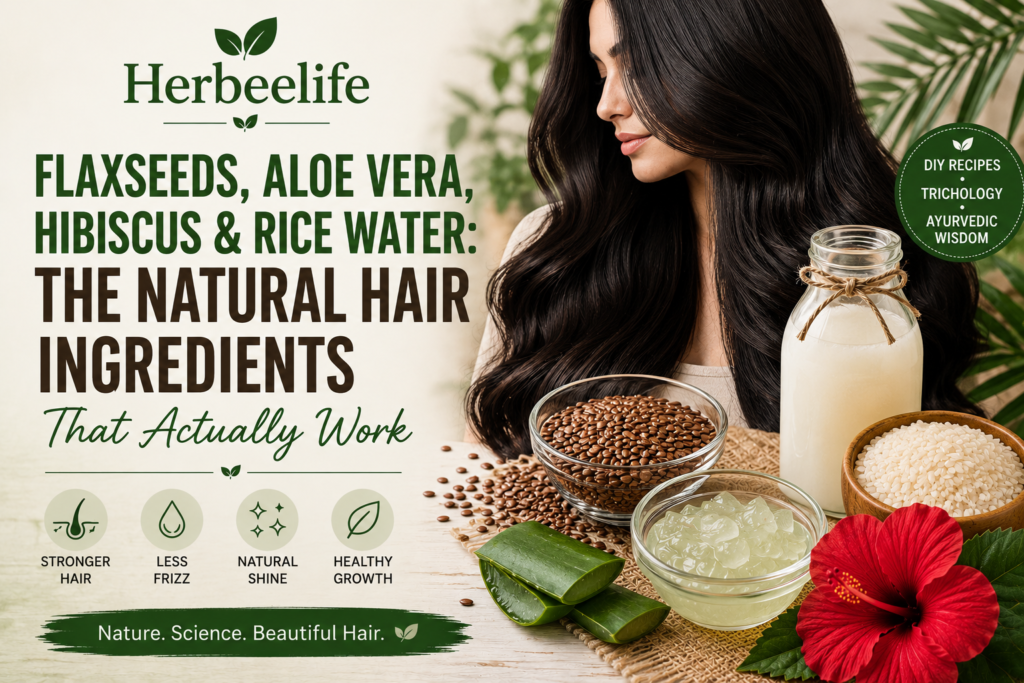

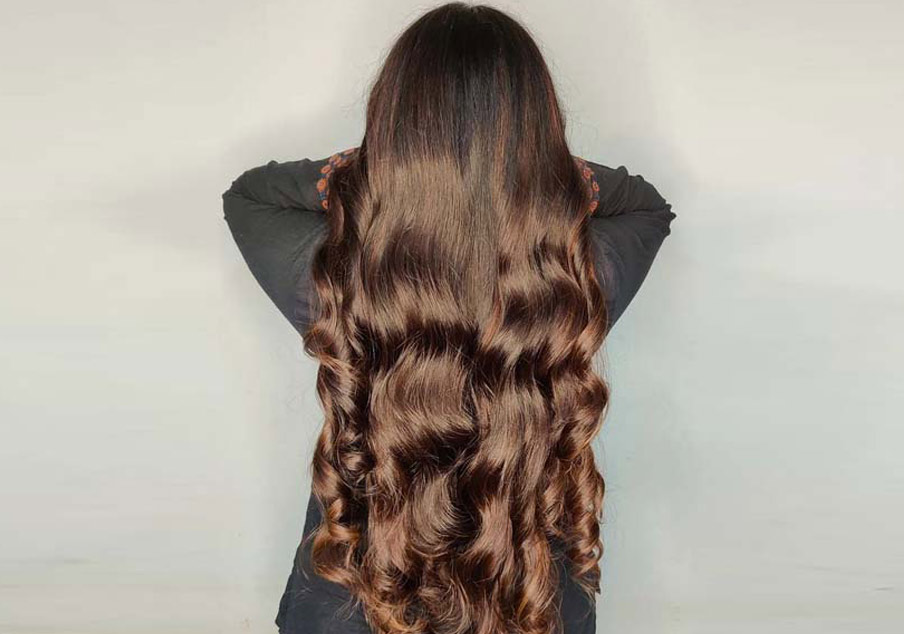
They are going viral for a reason. Flaxseed gel defining curls and waves without a drop of product. Aloe vera melting frizz into smooth, moisturised definition. Hibiscus giving dark Indian hair a richness that salon glossing treatments charge thousands for. Rice water strengthening strands to the point where breakage visibly reduces within weeks. Across Instagram, YouTube, and WhatsApp groups of every age and hair type, these four natural ingredients are having a moment — celebrated by women in Chennai and Tokyo and Lagos with completely different hair textures who all arrived at the same ingredients independently, because they work.
But “going viral” and “scientifically understood” are different things. This guide provides both: the mechanism behind why each ingredient does what it does, the specific compounds responsible for the effects people are experiencing, the recipes that maximise those compounds, and the complete practical guide to building a consistent natural hair care routine that produces lasting results rather than occasional good hair days.
Because as the viral posts themselves are now saying: healthy hair starts with consistent care — not just styling. The ingredients are the beginning of the story. Understanding them is how you make the results permanent.
Before the Ingredients: Understanding What Hair Actually Needs
To understand why these four ingredients work, it helps to understand the structure of a hair strand and what makes it behave as it does.
Each hair strand is composed of three layers: the medulla (the innermost core, present in thick hair, absent in fine hair), the cortex (the primary structural layer — long keratin protein chains arranged in a helical pattern that determine hair’s strength, elasticity, and colour), and the cuticle (the outermost layer of overlapping, scale-like cells that determine hair’s smoothness, shine, and moisture retention). Hair behaviour — frizziness, curl definition, shine, strength, porosity — is almost entirely determined by the cuticle’s condition.
Healthy hair has cuticle scales that lie flat and tight against the hair shaft — reflecting light uniformly (shine), preventing moisture from escaping the cortex (hydration), and allowing moisture to be absorbed smoothly when needed (appropriate porosity). Damaged hair — from heat, chemicals, UV exposure, mechanical friction, and oxidative stress — has lifted, chipped, or missing cuticle scales. Lifted cuticles produce frizz (moisture enters unevenly), reduce shine (light scatters off irregular surface), and allow moisture to escape rapidly (dry, brittle hair).
Everything that matters in natural hair care is therefore either: smoothing and sealing the cuticle, providing the moisture the cortex needs, strengthening the keratin protein structure of the cortex, or protecting the cuticle from further damage. Each of the four viral ingredients addresses one or more of these needs through specific, documented mechanisms — which is why they work across different hair types and textures.
🌿 Ingredient 1: Flaxseeds (Alsi)
For: Curl and wave definition, frizz control, flexible hold, scalp health
The Science of Flaxseed Gel
Flaxseed gel is made from boiling whole flaxseeds in water — and the gel that forms is not simply the result of cooking. It is the extraction of a specific polysaccharide called mucilage — primarily composed of arabinoxylan (a branched polysaccharide with exceptional water-holding capacity and viscosity-forming properties). When the flaxseed mucilage is applied to hair and dries, the arabinoxylan molecules form a flexible, breathable film around each hair strand that:
- Groups adjacent strands together in their natural wave or curl pattern by the film’s gentle adhesive properties — providing curl definition without the stiff, crunchy hold of synthetic gels
- Retains moisture within the cortex by forming a semi-occlusive barrier that slows transepidermal water loss from the hair shaft while remaining breathable (unlike silicones, which seal moisture but prevent any further water absorption)
- Reflects light from its smooth surface coating, adding shine to defined strands
- Carries additional active compounds from the flaxseeds themselves directly to the hair and scalp: omega-3 ALA (alpha-linolenic acid), lignans (phytoestrogens with anti-inflammatory and mild DHT-inhibiting activity relevant to androgenetic hair loss), and Vitamin E (tocopherols with antioxidant protection against UV and oxidative damage)
Research published in the International Journal of Cosmetic Science confirmed that plant-derived polysaccharide films (from seed mucilage) provide styling hold, frizz reduction, and moisture retention comparable to synthetic film-forming polymers used in commercial gels — with the significant additional benefit of providing bioactive compounds that benefit the hair biologically rather than merely coating it cosmetically.
For Indian hair specifically — which ranges from the straight, fine hair common in many North Indian communities to the thick, wavy, and frequently coarse hair of South Indian, Northeast Indian, and tribal communities — flaxseed gel provides the definition and moisture seal that the hair’s natural wave pattern needs to express itself cleanly, without the weight of heavy oils or the stiffness of commercial gels.
The Omega-3 and Lignan Dimension
Beyond the mechanical gel properties, flaxseeds are the richest plant source of ALA omega-3 fatty acids (2.35g per tablespoon) and lignans (the phytoestrogen secoisolariciresinol diglucoside — SDG). The ALA in flaxseed gel, absorbed through the scalp during application, has documented anti-inflammatory activity against the scalp inflammation that contributes to follicle miniaturisation and hair fall. The SDG lignans have mild 5-alpha reductase inhibitory activity — reducing the conversion of testosterone to DHT that drives androgenetic (pattern) hair loss.
This means flaxseed gel is simultaneously a styling product and a scalp health treatment — an overlap that no synthetic gel can claim. The full hair fall prevention science, including the broader context of DHT-blocking ingredients, is in our hair fall guide and homemade hair oil guide.
Flaxseed Gel Recipe — The Master Preparation
| Prep time | 15–20 minutes |
| Shelf life | 1–2 weeks refrigerated |
| Yield | Approximately 200ml |
| Best for | All hair types for frizz control; wavy and curly hair for definition; fine hair for lightweight hold |
Ingredients:
- ¼ cup (40g) whole flaxseeds (alsi)
- 2 cups (500ml) water
- Optional additions: 1 tablespoon aloe vera gel (moisture boost), 5 drops rosemary essential oil (scalp stimulation), 1 teaspoon hibiscus powder (colour and shine for dark hair)
Method:
- Combine flaxseeds and water in a small saucepan. Bring to a medium boil over medium heat.
- Stir continuously as the mixture heats — the gel forms rapidly and will stick to the bottom if not stirred.
- When the liquid begins to look like egg whites being poured — viscous, translucent, slightly foamy — typically at 8–12 minutes of simmering, it is ready.
- Test consistency: dip a spoon and hold it horizontally — the gel should drip slowly in thick, thread-like drops rather than running freely. If too thin, continue simmering 2–3 more minutes. If too thick (gel-solid rather than gel-liquid), add a tablespoon of water and stir.
- Remove from heat. Pour immediately through a fine mesh strainer or muslin cloth into a glass jar, pressing the flaxseeds with a spoon to extract maximum gel. Work quickly — it thickens as it cools.
- Add optional enrichments (aloe vera gel, essential oils, hibiscus) once cooled to body temperature. Stir well.
- Store in the refrigerator. Use within 2 weeks — it will develop a slightly sour smell if it has fermented; discard and make fresh.
Application:
On damp (not dripping wet) hair after washing and conditioning: section hair and apply flaxseed gel from roots to ends, scrunching upward into the hair to encourage the natural wave/curl pattern to form. For wavy Indian hair, the “praying hands” technique (smoothing hands down sections of hair in a prayer position, then scrunching) distributes gel evenly and defines waves without disturbing the natural pattern. Allow to air dry completely — the gel forms a “cast” (slightly crunchy film) as it dries, which is scrunched out gently once fully dry to reveal soft definition. Do not touch or diffuse too aggressively while wet — disturbing the gel before it sets breaks the cast and increases frizz.
🌿 Ingredient 2: Aloe Vera (Ghritkumari)
For: Moisture retention, frizz control, scalp health, hair growth support
Why Aloe Vera Does So Much
Aloe vera gel — extracted from the leaf of Aloe barbadensis — is one of the most compositionally complex natural ingredients used in hair care, containing over 200 bioactive compounds including polysaccharides (acemannan, glucomannans), amino acids (all 20 essential and non-essential amino acids), proteolytic enzymes (aliiase — which breaks down dead skin cells on the scalp), vitamins (A, C, E, B12, folic acid, choline), and minerals (calcium, magnesium, zinc, selenium) — all within the clear inner gel.
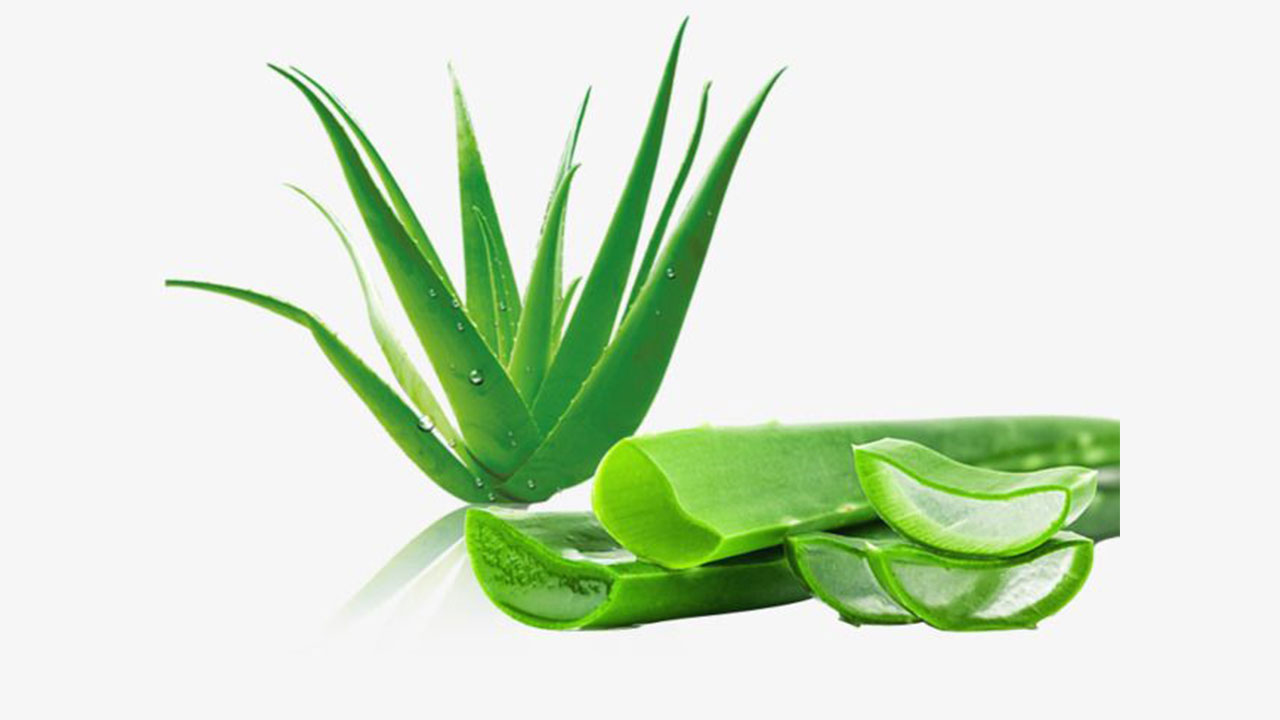
For frizz and moisture: Aloe vera’s water content (96%) and its acemannan polysaccharide humectant activity (acemannan attracts and binds water molecules to the hair shaft, maintaining moisture content of the cortex and preventing the cortex dehydration that causes frizz) make it an exceptional natural humectant and anti-frizz agent. Its slightly acidic pH (approximately 4.5 — matching the hair’s own pH) seals the cuticle when applied — the same mechanism as apple cider vinegar rinses but gentler and with more additional benefit. Sealed cuticle scales reflect light uniformly (shine) and prevent moisture escape (sustained hydration between washes).
For the scalp: Aloe vera’s proteolytic enzymes gently remove dead keratinocytes from the follicular infundibulum (the opening of the hair follicle at the scalp surface) — reducing the follicular clogging that can impair follicle function. Its anti-inflammatory activity (acemannan inhibiting IL-1β and TNF-α at the scalp surface) reduces the scalp inflammation that drives dandruff-associated hair fall and follicle miniaturisation. The full scalp health evidence is in our itchy scalp guide.
For hair growth: A 2019 study published in the Journal of Chemical and Pharmaceutical Research found aloe vera extract significantly increased hair follicle count and hair shaft diameter in animal models — attributed to its stimulation of dermal papilla cell proliferation and its inhibition of the 5-alpha reductase activity that converts testosterone to DHT. The zinc content of aloe vera additionally supports the keratin synthesis required for strong, thick hair shaft production.
Fresh vs. Bottled Aloe Vera — Why Fresh Wins
The aloe vera plants growing in most Indian homes and gardens are a genuinely superior hair care ingredient in their fresh-extracted form compared to commercial aloe vera gels — not for romantic reasons but for specific biochemical ones. The proteolytic enzymes in fresh aloe vera (particularly aliiase and other cysteine proteases) are denatured during the heat processing used to produce commercial gels. The delicate acemannan polysaccharides are partially degraded in commercial preparations. And many commercial aloe vera gels contain preservatives (particularly methylisothiazolinone — one of the most common contact allergens in personal care products) that can cause scalp irritation in sensitive individuals.
Fresh aloe vera leaf, split lengthwise and the clear inner gel scooped out, provides the full enzyme-active, acemannan-intact, preservative-free compound profile that makes the ingredient effective. The yellowish aloin layer immediately beneath the leaf skin should be rinsed away before use — it contains anthraquinones that can be irritating to the scalp.
Aloe Vera Hair Recipes
1. Daily Leave-In Conditioning Spray
- 3 tablespoons fresh aloe vera gel
- 200ml distilled or filtered water
- 1 teaspoon argan oil or jojoba oil (for shine and slip)
- 5 drops lavender essential oil (optional — for fragrance and mild follicle stimulation)
Blend smooth. Pour into a spray bottle. Shake before each use. Spray onto damp or dry hair to refresh moisture and tame frizz between wash days. Particularly effective for Indian hair types that dry out between weekly or bi-weekly oil champi and wash routines.
2. Deep Conditioning Mask (Weekly Treatment)
- 4 tablespoons fresh aloe vera gel
- 2 tablespoons coconut oil (warmed)
- 1 tablespoon honey (humectant — attracts and retains moisture)
- 1 tablespoon dahi (live cultures + lactic acid for pH-balanced conditioning)
Blend all ingredients. Apply generously from scalp to ends on damp hair. Cover with a shower cap. Leave for 30–45 minutes. Wash out with a gentle sulphate-free shampoo. The combination of aloe vera’s humectant activity, coconut oil’s cortex penetration, honey’s moisture attraction, and dahi’s lactic acid cuticle smoothing produces a complete moisture, protein, and pH balance treatment in a single application.
3. Scalp Treatment for Dandruff and Itching
- 4 tablespoons fresh aloe vera gel
- 3 drops tea tree essential oil (diluted in 1 tsp coconut oil first)
- 1 teaspoon neem powder (or 2 drops neem oil)
Mix well. Apply directly to scalp sections. Leave 30–60 minutes. Wash. The triple antifungal action of aloe vera (against Malassezia), tea tree terpinen-4-ol, and neem nimbidin provides comprehensive coverage for dandruff-driven scalp itching — more broad-spectrum than any single ingredient alone.
🌺 Ingredient 3: Hibiscus (Gudhal)
For: Shine, colour richness, hair fall reduction, scalp conditioning
Why Hibiscus Makes Indian Hair Shine Like Nothing Else
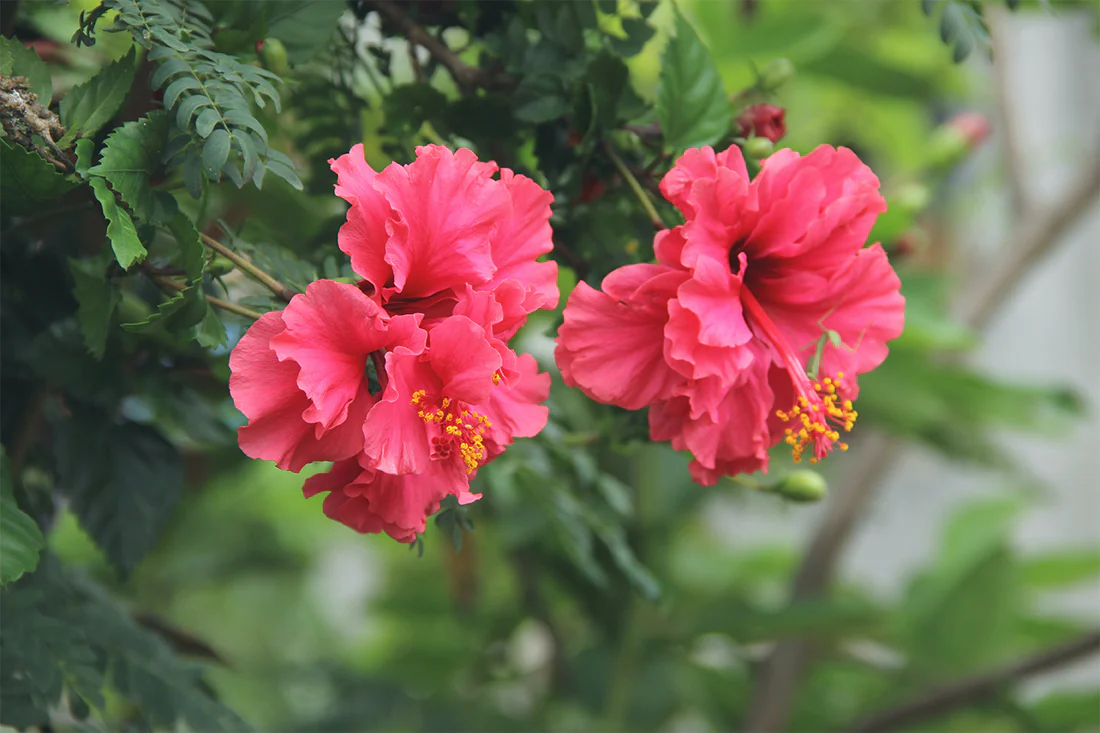
Hibiscus (Hibiscus rosa-sinensis — the common gudhal or China rose) is the most deeply embedded hair care ingredient in South Indian Ayurvedic tradition — applied as flower paste, flower-infused oil, and leaf rinse by generations of women in Kerala, Tamil Nadu, and Andhra Pradesh whose hair is legendary for its length, thickness, and deep, light-reflective lustre. The mechanism behind the shine that hibiscus produces is now scientifically characterised: it is the combination of two distinct surface-active compounds that work on the hair cuticle simultaneously.
Mucilage (polysaccharides) in hibiscus petals form a thin, smooth conditioning film on the cuticle surface — similar to the flaxseed mucilage mechanism but lighter in texture and providing less hold, more gloss. The film fills micro-gaps and lifted scale edges in the cuticle, producing a smoother, more uniform reflective surface that returns light more efficiently — the physical basis of shine.
Organic acids (citric acid, tartaric acid, hibiscic acid) in hibiscus petals and calyces lower the pH of the hair and scalp surface toward the hair’s natural slightly acidic state (pH 4.5–5.5). Commercial shampoos and many hair treatments are alkaline (pH 6–9), which lifts the cuticle scales, producing the temporary frizz and reduced shine that follows even a good shampoo. Hibiscus’s organic acids close lifted cuticle scales — the same mechanism as ACV rinses but gentler, with additional conditioning polysaccharide benefit. A hibiscus rinse after shampooing is therefore both a cuticle-sealing and a conditioning treatment simultaneously.
Anthocyanins — the pigments that give hibiscus its deep crimson colour — are potent antioxidants with specific relevance to hair colour maintenance: they protect melanocytes (the pigment-producing cells in hair follicles) from oxidative damage, and the anthocyanin colour itself can temporarily deposit on hair as a mild natural colour enhancer for dark hair — deepening and enriching natural black and dark brown tones without the damage of permanent dye. This is the “hibiscus for colour richness” effect that dark-haired Indian women have utilised for centuries in South Indian hair care traditions.
The Hair Fall Prevention Dimension
Multiple in vitro and animal model studies have confirmed hibiscus flower and leaf extract promotes hair follicle entry into the anagen (growth) phase and reduces hair fall through: amino acid content supporting keratin synthesis in the matrix cells of the follicle bulb; flavonoids (quercetin, kaempferol) with documented 5-alpha reductase inhibitory activity reducing DHT at the follicle level; and direct follicle-stimulating effects on dermal papilla cell proliferation. A study published in the Journal of Ethnopharmacology found hibiscus flower extract significantly increased hair follicle number and depth compared to control. The hair fall and hair growth context connects to our hair fall guide.
Hibiscus Recipes
1. Hibiscus Conditioning Rinse (After Every Wash)
- 4–5 fresh gudhal flowers (or 2 tablespoons dried hibiscus petals)
- 1 litre water
- Optional: 2–3 curry leaves (DHT-blocking alkaloids), 1 teaspoon methi seeds
Boil ingredients in water for 10 minutes. Cool completely. Strain. Pour over hair as the final rinse after conditioning and before stepping out of the shower. Do not rinse out — allow to dry naturally. The acidic rinse closes the cuticle, the polysaccharides condition, and the anthocyanins enrich dark hair tones. The slight pink tint from red hibiscus rinses away during drying — it will not permanently colour hair at this preparation strength.
2. Hibiscus Hair Mask (Bi-Weekly Treatment)
- 8–10 fresh hibiscus flowers AND 6–8 fresh hibiscus leaves (the leaves contain additional proteins and mucilage)
- Grind to a smooth paste with minimal water
- 3 tablespoons coconut oil or sesame oil (base for oil-soluble compound delivery)
- 1 tablespoon dahi (pH balance and conditioning)
Mix paste with oil and dahi until smooth. Apply from scalp to ends — the traditional South Indian method is to apply to the scalp first, massage gently, then distribute through the lengths. Leave 30–45 minutes. Wash out thoroughly with a mild shampoo. The mask stains hands and clothes in dark shades — wear old clothing and use gloves.
3. Hibiscus-Infused Hair Oil (Long-Term Scalp Treatment)
- 15–20 fresh gudhal flowers (packed into a jar)
- 250ml cold-pressed coconut oil (or sesame oil for Ayurvedic Keshya formula)
Cold infusion: pack flowers into a glass jar, cover completely with oil, seal, leave in a warm sunny location for 3–4 weeks. Strain through muslin cloth. The resulting deep-red-tinted oil carries all the fat-soluble hibiscus pigments and active compounds into the oil matrix for sustained scalp delivery during massage. Use as a pre-wash scalp oil 1–2 hours before washing. This is the classical Ayurvedic Pushpa Taila (flower-infused oil) preparation for the gudhal specifically described in Bhavaprakasha Nighantu for Keshavardhana (hair nourishment).
🍚 Ingredient 4: Rice Water (Chawal Ka Paani)
For: Strength, protein repair, elasticity, porosity balance, length retention
The Yao Women of China and the 20-Year Wait for Science to Catch Up
The rice water hair tradition is ancient. The Yao women of Huangluo village in Guangxi province, China — famous for hair lengths often exceeding 2 metres (documented in the Guinness World Records) — have used fermented rice water as their sole hair care product for generations. Japanese aristocratic women of the Heian period (794–1185 CE) are documented using Yu-Su-Ru (rice water) to maintain their floor-length black hair. In South India, the traditional practice of washing hair with starch-laden cooking water from rice (ganji) has been maintained for centuries. These are not coincidentally similar discoveries — they are independent empirical validations of the same specific hair biology.
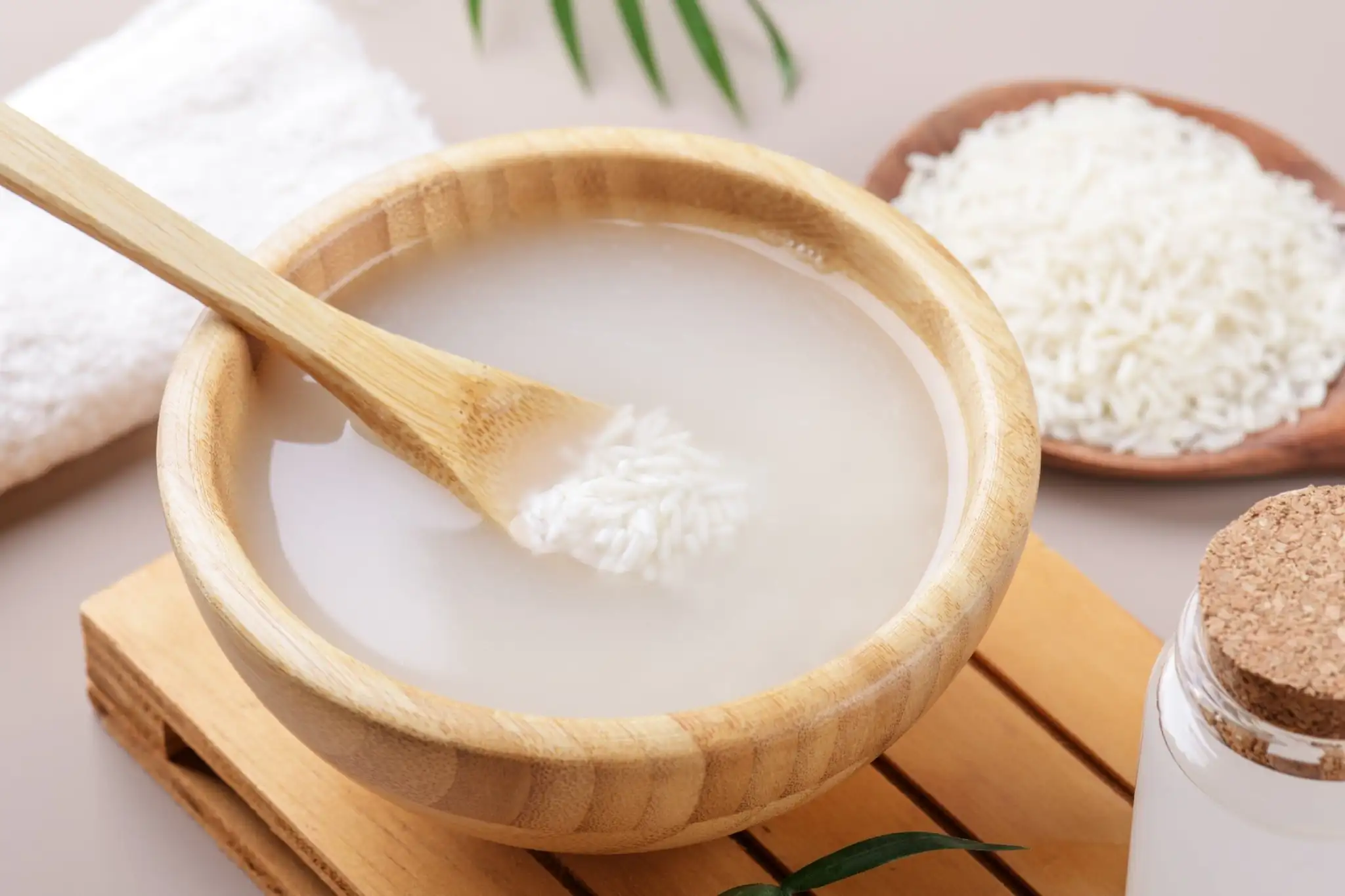
Modern trichology has now characterised the mechanisms precisely. Rice water contains:
Inositol — a carbohydrate that penetrates the hair shaft and remains even after rinsing, repairing damage from the inside of the hair fibre. Research published in the International Journal of Cosmetic Science specifically confirmed that inositol from rice water penetrates damaged hair, reduces surface friction, and improves hair elasticity — persisting in the hair for multiple subsequent washes. This is a unique property — most conditioning agents sit on the hair surface. Inositol goes inside.
Amino acids (particularly glutamine, arginine, serine, leucine, proline) — the protein building blocks that fill gaps in the damaged keratin structure of the cortex. This protein-filling action increases hair shaft diameter (making hair appear and feel thicker), improves tensile strength (reducing breakage), and improves elasticity (reducing the brittleness that produces snapping on tension).
Vitamins B1 (thiamine), B3 (niacin), B6 (pyridoxine) — all involved in the metabolic processes of follicle cells, supporting healthy hair growth cycle progression. B vitamins in topical preparations have limited penetration through the cuticle but fermented rice water (where B vitamins are partially converted to more bioavailable forms by the fermentation bacteria) may provide better follicular delivery than plain rice water.
Ferulic acid — a phenolic antioxidant that protects hair proteins from UV-induced and oxidative degradation, and from the protein-denaturing effect of alkaline chemical treatments. For Indian women who use hair dye or chemical straightening alongside their natural hair care, ferulic acid from rice water provides protective coverage against chemical damage accumulation.
Fermented vs. Plain Rice Water — Why Fermentation Matters
Fermented rice water — rice water left at room temperature for 24–48 hours to undergo natural lacto-fermentation — has a lower pH than plain rice water (the fermentation produces lactic acid, lowering pH from approximately 6.5 to approximately 4.5 — the hair’s ideal acidic pH). This pH shift means fermented rice water additionally closes the cuticle upon application, combining the protein repair of inositol with the cuticle-sealing benefit of acidic conditioning. The fermentation also partially breaks down the larger starch molecules into smaller oligosaccharides that may penetrate the cuticle more effectively, and increases the bioavailability of the B vitamins through microbial transformation.
The fermented rice water smell — a sour, slightly yeasted odour — dissipates completely once dry. Diluting fermented rice water 1:1 with water before application reduces the smell during application without significantly reducing efficacy.
Rice Water Recipes
1. Fermented Rice Water (Recommended for Damaged, Brittle, or Low-Elasticity Hair)
- ½ cup uncooked rice (white rice, brown rice, or red rice — each provides slightly different profiles; red rice has higher antioxidant content; white rice provides the most concentrated starch for maximum inositol)
- 2–3 cups water
Rinse rice briefly (1 quick rinse — not thoroughly, which washes away the surface starches and amino acids). Combine with water in a glass jar. Cover with a cloth (not an airtight lid — the fermentation produces CO₂). Leave at room temperature for 24–48 hours — in Indian summer conditions, 12–24 hours may be sufficient; in cooler conditions, 48 hours. The water should smell pleasantly sour when ready. Refrigerate and use within 5–7 days.
Application as rinse: After shampooing and conditioning, pour fermented rice water (diluted if desired) over hair from roots to ends, massage gently into the scalp, leave 5–10 minutes, then rinse thoroughly. Use 1–2 times per week. The protein content of rice water can cause protein overload in hair with high porosity if used more frequently than twice weekly — protein overload makes hair feel stiff and is corrected by a moisturising mask.
2. Plain Rice Water (For Gentle Strengthening and Fine or Low-Porosity Hair)
- ½ cup rice, 2–3 cups water
- Soak for 30 minutes, swirl, strain
Less concentrated than fermented rice water and without the pH-lowering benefit of fermentation — better suited for fine hair, low-porosity hair (which cannot absorb heavy protein), or for those new to rice water who want to assess their hair’s response before committing to the fermented version.
3. Rice Water + Hibiscus Rinse (Combined Strength and Shine)
- 200ml fermented rice water
- 3 tablespoons hibiscus flower rinse concentrate (from the recipe above, before dilution)
- 1 tablespoon aloe vera gel
Combine in a spray bottle. Shake well. Apply to wet hair after shampooing. Leave 5 minutes. Rinse. This combination provides the protein repair and elasticity of rice water inositol, the cuticle sealing and shine of hibiscus’s organic acids and polysaccharides, and the moisture retention of aloe vera’s acemannan — a three-mechanism conditioning treatment in a single rinse.
The Four Ingredients Together — A Complete Natural Hair Care Routine
These four ingredients are most powerful when used as a coordinated system rather than as individual isolated treatments. Here is how they work together across the week:
Wash Day (once or twice weekly):
- Pre-wash oil treatment: Hibiscus-infused coconut oil massaged into the scalp 1–2 hours before washing. The oil protects the hair shaft from the swelling caused by water absorption during washing (hygral fatigue), and delivers hibiscus compounds to the scalp for follicle stimulation.
- Wash: Gentle sulphate-free shampoo (sulphate-free preserves the hair’s natural oil and prevents the alkaline pH damage that requires more intensive conditioning to correct).
- Post-wash rice water rinse: Fermented rice water applied for 5–10 minutes after shampooing, before conditioning — the protein from rice water fills cortex gaps in the wet, open-cuticle state when penetration is maximal.
- Conditioning: Aloe vera deep conditioning mask (aloe + coconut oil + honey + dahi) or standard conditioner applied from mid-lengths to ends.
- Final rinse: Hibiscus conditioning rinse (or hibiscus + rice water combination rinse) as the absolute last step before towel-drying — the acidic rinse seals the cuticle over all the previous treatments.
Styling (on wash day, while hair is still damp):
- Leave-in moisture: Aloe vera spray applied to damp (not dripping) hair, scrunched in gently.
- Define and hold: Flaxseed gel applied in sections from roots to ends — scrunching upward for curls and waves, smoothing downward for straight and loose wavy styles. Air dry completely before touching.
Between wash days:
- Aloe vera leave-in spray to refresh moisture and tame any frizz — particularly after sleeping (silk pillowcase or silk bonnet for overnight is the single most impactful mechanical hair care change available for reducing friction-driven cuticle damage and morning frizz).
- A light fingering of hibiscus flower oil on the ends if dryness develops — the ends are the oldest, most porous part of the hair shaft and benefit from more frequent moisture sealing than the roots.
The Ayurvedic Perspective — Keshavardhana and the Four Ingredients
Classical Ayurveda’s Keshavardhana (hair nourishment) system identifies hair health as an external expression of internal metabolic and nutritional status — specifically as a byproduct of Asthi dhatu (bone tissue) metabolism, meaning that hair reflects the quality of the body’s mineral and protein metabolism at the deepest tissue level. Topical care is considered secondary to internal nutrition and Agni (digestive fire) quality — a sophisticated view that modern trichology confirms: hair loss and poor hair quality from nutritional deficiencies (iron, B12, Vitamin D, zinc) cannot be corrected topically, only through addressing the nutritional root.
Within this framework, each of the four viral ingredients has a specific classical Ayurvedic classification:
Flaxseeds (Atasi): Classified as Keshya (beneficial for hair), Vatahara (pacifying Vata — the dosha governing dryness and hair fall), and specifically prescribed in Ashtanga Hridayam for Kesha Vardhana through its Snigdha (unctuous/moisturising) quality. The omega-3 content that modern science identifies as the mechanism was empirically observed as the “oily nourishment” that Ayurveda described with the Snigdha classification.
Aloe Vera (Kumari / Ghritkumari): One of the most important Rasayana herbs in the Ayurvedic pharmacopoeia — classified as deeply nourishing to all dhatus and specifically beneficial for Pitta-aggravated scalp conditions (the inflammatory, sensitive, heat-prone scalp type prone to dandruff, irritation, and premature greying). Its cooling (Shita), moisturising (Snigdha), and rejuvenative (Rasayana) properties map precisely onto its modern confirmed anti-inflammatory, humectant, and follicle-stimulating activities.
Hibiscus (Japakusum): Specifically described in classical texts as Keshya (hair-beneficial), Tvak prasadaka (skin and surface-beautifying), and Rakta pittahara (reducing excess Pitta in the blood — relevant for the inflammatory scalp conditions associated with heat, irritation, and hair fall). The Bhavaprakasha Nighantu specifically prescribes hibiscus flower paste for hair darkening and scalp nourishment — the anthocyanin-mediated colour enrichment and antioxidant protection of melanocytes that modern science now characterises.
Rice water (Tandulodaka): Described in classical Ayurvedic texts as Balya (strength-giving), Tarpana (nourishing to tissues), and Stambhana (stabilising — relevant to its elasticity-improving inositol effect). Ganji (rice cooking water) is specifically mentioned in Ashtanga Hridayam as a hair wash preparation for strengthening and conditioning — the same application that the Yao women and modern trichology both arrived at independently.
Hair Type Guide — Adapting for Indian Hair
Indian hair spans an enormous range of textures, porosities, and patterns — and the optimal use of these four ingredients varies accordingly:
Straight, fine hair (common in many North Indian, Punjabi, Kashmiri communities): Flaxseed gel at lower concentration (dilute with aloe vera spray 1:1), applied sparingly — heavy gel application weighs fine hair down. Rice water rinse once weekly provides strengthening without protein overload. Hibiscus rinse provides shine without weight. Aloe vera spray is the most important daily product for keeping fine hair moisturised without heaviness.
Thick, straight to wavy hair (common across much of South and Central India): The most versatile hair type for all four ingredients at standard concentrations. Full-concentration flaxseed gel provides definition for waves without weighing the thickness down. Rice water twice weekly builds the strength needed to manage the mechanical stress of combing and styling thick hair.
Wavy to curly hair (common in South Indian, particularly Telugu, Tamil, and Malayali communities; also Northeast Indian and tribal communities): This is the hair type that benefits most dramatically from flaxseed gel’s curl-defining properties — the polysaccharide film groups the natural curl pattern and holds it without the crunch of commercial gels. Aloe vera’s moisture retention is critical for maintaining curl hydration that prevents frizz. Rice water builds the elasticity that allows curls to stretch without breaking.
High-porosity hair (damaged from heat, chemicals, frequent dyeing): Rice water protein treatment twice weekly fills the gap-riddled cortex. Hibiscus organic acid rinse seals the lifted cuticles. Aloe vera deep conditioning mask replaces moisture that rapidly escapes through the porous cuticle. Flaxseed gel forms the occlusive-ish film that slows ongoing moisture loss. All four ingredients are particularly valuable for high-porosity hair repair.
Low-porosity hair (healthy but resistant to product absorption): Use rice water sparingly (once every 10–14 days) to prevent protein overload, which low-porosity hair is more susceptible to. Warm aloe vera gel and warm flaxseed gel slightly (warm temperatures open the cuticle of low-porosity hair, allowing better product penetration). Hibiscus rinse provides the pH balance that low-porosity hair needs without adding protein.
What to Realistically Expect — Timeline
| Timeline | What You Should Notice |
|---|---|
| After First Use | Softer hair texture after rice water rinse; initial frizz reduction from aloe vera; flaxseed gel hold and definition visible on styling day; hibiscus shine visible after drying |
| Week 2–3 | Improved smoothness between wash days; flaxseed gel definition improving as technique is refined; scalp feeling calmer (aloe vera + hibiscus anti-inflammatory) |
| Week 4–6 | Measurable reduction in breakage (rice water inositol and protein repair accumulating); hair appearing thicker and more voluminous; natural wave/curl pattern becoming more consistently defined |
| Month 2–3 | Sustained moisture retention between wash days; significant reduction in frizz in humid conditions (flaxseed gel + aloe vera combination); improved hair elasticity (stretches without snapping) |
| Month 3–6 | Retained length from reduced breakage (the most significant long-term benefit — hair that previously broke off mid-shaft is now reaching greater lengths); improved scalp health visible in reduced dandruff and reduced hair fall on wash days |
Myth vs. Fact: Natural Hair Care
| ❌ The Myth | ✅ The Truth |
|---|---|
| Natural ingredients work slower than commercial products | Some natural ingredients work as fast as or faster than commercial equivalents — hibiscus shine from a single rinse, flaxseed gel hold from first application, aloe vera frizz reduction within the same wash day. Where natural ingredients are slower is in structural repair — rice water inositol requires 4–6 weeks of consistent use to produce the full cortex repair that commercial protein treatments achieve more aggressively but with greater potential for overload. Different timeline, not inferior outcome. |
| Rice water makes hair grow faster | Rice water does not accelerate the biological hair growth rate (approximately 1.25cm per month, determined by follicle biology). It reduces breakage — allowing hair that is already growing to reach greater lengths because it is not snapping before it achieves that length. This feels like faster growth because hair appears visibly longer over time, but the mechanism is retention rather than acceleration of growth rate. The distinction matters because growth rate limitations are biological; retention limitations are mechanical and addressable with the right care. |
| Flaxseed gel only works for curly hair | Flaxseed gel works for all hair types — for curly and wavy hair it defines the curl pattern and reduces frizz; for straight hair it provides humidity-resistant smoothness and a light conditioning film that prevents the frizz of lifted cuticles without altering the natural texture. Straight hair benefits from flaxseed gel as a lightweight, non-greasy frizz-prevention treatment — not as a defining product but as a smoothing, protective one. |
| You need all four ingredients to see results | Each ingredient provides independent, stand-alone benefits — you do not need all four to see improvement. Start with the one most relevant to your primary concern: flaxseed gel for definition and frizz; aloe vera for moisture and scalp health; hibiscus for shine and hair fall prevention; rice water for breakage and strength. The four work synergistically, but the best routine is the one you will maintain consistently — starting with one and adding others over time is more effective than beginning all four simultaneously and finding the routine unsustainable. |
Related Articles From HerbeeLife
📖 Hair Fall After 30 in Women: 9 Alarming Causes You Must Stop Ignoring
📖 Homemade Hair Oil for Hair Fall: 8 Science-Backed Recipes
📖 Itchy Scalp: Causes, Types and 12 Powerful Natural Remedies
📖 Amla Benefits: Proven Immunity, Digestion and Whole-Body Health
📖 Tulsi (Holy Basil): 12 Powerful Science-Backed Health Benefits
📖 Neem Benefits: The Powerful Blood Purification Guide Backed by Science
📖 Anti-Inflammatory Foods: 12 Powerful Choices That Fight Disease From the Inside Out
Frequently Asked Questions
Can I use flaxseed gel on my scalp or just the hair?
Flaxseed gel can be applied to both the scalp and hair lengths — the scalp application delivers the omega-3 ALA and lignan compounds that support scalp health and provide mild DHT-inhibiting activity, while the hair application provides the gel, frizz control, and definition. However, for very oily scalps, applying gel to the scalp may contribute to build-up and heaviness — in this case, apply flaxseed gel from mid-lengths to ends and use aloe vera spray as the scalp-focused moisture product. Scalp build-up from flaxseed gel is easily addressed with an occasional clarifying wash (a dilute baking soda rinse or a gentle clarifying shampoo once every 3–4 weeks).
Can I mix all four ingredients together in one product?
Yes — and the combined recipe works beautifully as a multipurpose leave-in or styler: flaxseed gel base + fresh aloe vera gel + hibiscus rinse concentrate + rice water, combined in a spray bottle. The practical limitation is shelf life: fresh aloe vera shortens the mixture’s refrigerated shelf life to approximately 5–7 days. If shelf life is a concern, keep aloe vera as a separate daily spray (add it fresh each day) and combine flaxseed gel, hibiscus rinse, and rice water as the base that stays in the refrigerator for 1–2 weeks.
How often should rice water be used to avoid protein overload?
For most Indian hair types (medium-to-high porosity from heat or chemical use): once or twice weekly as a rinse. For fine, low-porosity, or previously protein-treated hair: once every 10–14 days. Signs of protein overload (too much rice water too frequently): hair feels stiff, brittle, and snaps easily even though it felt stronger when you first started — paradoxically similar to moisture-deprived hair. The treatment for protein overload is a deep moisture treatment (aloe vera + coconut oil + honey mask) and pausing rice water for 2–3 weeks to allow the protein balance to reset.
Is hibiscus suitable for all hair colours or only dark hair?
Hibiscus is suitable for all hair colours for its conditioning, strengthening, and scalp health benefits. The mild colour-enriching effect (deepening and enriching dark tones through anthocyanin temporary deposition) is specific to dark brown and black hair — it will not produce any visible colour change on light hair and will not deposit permanent colour on any hair. Some individuals with very light blonde or grey hair prefer to use the hibiscus leaf preparation rather than the deep-red flower preparation to avoid any possibility of pink tinting — hibiscus leaves provide conditioning and hair fall prevention benefits without the intense anthocyanin pigment of the red flowers.
Sources and References
1. Ohishi T et al. Inositol penetrates into the hair and has a repairing effect on damaged hair. International Journal of Cosmetic Science, 2013.
2. Sritanyarat W et al. Hair growth activity of Hibiscus rosa-sinensis on rats. Journal of the Medical Association of Thailand, 2006.
3. Patel S, Goyal A. The current trends and future perspectives of prebiotics research: a review. 3 Biotech, 2012. (Aloe vera polysaccharide properties)
4. Rele AS, Mohile RB. Effect of mineral oil, sunflower oil, and coconut oil on prevention of hair damage. Journal of Cosmetic Science, 2003.
5. Datta K et al. Inhibitory effect of flaxseed extracts on 5α-reductase type I and type II. Journal of Medicinal Food, 2009.
6. Surjushe A et al. Aloe vera: a short review. Indian Journal of Dermatology, 2008.
7. Jadhav VM et al. Herbal medicines for hair care. Pharmacognosy Reviews, 2009.
Follow HerbeeLife
🌿 Stay connected for more evidence-based hair care, Ayurvedic wisdom, and natural wellness content:
📸 Instagram | 📌 Pinterest | 👥 Facebook | 🐦 X (Twitter)
The Bottom Line: The Ingredients Were Never the Secret. The Consistency Was.
Flaxseed gel that defines your waves. Aloe vera that melts your frizz. Hibiscus that gives your dark hair a depth that no synthetic gloss can replicate. Rice water that makes every strand feel like it has something to hold onto. These ingredients are going viral because they work — because the women who discovered them through their own hair have hair worth showing, and the showing is the evidence.
But the Yao women of Huangluo did not have extraordinary hair because of a single application of rice water. They had extraordinary hair because of a lifetime of consistent, patient, ingredient-appropriate care — applied without exception, without the interruptions of heat damage and chemical processing, with the understanding that hair responds to what it receives consistently over years, not to what it receives dramatically and occasionally.
The ingredients are accessible. Most of them are already in your kitchen, your garden, or your local market — and have been there for decades, used by generations of Indian women whose hair health was genuinely superior to the chemically-assisted, heat-damaged normal that is now considered standard.
Make the gel this weekend. Try the rice water rinse. Use the hibiscus rinse after your next wash. Spray the aloe vera on tomorrow morning.
And then do it again next week. And the week after. That is where the results live.
⚠️ Disclaimer: Patch-test all new preparations on the inner arm before scalp application. Discontinue use if irritation occurs. Individual hair responses vary — what works for one hair type may not work for another. Read full disclaimer →
💬 Which of these four ingredients have you already tried — and which result surprised you the most? Share your experience in the comments. The real reviews from real Indian hair are always the most useful guidance for someone beginning this journey.