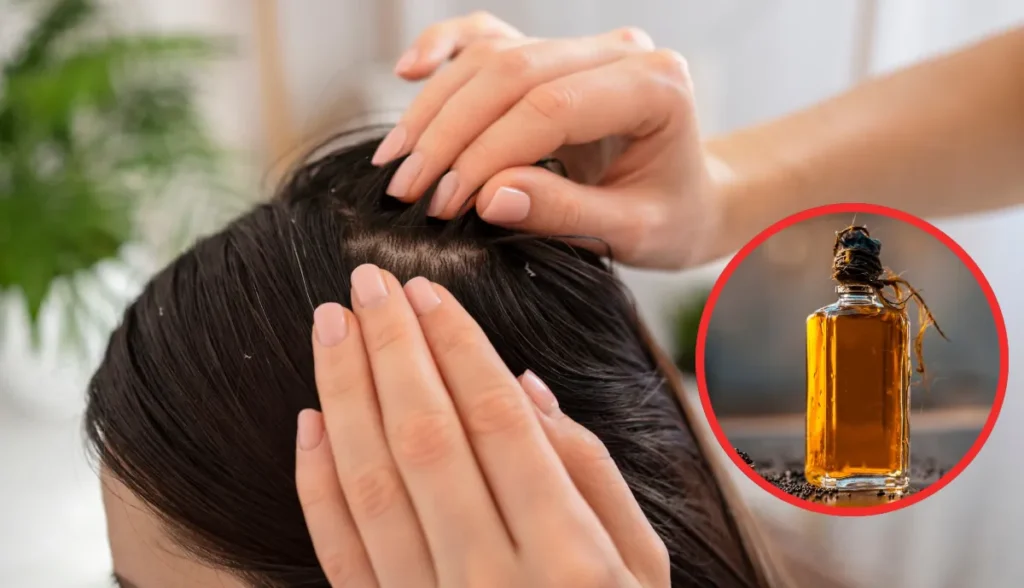

Hair oiling is one of the oldest, most deeply embedded hair care practices in Indian culture — and one of the most scientifically validated. The tradition of weekly or bi-weekly warm oil massage (champi) is not ritual without reason. It is the delivery of specific bioactive compounds to the scalp microenvironment where hair follicles live — compounds that increase blood circulation, inhibit DHT (the hormone that shrinks follicles in androgenetic alopecia), reduce scalp inflammation, and directly stimulate the dermal papilla cells that determine whether a hair follicle produces a thick, long hair or enters premature dormancy.
The problem with most “homemade oil for hair fall” content is that it lists ingredients without explaining why each one matters — leaving you with a recipe but no understanding of what you are trying to achieve. This guide is different. Each recipe comes with its specific problem target, the science behind each ingredient, and precise instructions — because knowing why your oil works makes you a trichologist, not just a follower of recipes.
The Science of Hair Oiling — Why It Works at All
Before the recipes: a brief explanation of how topical oils actually reach the follicle.
Hair follicles are surrounded by sebaceous glands that produce sebum — a lipid-rich secretion that naturally coats the hair shaft and scalp. Topically applied oils with high affinity for the lipid components of the stratum corneum (the outermost skin layer) penetrate more effectively than oils that sit on the surface. Coconut oil’s triglycerides have a particular affinity for hair keratin proteins — research has confirmed coconut oil penetrates the hair shaft and cortex more effectively than mineral oil or sunflower oil, significantly reducing protein loss from hair (by 39% for undamaged hair). This penetration is not just cosmetic — it delivers the bioactive compounds dissolved in the oil to the scalp dermis where follicles are located.
The warm oil scalp massage adds a critical dimension: heat expands the follicular pore and the infundibulum (the upper portion of the follicle), increasing the absorption of oil-soluble compounds. The massage itself increases scalp blood flow significantly — a key driver of hair growth, since dermal papilla cells at the follicle base receive nutrients exclusively through the scalp vasculature. Research has confirmed that standardised scalp massage (4 minutes daily) increases hair thickness over 24 weeks through mechanical stimulation of dermal papilla cells alone — before any bioactive compound effect is considered.
With that foundation: the eight recipes, each targeting a specific hair fall mechanism.
🧴 Recipe 1: The Classic Indian Growth Oil
For: General hair fall, thin hair, slow growth
| Prep time | 10 minutes |
| Infusion time | 2–3 weeks (cold) OR 45 minutes (heat) |
| Shelf life | 3 months |
| Best for | General thinning, slow growth, anyone starting a hair care routine |
Ingredients
- 100ml cold-pressed coconut oil (base)
- 30ml cold-pressed castor oil
- 1 tablespoon dried bhringraj herb (or bhringraj powder)
- 5–6 fresh curry leaves
- 1 teaspoon fenugreek (methi) seeds
- 5 drops rosemary essential oil
Why Each Ingredient
Coconut oil: Penetrates the hair shaft to prevent protein loss (39% reduction — confirmed in research). Lauric acid’s high affinity for hair keratin makes it the best carrier oil for delivering active compounds to the follicle.
Castor oil: Ricinoleic acid (90% of castor oil) has prostaglandin-inhibiting and anti-inflammatory activity at the scalp. Research suggests ricinoleic acid increases scalp circulation and prolongs the anagen (active growth) phase of the hair cycle. Its viscosity also coats hair strands, reducing breakage.
Bhringraj: Documented in Archives of Dermatological Research to significantly promote hair follicle entry into anagen phase compared to control — the mechanism by which it earns its title “king of hair herbs.” Contains ecliptine and wedelolactone with direct follicle-stimulating effects.
Curry leaves: Contain beta-carotene and amino acids that reduce hair fall, and antioxidant alkaloids that prevent follicle oxidative damage. Studies suggest curry leaf extract inhibits 5-alpha reductase — the enzyme that converts testosterone to DHT, the hormone responsible for follicle miniaturisation in androgenetic hair loss.
Methi seeds: Contain nicotinic acid and proteins that stimulate hair growth; lecithin that strengthens hair shafts; and hormone precursors (diosgenin) that modulate scalp androgen activity.
Rosemary essential oil: A randomised controlled trial published in SKINmed found rosemary oil as effective as minoxidil 2% for hair regrowth over 6 months — with less scalp itching. Carnosic acid in rosemary restores nerve growth and improves scalp circulation through prostaglandin synthesis stimulation.
Method
- Combine coconut oil and castor oil in a glass jar.
- Add dried bhringraj, curry leaves, and methi seeds.
- Heat method: Place the jar in a bowl of hot water (double boiler). Maintain gentle warmth for 45 minutes — do not boil. Strain through muslin cloth. Cool completely.
- Cold infusion method: Seal the jar and leave in a sunny windowsill for 2–3 weeks, shaking daily. Strain and use.
- Once cooled to room temperature, add rosemary essential oil. (Essential oils are volatile — heat destroys them. Always add after cooling.)
- Store in a dark glass bottle.
How to Apply
Warm the oil by placing the bottle in warm water for 5 minutes. Section the hair. Apply oil directly to the scalp using fingertips or a dropper bottle. Massage in small circular motions for 5–10 minutes — covering the entire scalp. Leave for a minimum of 1 hour (overnight is ideal). Wash with a sulphate-free or mild shampoo. Use 2–3 times weekly.
🧴 Recipe 2: The DHT-Blocker Oil
For: Androgenetic hair loss, receding hairline, family history of baldness
| Prep time | 15 minutes |
| Infusion time | 1 hour (heat infusion) |
| Shelf life | 2 months |
| Best for | Pattern hair loss (temples and crown), hormonal hair fall, PCOS-related hair thinning |
Ingredients
- 60ml cold-pressed sesame oil (base)
- 40ml jojoba oil
- 1 tablespoon dried saw palmetto berries (or 10 drops saw palmetto extract)
- 1 tablespoon pumpkin seed oil
- 5 drops peppermint essential oil
- 3 drops lavender essential oil
Why Each Ingredient
Sesame oil: Sesamol and sesamolin have documented 5-alpha reductase inhibitory activity — blocking the enzyme that converts testosterone to the follicle-shrinking DHT. Also rich in antioxidants that protect follicles from oxidative stress damage.
Jojoba oil: Molecularly similar to sebum — the scalp’s own oil — which means it is absorbed without clogging follicular pores. Contains myristic acid with 5-alpha reductase inhibitory activity. Particularly appropriate for oily scalps prone to androgenetic hair loss.
Saw palmetto: Has the strongest evidence base among plant DHT blockers — a randomised controlled trial found saw palmetto extract comparable to finasteride (the pharmaceutical DHT blocker) for hair regrowth in androgenetic alopecia, with significantly better tolerability. It inhibits 5-alpha reductase types 1 and 2.
Pumpkin seed oil: A randomised double-blind trial in Evidence-Based Complementary and Alternative Medicine found pumpkin seed oil supplementation produced 40% more hair count versus placebo over 24 weeks in men with androgenetic alopecia — attributed to its phytosterols and delta-7 sterols inhibiting 5-alpha reductase.
Peppermint essential oil: A study in Toxicological Research found peppermint oil significantly increased hair follicle number and depth compared to minoxidil in animal models — attributed to increased IGF-1 (insulin-like growth factor 1) signalling in follicle dermal papilla cells. It also produces immediate vasodilation through TRPM8 activation, increasing scalp blood flow.
Lavender essential oil: A study in Toxicological Research found lavender oil significantly increased hair follicle number, follicle depth, and dermal layer thickness compared to control — with effects comparable to minoxidil on some parameters.
Method
- Combine sesame oil and jojoba oil in a double boiler setup.
- Add saw palmetto berries. Warm gently (not above 60°C) for 45–60 minutes.
- Strain through fine muslin cloth. Cool completely.
- Add pumpkin seed oil (cold — it oxidises at heat).
- Once completely cool, add peppermint and lavender essential oils.
- Store in a dark glass bottle in the refrigerator (pumpkin seed oil is heat-sensitive).
How to Apply
Focus application on the hairline and crown where androgenetic pattern loss occurs. Apply with a dropper directly to the scalp along partings. Massage gently for 5 minutes. Leave overnight for maximum absorption. The peppermint will cause a cooling, tingling sensation — this is the increased blood flow. Do not wash off immediately; the DHT-blocking compounds require sustained skin contact to penetrate to follicle level.
🧴 Recipe 3: The Scalp Inflammation Soother
For: Dandruff-related hair fall, itchy scalp, seborrhoeic dermatitis, stress-triggered loss
| Prep time | 15 minutes |
| Infusion time | 30 minutes (heat) |
| Shelf life | 6 weeks |
| Best for | Itchy scalp, dandruff, flaky scalp, hair fall after illness or stress |
Ingredients
- 80ml cold-pressed coconut oil (base)
- 2 tablespoons fresh neem leaves (or 1 tablespoon neem powder)
- 5–6 fresh tulsi leaves
- 1 teaspoon tea tree essential oil (diluted — never undiluted)
- 3 drops eucalyptus essential oil
Why Each Ingredient
Neem: Nimbidin and nimbolide have the most potent antifungal activity against Malassezia (the dandruff-causing yeast) of any plant compound tested — in one study, neem extract outperformed ketoconazole for reducing Malassezia colony counts. Also has documented anti-inflammatory activity through NF-κB inhibition, reducing the scalp inflammation that causes follicle miniaturisation and accelerated telogen shedding. Full neem evidence at our neem benefits guide.
Tulsi: Eugenol’s antimicrobial activity complements neem’s against scalp pathogens. Ursolic acid’s anti-inflammatory activity reduces the cytokine environment that drives inflammation-related hair fall. Full tulsi evidence at our tulsi benefits guide.
Tea tree oil: 5% tea tree oil is the only essential oil with a randomised double-blind trial published in the Journal of the American Academy of Dermatology confirming significant improvement in dandruff. Terpinen-4-ol disrupts Malassezia cell membranes through fungal ergosterol synthesis inhibition. Must be diluted — 5 drops per 30ml carrier is the appropriate concentration.
Eucalyptus oil: 1,8-cineole has documented antimicrobial activity against dandruff pathogens and anti-inflammatory effects on scalp tissue, complementing tea tree’s antifungal action through a different mechanism.
Method
- Warm coconut oil gently in a double boiler.
- Add neem leaves and tulsi. Simmer gently for 30 minutes, stirring occasionally, until the oil turns green-tinged and fragrant.
- Strain through muslin cloth. Cool completely to room temperature — essential oils evaporate above 40°C.
- Add tea tree oil and eucalyptus oil. Mix thoroughly.
- Store in a dark glass bottle.
How to Apply
Apply to the scalp only (not hair length — this is a scalp treatment). Part hair in sections and apply along each part with fingertips. Leave for 1 hour minimum; overnight preferred. The initial strong smell of neem and tea tree diminishes significantly after washing. Use twice weekly during active dandruff episodes; once weekly for maintenance.
🧴 Recipe 4: The Postpartum and Stress Loss Recovery Oil
For: Telogen effluvium — the diffuse hair fall after childbirth, illness, crash dieting, surgery or severe stress
| Prep time | 10 minutes |
| Infusion time | Cold infusion, 2 weeks |
| Shelf life | 2 months |
| Best for | Postpartum hair fall, post-illness shedding, stress-related diffuse hair thinning |
Ingredients
- 70ml cold-pressed sesame oil (base)
- 30ml sweet almond oil
- 2 tablespoons dried hibiscus flowers and leaves
- 1 tablespoon amla powder (or 4–5 dried amla pieces)
- 5 drops clary sage essential oil (skip during breastfeeding)
- 5 drops geranium essential oil
Why Each Ingredient
Sesame oil: Rich in sesamin and sesamol — antioxidants that protect hair follicle DNA from the oxidative damage that accumulates during severe physical or psychological stress. Also contains magnesium, zinc, and B vitamins that support follicle metabolism during recovery.
Sweet almond oil: Rich in biotin (Vitamin B7 — the most important B vitamin for hair keratin synthesis), Vitamin E, and magnesium. Penetrates the hair shaft to reduce breakage and provides essential fatty acids that support follicle cell membrane integrity during the recovery phase.
Hibiscus: Contains amino acids and Vitamin C that directly nourish hair follicles during recovery; flavonoids that stimulate scalp blood flow; and compounds with documented capacity to promote follicular re-entry into anagen phase from telogen — directly relevant to the telogen effluvium mechanism where too many follicles are simultaneously in the resting phase.
Amla: Vitamin C content supports collagen synthesis (collagen is the primary structural protein of the follicle dermal sheath); antioxidant compounds protect recovering follicles from ongoing oxidative stress; and documented 5-alpha reductase inhibitory activity prevents the androgenetic component that sometimes accompanies post-telogen effluvium shedding. Full amla evidence at our amla benefits guide.
Clary sage: Contains sclareol — a diterpene alcohol with documented anti-oestrogenic and hormone-balancing activity relevant to the postpartum oestrogen drop that triggers telogen effluvium. Also reduces cortisol when inhaled through aromatherapy, addressing the stress component of telogen effluvium triggers. Note: Skip during breastfeeding — clary sage has phytoestrogenic activity.
Geranium: Promotes circulation to the scalp and has documented hormone-balancing properties; its rosy fragrance has stress-reducing aromatherapeutic effects that complement the topical ingredients.
Method
- Combine sesame and sweet almond oils in a glass jar.
- Add dried hibiscus flowers, hibiscus leaves, and amla powder.
- Seal tightly. Leave in a warm, sunny location for 14 days, shaking gently daily.
- Strain through a double layer of muslin cloth, squeezing well to extract the infused oil from the herbs.
- Add clary sage (if applicable) and geranium essential oils to the strained, cooled oil.
- Store in a dark amber glass bottle.
How to Apply
Telogen effluvium hair fall typically begins 2–3 months after the triggering event and resolves spontaneously — but scalp massage with this recovery oil significantly accelerates follicle re-entry into anagen by improving scalp circulation and providing the nutritional building blocks for new hair matrix cell division. Apply warm, 3 times weekly. This is a long-game oil — consistent use over 3–4 months produces visible regrowth.
🧴 Recipe 5: The Protein-Strength Oil
For: Breakage, brittle hair, heat damage, chemical damage, limp fine hair
| Prep time | 5 minutes |
| Infusion time | None — direct blend |
| Shelf life | 3 months |
| Best for | Breakage and split ends that mimic hair fall, damaged or over-processed hair, fine hair that lacks volume |
Ingredients
- 60ml cold-pressed coconut oil
- 20ml argan oil
- 20ml castor oil
- 1 teaspoon vitamin E oil (from capsules)
- 5 drops cedarwood essential oil
- 5 drops ylang-ylang essential oil
Why Each Ingredient
Coconut oil: The only oil proven to reduce protein loss in hair — by 39% in undamaged hair and 26% in damaged hair (research published in the Journal of Cosmetic Science). The mechanism is its penetration into the cortex where it occupies the spaces that would otherwise fill with water during washing, preventing the hygral fatigue (repeated swelling and shrinking) that causes structural damage and breakage.
Argan oil: Rich in oleic acid and linoleic acid that fill gaps in the hair cuticle, and Vitamin E that protects hair lipids from oxidative damage. Argan oil’s unique squalene content provides a light, non-greasy protective coat that smooths the cuticle and reduces frizz without weighing fine hair down.
Castor oil: Its viscosity coats each strand with a protective film that reduces mechanical breakage from brushing and styling. Ricinoleic acid also improves scalp health as in Recipe 1.
Vitamin E: Tocopherols directly repair lipid peroxidation damage in hair cuticle lipids — the same oxidative damage that chemical processes and UV exposure cause to the hair surface, producing the brittle, porous texture of damaged hair.
Cedarwood: A study found cedarwood essential oil significantly improved hair density when combined with other essential oils; its alpha-cedrene stimulates scalp circulation. For this recipe, it contributes to scalp health alongside the hair shaft-strengthening carrier oils.
Ylang-ylang: Regulates sebum production — important for fine hair prone to limpness from oily scalp — while also stimulating scalp circulation and having mild follicle-stimulating properties.
Method
- No infusion needed. Combine all carrier oils in a dark glass bottle.
- Pierce vitamin E capsules and squeeze contents into the blend.
- Add essential oils. Cap the bottle and roll between palms to mix thoroughly.
- Refrigerate — argan and vitamin E are more stable at cool temperatures.
How to Apply
This oil is for use as a pre-wash treatment — apply specifically to hair lengths and ends (not just scalp) 30–60 minutes before shampooing. The pre-wash application allows coconut oil’s proteins to fill the cortex before water swelling begins, providing the maximum protein-loss-prevention benefit. Massage a small amount into the scalp and more generously through mid-lengths to ends. Use 1–2 times weekly.
🧴 Recipe 6: The Grey Hair Delay Oil
For: Premature greying, maintaining natural hair colour, oxidative stress on melanocytes
| Prep time | 20 minutes |
| Infusion time | 45 minutes (heat infusion) |
| Shelf life | 2 months |
| Best for | Premature greying under 40, maintaining hair colour with regular use |
Ingredients
- 80ml cold-pressed coconut oil
- 1 large handful fresh curry leaves
- 2 tablespoons amla powder
- 1 teaspoon black seed (kalonji) oil
- 5 drops rosemary essential oil
Why Each Ingredient
Curry leaves: Contain beta-carotene (precursor to Vitamin A which supports melanocyte function), alkaloids that protect melanocytes from oxidative damage, and compounds with documented capacity to preserve hair pigmentation by maintaining the melanin-synthesising activity of melanocytes in the hair follicle bulb. The traditional Indian practice of curry leaf oil specifically for preventing premature greying has this specific cellular mechanism.
Amla: The single richest stable source of Vitamin C available in natural form — and Vitamin C is a direct cofactor for the enzyme tyrosinase that catalyses melanin synthesis from tyrosine. Inadequate Vitamin C reduces melanin production efficiency, contributing to premature greying. Amla’s ellagitannins also act as antioxidants that protect melanocyte DNA from the hydrogen peroxide accumulation in greying follicles.
Black seed (kalonji) oil: Thymoquinone — black seed’s primary active compound — has potent catalase-stimulating activity. Catalase is the enzyme that breaks down hydrogen peroxide in hair follicles; age-related depletion of catalase allows hydrogen peroxide to accumulate and bleach hair from within (the intrinsic mechanism of natural greying). Stimulating catalase activity through thymoquinone directly addresses this mechanism.
Rosemary: Stimulates scalp circulation to melanocyte-containing follicle bulbs, ensuring adequate nutrient delivery for melanin synthesis — and its carnosic acid has documented antioxidant protective effects on follicle cells including melanocytes.
Method
- Warm coconut oil gently in a double boiler.
- Add fresh curry leaves (dried curry leaves have significantly lower active compound content). Simmer for 45 minutes until the leaves become crisp and the oil turns dark green-black.
- Strain thoroughly. Cool completely.
- Stir in amla powder and black seed oil.
- Add rosemary essential oil once cool.
- Store in a dark bottle. The oil will have a distinctive dark colour from the curry leaf and amla infusion.
How to Apply
Warm and massage into the scalp and through hair lengths 2–3 times weekly. Consistency is critical for this recipe — the oxidative protection of melanocytes requires sustained antioxidant presence. Leave overnight when possible. Results on existing grey hair are minimal (melanocytes in fully greyed follicles are exhausted) — this oil is most effective as a preventive practice for young adults with family history of early greying, or for people with premature greying who have recently begun to notice the first grey strands.
🧴 Recipe 7: The Fast-Track Growth Serum
For: Maximum growth stimulation — for people who want results fastest
| Prep time | 5 minutes |
| Infusion time | None — direct blend |
| Shelf life | 3 months (refrigerated) |
| Best for | Anyone wanting maximum evidence-backed hair growth stimulation from a topical oil |
Ingredients
- 30ml jojoba oil (lightweight base)
- 10ml pumpkin seed oil
- 12 drops rosemary essential oil
- 6 drops peppermint essential oil
- 5 drops lavender essential oil
- 3 drops cedarwood essential oil
Why This Combination
This recipe assembles the four essential oils with the most rigorous clinical trial or peer-reviewed research evidence for hair growth stimulation:
- Rosemary: Equivalent to minoxidil 2% in a randomised controlled trial (SKINmed journal).
- Peppermint: Superior to minoxidil on some follicle parameters in peer-reviewed research (Toxicological Research).
- Lavender: Significant improvement in follicle number and depth in controlled research (Toxicological Research).
- Cedarwood: Included in the original Scott & Hay study that found essential oil blend significantly improved alopecia areata in a randomised trial.
Jojoba is chosen as base for its near-identical composition to sebum — maximising scalp absorption without clogging follicular pores. Pumpkin seed oil adds 5-alpha reductase inhibitory activity as a bonus.
Method
Simply combine all ingredients in a dark glass dropper bottle. Roll between palms to blend. No heat, no infusion. The simplest recipe in this guide — and arguably the most evidence-backed per ingredient.
How to Apply
This is a concentrate — use sparingly. Apply 10–15 drops directly to the scalp in thinning areas using the dropper. Massage gently for 3–5 minutes. Do not rinse out — leave in. The lightweight jojoba base is absorbed without leaving greasiness on the hair. Use daily or nightly for maximum benefit. The clinical trials for rosemary and peppermint found optimal results with daily or near-daily application over 3–6 months.
🧴 Recipe 8: The Overnight Deep Repair Mask Oil
For: Severely damaged hair, very dry scalp, hair loss after nutritional deficiency
| Prep time | 10 minutes |
| Infusion time | None — direct blend |
| Shelf life | 6 weeks (refrigerated) |
| Best for | Extremely dry, damaged, or brittle hair; recovering from nutritional deficiency hair loss |
Ingredients
- 50ml cold-pressed coconut oil
- 30ml cold-pressed black sesame oil (til oil) — not regular sesame
- 20ml castor oil
- 1 teaspoon pure vitamin E oil
- 1 tablespoon aloe vera gel (fresh)
- 5 drops bhringraj essential oil (or 1 teaspoon bhringraj-infused oil from Recipe 1)
Why Each Ingredient
Black sesame oil: In Ayurveda, black sesame (kala til) is specifically prescribed for Keshavardhana (hair nourishment) — it is the primary base oil in most classical hair formulations. Modern research confirms its richness in oleic acid, linoleic acid, sesamin, sesamolin, and copper — a mineral directly required for melanin synthesis and for the cross-linking of hair keratin proteins that gives hair its tensile strength.
Aloe vera gel: Provides proteolytic enzymes (protease) that gently remove dead scalp cells from follicular pores, improving the penetration of the oil blend; its polysaccharides form a hydrating film on the scalp that improves moisture retention between applications. The combination of oil and aloe vera creates a micro-emulsion that penetrates more effectively than oil alone. See our scalp health guide for the full aloe vera evidence for hair.
Vitamin E and castor oil: As in previous recipes — antioxidant protection and ricinoleic acid hair cycle support.
Method
- Warm coconut oil gently (just enough to liquefy if solid).
- Combine with black sesame oil, castor oil, and vitamin E oil in a bowl.
- Allow to cool slightly. Add fresh aloe vera gel and bhringraj oil.
- Whisk vigorously — the aloe vera will partially emulsify with the oils, creating a slightly thicker consistency.
- Use immediately (aloe vera shortens shelf life — make fresh batches weekly) or store refrigerated for up to 6 weeks.
How to Apply
Apply generously to scalp and throughout hair length. Cover with a shower cap. Leave overnight for 6–8 hours. Wash morning with a gentle shampoo — may require two washes to fully remove the blend. Use once weekly as an intensive overnight treatment, complementing a lighter oil (Recipe 1, 2, or 7) on other days. This is the “reset” recipe — used during periods of intense repair or nutritional recovery.
The Science of Application — Maximising What You’ve Made
The best oil in the world applied incorrectly delivers a fraction of its potential. These application principles apply to every recipe above:
Always warm the oil. Warm oil (not hot — test on wrist) opens the follicular infundibulum, increases scalp blood flow, and improves the penetration of fat-soluble compounds by 30–50% compared to room-temperature application. Place the bottle in a bowl of warm water for 5 minutes before use.
Part your hair to reach the scalp. The benefit of hair oil for hair fall is in its scalp delivery, not simply coating the hair shaft. Use partings to apply oil directly to the scalp surface along systematic lines across the entire scalp, not just the top of the hair.
Massage with intent. The scalp massage component produces documented independent hair growth benefits — research confirms 4 minutes of standardised scalp massage daily increases hair thickness over 24 weeks through mechanical stimulation of dermal papilla cells. Use circular fingertip movements with moderate pressure — not scratching with nails. Work through the entire scalp from front to back and sides.
Leave time matters. A minimum of 1 hour is required for fat-soluble compounds to penetrate the stratum corneum and reach the follicle. Overnight application (6–8 hours) produces significantly better delivery than quick-oil applications washed off within 30 minutes.
Wash correctly. Apply shampoo to oily hair before wetting — this prevents water repulsion by the oil that makes it difficult for surfactants to emulsify. Apply shampoo directly to the scalp, lather, then add water. A sulphate-free shampoo preserves more of the oil’s residual benefits while still effectively cleaning.
The Ayurvedic Champi Tradition — Why India Got This Right First
The Indian tradition of champi — warm oil scalp massage performed by mothers for children and by barbers in traditional salons — is a pharmacological delivery practice embedded in cultural ritual. Classical Ayurveda’s Shiroabhyanga (head oiling) is prescribed as a daily or weekly Dinacharya practice for preventing hair loss, maintaining hair colour, and supporting the nervous system through the vascular and neural connections between the scalp and the brain.
The Ayurvedic Keshavardhana (hair nourishment) theory held that hair is a byproduct of bone tissue metabolism (Asthi dhatu mala) — meaning hair health reflects skeletal and systemic nutritional status. This insight predates modern trichology’s understanding that hair is metabolically one of the most nutritionally demanding tissues (requiring sufficient protein, iron, zinc, biotin, Vitamin D, and the full B-vitamin complex). The systemic hair fall causes covered in our hair fall after 30 guide — nutritional deficiencies, thyroid dysfunction, hormonal imbalance — are exactly the “Asthi dhatu” insufficiencies Ayurveda identified as the root of hair loss three thousand years ago.
Topical oil is one dimension. Nutrition is the other. The most beautiful homemade oil cannot fully compensate for iron deficiency anaemia, Vitamin D deficiency, or hypothyroidism that are shutting follicles into premature telogen. The oil is the external practice; the systemic health is the internal one. Both matter.
Quick Reference: Which Recipe for Which Problem
| Your Hair Problem | Start With | Combine With |
|---|---|---|
| General thinning + slow growth | Recipe 1 (Classic Growth) | Recipe 7 (Fast-Track Serum) |
| Receding temples + crown thinning | Recipe 2 (DHT Blocker) | Recipe 7 (Serum, daily) |
| Dandruff + itchy scalp + fall | Recipe 3 (Inflammation Soother) | Recipe 1 (once dandruff controlled) |
| Post-childbirth shedding | Recipe 4 (Recovery Oil) | Recipe 1 (alternating days) |
| Breakage + brittle + fine hair | Recipe 5 (Protein-Strength) | Recipe 7 (scalp focus) |
| Premature greying | Recipe 6 (Grey Delay) | Recipe 1 (for overall growth) |
| Maximum results, fastest | Recipe 7 (Fast-Track Serum) | Recipe 1 or 4 (weekly deep treatment) |
| Severely damaged + very dry | Recipe 8 (Overnight Mask) | Recipe 5 (pre-wash mid-week) |
Myth vs. Fact: Hair Oiling
| ❌ The Myth | ✅ The Truth |
|---|---|
| Oiling causes more hair fall during washing | The shedding that occurs when washing oiled hair is hairs that were already in the telogen (resting) phase and ready to fall — the oiling itself does not cause them to fall; the shampooing dislodges them. Pre-oiled hair typically loses fewer hairs overall per wash because the oil reduces mechanical friction during washing. What feels like “more falling” is simply the hairs that would have fallen across multiple dry-hair washes all coming out in one wash. |
| Any oil works — the massage is what matters | The massage does produce independent benefits (scalp blood flow, dermal papilla mechanical stimulation). But the oil’s bioactive compounds — rosemary’s carnosic acid, neem’s nimbidin, bhringraj’s ecliptine, curry leaves’ alkaloids — produce additional, measurable follicle-stimulating, DHT-blocking, and anti-inflammatory effects that massage alone cannot replicate. Both the oil and the massage matter; the choice of oil matters too. |
| More oil = more benefit | Excess oil that sits on the hair surface rather than penetrating the scalp provides no additional benefit and requires more aggressive washing to remove. The penetration-effective dose is achieved with a moderate amount applied warm and left overnight — not an excessive quantity applied for a few minutes. |
| Hair oil should be applied to the hair, not the scalp | For hair fall specifically, the scalp is the primary target — that is where follicles live, where blood supply delivers nutrients, and where inflammation, DHT, or fungal activity is causing the fall. Hair shaft oiling (mid-lengths to ends) addresses breakage and texture but does not influence follicle health or hair fall from the root. The most common hair oiling mistake is applying oil to the hair instead of the scalp. |
Related Articles From HerbeeLife
📖 Hair Fall After 30 in Women: 9 Alarming Causes You Must Stop Ignoring
📖 Itchy Scalp: Causes, Types and 12 Powerful Natural Remedies
📖 Amla Benefits: Proven Immunity, Digestion and Whole-Body Health
📖 Tulsi (Holy Basil) Benefits: 12 Powerful Science-Backed Reasons
📖 Neem Benefits: The Powerful Blood Purification Guide Backed by Science
📖 Hypothyroidism Symptoms and Causes: The Complete Guide Every Indian Woman Needs
📖 Anti-Inflammatory Foods: 12 Powerful Choices That Fight Disease From the Inside Out
Frequently Asked Questions
How long before I see results from homemade hair oils?
For most hair fall types, consistent use (2–3 times weekly) over 8–12 weeks produces visible improvement in hair density and reduced shedding. Hair growth cycles are 3–6 months long — stimulating a follicle back into anagen (growth phase) takes at minimum one full cycle before the resulting new hair is visible at the surface. The RCT that found rosemary oil equivalent to minoxidil ran for 6 months. Manage expectations: these are follicle-level interventions that work on biological timescales, not instant cosmetic fixes.
Can I use these oils if I have coloured or chemically treated hair?
Yes — most of these recipes are safe for coloured and chemically treated hair, and may be particularly beneficial for the protein and moisture support they provide to chemically compromised hair shafts. Note that some herbal infusions (particularly dark curry leaf or amla oils) may slightly darken hair over time — a consideration for very light-coloured hair. The essential oil blends (Recipes 2, 5, 7) are completely colour-safe.
Is it safe to use these oils during pregnancy?
Most carrier oils and many herbs in these recipes are safe during pregnancy at topical application doses. Avoid clary sage (Recipe 4) during pregnancy and breastfeeding — it has uterotonic properties. Use essential oils conservatively during the first trimester; lavender, rosemary in small quantities, and peppermint are generally considered safe at the dilutions used in these recipes. When in doubt, skip the essential oil addition and use the herbal infusion base alone — which remains therapeutic without the essential oil component.
My hair falls more than 100 strands daily — is oiling enough?
Hair fall exceeding 100 strands daily consistently (not just post-washing of pre-accumulated telogen hairs) is clinically significant and warrants investigation of systemic causes before topical treatment alone. Thyroid dysfunction, iron deficiency anaemia, Vitamin D deficiency, and hormonal imbalance (PCOS) are the most common treatable systemic causes in Indian women — all of which produce hair fall that topical oils cannot address because the cause is internal. Read our hair fall after 30 guide for the complete diagnostic framework, and see a dermatologist or trichologist for blood testing before relying on topical treatment for significant chronic hair loss.
Sources and References
1. Rele AS, Mohile RB. Effect of mineral oil, sunflower oil, and coconut oil on prevention of hair damage. Journal of Cosmetic Science, 2003.
2. Panahi Y et al. Rosemary oil vs minoxidil 2% for the treatment of androgenetic alopecia: a randomized comparative trial. SKINmed, 2015.
3. Oh JY et al. Peppermint oil promotes hair growth without toxic signs. Toxicological Research, 2014.
4. Hay IC et al. Randomized trial of aromatherapy: successful treatment for alopecia areata. Archives of Dermatology, 1998.
5. Cho YH et al. Effect of pumpkin seed oil on hair growth in men with androgenetic alopecia. Evidence-Based Complementary and Alternative Medicine, 2014.
6. Koyama T et al. Standardised scalp massage results in increased hair thickness by inducing stretching forces to dermal papilla cells. ePlasty, 2016.
7. Minocha V et al. Clinical evaluation of bhringraj (Eclipta alba) in hair fall. Journal of Ayurveda and Integrative Medicine, 2009.
Follow HerbeeLife
🌿 Stay connected for more Ayurvedic hair care, trichology science, and natural wellness content:
📸 Instagram | 📌 Pinterest | 👥 Facebook | 🐦 X (Twitter)
The Final Word
You now have eight recipes. Each one targets a different mechanism of hair fall. Each ingredient in each recipe has a reason for being there — not because it sounds natural or because it has been used for generations, but because the specific compound it contains does a specific measurable thing in a hair follicle or on a scalp.
Your ancestors used curry leaves for grey hair because the alkaloids protect melanocytes. They used bhringraj because ecliptine signals follicles back into growth phase. They used neem for dandruff because nimbidin kills Malassezia. They used sesame as the base because its antioxidants protect follicle DNA. They called it tradition. We now call it trichology. The understanding is new. The wisdom was always there.
Make one recipe this weekend. Apply it warm. Massage properly. Leave it overnight. Give it twelve weeks.
Your hair was listening. It just needed the right message.
⚠️ Disclaimer: Patch test all new oils before full scalp application. Essential oils must always be diluted. Stop use if irritation occurs. Significant hair fall requires professional medical investigation. Read full disclaimer →
💬 Which recipe are you making first — and which ingredient in this guide surprised you the most? Share your experience after you’ve used your first batch. Hair oiling stories from this community are the most satisfying reading we know.