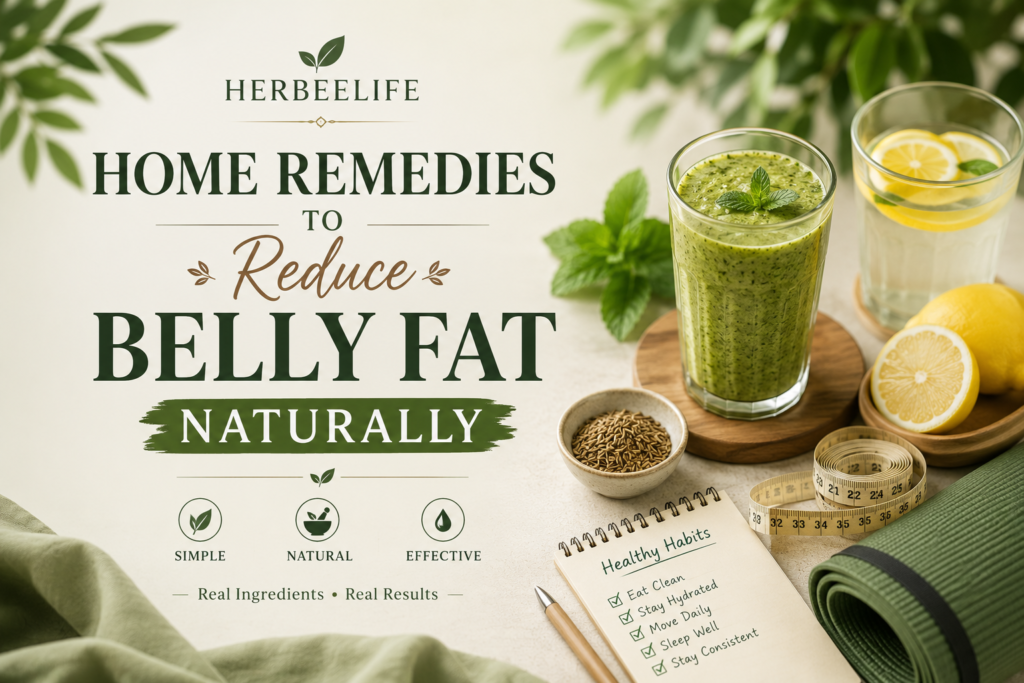

Home Remedies to Reduce Belly Fat Naturally: 15 Habits That Actually Work
No tea will melt belly fat overnight, no matter what the internet promises — but a consistent set of kitchen-based remedies, food choices, and daily habits genuinely can, over weeks rather than days. Here's what actually works, and why.
Belly fat is uniquely stubborn, and it's also uniquely important to understand rather than just "burn." Not all belly fat is the same: the soft layer you can pinch (subcutaneous fat) is mostly a cosmetic concern, while the deeper fat surrounding your internal organs (visceral fat) is metabolically active and linked to real health risks like insulin resistance and heart disease. The good news is that visceral fat — the more dangerous kind — actually responds faster to diet and lifestyle changes than subcutaneous fat does, which means the habits in this guide are working on the part of belly fat that matters most for your health, even before you see a visible difference in the mirror.
This guide brings together 15 practical, natural remedies and habits for reducing belly fat, a look at what's actually driving stubborn fat around your midsection, a sample daily routine, foods to favour and avoid, and a dedicated section on the hormonal and postpartum factors that make belly fat particularly persistent for many women.
⚡ Quick Answer
- Best morning habit: Warm jeera (cumin) water or ajwain water on an empty stomach
- Best daily drink: Green tea, 2–3 cups spread through the day, away from meals
- Best dietary change: Cutting added sugar and refined carbs, which are more strongly linked to belly fat than dietary fat itself
- Best exercise: A daily 30–45 minute brisk walk, plus 2–3 strength sessions a week — not endless crunches
- Underrated factor: Sleep and stress — chronic high cortisol specifically promotes fat storage around the belly
- Avoid: Crash diets, "fat burner" supplements, and expecting visible results in under a few weeks
📋 Table of Contents
Visceral vs. Subcutaneous Fat: Why Belly Fat Is Different
Understanding the two types of fat around your midsection changes how you should think about "reducing belly fat." Subcutaneous fat sits just under the skin — it's the layer you can pinch, and it behaves similarly to fat anywhere else on the body. Visceral fat, on the other hand, wraps around your internal organs deep in the abdominal cavity. It's hormonally active, releasing inflammatory compounds that are linked to insulin resistance, high blood pressure, and cardiovascular risk — which is exactly why "belly fat" gets so much health attention beyond just appearance.
The encouraging part is that visceral fat is often the first to respond to diet, movement, and lifestyle changes, sometimes shrinking noticeably before subcutaneous fat does. This is why many people report feeling less bloated, lighter, and healthier within a couple of weeks of consistent effort, even before their waistline visibly changes — the internal, health-relevant fat is often improving first.
What Causes Stubborn Belly Fat?
Excess refined carbs and added sugar: Sugar and refined carbohydrates spike insulin, and chronically high insulin specifically promotes fat storage around the abdomen more than it does elsewhere on the body.
Chronic stress and high cortisol: Cortisol, the body's primary stress hormone, is strongly linked to abdominal fat storage — which is part of why stressful periods in life so often coincide with a growing waistline, regardless of diet.
Poor sleep: Inadequate or irregular sleep disrupts hunger hormones (ghrelin and leptin), increasing cravings for high-calorie food and making belly fat harder to shed even with a reasonable diet.
Sedentary lifestyle: Long hours of sitting and low overall activity slow metabolism and specifically encourage fat storage in the abdominal area over time.
Alcohol consumption: Alcohol is calorie-dense, disrupts fat metabolism, and is strongly associated with abdominal fat accumulation, sometimes more than other calorie sources.
Hormonal changes: Menopause, pregnancy, thyroid imbalances, and PCOS can all shift fat storage patterns toward the abdomen, which is why belly fat is often more stubborn for women during these life stages, covered in more detail below.
Genetics: Where your body tends to store fat is partly genetic, which is why two people eating similarly can carry weight very differently around the midsection.
15 Natural Remedies to Reduce Belly Fat
The remedies below work through several mechanisms: boosting metabolism, improving digestion, reducing bloating (which can make belly fat look worse than it is), regulating blood sugar, and addressing the hormonal and lifestyle factors that drive fat storage in the first place.
🌿 Jeera (Cumin) Water in the Morning
Jeera water is one of the most trusted Ayurvedic morning rituals for weight management — cumin supports digestion and metabolism, and starting the day with it on an empty stomach is a simple, sustainable habit many people find easy to stick with.
🍵 Green Tea Through the Day
Green tea contains catechins and a modest amount of caffeine, both of which have been studied for their ability to slightly boost metabolism and support fat oxidation, particularly around the abdominal area.
🛒 Recommended: Organic Green Tea
Choose a pure, additive-free green tea (loose leaf or whole-leaf bags) for the highest catechin content, rather than heavily processed, flavoured blends.
Check Price on Amazon →🌶️ Ajwain (Carom Seed) Water
Ajwain supports digestive enzyme secretion and reduces bloating, which can make a real visible difference to how flat your stomach looks day to day, separate from actual fat loss.
🌱 Fenugreek (Methi) Water
Fenugreek is rich in soluble fibre, which slows digestion and helps regulate blood sugar spikes — directly addressing one of the biggest hormonal drivers of belly fat accumulation.
🛒 Recommended: Organic Fenugreek (Methi) Seeds
Look for whole, unpolished fenugreek seeds rather than pre-ground powder, which loses potency faster — whole seeds soak and release their beneficial compounds more effectively.
Check Price on Amazon →🍋 Warm Lemon Water
Warm lemon water supports digestion and hydration first thing in the morning, and while it won't directly "melt fat" as often claimed, it's a genuinely useful habit for kickstarting a consistent morning routine that supports broader weight management.
🍎 Diluted Apple Cider Vinegar (With Caution)
Some research suggests apple cider vinegar may modestly help regulate blood sugar and reduce appetite, which can indirectly support fat loss over time — though it's not a standalone fix and needs to be used carefully.
🛒 Recommended: Raw, Unfiltered Apple Cider Vinegar (with Mother)
Choose a raw, unfiltered ACV that still contains the "mother" — the cloudy strands of beneficial bacteria and enzymes that clear, filtered versions lack.
Check Price on Amazon →🫚 Ginger Tea
Ginger has a mild thermogenic effect and supports digestion, helping reduce the bloating that often makes the stomach look more prominent than the actual fat underneath.
🌿 Triphala at Bedtime
Triphala supports healthy digestion and regular elimination, and since chronic constipation and sluggish digestion can make the belly look more bloated and distended, this classical Ayurvedic remedy indirectly supports a flatter-looking stomach.
🌶️ Cinnamon
Cinnamon has been studied for its potential to improve insulin sensitivity, which may help reduce the blood-sugar swings that contribute to abdominal fat storage over time.
🥗 Increasing Protein and Fibre Intake
Protein and fibre both increase satiety, helping you naturally eat less without constant hunger — a far more sustainable approach than restrictive dieting, and one that directly targets the excess calorie intake that drives fat storage.
🚶 Daily Walking (30–45 Minutes)
Brisk walking is one of the most underrated, sustainable forms of exercise for reducing visceral fat specifically — it's low-impact enough to do daily without burnout, which matters more for long-term results than occasional intense workouts.
🏋️ Strength Training (Not Just Crunches)
Spot-reduction — the idea that endless crunches will burn fat specifically from the belly — isn't well-supported by research. Building overall muscle through strength training raises your resting metabolism and supports fat loss across the whole body, including the midsection, more effectively than ab exercises alone.
🌙 Prioritising Sleep
Poor sleep disrupts the hormones that regulate hunger and fat storage, making belly fat notably more resistant to diet and exercise efforts in people who are chronically sleep-deprived.
🧘 Stress Management
Since chronic stress elevates cortisol, and cortisol specifically encourages fat storage around the abdomen, managing stress is a legitimate, evidence-backed part of any belly fat reduction plan — not just a "nice to have."
💧 Staying Well-Hydrated
Adequate water intake supports metabolism, helps distinguish true hunger from thirst (which are often confused), and reduces the water retention and bloating that can make the belly look puffier than the actual fat level underneath.
👩 Belly Fat in Women: Hormones, Pregnancy, and Menopause
Belly fat tends to be particularly stubborn for women at specific life stages, and understanding why can make the process feel far less frustrating. During and after pregnancy, hormonal shifts and a naturally stretched abdominal area mean belly fat reduction takes real time and shouldn't be rushed — gentle walking, hydration, and a nutrient-dense diet are the safest starting points, and stronger remedies like ACV or fenugreek in concentrated amounts should be checked with a doctor first, especially while breastfeeding. If you're navigating other pregnancy or postpartum changes, our pregnancy journey guide covers what to expect trimester by trimester.
Around perimenopause and menopause, declining oestrogen levels shift fat storage patterns toward the abdomen even without a change in diet or activity, which is a hormonal reality rather than a personal failing. Strength training becomes especially important during this stage, since it helps counter the natural muscle loss that further slows metabolism. PCOS is another common underlying factor behind stubborn abdominal weight in women, often tied to insulin resistance — if this applies to you, addressing blood sugar through diet (lower refined carbs, higher fibre and protein) tends to matter more than exercise alone.
A Sample Daily Routine
Morning: Jeera or ajwain water on an empty stomach, followed by a protein and fibre-rich breakfast rather than only refined carbs like white bread or sugary cereal.
Midday: A brisk 15–20 minute walk after lunch, and green tea mid-afternoon instead of a sugary snack.
Evening: A strength training or brisk walking session, and a lighter, earlier dinner that finishes at least 2–3 hours before bed.
Night: Triphala or warm water before bed, along with a consistent, screen-free wind-down to protect sleep quality — arguably as important to this routine as anything you eat or drink.
This routine, followed consistently for 4–6 weeks, tends to show noticeably reduced bloating and a flatter-feeling stomach well before major visible fat loss, followed by gradual, lasting changes over 2–3 months.
Foods to Favour and Foods to Avoid
| Category | Favour | Limit or Avoid |
|---|---|---|
| Carbohydrates | Whole grains, millets (jowar/bajra), oats | Refined flour (maida), white rice in excess, sugary cereals |
| Protein | Dal, paneer, eggs, curd, lean meats/fish | Heavily processed, deep-fried protein sources |
| Fats | Ghee in moderation, nuts, seeds, olive oil | Trans fats, excess deep-fried food |
| Drinks | Water, green tea, buttermilk | Sugary drinks, excess alcohol, sodas |
| Snacks | Roasted makhana, fruit, soaked nuts | Packaged chips, biscuits, sweets |
For a broader look at what actively causes bloating and a puffier midsection, our guides on why healthy food is making you bloated and how to improve digestion naturally pair well with everything covered here.
🚩 When to See a Doctor
Gradual, healthy belly fat reduction is normal and expected with consistent effort. However, please consult a doctor if you experience: sudden, unexplained abdominal swelling or weight gain, persistent bloating accompanied by pain, unexplained weight loss alongside belly fat concerns, or symptoms suggesting an underlying hormonal condition like PCOS or thyroid imbalance (irregular periods, excessive fatigue, hair thinning). These deserve proper medical evaluation rather than diet and exercise alone. Our guide on signs your gut is unhealthy is also worth checking if bloating is a significant part of your concern.
Frequently Asked Questions
What is the fastest home remedy to reduce belly fat?
There's no genuinely "instant" remedy for fat loss, but ajwain or jeera water can reduce bloating and make your stomach look and feel flatter within a day, while real fat reduction takes consistent effort over several weeks.
Can I lose belly fat without exercise, just through diet?
Diet plays the larger role in fat loss overall, but combining it with movement — even just daily walking — significantly improves results and specifically helps target visceral fat more effectively than diet alone.
Do fat burner drinks or supplements actually work?
Most "fat burner" products offer, at best, a very modest metabolic boost and are not a substitute for diet, movement, sleep, and stress management, which have far stronger evidence behind them for genuine, lasting belly fat reduction.
Why is belly fat harder to lose than fat elsewhere on the body?
Belly fat, particularly visceral fat, is influenced heavily by hormones like cortisol and insulin, and genetics also plays a role in where the body stores and releases fat first — which is why it can feel more stubborn than fat in other areas.
Does doing crunches or ab exercises specifically reduce belly fat?
Not on their own — spot reduction isn't well-supported by research. Ab exercises strengthen the underlying muscles, but overall fat loss through diet, cardio, and strength training is what actually reduces the fat layer covering them.
Is belly fat after pregnancy or during menopause different to treat?
Yes — hormonal shifts during these stages genuinely change fat storage patterns around the abdomen. A gentler, patience-first approach with proper nutrition, hydration, and gradually increasing activity tends to work better than aggressive dieting during these life stages.
📖 Related Reads on HerbeeLife
🌿 Loved These Remedies?
Follow HerbeeLife for daily Ayurvedic tips, natural remedies, and wellness inspiration you won't find anywhere else.