
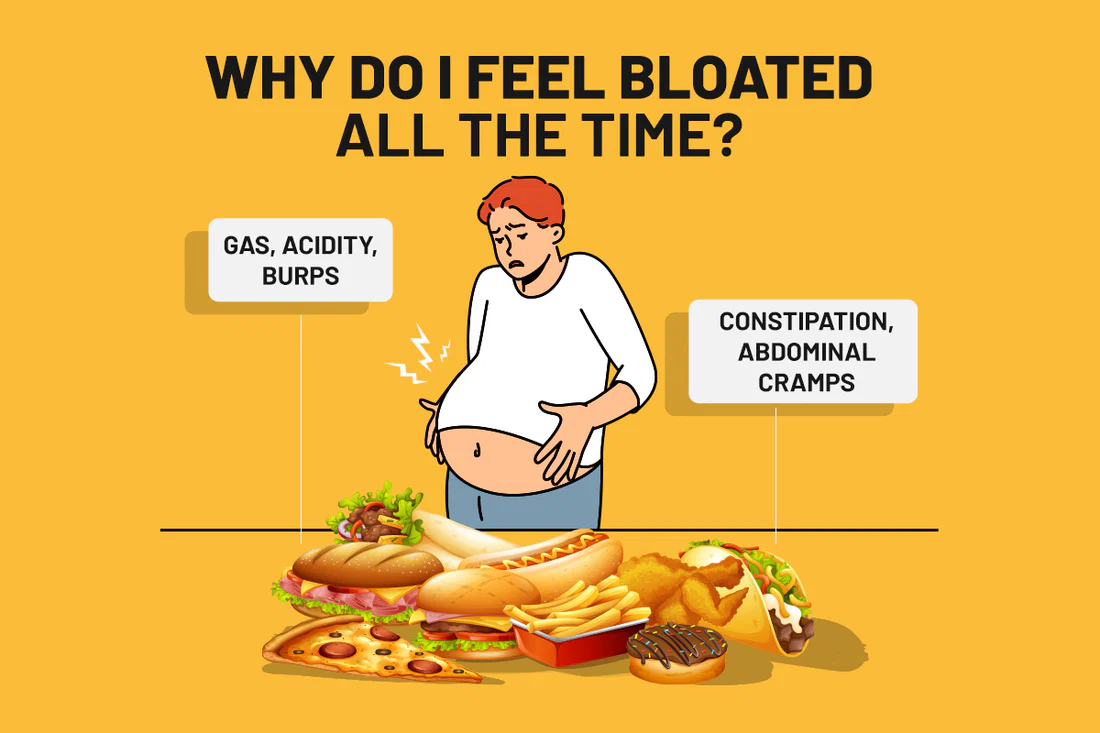
Bloating is one of the most universally frustrating digestive experiences — that tight, distended, uncomfortable feeling that makes your waistband feel two sizes too small, sometimes within minutes of finishing a meal. Most people reach for antacids or just wait it out. But the most effective approach is neither — it is eating the right foods that actively work to reduce gas, support gut motility, balance the microbiome, and reduce the inflammation that makes even normal amounts of gas feel painful.
The good news: many of the most powerful anti-bloating foods are already in the Indian kitchen. Ginger in your chai. Jeera in your tadka. Dahi in your thali. Papaya ripening on the counter. Pudina growing on the windowsill. These are not merely pleasant ingredients — they are pharmacologically active compounds that target the specific causes of bloating through mechanisms that modern gastroenterology has confirmed one clinical trial at a time.
This guide walks through 20 foods that reduce bloating — what each one does, why it works, and exactly how to use it for maximum benefit. Whether your bloating comes after every dal meal, builds up through the day, or peaks during stress or hormonal shifts, there is something here that directly targets your specific type.
Quick Orientation: Bloating has two main causes — (1) gas produced by gut bacteria fermenting undigested carbohydrates, and (2) water retention from sodium, hormones, or inadequate hydration. Some foods below target gas. Some target water retention. Some do both. The label “Best For” on each food tells you which type of bloating it addresses most effectively. For a deeper dive into the causes and types of gas, read our complete gas relief guide.
🌿 The Carminative Herbs and Spices — India’s Anti-Bloating Arsenal
These work fastest — often within 15–30 minutes. Each one has a documented mechanism for reducing intestinal gas and cramping.
1. Ginger
🔬 Why It Works: Ginger contains gingerols and shogaols that do three specific things for bloating: they stimulate the migrating motor complex (MMC) — the intestinal housekeeping contractions that sweep gas and undigested food through the gut between meals; they accelerate gastric emptying (reducing the upper-abdominal gas accumulation of a sluggish stomach); and they inhibit prostaglandin synthesis, reducing the intestinal inflammation that makes gas feel painful. A clinical trial confirmed ginger significantly accelerated gastric emptying compared to placebo — the direct mechanism of post-meal bloating relief.
✅ Best For: Post-meal bloating, upper abdominal gas, sluggish digestion, nausea-with-bloating
🥣 How to Use:
- Fresh ginger tea: 1-inch piece, grated into boiling water for 5–10 min. Add lemon and honey. Drink before or after meals.
- Add generously to dal, sabzi, and chutneys — not just for flavour.
- Ginger-lemon-honey warm water first thing in the morning activates gastric motility before breakfast.
- Grate fresh ginger directly onto your thali as a finishing garnish for immediate carminative effect.
2. Pudina (Peppermint)
🔬 Why It Works: Menthol — peppermint’s primary compound — is the most clinically studied natural anti-bloating molecule available. It is a calcium channel antagonist in gut smooth muscle: it physically relaxes the intestinal wall, releasing the tension that traps gas bubbles and preventing the spasmodic cramping that makes bloating painful. A Cochrane systematic review confirmed peppermint oil significantly reduces IBS symptoms including bloating, gas, and abdominal pain — clinical evidence for a food ingredient is rare and notable.
✅ Best For: Lower abdominal gas and cramping, IBS-type bloating, after-dinner distension
🥣 How to Use:
- Pudina tea: 10–12 fresh mint leaves steeped in boiling water for 5 min. Best after the main meal.
- Fresh pudina chutney with meals — the mechanical act of eating it provides direct GI contact.
- Add a handful of fresh pudina leaves to chaas (buttermilk) — doubling the anti-bloating effect through the probiotic + menthol combination.
- Jeera-pudina water: cumin seeds boiled with fresh mint — India’s most complete carminative combination in one drink.
3. Saunf (Fennel Seeds)
🔬 Why It Works: Anethole — fennel’s primary essential oil — relaxes intestinal smooth muscle and selectively inhibits Clostridium gas-producing bacteria while supporting Lactobacillus growth. The result: less gas from equivalent food intake over time, and reduced cramping during acute bloating episodes. The Indian tradition of post-meal saunf is not a hospitality gesture — it is a scheduled carminative intervention at the moment (post-prandial) when fermentation gas production begins to peak.
✅ Best For: Post-meal gas prevention, colonic bloating, gradual day-long distension
🥣 How to Use:
- Chew 1 teaspoon of saunf after every main meal — the most consistent and best-timed anti-bloating habit available.
- Saunf tea: crush 1 teaspoon in warm water for 10 min. Strain and drink after dinner.
- Add saunf to tadka alongside jeera — the dual carminative combination in cooking reduces meal-generated gas at the source.
- Saunf + mishri (crystallised sugar) mix: the traditional Indian restaurant post-meal digestive combination, with mishri’s mild digestive stimulation alongside saunf’s carminative action.
4. Ajwain (Carom Seeds)
🔬 Why It Works: Ajwain contains the highest concentration of thymol of any culinary herb — 2–4% by weight in dried seeds. Thymol produces the fastest antispasmodic smooth muscle relaxation of any Indian carminative spice: it acts as a calcium channel antagonist that releases intestinal wall tension within minutes, allowing trapped gas pockets to coalesce and move toward expulsion. A randomised controlled trial confirmed ajwain extract significantly reduced bloating, flatulence, and abdominal cramping versus placebo.
✅ Best For: Immediate acute bloating relief, cramping-with-gas, legume-related bloating, bloating from beans or chickpeas
🥣 How to Use:
- Fastest relief: chew ½ teaspoon ajwain with a pinch of kala namak. Swallow with warm water. Relief typically within 5–15 minutes.
- Add to all rajma, chana, and lentil dishes during cooking — this is their primary functional role in Indian cooking alongside flavour.
- Ajwain water: boil 1 teaspoon in 500ml water for 5 min, strain. Drink warm for colicky, cramping bloating.
- Ajwain paratha: the traditional addition of ajwain to paratha dough specifically offsets the gas-generating potential of the wheat and filling.
5. Hing (Asafoetida)
🔬 Why It Works: Two pharmacological mechanisms make hing the most powerful single anti-bloating ingredient in the Indian kitchen. (1) Calcium channel antagonism in intestinal smooth muscle — it relaxes the spasm that traps gas, more quickly than almost any other spice. (2) Selective antimicrobial activity against Clostridium species (the highest gas-producing gut bacteria) while supporting Lactobacillus growth — reducing gas production from subsequent meals when used regularly in cooking. A pinch of hing in warm water relieves acute bloating within 5–20 minutes through the first mechanism alone.
✅ Best For: Legume bloating, acute trapped gas, chronic gas accumulation, infant colic (heeng ka paani)
🥣 How to Use:
- A tiny pinch in every dal tadka — the most important single anti-bloating cooking habit in Indian food.
- Acute relief: dissolve a pinch in half a cup of warm water. Drink slowly.
- Add to the soaking water when soaking beans or chickpeas overnight — begins reducing fermentable oligosaccharides before cooking even starts.
- Hing-ajwain-kala namak in warm water: India’s most potent homemade anti-bloating combination for acute relief.
🍽️ Digestive Enzyme Powerhouses — Foods That Break Down Food Before It Can Ferment
These reduce bloating at the source — by ensuring food is more completely digested in the small intestine before reaching gut bacteria in the colon. Less undigested substrate reaching the colon means less fermentation gas downstream.
6. Papaya
🔬 Why It Works: Papaya contains papain — a cysteine protease enzyme that breaks down protein peptide bonds, significantly improving protein digestion efficiency. Inadequately digested protein reaching the colon undergoes putrefaction (bacterial protein fermentation) producing hydrogen sulphide and other odorous gases alongside the more typical carbohydrate fermentation gases. Papain ensures proteins are more completely broken down in the small intestine. Papaya also contains chymopapain (with similar proteolytic activity) and is rich in soluble fibre that softens stool and reduces the constipation-driven bloating of retained intestinal contents.
✅ Best For: Protein-meal bloating, heavy-food bloating, constipation-related fullness
🥣 How to Use:
- Fresh ripe papaya as a morning fruit or post-meal dessert — enzyme activity is highest in fresh ripe fruit.
- Raw green papaya in salads (kachcha papaya salad): raw papaya has even higher papain concentration than ripe — used in green papaya sabzi or salad for maximum enzyme delivery.
- Papaya smoothie with lime and mint: fruit enzyme + menthol + citric acid = triple-mechanism anti-bloating breakfast.
7. Pineapple
🔬 Why It Works: Bromelain — pineapple’s proteolytic enzyme — is one of the most researched plant-derived digestive enzymes available. It breaks down protein bonds more rapidly than papain for many substrates, accelerating protein digestion and reducing the protein residue that reaches the colon for gas-producing fermentation. A clinical review in the Journal of Medicinal Food confirmed bromelain’s anti-inflammatory and digestive efficacy. Pineapple’s high water content additionally supports intestinal hydration — reducing the dry, slow-transit bloating of dehydration-driven constipation.
✅ Best For: Post-meat bloating, protein-heavy meal bloating, inflammatory digestive discomfort
🥣 How to Use:
- Fresh pineapple as a pre-meal appetiser or alongside a protein-heavy meal — enzyme activity is highest in raw, unprocessed pineapple (canning destroys bromelain through heat).
- Use fresh pineapple as a natural meat tenderiser in marinades — the enzymatic activity that tenderises meat also pre-digests protein before cooking.
- Pineapple raita: fresh pineapple + dahi = enzyme activity + probiotic benefit in one preparation.
8. Kiwi
🔬 Why It Works: Kiwi contains actinidin — a cysteine protease enzyme uniquely effective for digesting dairy and meat proteins that other enzymes (including papain and bromelain) are less efficient at breaking down. A randomised controlled trial published in Advances in Food and Nutrition Research found kiwi significantly improved protein digestion compared to control. Kiwi is also rich in dietary fibre and Vitamin C, supporting gut motility and the collagen production that maintains intestinal wall integrity. Its high water content supports intestinal hydration.
✅ Best For: Dairy-triggered bloating, post-paneer or post-milk bloating, slow-transit fullness
🥣 How to Use:
- 2 fresh kiwis consumed after a dairy-heavy or meat-heavy meal provides therapeutic actinidin activity.
- Kiwi-mint smoothie with dahi: actinidin + menthol + Lactobacillus = targeted post-protein meal anti-bloating combination.
🥛 Gut Microbiome Supporters — Foods That Reduce Gas Production at the Bacterial Source
These work over weeks and months — shifting your gut microbiome toward species that produce less gas from equivalent food intake. Less gas-producing bacteria = less bloating from the same diet.
9. Dahi (Yogurt with Live Cultures)
🔬 Why It Works: Dahi — fermented with Lactobacillus bulgaricus and Streptococcus thermophilus — provides live probiotic bacteria that directly compete with gas-producing gut bacteria for both adhesion sites on the intestinal wall and fermentable substrate. Lactobacillus species produce lactic acid (creating an intestinal environment less favourable for gas-producing Clostridium species) and produce enzymes (lactase — the enzyme that breaks down lactose) that reduce the lactose fermentation responsible for dairy-triggered bloating in lactose-sensitive individuals.
✅ Best For: Dairy bloating, antibiotic-associated bloating, chronic gas and microbiome imbalance
🥣 How to Use:
- Plain, unsweetened homemade dahi daily — ideally at lunch as part of the traditional thali. The live cultures in fresh homemade dahi are more numerous and more diverse than commercial yogurt.
- Spiced chaas (diluted dahi with jeera, hing, ginger, kala namak, curry leaves) with the main meal: this is the most complete single anti-bloating preparation in the Indian culinary repertoire — probiotics + four separate carminative compounds in one glass. See our gas relief guide for the complete chaas science.
- Never heat dahi — cooking kills the live cultures. Add to dal or curry after removing from heat.
10. Fermented Indian Foods (Idli, Dosa, Kanji, Pickles)
🔬 Why It Works: The fermented foods of Indian cuisine — idli and dosa (from fermented rice-lentil batter), kanji (fermented carrot and beet water from North India), and lacto-fermented pickles — provide diverse live bacterial cultures including Lactobacillus plantarum, L. fermentum, and Leuconostoc mesenteroides. This bacterial diversity is specifically important: a diverse gut microbiome, with multiple bacterial species competing efficiently for fermentable substrate, produces less total gas from equivalent food intake than a low-diversity microbiome dominated by high-gas producers.
✅ Best For: Chronic bloating, low-diversity gut microbiome, post-antibiotic digestive recovery
🥣 How to Use:
- Idli and dosa made from properly fermented batter (not the instant batter from packets — fermentation time is where the live cultures develop).
- Kanji during spring/winter: traditionally prepared with black carrots, mustard seeds, and water — a naturally fermented drink consumed daily for gut microbiome support.
- Properly made lacto-fermented pickles (not vinegar-based ones — which are acidified rather than fermented and contain no live cultures).
11. Bananas (Especially Slightly Green)
🔬 Why It Works: Bananas earn their anti-bloating reputation through two mechanisms operating at different timescales. Short-term: bananas are high in potassium — the electrolyte that counteracts sodium’s water-retaining effect. High-sodium meals cause the body to retain water, producing the water-retention type of bloating; potassium from bananas promotes renal sodium excretion, reducing water retention within hours. Longer-term: slightly green (unripe) bananas contain resistant starch — the prebiotic fibre that specifically feeds butyrate-producing gut bacteria, improving microbiome composition toward less gas-producing species over weeks of consistent consumption.
✅ Best For: Sodium/water-retention bloating (post-salty-meal), hormonal water retention bloating, microbiome support
🥣 How to Use:
- One banana as the mid-morning snack — the potassium counteracts breakfast sodium and primes the microbiome for the day’s major meals.
- Banana-dahi smoothie: potassium + resistant starch + live cultures in one preparation.
- Slightly green (not overripe) bananas for maximum resistant starch prebiotic content — the speckled brown very ripe banana has less resistant starch and more simple sugar.
💧 Hydrating and Diuretic Foods — Anti-Bloating Through Water Balance
These reduce the water-retention type of bloating — particularly the puffiness after salty meals, premenstrual bloating, and the generalised swelling of inadequate hydration.
12. Cucumber
🔬 Why It Works: Cucumber is approximately 96% water — one of the highest water-content foods available. Its quercetin and caffeic acid flavonoids have mild diuretic activity, promoting renal sodium excretion and reducing the water retention that causes puffiness and abdominal distension. Cucumbers additionally contain cucurbitacins — bitter triterpenoids with direct anti-inflammatory activity in the intestinal wall — reducing the mucosal inflammation that worsens the discomfort of retained gas. The high water content improves stool hydration, reducing the constipation-driven fullness that compounds bloating.
✅ Best For: Post-salty-meal bloating, premenstrual bloating, general puffiness and water retention
🥣 How to Use:
- Fresh cucumber raita: dahi + grated cucumber + jeera + pudina = probiotic + diuretic + carminative in one cooling side dish. One of the most complete anti-bloating preparations in the Indian thali.
- Sliced cucumber with lime and kala namak: the potassium in cucumber + the sulphur compounds in kala namak provide a quick diuretic and carminative snack.
- Cucumber-mint-lime infused water: sustained throughout the day for ongoing hydration and gentle diuretic support. See our detox water guide for the full recipe.
13. Asparagus
🔬 Why It Works: Asparagus is one of the strongest natural dietary diuretics available — its asparagine amino acid content promotes kidney filtration and sodium excretion, reducing water-retention bloating within 24 hours of consumption. It is also one of the richest dietary sources of inulin — a prebiotic fructooligosaccharide that specifically feeds Bifidobacterium species in the gut, which are among the most efficient fermenters that produce the least hydrogen gas from equivalent carbohydrate substrate. Asparagus paradoxically reduces long-term gas production while providing the prebiotic fibre that supports microbiome health.
✅ Best For: Water retention bloating, premenstrual bloating, long-term microbiome gas reduction
🥣 How to Use:
- Steamed or lightly roasted asparagus with olive oil and lemon — overcooking destroys the inulin content and the diuretic asparagine.
- Asparagus soup: maintains asparagine content better than high-heat roasting.
14. Lemon and Lime (Nimbu)
🔬 Why It Works: Nimbu’s anti-bloating effects are mediated through four specific mechanisms: citric acid stimulates bile production (bile emulsifies fat and stimulates the intestinal motility reflex — both reducing post-fat-meal bloating); d-limonene from the peel has documented hepatoprotective and bile-stimulating activity; Vitamin C supports gut motility and the connective tissue of the intestinal wall; and the act of drinking warm water with lemon activates the gastrocolic reflex — the strongest morning motility driver available. Lemon also has mild diuretic properties through its potassium content. The lemon water science is in our detox water guide.
✅ Best For: After-fat-meal bloating, morning fullness and slow transit, water retention
🥣 How to Use:
- Warm water with half a lemon (including a squeeze of the peel for d-limonene) first thing in the morning on an empty stomach — the highest-impact daily anti-bloating ritual available.
- Fresh nimbu squeezed over dal, sabzi, and salads at the time of eating — live citric acid delivery directly with the meal.
- Nimbu-pudina sharbat: lemon + mint + kala namak + roasted jeera powder = a multi-mechanism anti-bloating drink perfect for Indian summers.
🥗 Fibre-Rich Foods That Support Gut Motility — Moving Gas Through Rather Than Letting It Accumulate
These reduce bloating by supporting the regular gut transit that prevents gas from sitting and building. They work best when combined with adequate hydration.
15. Isabgol (Psyllium Husk)
🔬 Why It Works: The soluble fibre in isabgol absorbs water and forms a gel that: softens stool (reducing constipation-driven abdominal distension), mechanically stimulates the enteric nervous system stretch receptors in the colon wall (triggering propulsive contractions), and lubricates intestinal transit to reduce the straining that swallows air and worsens upper bloating. A Cochrane review confirmed psyllium significantly improves stool frequency and consistency — addressing the constipation component of chronic bloating that most “anti-bloating food” guides miss entirely. The full constipation-bloating science is in our constipation guide.
✅ Best For: Constipation-type abdominal distension, chronic fullness, irregular bowel movement bloating
🥣 How to Use:
- 1–2 teaspoons stirred immediately into a full glass of warm water or chaas at bedtime — must be followed by another full glass of water. Never take isabgol without adequate water.
- Add to smoothies or dahi for a gentler daily dose.
- Not a fast-acting remedy — isabgol softens and moves stool overnight, reducing bloating by the following morning.
16. Moong Dal (Split Mung Bean)
🔬 Why It Works: Of all the Indian dals, moong dal is specifically the lowest in the raffinose and stachyose oligosaccharides that gut bacteria ferment into gas. Ayurveda prescribes moong dal specifically for people with weak digestion, post-illness recovery, and excess Vata (gas, bloating, irregularity) — not as a deprivation food but as the most digestible, least gas-producing legume available. Its protein is highly bioavailable, its starch is rapidly and completely digested, and its fibre supports gentle gut motility without the aggressive fermentation gas of heavier legumes.
✅ Best For: Legume-sensitive bloating, digestive recovery, daily anti-bloating meal planning
🥣 How to Use:
- Replace rajma, chole, or mixed dal with moong dal on days of high digestive sensitivity.
- Khichdi (moong dal + rice): Ayurveda’s prescribed meal for digestive reset — minimal gas production, maximum digestibility, prebiotic fibre for microbiome support.
- Moong dal cheela (pancakes): a complete protein breakfast with minimal bloating potential.
17. Oats
🔬 Why It Works: Oats’ beta-glucan — a viscous soluble fibre — forms a gel in the small intestine that slows carbohydrate absorption and reduces post-meal blood glucose and insulin spikes. The insulin spike-bloat connection is real: high insulin promotes renal sodium retention (increasing water retention) and stimulates gut inflammatory signalling (increasing visceral sensitivity to gas). Beta-glucan additionally feeds Lactobacillus and Bifidobacterium species — shifting the microbiome toward lower gas production. Research on oat consumption consistently finds reduced bloating and improved gut comfort compared to refined grain alternatives.
✅ Best For: Carbohydrate-meal bloating, insulin-related water retention, daily fibre maintenance
🥣 How to Use:
- Overnight oats with dahi and fruit: beta-glucan + live cultures + enzyme-containing fruit = one of the most anti-bloating breakfast combinations available.
- Oat dalia (porridge) with a pinch of cardamom and warm milk — the warming spice activates digestive secretion alongside the fibre delivery.
🌸 Anti-Inflammatory and Hormone-Balancing Foods — For Bloating That Has Deeper Roots
For bloating that is worse premenstrually, during stress, or with chronic inflammatory digestive conditions — these address the systemic drivers rather than just the immediate gas.
18. Amla (Indian Gooseberry)
🔬 Why It Works: Amla is one of the most comprehensively therapeutic foods in the Indian kitchen — and its anti-bloating effects are multidimensional. Gallotannins activate Nrf2 (Phase II liver detoxification enzyme upregulation), improving bile production and quality. Better bile means better fat emulsification and better post-fat-meal digestion, directly reducing the sluggish fat digestion that causes post-heavy-meal distension. Amla’s Vitamin C supports collagen synthesis for intestinal wall integrity — a healthy intestinal barrier reduces the inflammatory signalling that worsens visceral sensitivity to gas. And amla’s pectin content provides prebiotic soluble fibre for microbiome support. The comprehensive amla evidence is at our amla benefits guide.
✅ Best For: Post-fatty-meal bloating, chronic inflammatory bloating, liver-sluggishness-related digestive heaviness
🥣 How to Use:
- 1 fresh amla eaten with morning warm water — most stable natural Vitamin C for gut and liver support.
- Amla murabba as a post-meal digestive: the traditional preserve format that delivers amla’s compounds in a palatable, convenient form.
- Amla juice (30ml) diluted in water as a morning digestive stimulant.
19. Turmeric (Haldi)
🔬 Why It Works: Curcumin’s NF-κB inhibition reduces the intestinal mucosal inflammation that drives visceral hypersensitivity — the condition in which normal amounts of gas feel painful. For people with IBS-type bloating (where actual gas production may not be excessive but pain sensitivity to gas is amplified), reducing intestinal inflammation through curcumin directly reduces the perception of bloating even when gas quantity is unchanged. Turmeric also inhibits MUC5B and MUC5AC mucin production — reducing the excess mucus secretion that some people experience as heaviness and bloating. The anti-inflammatory mechanism evidence is in our anti-inflammatory foods guide.
✅ Best For: IBS-type sensitive bloating, inflammatory bowel-related discomfort, chronic low-grade digestive inflammation
🥣 How to Use:
- Haldi doodh (golden milk) with black pepper and ghee at bedtime — the bioavailability-optimised preparation. Plain turmeric water delivers minimal curcumin absorption. Fat + black pepper (piperine) is non-negotiable for therapeutic effect.
- Generous turmeric in all dal and sabzi preparations.
- Turmeric-ginger-black pepper tea: double anti-inflammatory coverage — curcumin + gingerols together.
20. Chaas (Spiced Buttermilk) — India’s Complete Anti-Bloating Drink
🔬 Why It Works: Chaas deserves its own entry as the most complete anti-bloating preparation in Indian culinary tradition — combining five distinct anti-bloating mechanisms in a single drink when prepared correctly. Dahi base: Lactobacillus probiotics competing with gas-producing gut bacteria. Dilution and churning: pro-kinetic mechanical stimulation of gastric and intestinal motility. Jeera: cuminaldehyde for digestive enzyme stimulation and antispasmodic activity. Hing: smooth muscle relaxation and Clostridium inhibition. Ginger: MMC stimulation and gastric emptying acceleration. Kala namak: sulphur compounds reducing gas volume. The entire anti-bloating strategy described in this article, concentrated into one traditional Indian post-meal drink.
✅ Best For: All types of post-meal bloating — the single most comprehensive anti-bloating preparation available
🥣 How to Use:
- Full recipe: 3 tablespoons plain dahi churned with 250ml water, a pinch of roasted jeera powder, a pinch of hing, a few fresh curry leaves, half a teaspoon grated ginger, a pinch of kala namak, and a few pudina leaves. Serve with or immediately after the main meal.
- Even a simplified version (dahi + water + jeera + kala namak) provides significant anti-bloating benefit.
- Consume with the largest meal of the day for maximum protective effect before fermentation gas production begins.
Quick Reference: Which Food for Which Type of Bloating
| Type of Bloating | Best Foods to Reach For |
|---|---|
| 🌀 Immediate trapped gas | Ajwain + kala namak, hing water, peppermint tea |
| 🍽️ Post-meal gas and fullness | Saunf, ginger tea, chaas, fennel seeds |
| 🥩 After protein-heavy meal | Papaya, pineapple, kiwi, ginger |
| 💧 Water retention / puffiness | Cucumber, banana, asparagus, lemon water |
| 🧬 IBS / sensitive gut bloating | Peppermint, turmeric, moong dal, dahi |
| ⏰ Chronic / daily bloating | Dahi, fermented foods, isabgol, oats, chaas |
| 🌿 Dal / legume bloating | Hing + jeera in cooking, ajwain, saunf, moong dal |
| 💆 Stress-related bloating | Peppermint, ginger, turmeric, dahi, amla |
5 Eating Habits That Make Every Anti-Bloating Food Work Better
The foods above work best when paired with eating practices that do not undermine them:
- Eat slowly and chew thoroughly. Rapid eating swallows air (aerophagia — a primary source of upper abdominal bloating unrelated to food fermentation). Each swallow that does not go through proper chewing also sends partially digested particles toward the colon for gas-producing fermentation. Aim for 20–30 chews per bite — not as a rigid rule but as a reminder to slow down.
- Do not drink large quantities of liquid during meals. Large water intake during meals dilutes digestive enzymes and stomach acid, reducing the completeness of digestion and increasing the undigested substrate reaching the colon for fermentation. Small sips are appropriate; glasses of cold water with food are not.
- Eat at consistent times. The gut’s digestive enzyme secretion, gastrocolic reflex, and MMC cycling are all circadian — calibrated to the timing of expected meals. Irregular meal times desynchronise these rhythms and reduce digestive efficiency, increasing fermentation gas. The comprehensive meal timing evidence is in our digestion guide.
- Avoid very cold foods immediately after hot foods. The dramatic temperature shift causes temporary intestinal smooth muscle contraction that impairs transit and traps gas. Traditional Indian wisdom of not drinking cold water immediately after hot food has this physiological basis.
- Walk 15 minutes after the main meal. Post-meal walking significantly accelerates gastric emptying and colonic motility — reducing gas accumulation time and decreasing total fermentation gas production from a given meal. Even a short 10–15 minute gentle walk after lunch produces measurable improvements in post-meal bloating.
The Ayurvedic Anti-Bloating Food Principle — Deepana and Pachana
Ayurveda addresses bloating through two complementary principles: Deepana (kindling the digestive fire — increasing Agni) and Pachana (digesting accumulated, undigested material — clearing Ama). Most of the carminative spices in this guide (ginger, ajwain, hing, saunf, jeera) are classified as both Deepana and Pachana herbs — they simultaneously stimulate fresh digestive enzyme activity and help clear the fermentable residue that is already generating gas.
The Ayurvedic principle that “like increases like” is relevant to anti-bloating food choices: cold, heavy, raw foods increase Kapha and slow digestion (worsening bloating); warm, light, cooked foods with digestive spices increase Agni and reduce bloating. This is the Ayurvedic explanation for why chaas (warm-temperature, probiotic, carminative-spiced) consistently relieves bloating where cold, carbonated drinks worsen it — the temperature and the spice combination both support the digestive fire that Ayurveda identifies as the foundation of bloating-free digestion.
Myth vs. Fact: Foods and Bloating
| ❌ The Myth | ✅ The Truth |
|---|---|
| Avoiding all beans and legumes is necessary for bloating | Moong dal, properly soaked and cooked legumes with carminative spices (hing, jeera, ajwain) reduce legume gas by 40-70%. Eliminating legumes removes some of the most nutritious foods in the Indian diet unnecessarily. |
| Gassy foods like broccoli should always be avoided | Cruciferous vegetables produce gas because they feed beneficial gut bacteria — the same bacteria that reduce long-term gas production over time. Light cooking reduces gas immediately; consistent consumption builds a microbiome that produces less gas from the same foods. |
| Probiotics immediately fix bloating | Probiotics shift microbiome composition over weeks, reducing chronic bloating long-term. They do not provide immediate relief. Some people experience temporarily increased gas in the first 1-2 weeks of probiotic use — this normalises. |
| Fruit should be avoided after meals as it ferments | Fruit digests quickly in the small intestine through enzymatic action and does not ferment in the manner of undigested carbohydrates. Enzyme-rich fruits (papaya, pineapple, kiwi) consumed after meals actively assist digestion rather than hindering it. |
Related Articles From HerbeeLife
📖 Natural Remedies for Gas Relief: 12 Science-Backed Indian Solutions That Work Fast
📖 How to Improve Digestion Naturally: 12 Powerful Science-Backed Strategies
📖 Natural Remedies for Constipation: 12 Science-Backed Strategies That Actually Work
📖 Detox Water: Real Health Benefits, Busted Myths and 10 Science-Backed Indian Recipes
📖 Amla Benefits: Proven Immunity, Digestion and Whole-Body Health
📖 Anti-Inflammatory Foods: 12 Powerful Choices That Fight Disease From the Inside Out
📖 Tulsi (Holy Basil) Benefits: 12 Powerful Science-Backed Reasons to Use It Daily
Frequently Asked Questions: Foods That Reduce Bloating
What is the single best food to eat when bloated right now?
For the fastest immediate relief: chew half a teaspoon of ajwain seeds with a pinch of kala namak and swallow with warm water — thymol produces antispasmodic smooth muscle relaxation within 5–15 minutes. For post-meal bloating that has already set in: warm ginger tea (fresh ginger steeped for 10 minutes) combined with Pawanmuktasana yoga pose (knees to chest held 30 seconds per side) — the combination of smooth muscle relaxation and mechanical gas movement provides relief within 10–20 minutes for most people.
Why does bloating get worse in the evening?
Three factors converge in the evening: fermentation gas accumulates throughout the day, reaching its highest volume 8–12 hours after the day’s major meals (typically by evening). Cortisol (which supports gut motility during the active day) falls in the evening, reducing the propulsive contractions that would otherwise move gas through the colon. And the large evening dinner that many Indians eat adds a new fermentation load on top of the day’s accumulated gas. Best evening anti-bloating strategy: eat the largest meal at lunch rather than dinner, take a 15-minute post-dinner walk, drink spiced chaas with dinner, and avoid lying down within 2 hours of eating.
Can the foods I eat actually change how much gas I produce long-term?
Yes — significantly. Gut microbiome composition (the primary determinant of fermentation gas production) is highly responsive to dietary pattern: within 3–4 days of a significant dietary shift, measurable changes in microbiome composition occur. Sustained dietary changes (more diverse plant fibre, regular fermented foods, carminative spices in cooking) produce lasting shifts toward less gas-producing bacterial species within 4–8 weeks. The same legume meal that produces significant bloating in someone with a low-diversity, high-methane-producer microbiome produces far less in someone with a diverse, Lactobacillus-rich microbiome. Diet changes the bugs. The bugs change the gas.
Is premenstrual bloating different from food-related bloating?
Yes — premenstrual bloating is primarily water retention driven by progesterone’s effects on aldosterone (a sodium-retaining hormone) and prostaglandin-driven intestinal inflammation rather than fermentation gas. The foods most effective for premenstrual bloating are therefore the diuretic and anti-inflammatory foods: cucumber, asparagus, bananas (potassium), lemon water, and anti-inflammatory turmeric and ginger — rather than the carminative spices most effective for fermentation gas. The hormonal context is covered in our hormone health guide.
Sources and References
1. Micklefield GH et al. Effects of ginger on gastroduodenal motility. International Journal of Clinical Pharmacology and Therapeutics, 1999.
2. Khanna R et al. Peppermint oil for the treatment of irritable bowel syndrome: a systematic review and meta-analysis. Journal of Clinical Gastroenterology, 2014.
3. Valussi M. Functional foods with digestion-enhancing properties. International Journal of Food Sciences and Nutrition, 2012.
4. Suárez FL et al. Gas production in humans ingesting a soybean flour derived from beans naturally low in oligosaccharides. American Journal of Clinical Nutrition, 1999.
5. Houghton CA et al. Sulforaphane and other nutrigenomic NRF2 activators: can the clinician’s expectation be matched by the reality? Oxidative Medicine and Cellular Longevity, 2016.
6. Haniadka R et al. A review of the gastroprotective effects of ginger. Food and Function, 2013.
7. Ley RE et al. Microbial ecology: human gut microbes associated with obesity. Nature, 2006.
Follow HerbeeLife
🌿 Stay connected for more evidence-based digestive health, Ayurvedic wisdom, and natural wellness content:
📸 Instagram | 📌 Pinterest | 👥 Facebook | 🐦 X (Twitter)
The Bottom Line
You do not need to buy anything special. The most powerful anti-bloating foods in the world are already in your kitchen — the hing, the jeera, the ajwain, the saunf, the ginger, the dahi, the amla. They were put there by three thousand years of Indian culinary tradition that learned, one generation at a time, that these specific ingredients added to these specific foods at these specific moments in the meal made digestion comfortable and bloating rare.
Use them intentionally. Add the hing to every dal. Chew the saunf after every meal. Make the chaas with all five spices, not two. Drink the ginger tea warm, not cold. And over weeks and months, as your microbiome shifts toward the diverse, Lactobacillus-rich composition that produces less gas from equivalent food, you will notice that the same meals that used to bloat you reliably have become comfortable.
Your kitchen was always the remedy. Now you know why each ingredient is there.
⚠️ Medical Disclaimer: This article is for informational and educational purposes only. Persistent, severe, or unexplained bloating requires professional medical evaluation. Read full disclaimer →
💬 Which of these 20 foods has made the biggest difference to your bloating — and which combination from your kitchen is your go-to? Share in the comments. The collective wisdom of this community about what actually works in real Indian kitchens is always the most useful part of the conversation.