
The Chemistry of Rosemary — What’s Actually in This Herb
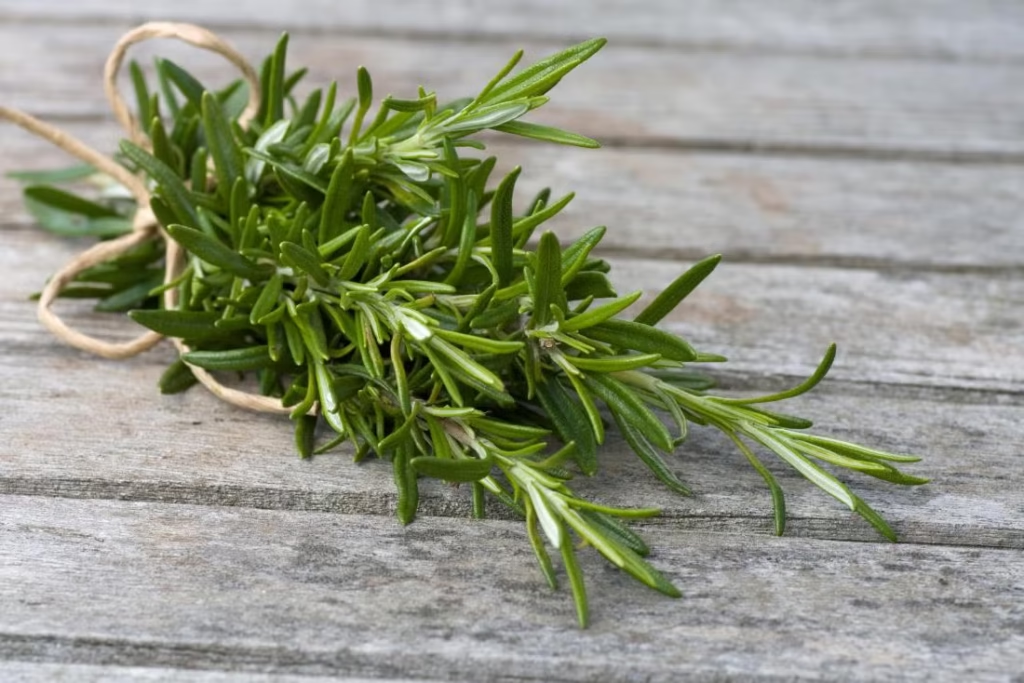
Understanding what makes rosemary work begins with its phytochemical fingerprint. Rosemary is rich in two distinct classes of bioactive compounds — volatile aromatic compounds responsible for its cognitive and aromatic effects, and phenolic diterpenes responsible for its antioxidant, anti-inflammatory, and cancer-preventive properties.
1,8-Cineole (Eucalyptol) — 35–50% of essential oil: The compound responsible for rosemary’s distinctive fresh, camphoraceous scent and its cognitive-enhancing effects. Inhibits acetylcholinesterase (the enzyme that breaks down acetylcholine), crosses the blood-brain barrier readily, and increases cerebral blood flow. Also has bronchodilator, mucolytic, and anti-inflammatory properties.
Carnosic Acid — 1.5–2.5% of dry weight: The most powerful antioxidant compound in rosemary. Activates Nrf2 — the cellular “master antioxidant switch” — upregulating the body’s own antioxidant enzymes rather than simply acting as an external antioxidant. Inhibits NF-kB (anti-inflammatory), inhibits 5-alpha reductase (anti-DHT, relevant for hair growth), and has shown anti-cancer activity in multiple cell-line studies. Partially destroyed by prolonged high-heat cooking; higher in fresh rosemary than dried.
Rosmarinic Acid — 0.5–1.5% of dry weight: A polyphenol ester with potent antioxidant, anti-inflammatory (COX-1 and COX-2 inhibition), antimicrobial (documented against MRSA, Candida, and multiple food-borne pathogens), and neuroprotective properties. Bioavailable in meaningful amounts from rosemary tea. Stable to cooking heat — remains active in cooked rosemary.
Alpha and Beta Pinene: Monoterpenes contributing to the pine-like aromatic quality. Anti-inflammatory, bronchodilatory, and they enhance the permeability of the blood-brain barrier for other compounds — potentially amplifying 1,8-cineole’s cognitive effects.
Camphor (5–20%): Provides the cooling, stimulating sensation. Has topical analgesic properties and contributes to rosemary’s use in muscle rub preparations. At high concentrations in essential oil form, camphor is neurotoxic — one reason concentrated rosemary essential oil should never be ingested.
Ursolic Acid: A triterpenoid with anti-inflammatory, hepatoprotective, and anti-cancer properties. Inhibits tumour cell proliferation through multiple pathways including PI3K/Akt signalling. Present in the leaves and stems.
Health Benefits at a Glance — What the Research Shows
The Science in Depth — Five Benefits Examined Closely
① Memory and Cognitive Enhancement — The Acetylcholinesterase Story
The cognitive effects of rosemary are among the best-mechanistically-supported of any aromatic herb. The pivotal 2016 study in Therapeutic Advances in Psychopharmacology placed participants in rooms diffused with rosemary essential oil at varying concentrations, measured blood serum levels of 1,8-cineole, and correlated these with performance on a validated cognitive assessment battery. The finding was specific and striking: blood 1,8-cineole concentration correlated directly with performance speed (not just accuracy) — suggesting that absorbed rosemary compounds genuinely enhance processing speed, not merely mood or alertness.
The mechanism is acetylcholinesterase inhibition — the compound crosses the blood-brain barrier rapidly (being highly lipophilic) and inhibits the enzyme responsible for breaking down acetylcholine in the synaptic cleft. Acetylcholine is the primary neurotransmitter for learning, memory consolidation, and attention. The drugs used for Alzheimer’s disease — donepezil (Aricept), rivastigmine, galantamine — all work through identical acetylcholinesterase inhibition. The concentrations achievable through aromatherapy and topical rosemary oil are far below pharmaceutical dosing, but the mechanism is genuine and measurable.
2012 study (University of Northumbria): Participants performed significantly better on memory tests and had elevated alertness when working in a rosemary-scented room compared to unscented rooms.
2016 pharmacokinetic study: 1,8-cineole was detectable in blood 20 minutes after entering a rosemary-scented room — proving the compound absorbs through inhalation at measurable concentrations.
2014 study: Older adults (66–75 years) exposed to rosemary aroma showed significantly improved speed and accuracy on memory and attention tasks compared to controls.
② Hair Growth — The Minoxidil-Level Evidence
The 2015 SKINmed journal RCT is the most important piece of clinical evidence rosemary has ever generated. It recruited 100 patients with androgenic alopecia (male-pattern hair loss — the most common form, driven by DHT-induced follicle miniaturisation) and randomised them to twice-daily scalp application of either rosemary oil or 2% minoxidil solution for six months. Hair counts were measured at baseline, 3 months, and 6 months using standardised macrophotography.
At 6 months: both groups showed significant and statistically equivalent hair count increases. The rosemary group experienced significantly less scalp itching — minoxidil’s most common side effect — than the minoxidil group. The mechanism: carnosic acid, camphor, and 1,8-cineole in rosemary collectively inhibit 5-alpha reductase activity in the scalp tissue, reducing local DHT production that causes follicle miniaturisation. This is the same mechanism as the pharmaceutical finasteride — but applied topically rather than systemically, avoiding finasteride’s systemic hormonal side effects.
2015 RCT (SKINmed): 100 patients, 6 months, rosemary oil vs. 2% minoxidil — equivalent hair counts, less itching with rosemary.
2022 systematic review: Rosemary appeared in multiple studies for alopecia with consistent positive outcomes; identified as one of the most evidence-backed herbal interventions for hair loss.
Mechanism research: Carnosic acid shown to promote dermal papilla cell proliferation (the cells that drive hair follicle cycling) in vitro — supporting the clinical finding.
③ Anti-Inflammatory Action — The NF-kB and COX Pathway
Rosemary’s anti-inflammatory activity is mediated primarily by carnosol and carnosic acid through inhibition of NF-kB (Nuclear Factor kappa B) — the master transcription factor that switches on the production of pro-inflammatory cytokines including TNF-α, IL-1β, IL-6, and COX-2. This is the same molecular target as many anti-inflammatory drugs, natural compounds like curcumin, and the pathway implicated in chronic inflammatory diseases from arthritis to cardiovascular disease. Rosmarinic acid additionally inhibits COX-1 and COX-2 directly — the mechanism of aspirin and ibuprofen.
The practical significance: rosemary at culinary doses provides consistent, low-level anti-inflammatory input through the diet. Rosemary tea and high-dose rosemary extract provide more concentrated anti-inflammatory doses relevant for chronic inflammatory conditions. Topical rosemary oil preparations are used for muscle pain, arthritis, and joint inflammation in traditional European herbalism — with the anti-inflammatory mechanisms providing mechanistic support for these applications.
④ Antioxidant — Why Nrf2 Activation Is Different from Simple Antioxidants
Most food-derived antioxidants work by directly scavenging free radicals — a stoichiometric process where each molecule of antioxidant neutralises one free radical. Carnosic acid and ursolic acid in rosemary do something more sophisticated: they activate the Nrf2 transcription factor, which upregulates the body’s own antioxidant enzyme system — superoxide dismutase, catalase, glutathione peroxidase, and heme oxygenase-1. This catalytic antioxidant mechanism means a single molecule of carnosic acid ultimately produces far more antioxidant protection than a single molecule of a direct antioxidant like Vitamin C, because it activates enzymatic cascades rather than providing one-for-one neutralisation.
This Nrf2 activation is also cytoprotective in a broader sense — it protects cells against not only oxidative stress but also xenobiotics (environmental toxins), heavy metals, and radiation-induced DNA damage. The hepatoprotective effects of rosemary documented in animal models are primarily mediated through this pathway.
⑤ Antimicrobial Activity — Including Against Drug-Resistant Bacteria
Rosemary’s antimicrobial spectrum is remarkably broad. Rosmarinic acid and 1,8-cineole have documented activity against MRSA (methicillin-resistant Staphylococcus aureus) — the antibiotic-resistant hospital pathogen that kills thousands annually — as well as against E. coli, Salmonella, Listeria, Helicobacter pylori, and Candida albicans. The mechanisms involve disruption of bacterial cell membrane integrity (1,8-cineole is highly lipophilic and integrates into lipid membranes), inhibition of bacterial biofilm formation (critical for reducing the drug-resistance that biofilms confer), and direct inhibition of essential bacterial enzymes.
The use of rosemary historically as a food preservative — long before refrigeration — was based on exactly these properties, empirically discovered. Modern food science has confirmed that rosemary extract is among the most effective natural food preservatives available, extending shelf-life through both antioxidant (preventing lipid oxidation) and antimicrobial mechanisms.
How to Use Rosemary — The Right Form for Each Goal
Rosemary is available in multiple forms, each with distinct bioavailability profiles and appropriate applications. Choosing the right form for the intended purpose determines whether you get clinical-level benefit or just pleasant flavour.
Best for: ongoing dietary antioxidant and anti-inflammatory intake; rosmarinic acid (heat-stable) is most available from cooked rosemary.
How: Add to roasted vegetables, soups, marinades, flatbreads, and rice dishes. Use fresh for salads and dressings. One tablespoon of fresh rosemary provides meaningful rosmarinic acid and flavonoid content.
Note: Carnosic acid is partially destroyed by prolonged high-heat cooking — use fresh rosemary added near the end of cooking to preserve this fraction.
Best for: cognitive support, anti-inflammatory effect, digestive aid, and mild antimicrobial benefit.
How: Steep 1 tsp fresh or ½ tsp dried rosemary in 250ml near-boiling water for 5–10 minutes. Strain. 1–2 cups daily. Adding lemon increases rosmarinic acid extraction and adds Vitamin C.
Note: Avoid more than 2 cups daily long-term — high doses can cause uterine stimulation, seizures in rare susceptible individuals, and interact with anticoagulants.
Best for: cognitive enhancement, focus, memory support, and mood.
How: Add 3–5 drops to an ultrasonic diffuser. Run for 30–60 minutes while working or studying. Alternatively, place a fresh rosemary sprig near your workspace. The 2016 pharmacokinetic study confirmed measurable blood absorption within 20 minutes.
Note: Do not use in rooms with infants, people with epilepsy, or in pregnancy (camphor content has neurotoxic and uterotonic potential at high concentrations).
Best for: androgenic alopecia (hair thinning), scalp health, and dandruff prevention.
How: 6–10 drops rosemary essential oil in 2 tbsp carrier oil (coconut, castor, or jojoba). Massage into scalp for 5–10 minutes. Leave 30 minutes to overnight. Wash out. Use 3–5x weekly for minimum 3 months before assessing results.
Note: Always dilute — never apply undiluted essential oil directly to scalp. Patch test first. Do not use near eyes. The 2015 minoxidil-equivalent RCT used this application method.
Best for: muscle soreness, joint pain, poor circulation to extremities.
How: 5–7 drops rosemary oil in 1 tbsp carrier oil. Massage gently into affected area 1–2x daily. The camphor content provides topical analgesia; 1,8-cineole improves local circulation.
Note: Avoid on broken skin, near mucous membranes, and in children under 6 (camphor toxicity risk). Always diluted.
Best for: IBS, chronic inflammation, liver protection, and concentrated antioxidant supplementation.
How: Standardised to 5–12% carnosic acid content. Typical dose: 400–800mg daily with meals. Discuss with a physician before use — interactions with multiple medications.
Note: Not for pregnancy, lactation, or people with epilepsy. Check drug interactions before starting. Dietary sources are safer for general wellness.
Precautions, Drug Interactions, and Who Should Be Careful
| Precaution / Interaction | Risk Level | Details | Action |
|---|---|---|---|
| Pregnancy | ⚠️ HIGH | Rosemary has uterotonic properties (stimulates uterine contractions) at therapeutic doses. Culinary amounts are safe; therapeutic doses and high-concentration topical oil are not. | Use only as cooking herb during pregnancy. Avoid supplements, concentrated tea, and large topical applications. Consult obstetrician. |
| Anticoagulants (warfarin, aspirin, heparin, clopidogrel) | ⚡ MODERATE | Rosemary has mild antiplatelet and anticoagulant properties. Combined with blood thinners may increase bleeding risk. Monitor INR more frequently if on warfarin and starting rosemary supplements. | Inform your physician if taking rosemary extract/tea therapeutically alongside anticoagulants. Culinary use is low risk. |
| Antihypertensive medications | ⚡ MODERATE | Rosemary has mild vasodilatory and diuretic effects. May additively lower blood pressure when combined with antihypertensives — particularly ACE inhibitors and beta-blockers. | Monitor blood pressure if adding therapeutic rosemary alongside antihypertensive medications. Discuss with cardiologist. |
| Epilepsy / Seizure disorders | ⚠️ HIGH | Camphor in rosemary essential oil has pro-convulsant activity at high doses. Concentrated rosemary essential oil ingestion or very high diffuser concentrations could theoretically lower seizure threshold. | Avoid rosemary essential oil use in any form for people with epilepsy. Culinary rosemary is safe. Do not ingest essential oil. |
| Iron supplements and iron-rich foods | ✓ LOW | Rosemary’s tannins can reduce non-haem iron absorption when consumed simultaneously. Relevant for people with iron-deficiency anaemia taking supplements. | Separate rosemary tea and iron supplement consumption by at least 2 hours. Not a concern for culinary use in the same meal. |
| CYP450 enzyme interactions | ⚡ MODERATE | 1,8-cineole can induce CYP1A1 and CYP1A2 enzymes — potentially accelerating the metabolism of medications including caffeine, theophylline, tacrine, and some antidepressants, reducing their blood levels. | Relevant only with supplemental doses. Inform pharmacist if on narrow-therapeutic-index medications and starting rosemary supplements. |
| Children under 6 years | ⚠️ HIGH | Camphor and 1,8-cineole in rosemary essential oil can cause serious toxicity (including respiratory depression and seizures) in young children when applied near the face or in high concentrations. | Do not apply rosemary essential oil to children under 6. Do not diffuse in rooms where infants sleep. Culinary rosemary in food is safe. |
| Pets (cats and dogs) | ⚡ MODERATE | Cats lack certain liver enzymes for metabolising monoterpenes. Rosemary essential oil is toxic to cats. Dogs can typically tolerate small culinary amounts but not concentrated essential oil. | Do not apply rosemary essential oil to or near pets. Do not diffuse in confined spaces with cats. Culinary rosemary in pet food is generally safe in small amounts. |
| Allergic contact dermatitis | ✓ LOW (uncommon) | Rosemary and its oil can cause contact allergic reactions in sensitised individuals — presenting as skin redness, itching, or rash at application sites. | Patch test any new topical rosemary oil preparation on the inner forearm for 24 hours before scalp or body application. |
Rosemary Myths vs. Facts
“Rosemary essential oil can be applied directly to the scalp — more is better for hair growth.”
Undiluted rosemary essential oil applied to the scalp can cause chemical burns, severe irritation, and contact dermatitis. The 2015 clinical trial that achieved minoxidil-equivalent results used 6–10 drops in a carrier oil — diluted, not neat. More is not better; consistent and correctly diluted application is the method with clinical evidence behind it.
“Rosemary tea is completely safe to drink in large amounts daily.”
Rosemary tea in normal amounts (1–2 cups daily) is safe for most healthy adults. However, very large quantities can cause nausea, vomiting, uterine contractions (in pregnancy), and in rare cases, seizures due to camphor content. Rosemary should be treated as a medicinal herb at therapeutic doses, not a limitless beverage. 1–2 cups of reasonably steeped rosemary tea daily is the appropriate range.
“Simply smelling rosemary can improve your memory — it’s just a pleasant experience.”
Inhaling rosemary aroma produces measurable blood levels of 1,8-cineole within 20 minutes — proven pharmacokinetically. Those blood levels correlated directly with cognitive performance improvements in a rigorously controlled study. The mechanism is acetylcholinesterase inhibition. This is pharmacology, not aromatherapy placebo. The effect is real, though more modest than pharmaceutical doses.
“Rosemary is just a Mediterranean herb with no relevance to Indian wellness.”
Rosemary grows well in Indian climates (particularly in cooler regions like Himachal Pradesh, Uttarakhand, and the Nilgiris), is increasingly available in Indian urban markets and online, and has benefits directly relevant to India’s most common health concerns: hair thinning (extremely common in Indian adults), cognitive fatigue, chronic inflammation, and antimicrobial protection. Its mechanisms overlap with Ayurvedic medhya rasayana (cognitive tonics) and keshya (hair-nourishing) herb categories.
Frequently Asked Questions
Clinically supported benefits: cognitive enhancement via acetylcholinesterase inhibition by 1,8-cineole (2016 pharmacokinetic-performance study); hair regrowth equivalent to 2% minoxidil in a 6-month RCT (2015, SKINmed); anti-inflammatory action through NF-kB and COX-2 inhibition (carnosic acid, rosmarinic acid); potent antioxidant protection through direct radical scavenging and Nrf2 activation (carnosic acid); broad-spectrum antimicrobial activity including against MRSA; mild circulatory improvement; and hepatoprotective effects through Nrf2 upregulation in liver cells.
Yes — with the 2015 RCT as the primary evidence. 100 patients, 6 months, rosemary oil vs. 2% minoxidil — statistically equivalent hair count results. The mechanism: carnosic acid and 1,8-cineole inhibit 5-alpha reductase, reducing DHT-driven follicle miniaturisation. Use: 6–10 drops in 2 tbsp carrier oil, massaged into scalp 3–5x weekly. Allow minimum 3 months before assessing results. Always diluted — never apply undiluted essential oil to scalp.
Primary interactions: anticoagulants (mild antiplatelet effect may increase bleeding — monitor INR); antihypertensives (additive blood pressure lowering); CYP450-metabolised drugs (1,8-cineole can alter enzyme activity, changing drug metabolism rates); iron supplements (tannins reduce absorption — separate by 2 hours); and uterotonic risk in pregnancy (avoid therapeutic doses). Culinary rosemary poses minimal interaction risk for most people — these precautions apply to supplements and therapeutic doses.
Culinary amounts in cooking: safe. Therapeutic doses (concentrated tea, extract capsules, high-concentration topical oil): avoid. Rosemary has documented uterotonic properties at medicinal doses that pose a theoretical risk of uterine stimulation. Use as a flavouring herb without restriction; avoid anything beyond that without obstetric guidance.
Carnosic acid is rosemary’s most significant bioactive compound — approximately 1.5–2.5% of dry weight. Properties: most potent natural antioxidant through Nrf2 activation (catalytic, not stoichiometric antioxidant — each molecule activates enzymatic cascades), NF-kB inhibitor (anti-inflammatory), 5-alpha reductase inhibitor (anti-DHT, contributing to hair growth), neuroprotective (crosses blood-brain barrier), hepatoprotective (Nrf2 in liver cells), and shows anti-cancer activity in vitro. Partially destroyed by prolonged high heat — preserve by adding fresh rosemary near the end of cooking.
Through 1,8-cineole (eucalyptol) — absorbed through inhalation, detectable in blood within 20 minutes. Inhibits acetylcholinesterase (the enzyme breaking down memory neurotransmitter acetylcholine) — same mechanism as Alzheimer’s drugs donepezil and rivastigmine. A 2016 study correlated blood cineole from room diffusion with cognitive test performance speed and accuracy. For daily use: rosemary diffuser while working or studying, rosemary tea, or rosemary oil diluted and applied to temples.
Related Articles You’ll Love
Rosemary has been flavouring Mediterranean food for three thousand years. Science spent the last thirty investigating why — and found acetylcholinesterase inhibition, 5-alpha reductase blockade, NF-kB anti-inflammatory activity, and Nrf2 cytoprotection. Not bad for a kitchen herb.
The gap between rosemary as a garnish and rosemary as a therapeutic herb is simply the dosage and the form. Fresh rosemary on your food provides rosmarinic acid and antioxidants. Rosemary oil in a diffuser while you study provides pharmacokinetically measurable cognitive enhancement. Rosemary oil diluted into carrier oil on your scalp three times a week provides clinically validated hair regrowth.
Use it as a herb. Use it as an oil. Let the chemistry do what three thousand years of intuition already knew it could. 🌿Did the minoxidil-equivalent RCT change how you see rosemary? Or the 1,8-cineole blood-level study — that simply being in a rosemary-scented room produces measurable pharmacological effects? Share this with anyone who’s losing hair or looking for a natural cognitive edge — the evidence is considerably stronger than most people realise. 👇
Sources & Further Reading
- SKINmed (2015) — Rosemary Oil vs. 2% Minoxidil for Androgenic Alopecia: 6-Month RCT — Equivalent Hair Count Results
- Therapeutic Advances in Psychopharmacology (2016) — Blood 1,8-cineole from Rosemary Aroma Correlates with Cognitive Performance
- Therapeutic Advances in Psychopharmacology (2012) — Rosemary Aroma and Cognitive Performance: Northumbria University Study
- Journal of the Science of Food and Agriculture (2017) — Carnosic Acid and Nrf2 Activation: Hepatoprotective Mechanisms
- PLOS ONE (2015) — Rosmarinic Acid: Antimicrobial Activity Against MRSA and Broad-Spectrum Pathogens
- Molecules (2014) — Carnosic Acid and Carnosol: NF-kB and COX-2 Anti-Inflammatory Mechanisms in Rosemary
- HerbeeLife — Health Benefits of Turmeric: NF-kB Anti-Inflammatory Science
- HerbeeLife — Natural Health & Ayurvedic Wellness
Disclaimer: This content is for informational purposes only and does not constitute medical advice. The precautions section, particularly around pregnancy, epilepsy, anticoagulants, and children, reflects documented clinical risks at therapeutic doses and should be followed carefully. Consult your healthcare provider before using rosemary therapeutically alongside any medication or in pregnancy. Read full disclaimer →