
Stress is the defining health challenge of modern life. Not the sharp, immediate stress of a physical threat — the kind the human body is brilliantly designed to handle through the fight-or-flight response. The chronic, relentless, low-grade stress of never-ending to-do lists, financial pressure, relationship complexity, digital overload, and the particular exhaustion of performing competence all day in a world that moves faster than any previous generation has had to manage.
This chronic stress is not just uncomfortable. It is biologically damaging — driving elevated cortisol that disrupts sleep, suppresses immunity, impairs digestion, promotes weight gain, accelerates ageing, and is now recognised as a foundational risk factor for cardiovascular disease, metabolic syndrome, autoimmune conditions, depression, and anxiety.
And yoga for stress relief is one of the most evidence-backed, accessible, and immediately effective interventions available for addressing it — not as a complementary wellness activity for people who already have everything under control, but as a clinical tool for nervous system regulation that works through documented neurobiological mechanisms that modern science is only now fully understanding.
This guide covers what yoga actually does to your stress response at the physiological level, the 12 most effective poses for stress relief with detailed beginner instructions, the pranayama (breathwork) practices that amplify yoga’s effects, the Ayurvedic framework that has understood yoga’s stress-relieving power for 5,000 years, and a practical daily structure that can be sustained even by the busiest beginners.
Why Yoga for Stress Relief Works — The Neuroscience and Physiology
Understanding why yoga relieves stress — not just that it does — transforms how you approach the practice and significantly improves both adherence and results. Yoga does not merely make you feel calmer through relaxation or distraction. It produces measurable, clinically documented changes in the neurobiological systems that govern the stress response.
The autonomic nervous system shift is the most fundamental mechanism. The human nervous system operates along a spectrum from sympathetic dominance (the “fight or flight” state — characterised by elevated cortisol, adrenaline, increased heart rate, dilated pupils, reduced digestive activity, and heightened threat perception) to parasympathetic dominance (the “rest and digest” state — characterised by reduced heart rate, improved digestion, immune restoration, cellular repair, and the physiological conditions for relaxation and recovery).
Chronic stress keeps most modern people locked in a state of sustained sympathetic dominance. The body is perpetually in mild fight-or-flight — not enough to interfere with daily function, but enough to maintain chronically elevated cortisol, impaired recovery, disturbed sleep, and the accumulated physiological damage that ultimately expresses as chronic disease.
Yoga — specifically through its combination of deliberate physical movement, controlled breathing (pranayama), and focused attention — directly activates the parasympathetic nervous system through multiple simultaneous pathways. The slow, rhythmic diaphragmatic breathing that characterises yoga practice activates the vagus nerve — the primary parasympathetic nerve, running from the brainstem through the chest and abdomen. Vagal activation produces immediate heart rate reduction, cortisol suppression, and the physiological signature of parasympathetic dominance. Sustained yoga practice measurably increases resting vagal tone — meaning the parasympathetic nervous system becomes more readily activated and more powerfully active as a result of regular practice.
GABA upregulation is another specific and clinically relevant mechanism. GABA (gamma-aminobutyric acid) is the brain’s primary inhibitory neurotransmitter — the neurochemical that reduces neural excitability and produces the relaxed, calm mental state that is the opposite of anxious rumination. A landmark study published in the Journal of Alternative and Complementary Medicine used magnetic resonance spectroscopy to directly measure GABA levels in yoga practitioners before and after a 60-minute yoga session — finding a 27% increase in thalamic GABA levels following yoga, compared to no change in a reading control group. This GABA increase directly accounts for the post-yoga sense of mental quiet and reduced anxiety — and explains why yoga’s anxiolytic effects operate through the same neurochemical pathway as benzodiazepine medications, but without any of their side effects or dependency risks.
Cortisol reduction is the most consistently documented hormonal effect of yoga for stress relief. Multiple randomised controlled trials have confirmed significant reductions in salivary and serum cortisol following yoga sessions — with effects that persist beyond the immediate post-session period in regular practitioners who show lower baseline cortisol levels than non-practising controls. This cortisol reduction is not merely a feeling — it is measurable in blood and saliva, and it directly reduces the downstream hormonal disruptions that chronic stress produces. The cortisol-hormone connection explored in our article on how hormones affect women’s health is directly relevant here — yoga’s cortisol reduction supports hormonal balance across the entire endocrine system.
HRV improvement (Heart Rate Variability — the variation in time between heartbeats, a primary biomarker of autonomic nervous system health and stress resilience) is one of the most clinically meaningful effects of regular yoga practice. Higher HRV indicates a nervous system that is responsive, adaptable, and capable of rapidly shifting between sympathetic and parasympathetic states as context demands — the physiological definition of stress resilience. Studies consistently show that experienced yoga practitioners have significantly higher resting HRV than non-practitioners — and that even relatively short yoga interventions (8–12 weeks) produce measurable HRV improvements in stressed, sedentary populations.
Yoga and Ayurveda — The 5,000-Year Framework for Stress Management
In the Ayurvedic tradition, stress is not a psychological problem — it is a disruption of the fundamental balance between the three doshas (Vata, Pitta, and Kapha) that govern all physiological and psychological function. Chronic modern stress typically manifests as Vata aggravation — characterised by the racing, scattered, irregular, anxious quality of a nervous system that has lost its grounding.
Yoga in the Ayurvedic framework is not merely exercise or stretching. It is one of the eight limbs of Ashtanga yoga as codified by Patanjali — a complete system for the integration of body, mind, and consciousness that addresses stress at every level simultaneously. The physical postures (asanas) are just the third limb — preceded by ethical guidelines (yamas and niyamas) and followed by breath regulation (pranayama), sense withdrawal (pratyahara), concentration (dharana), meditation (dhyana), and absorption (samadhi). Understanding yoga as a complete system rather than a set of poses transforms the practice from a physical exercise into a life architecture.
For stress relief specifically, Ayurveda recommends yoga practices that are grounding, warming, and rhythmic — the qualities that pacify aggravated Vata. Slow, controlled movement with coordinated breath. Forward bends and inversions that soothe the nervous system. Poses held long enough to dissolve habitual muscular tension rather than moved through quickly. And crucially, the pranayama practices — particularly Nadi Shodhana (alternate nostril breathing) and Bhramari (humming bee breath) — that directly regulate the nervous system through the breath-vagus nerve pathway that modern neuroscience has confirmed.
12 Best Yoga Poses for Stress Relief — With Beginner Instructions and Science
1. Child’s Pose (Balasana) — The Instant Nervous System Reset
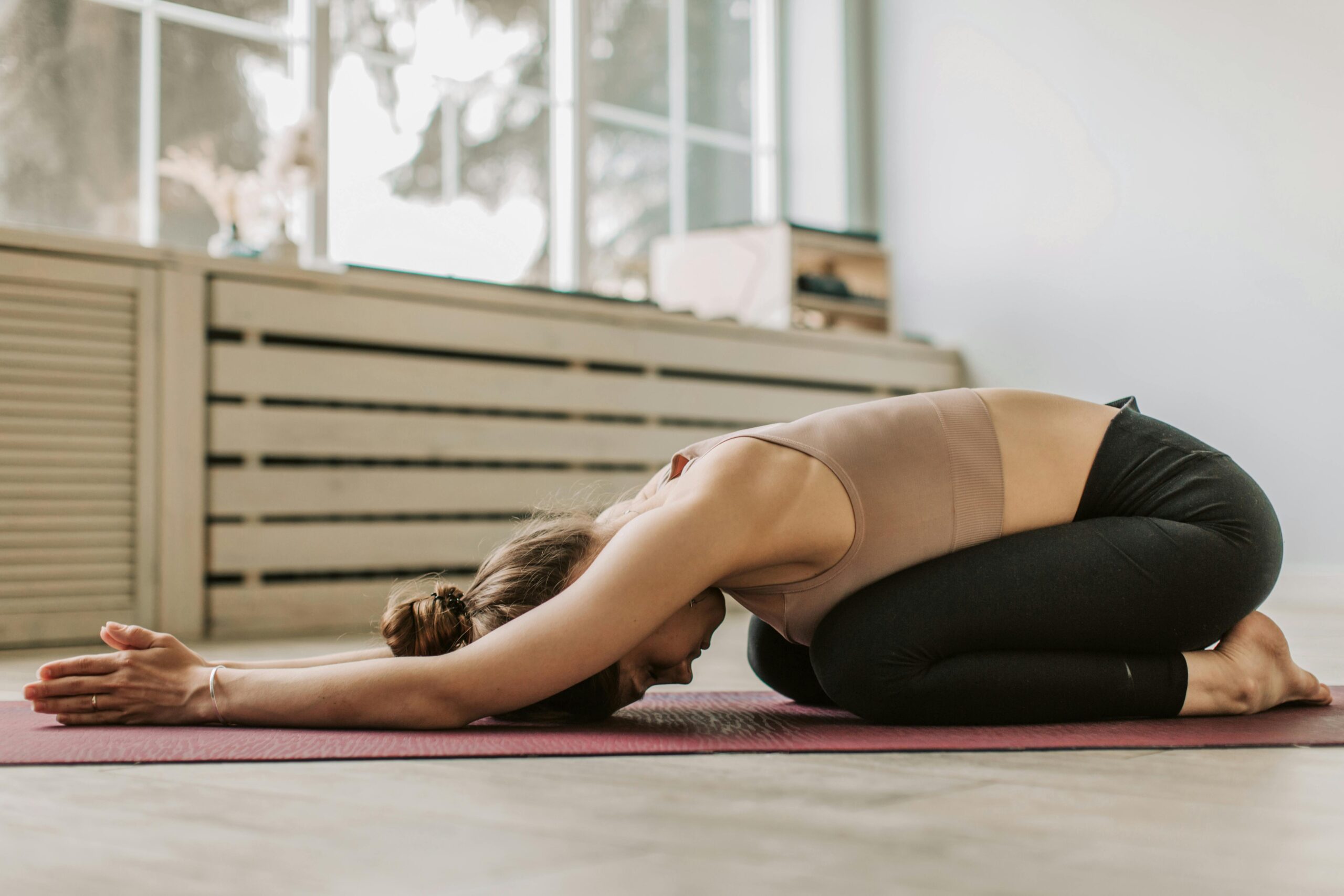
Balasana is the most universally accessible and immediately calming pose in the entire yoga canon — and its physiological stress-relieving mechanism is more specific than simply “it feels comfortable.” The forward-folded, floor-supported position activates baroreceptors in the throat and chest that signal to the brainstem that blood pressure is elevated (even when it is not), triggering a compensatory parasympathetic response that reduces heart rate and promotes relaxation. This is the same baroreceptor mechanism that makes forward bends broadly calming across yoga traditions.
The grounding of the forehead on the mat activates pressure receptors that calm the frontal cortex — the region of the brain responsible for the worry and rumination that chronic stress produces. The mild inversion created by the bowed head position increases venous return from the brain, producing the characteristic sense of mental quietness that makes Child’s Pose one of yoga’s most powerful immediate stress interventions.
How to practise: Kneel on the mat with knees hip-width apart or wider. Bring your big toes together behind you. Exhale and fold forward, extending your arms along the mat in front of you or resting them alongside your body (supported variation — arms alongside body with palms facing up — is more deeply relaxing for most beginners). Allow your forehead to rest on the mat or on a folded blanket if your forehead does not reach the floor comfortably. Breathe slowly and deeply into your back body — feeling your ribcage expand on each inhale and relax on each exhale. Hold for 1–3 minutes. This pose can be used any time during a yoga session when you need to rest, reset, or find your breath again.
2. Cat-Cow Pose (Marjaryasana-Bitilasana) — Spinal Mobilisation as Stress Release
The Cat-Cow sequence earns its universal place in yoga for stress relief through a mechanism that combines spinal mobilisation, breath synchronisation, and the gentle massage of the spinal nerves that runs through the vertebral column. Chronic stress produces characteristic postural patterns — rounded shoulders, compressed chest, tight hip flexors, forward head position — that are literally embodied stress. The body encodes psychological stress in muscular and fascial tension patterns that become self-reinforcing: the posture of stress produces the physiological state of stress, independent of external circumstances.
Cat-Cow systematically mobilises the entire spinal column — from the tailbone through the cervical vertebrae — through its full range of flexion and extension, gently releasing the compressive fascial tension that habitual stress posture creates. The breath coordination — inhaling through the spinal extension of Cow and exhaling through the spinal flexion of Cat — directly synchronises movement with the respiratory cycle, activating the parasympathetic shift that diaphragmatic breathing produces while simultaneously releasing the physical embodiment of stress from the spine.
How to practise: Begin on all fours in a neutral tabletop position — wrists directly beneath shoulders, knees directly beneath hips, spine parallel to the floor. On your inhale, let your belly drop toward the floor, lift your tailbone and chest upward, and allow your gaze to drift forward and slightly upward (Cow). On your exhale, round your spine toward the ceiling — tucking your tailbone, drawing your navel toward your spine, and releasing the crown of your head downward (Cat). Move slowly and deliberately, allowing the breath to lead the movement rather than the movement leading the breath. Continue for 8–12 rounds, progressively slowing the breath on each cycle.
3. Legs Up the Wall (Viparita Karani) — The Most Powerful Restorative Pose
Viparita Karani is one of the most scientifically compelling of all yoga for stress relief poses — and also the most accessible, requiring no flexibility, strength, or experience. It is a restorative inversion that produces measurable physiological effects within minutes through the combined action of venous drainage, baroreceptor activation, and complete muscular surrender to gravity.
The mild inversion created by elevating the legs activates carotid sinus baroreceptors that detect a perceived increase in blood pressure and trigger a parasympathetic response — slowing heart rate and relaxing the vasculature throughout the body. Simultaneously, the reversal of gravitational venous pooling in the legs (which occurs when standing and sitting for prolonged periods) produces measurable reductions in lower limb fluid retention and the fatigue signals that chronic venous pooling sends to the brainstem. The complete absence of muscular effort required to maintain the pose — the wall supports the legs entirely — allows a deeper muscular release than active poses can produce in beginners whose nervous systems are still activating muscles defensively during yoga.
Research on Viparita Karani specifically shows significant reductions in heart rate, respiratory rate, and subjective anxiety within 5 minutes of entering the pose — effects that persist for 20–30 minutes after leaving it, suggesting a sustained autonomic recalibration rather than a transient relaxation response.
How to practise: Sit sideways next to a wall with your hip touching it. Swing your legs up the wall as you lie back simultaneously — your buttocks should be as close to the wall as is comfortable. Adjust by bending your knees slightly if hamstring tension prevents straight legs from being comfortable. Place a folded blanket under your lower back for additional support if needed. Arms rest alongside the body, palms facing upward, in a position of complete surrender. Close your eyes, breathe slowly, and hold for 5–15 minutes. This pose is ideal as the final active pose before Savasana, or as a standalone evening stress relief practice.
4. Standing Forward Fold (Uttanasana) — Releasing the Stress Held in the Posterior Chain
The posterior chain — hamstrings, calves, lower back, and posterior hip muscles — is the primary location where the body stores the muscular tension of chronic psychological stress. The physiological explanation is both anatomical and evolutionary: the defensive contraction of the posterior body (bending forward to protect vital organs, tightening the lower back and hip flexors in readiness for flight) is the physical correlate of the sustained vigilance state that chronic stress produces. Sustained tension in these muscles maintains the physiological signature of threat-readiness even when no threat is present.
Uttanasana — a standing forward fold — stretches the entire posterior chain while simultaneously creating the mild inversion that activates the baroreceptor-parasympathetic response. The hanging weight of the head in forward fold positions the cervical spine in a way that reduces the neck and shoulder tension that is the most visible physical manifestation of stress in most people. The gentle compression of the abdomen in a forward fold also stimulates the vagal afferents in the digestive organs, contributing to the parasympathetic activation of the pose.
How to practise: Stand with feet hip-width apart. Exhale as you hinge from the hips (not the waist), folding forward and allowing your torso to drape over your legs. Bend your knees generously — as much as needed — to allow the spine to fully lengthen rather than rounding defensively to accommodate tight hamstrings. Let your head hang completely, releasing the cervical spine. Clasp opposite elbows, creating a “rag doll” upper body that sways gently. Hold for 1–3 minutes, breathing slowly. To come up, bend the knees fully and roll up one vertebra at a time — never straight-leg standing from a forward fold, which creates compressive loading on the lumbar vertebrae.
5. Downward-Facing Dog (Adho Mukha Svanasana) — The Full-Body Decompression
Downward Dog is the most iconic yoga pose for good reason — it is simultaneously a mild inversion (head below heart activating baroreceptors), a full posterior chain stretch, a shoulder and chest opener (directly releasing the rounded-shoulder stress posture), a gentle strengthener for the upper back and shoulder girdle, and a breathing regulator through the consistent pressure of the hands and feet against the mat.
In the context of yoga for stress relief, Downward Dog’s unique value is its combination of active engagement (enough muscular activation to prevent the mind from wandering into anxiety) with the inversion effect that produces immediate cardiovascular parasympathetic response. The increased blood flow to the brain in the slightly inverted position produces the “clearing” sensation that many practitioners describe — a reduction in the mental noise of stress-related rumination that is neurologically mediated by the improved cerebral venous drainage the position facilitates.
How to practise for beginners: Begin in tabletop. Curl your toes under. Exhale and lift your hips toward the ceiling, straightening your legs as much as is comfortable — bent knees are completely appropriate and often preferable for beginners with tight hamstrings. Press firmly through all four corners of both hands. Allow your head to hang freely between your arms — no gripping in the neck or jaw. Your body should form an inverted V shape, with the highest point at the hips. Hold for 5–8 slow breaths, then rest in Child’s Pose. With regular practice, the pose becomes progressively more accessible as hamstring and shoulder flexibility develops.
6. Warrior II (Virabhadrasana II) — Grounded Strength as Stress Antidote
Warrior II offers something qualitatively different from the restorative and forward-bending poses — it builds the embodied experience of calm strength, which is the psychological antidote to the helplessness and overwhelm that chronic stress so frequently produces. The wide-stance, open-chested, grounded posture of Warrior II is the physical opposite of the contracted, defended posture of stress — and research in embodied cognition demonstrates that intentionally adopting expansive, open body postures measurably influences the psychological and hormonal states associated with those postures.
Amy Cuddy’s research on “power poses” — including wide, expansive stances — found that adopting such postures even briefly increased testosterone (associated with confidence and assertiveness) and reduced cortisol. While the direct hormonal effect size has been debated in subsequent research, the principle that body posture influences internal psychological and physiological state is robustly supported across multiple research groups. Warrior II puts this principle into consistent practice: standing tall with an open chest, focused gaze, and grounded feet produces the neurological signature of stability and capability that directly counters the physiological experience of stress.
How to practise: From standing, step your feet wide apart (approximately one leg-length). Turn your right foot to face forward and your left foot to face 90 degrees to the left. Bend your right knee to 90 degrees — tracking directly over the second toe without collapsing inward. Extend both arms parallel to the floor, actively reaching in opposite directions through the fingertips. Gaze over your right hand. Hold for 5–8 breaths, then repeat on the left side. Focus on the sensation of groundedness — feet pressing firmly into the floor, spine tall, chest open — as a deliberate counter-posture to the compression and contraction of stressed daily life.
7. Bridge Pose (Setu Bandha Sarvangasana) — Chest Opening and Vagal Activation
Bridge Pose is one of the most therapeutically valuable yoga for stress relief poses because it systematically addresses three of the most significant physical manifestations of chronic stress: the compressed chest and rounded shoulders that restrict breathing depth and signal chronic defensiveness to the nervous system; the tight hip flexors that chronically shorten from hours of seated work and maintain the body in a posture of readiness; and the compressed lumbar spine that chronic sitting and standing tension produce.
The chest-opening action of Bridge Pose directly counters the shoulder-forward, chest-compressed posture of stress — and this postural correction has neurological consequences. The pectoralis minor and major muscles attach to the ribcage and influence breathing mechanics; their chronic shortening in the stress posture restricts diaphragmatic excursion, reducing the depth of diaphragmatic breathing that activates vagal tone. Bridge Pose stretches these muscles, progressively restoring the breathing mechanics that support parasympathetic nervous system activation.
The mild inversion of Bridge — with the heart elevated above the head — also activates the baroreceptor response that the full inversions produce, contributing to the calming physiological shift that makes this pose particularly effective for managing acute stress episodes.
How to practise: Lie on your back with knees bent and feet flat on the floor, hip-width apart, heels close to your sitting bones. Arms rest alongside the body, palms facing down. On an inhale, press through your feet and lift your hips toward the ceiling — squeezing the glutes and inner thighs gently to maintain pelvic stability. Optionally interlace your fingers beneath you and press your arms into the mat to deepen the chest opening. Hold for 5–8 breaths, then slowly lower down on an exhale. Repeat 2–3 times. A rolled blanket under the sacrum in a supported version (with the hips simply resting on the blanket rather than actively lifted) provides a deeply restorative variation appropriate for times of acute exhaustion.
8. Seated Forward Fold (Paschimottanasana) — Deep Surrender and Nervous System Calming
Paschimottanasana — the seated forward fold — is one of Ayurveda’s most recommended poses for Vata aggravation (the stress-driven scattered, anxious, depleted state) because of its grounding quality. The entire posterior side of the body from the soles of the feet to the crown of the head is stretched simultaneously, while the body folds toward the earth in a gesture of complete surrender — the physical embodiment of releasing the vigilance and control-seeking that chronic stress produces.
From a physiological perspective, the sustained stretch of the hamstrings and calves in Paschimottanasana activates Golgi tendon organs — the tension-sensing proprioceptors in the musculotendinous junctions — which signal the nervous system to reduce muscular tone. This “autogenic inhibition” mechanism produces the progressive deepening of a forward fold that occurs when you stop pushing and simply breathe — the muscles release not through force but through the nervous system’s response to sustained, non-threatening stretch. This physiological surrender is a direct training of the stress response — practising the neurological act of releasing control in a safe context.
How to practise: Sit on the floor with legs extended in front of you. Sit on the front edge of a folded blanket if your lower back rounds when sitting upright — this elevates the pelvis and allows the spine to lengthen more naturally. Inhale and lengthen your spine. Exhale and hinge forward from the hips — not the waist — reaching toward your feet, shins, or a strap looped around your feet if hamstring tension limits your range. Do not force the fold; the head may be far from the knees, and that is completely appropriate. The goal is a long, relaxed spine and steady breath — not maximum hamstring stretch. Hold for 1–3 minutes, breathing slowly, allowing each exhale to deepen the fold fractionally.
9. Supine Twist (Supta Matsyendrasana) — Spinal Decompression and Digestive Reset
The supine twist addresses one of the most underappreciated dimensions of how stress affects the body: its impact on spinal mechanics and digestive function. Chronic sympathetic nervous system dominance reduces gastrointestinal motility, reduces digestive enzyme secretion, and creates the visceral tightening around the organs of the abdomen that many chronically stressed people recognise as persistent digestive discomfort, cramping, or the “tight gut” sensation of sustained anxiety. The digestive-stress connection explored in our guide to improving digestion naturally is directly relevant — supine twists are among yoga’s most effective tools for addressing the gut consequences of chronic stress.
The twisting action of Supta Matsyendrasana systematically rotates the vertebrae through their full rotational range, releasing the compressive adhesions that prolonged sitting and sustained muscle tension create in the facet joints and intervertebral discs. It simultaneously massages the digestive organs through the gentle compression of the twist, stimulating peristalsis and improving the motility that stress suppresses.
How to practise: Lie on your back with knees bent. Draw both knees to your chest, then drop them both to the right side — stacking the knees if possible. Extend your left arm out to the side at shoulder height and turn your gaze to the left. Allow both shoulders to remain as grounded as possible — if the left shoulder lifts significantly off the floor, place a blanket under the knees for support. Hold for 1–2 minutes on each side, breathing into the left ribcage expansion on each inhale and allowing the twist to deepen fractionally on each exhale. Always finish on the left side — spinal twists performed in the direction of digestive flow (clockwise when viewed from above) end on the left, which supports the natural direction of intestinal peristalsis.
10. Reclining Bound Angle Pose (Supta Baddha Konasana) — The Heart-Opening Restorative
Supta Baddha Konasana is one of the most emotionally releasing poses in yoga for stress relief — and its physiological mechanism connects to the chest-opening, hip-releasing action that directly counters the defensive physical posture of chronic stress. The soles of the feet together, knees falling open to the sides, chest lifted position is the physical opposite of the foetal position of stress — it is open, expansive, vulnerable, and grounding simultaneously.
The hip opening in this pose releases the hip flexors and adductors that chronically tighten in response to stress — the psoas muscle in particular, which connects the lumbar spine to the femur and is sometimes called “the muscle of the soul” in somatic work because of its sensitivity to the stress response. The psoas contracts reflexively during the startle response and remains partially contracted in chronic stress states, creating the chronic lower back tension and the “braced” quality of the torso that many stressed people carry. Releasing the psoas through sustained hip-opening postures like Supta Baddha Konasana produces a quality of physical release that many practitioners describe as deeply emotional as well as physical.
How to practise: Lie on your back. Bring the soles of your feet together and allow your knees to fall open toward the floor — support each knee with a folded blanket or block if they do not comfortably rest near the floor. Place one hand on your belly and one on your heart. Close your eyes. Breathe slowly, feeling the gentle expansion of your chest and the progressive release of your hip muscles with each exhale. Hold for 3–5 minutes. A bolster under the spine (lengthwise, from the lower back to the crown of the head) deepens the chest-opening effect and makes this a deeply restorative version suitable for extended holds.
11. Shoulder Stand (Sarvangasana) — Mother of All Poses for Nervous System Health
Sarvangasana — shoulder stand — is described in classical hatha yoga texts as the “mother of all asanas,” and its nervous system effects justify this classification. The full inversion of shoulder stand produces the most potent baroreceptor-mediated parasympathetic activation of any commonly practised yoga pose — with the strong compression of the carotid sinus in the neck during the pose generating a powerful signal that rapidly shifts the autonomic balance toward parasympathetic dominance.
The thyroid gland — which governs metabolic rate and is directly affected by chronic stress through cortisol’s suppression of T4-to-T3 conversion (as covered in our article on how hormones affect women’s health) — is gently stimulated by the chin-lock position of shoulder stand, with traditional yoga texts and some modern endocrinology research suggesting thyroid-supportive effects of this pose.
Important beginner guidance: Shoulder stand should be approached carefully by beginners. Begin with the supported variation — legs up the wall (Viparita Karani, covered above) — which produces similar baroreceptor effects without the cervical compression of full shoulder stand. Progress to supported shoulder stand with blankets under the shoulders only when hamstring and shoulder flexibility is sufficient to maintain the full spinal extension required for safe practice. Contraindicated during menstruation, pregnancy, with neck injuries, and with uncontrolled hypertension — consult a qualified yoga teacher before attempting full Sarvangasana.
12. Corpse Pose (Savasana) — The Integration That Makes Everything Else Work
Savasana is the most important pose in any yoga for stress relief practice — and the one most frequently undervalued, shortened, or skipped entirely. Its clinical relevance goes far beyond simple relaxation.
Savasana is the integration period during which the nervous system processes and consolidates the autonomic shifts produced by the preceding practice. Without adequate Savasana, the effects of a yoga session are significantly curtailed — similar to how the benefits of exercise are partially dependent on the recovery period following it. During Savasana, the nervous system transitions from the mild sympathetic activation of active asana practice to the deepest possible parasympathetic state — producing the deepest possible cortisol reduction, GABA elevation, and HRV improvement of the entire session.
Research on yoga nidra — the yogic sleep practice that Savasana approximates — shows measurable increases in dopamine release in the ventral striatum during the practice, alongside theta brainwave activity that represents the hypnagogic (between waking and sleep) state associated with the deepest mental and physiological relaxation. Even a 5-minute Savasana produces neurological activity patterns distinct from ordinary waking relaxation — representing a genuine altered physiological state with specific restorative properties.
How to practise: Lie flat on your back, legs extended and slightly apart, arms resting alongside the body with palms facing upward — the ultimate position of surrender and receptivity. Close your eyes. Allow your feet to fall open naturally. Release all muscular effort. Breathe naturally, without control, allowing the body to find its own breathing rhythm. The mind will wander — this is expected and acceptable. When you notice thoughts arising, allow them to pass without engagement, returning attention to the physical sensation of the body resting on the floor. Hold for a minimum of 5 minutes — 10–15 minutes produces substantially deeper nervous system restoration for stressed beginners.
Pranayama for Stress Relief — The Breath Practices That Accelerate Yoga’s Effects
The physical poses of yoga produce significant stress-relief benefits — but combining them with deliberate pranayama (breath regulation) practices exponentially amplifies their neurological and hormonal effects. The breath is the only autonomic function that can be both voluntarily controlled and operates automatically — making it the most direct and immediately available tool for shifting the autonomic nervous system state.
Nadi Shodhana (Alternate Nostril Breathing)
Nadi Shodhana — alternate nostril breathing — is the pranayama practice with the strongest research evidence for acute stress reduction, most consistently recommended by both Ayurveda and evidence-based integrative medicine for HPA axis regulation and cortisol reduction.
The physiological mechanism operates through the nasal cycle — the well-documented phenomenon in which airflow alternates naturally between the left and right nostrils approximately every 90–120 minutes, corresponding to alternating activation of the left and right cerebral hemispheres. Voluntary alternate nostril breathing overrides and regulates this cycle, producing balanced bilateral brain activation and the specific autonomic regulation that bilateral hemispheric balance represents. Research from the Indian Journal of Physiology and Pharmacology found that Nadi Shodhana significantly reduced heart rate, systolic blood pressure, and respiratory rate — the three primary physiological measures of sympathetic activation — after 30 minutes of practice.
How to practise: Sit comfortably with your spine erect. Using your right hand, place your index and middle fingers between your eyebrows (or fold them toward your palm). Use your thumb to close your right nostril and your ring finger to close your left nostril. Close the right nostril with your thumb and inhale slowly through the left nostril for a count of 4. At the top of the inhale, close both nostrils briefly (count of 2). Release the right nostril and exhale slowly through the right for a count of 6–8. Inhale through the right nostril (count of 4). Close both briefly. Exhale through the left (count of 6–8). This completes one cycle. Begin with 5 cycles and gradually extend to 10–15 over several weeks of practice.
Bhramari (Humming Bee Breath)
Bhramari produces one of the most immediate and dramatic parasympathetic responses of any pranayama practice — through the vibrational stimulation of the vagus nerve in the pharynx and sinuses by the humming sound of the exhalation. The physical vibration of humming directly stimulates vagal nerve endings in the nasopharynx, producing an almost instant reduction in heart rate and anxiety that most practitioners experience as a washing sensation of calm within 2–3 breath cycles.
Research published in the International Journal of Yoga confirmed that Bhramari pranayama significantly reduced heart rate, anxiety scores, and blood pressure in stressed subjects within a single 5-minute session — faster and more directly than almost any other non-pharmacological anxiety intervention studied. This connects to the vagal activation mechanisms explored in our power of meditation guide — both Bhramari and meditation activate the vagus nerve through slightly different pathways but produce overlapping physiological outcomes.
How to practise: Sit comfortably. Close your eyes and place your index fingers gently over your ears (or use earplugs) to reduce external sound. Take a full inhale through the nose. On the exhale, produce a sustained, smooth humming sound — like a bee — keeping the lips gently closed. Feel the vibration in your face, skull, and chest. The exhalation should be slow and complete. Repeat for 5–10 cycles. The combination of the extended exhale (which activates the parasympathetic nervous system through the respiratory-cardiac reflex) and the vibrational vagal stimulation makes Bhramari one of the most potent acute stress-relief pranayamas available.
Extended Exhale Breathing (4-7-8 or 4-6 Ratio)
The most well-established principle in respiratory neuroscience for stress relief is the exhale-to-inhale ratio: a longer exhale relative to the inhale activates the parasympathetic nervous system through the respiratory sinus arrhythmia mechanism — heart rate naturally decelerates during exhalation and accelerates during inhalation, meaning that extending the exhale shifts the average heart rate downward and increases vagal tone measurably.
A simple 4-6 ratio — inhale for 4 counts, exhale for 6 counts — is clinically effective, achievable for most beginners, and sustainable across multiple minutes of practice. The 4-7-8 technique (inhale 4, hold 7, exhale 8) produces deeper effects but requires more respiratory control and is better introduced after 2–4 weeks of simpler extended exhale practice. Five minutes of extended exhale breathing produces measurable reductions in heart rate, cortisol, and subjective anxiety — making it one of the most immediately applicable yoga for stress relief tools covered in this guide.
A 20-Minute Yoga for Stress Relief Sequence for Beginners
The following sequence integrates the poses and pranayama from this guide into a practical, complete 20-minute practice suitable for beginners. It can be performed in the morning to establish a calm, grounded state for the day ahead, or in the evening to decompress from accumulated daily stress — adjusting the final Savasana length depending on time available.
Minutes 1–3: Centering and Breath Awareness. Sit comfortably. Close your eyes. Take 5 rounds of extended exhale breathing (inhale 4 counts, exhale 6 counts). Set a brief intention — not a goal, but a quality you want to cultivate in the next 20 minutes: ease, patience, openness, or simply “I am here.”
Minutes 3–6: Cat-Cow warm-up. 8–10 slow rounds, breath-led, progressively extending the range of motion and slowing the breath on each cycle.
Minutes 6–8: Downward Dog. Hold for 5 breaths. Step forward to the top of the mat. Roll up slowly to standing.
Minutes 8–11: Warrior II each side. 5 breaths each side. Notice the grounded, open quality of the posture and allow it to shift your physiological state intentionally.
Minutes 11–13: Standing Forward Fold. Generously bent knees. Rag doll arms. 1.5 minutes of complete hanging release.
Minutes 13–15: Bridge Pose. 2–3 rounds of 5 breaths each, with a brief release between rounds.
Minutes 15–16: Supine Twist. 30 seconds each side.
Minutes 16–17: Supta Baddha Konasana or Legs Up the Wall. Transition to the restorative phase of the practice.
Minutes 17–18: Nadi Shodhana or Bhramari. 5 cycles of whichever feels most accessible.
Minutes 18–20: Savasana. Complete stillness. Minimum 2 minutes — extend to 5–10 minutes whenever time allows. This is the integration period — resist the urge to check your phone.
Yoga for Stress Relief and the Broader Wellness Picture
Yoga for stress relief produces its most powerful and lasting results when it is one element of a comprehensive approach to stress management and hormonal health — not a standalone intervention expected to compensate for chronically poor sleep, consistently inflammatory nutrition, sedentary daily life, or unaddressed psychological patterns.
The HPA axis dysregulation that drives chronic stress symptoms requires a multi-dimensional response: yoga’s cortisol reduction, the adaptogenic herb support covered in our article on ashwagandha for stress and anxiety, the sleep optimisation strategies from our healthy morning routine guide, the gut health support that reduces stress-driven digestive disruption from our digestion guide, the anti-inflammatory nutrition from our anti-inflammatory foods guide, and the broader meditation practice from our power of meditation guide collectively address the HPA axis from every relevant direction simultaneously.
Yoga is also one of the most important tools for the hormonal balance concerns covered in our article on how hormones affect women’s health — because cortisol dysregulation drives progesterone depletion, thyroid suppression, and insulin resistance, yoga’s cortisol reduction is simultaneously a hormone-balancing intervention across the entire endocrine system.
Yoga for Stress Relief: Myth vs. Fact
| ❌ The Myth | ✅ The Truth |
|---|---|
| You need to be flexible to practise yoga | Flexibility is a result of yoga practice — not a prerequisite for it. Every pose in this guide is accessible to beginners with completely average flexibility, and modifications (bent knees, blanket support, blocks) make every pose accessible regardless of current range of motion. Waiting to be flexible before starting yoga is equivalent to waiting to be fit before starting exercise. |
| Yoga is only for women | Yoga originated in a predominantly male practice tradition in ancient India. The clinical evidence for yoga’s stress-relief, cardiovascular, and neurological benefits applies equally to men and women. The demographic skew of modern Western yoga studios does not reflect the nature or origin of the practice itself. |
| You need a full hour to benefit from yoga | Multiple studies have documented significant cortisol reduction, GABA increase, and autonomic nervous system shifts from yoga sessions as short as 20 minutes. Even a 10-minute sequence of restorative poses and pranayama produces measurable physiological benefits. Consistency of short daily practice produces greater cumulative benefit than occasional long sessions. |
| Hot yoga is more effective for stress relief than gentle yoga | For stress relief specifically, evidence strongly favours slower, more restorative yoga styles over intense practices. Vigorous hot yoga elevates cortisol during the practice, and while it reduces stress acutely for many people, it is not the optimal style for addressing chronic HPA axis dysregulation. Yin yoga, restorative yoga, and Hatha yoga with pranayama emphasis are better suited for therapeutic stress management. |
| Yoga can replace psychological therapy for stress and anxiety | Yoga is a powerful adjunct to psychological care — not a replacement for it. For mild-to-moderate stress and anxiety, yoga often provides sufficient therapeutic benefit. For moderate-to-severe anxiety disorders, PTSD, or clinical depression, yoga should complement professional psychological and psychiatric care rather than substitute for it. The neurobiological effects of yoga and therapy operate through complementary pathways that produce greater benefit in combination. |
| The physical benefits of yoga are more significant than the mental benefits | The mental and neurological benefits of yoga — cortisol reduction, GABA upregulation, HRV improvement, neuroplasticity through regular practice — are arguably its most clinically significant and most evidence-backed effects. The GABA research showing yoga produces greater GABA increase than walking at equal duration positions yoga’s brain chemistry effects as its primary therapeutic mechanism for stress relief, with the physical flexibility and strength benefits as secondary outcomes. |
Related Articles From HerbeeLife
📖 Power of Meditation: 10 Science-Backed Benefits for Your Mind and Body
📖 Ashwagandha for Stress and Anxiety: What Actually Happens in Your Body
📖 How Hormones Affect Your Health: The Complete Guide Women Must Read
📖 Healthy Morning Routine: 10 Powerful Habits That Transform Your Entire Day
📖 Holistic Health Benefits: 7 Life-Changing Reasons to Treat Your Whole Self
📖 Anti-Inflammatory Foods: 12 Powerful Choices That Fight Disease From the Inside Out
📖 How to Improve Digestion Naturally: 12 Powerful Science-Backed Strategies
Frequently Asked Questions: Yoga for Stress Relief
How quickly does yoga reduce stress?
Measurable physiological effects — reduced heart rate, elevated GABA, reduced cortisol — occur within a single 20–60 minute yoga session. The immediate sense of calm most practitioners experience post-yoga is neurobiologically real and measurable in blood and saliva. Sustained structural benefits — improved baseline HRV, lower resting cortisol, reduced amygdala reactivity — develop over 8–12 weeks of consistent practice. Some people with significant chronic stress notice meaningful subjective improvement within the first 2–3 weeks of daily practice.
What is the best time of day to practise yoga for stress relief?
Both morning and evening practice are valuable but produce different benefits. Morning yoga (before the day’s demands accumulate) establishes a parasympathetic baseline that influences the cortisol awakening response and sets a calmer physiological tone for the entire day. Evening yoga (1–2 hours before bed) produces the cortisol reduction and GABA upregulation that support sleep onset and quality. Both are beneficial — choosing the time you are most likely to maintain consistency is more important than optimising timing.
Which yoga style is best for stress relief for beginners?
Hatha yoga (slow-paced, pose-focused, accessible instruction), Yin yoga (long-held passive poses that target deep connective tissue and produce profound nervous system calming), and Restorative yoga (supported poses held for 5–20 minutes with props, designed specifically for nervous system restoration) are the three best styles for stress relief for beginners. Vinyasa and Ashtanga yoga are too physically demanding and metabolically stimulating for optimal stress relief in the early stages of practice, though they become effective stress management tools once physical capacity develops.
Can yoga for stress relief help with hormonal imbalance?
Yes — significantly, through the cortisol reduction mechanism. Chronic cortisol elevation drives progesterone depletion (the “pregnenolone steal”), thyroid function suppression, insulin resistance, and reproductive hormone disruption — as detailed in our article on how hormones affect women’s health. Yoga’s cortisol reduction is therefore one of the most upstream hormonal health interventions available, producing downstream improvements in progesterone levels, thyroid conversion, and insulin sensitivity when practised consistently. Specific poses — shoulder stand for thyroid stimulation, supported inversions for adrenal recovery, forward bends for nervous system calming — have additional targeted hormonal relevance.
How is yoga for stress relief different from meditation?
Yoga and meditation address stress through overlapping but distinct mechanisms. Yoga’s physical postures release the muscular and fascial tension that embodies stress in the body — addressing the somatic dimension of stress that purely mental meditation cannot reach. Meditation’s sustained focused attention training produces more specific neuroplastic changes in the prefrontal cortex and amygdala — with stronger evidence for long-term structural brain change. Yoga with integrated pranayama and meditation (as in the complete Ashtanga yoga system) addresses stress at every level simultaneously and is the most comprehensive approach. For those new to both, yoga often provides a more accessible entry point because the physical engagement provides a focus anchor for the attention that pure sitting meditation requires but beginners often struggle to maintain.
Is yoga safe during pregnancy for stress relief?
Prenatal yoga is safe and extensively studied — with documented benefits for pregnancy-related anxiety, lower back pain, and birth outcomes. However, certain modifications are essential: avoid strong twists, deep abdominal compression, lying flat on the back after the first trimester, inversions (which risk balance instability), and intense pranayama practices like Kapalabhati. Prenatal yoga classes specifically designed for pregnancy are the safest and most appropriate format. Always consult your obstetrician before beginning any exercise programme during pregnancy.
Sources and References
1. Streeter CC et al. Yoga Asana sessions increase brain GABA levels: a pilot study. Journal of Alternative and Complementary Medicine, 2007.
2. Pascoe MC, Bauer IE. A systematic review of randomised control trials on the effects of yoga on stress measures and mood. Journal of Psychiatric Research, 2015.
3. Chu P et al. The effectiveness of yoga in modifying risk factors for cardiovascular disease and metabolic syndrome. European Journal of Preventive Cardiology, 2016.
4. Sivasankaran S et al. The effect of a six-week program of yoga and meditation on brachial artery reactivity. Clinical Cardiology, 2006.
5. Bhavanani AB et al. Immediate effect of slow deep breathing exercise on blood pressure and heart rate. Biomedical and Pharmacological Journal, 2012.
6. West J et al. Effects of Hatha yoga and African dance on perceived stress, affect, and salivary cortisol. Annals of Behavioral Medicine, 2004.
7. Sharma VK et al. Effect of fast and slow pranayama practice on cognitive functions in healthy volunteers. Journal of Clinical and Diagnostic Research, 2014.
Follow HerbeeLife
🌿 Stay connected for more evidence-based yoga, mindfulness, Ayurvedic wisdom, and natural wellness content:
📸 Instagram | 📌 Pinterest | 👥 Facebook | 🐦 X (Twitter)
Final Thoughts: Yoga for Stress Relief Is Not a Luxury — It Is a Neurological Necessity
The stress of modern life is not going away. The emails will keep coming. The demands will not reduce themselves. The pace will not slow voluntarily. The nervous system that evolved for occasional acute threat — and that is now subjected to relentless chronic stimulation — needs deliberate, consistent support that counteracts the direction the modern environment is constantly pulling it.
Yoga for stress relief is that support — available for free, on a mat on your bedroom floor, at any hour, for any beginner, in any amount of time you have. Five minutes of Legs Up the Wall and Bhramari breathing changes your cortisol measurably. Twenty minutes of the sequence in this guide produces GABA upregulation comparable to pharmaceutical approaches for mild anxiety. Eight weeks of consistent practice improves HRV, reduces baseline cortisol, and produces structural brain changes that measurably reduce stress reactivity in daily life.
You do not need to be flexible. You do not need equipment. You do not need to join a studio. You need a mat, a floor, a willingness to breathe deliberately, and the understanding that caring for your nervous system is not self-indulgence. It is the most important maintenance practice your health requires.
⚠️ Medical Disclaimer: This article is for informational and educational purposes only and does not constitute medical advice. If you have injuries, significant health conditions, or are pregnant, consult a qualified yoga teacher and healthcare professional before beginning practice. Read full disclaimer →
💬 Which of these 12 yoga for stress relief poses are you going to try first — and which insight about yoga’s neuroscience surprised you most? Share in the comments. And if you have a traditional pranayama or yoga practice from your own family that has always helped you, we would love to hear about it.